
LONDON & THE M25
Junk Removal
in Acton.
We collect unwanted household and business contents in Acton, organising the removal around the rooms, furniture and materials involved. Send us the postcode, a clear description of what is leaving and the route out of the premises so we can discuss a properly defined collection.
- Carrying and loading included
- A clear quote before work begins
- Licensed and insured waste carrier
SPACES, ITEMS AND MATERIALS
Clearance services for Acton properties
An Acton enquiry starts with the contents of the premises
Our first question is what you want removed, rather than whether your property fits a particular label. A small flat can contain a heavy furniture load, while a house enquiry may concern just a bed and some boxes. In Acton we arrange both selective removals and wider clearances, with the unwanted items identified before the visit. Tell us whether you are replacing furniture, preparing rooms for a move or emptying redundant business space. We use that purpose to ask useful follow-up questions, while the collection itself remains limited to the agreed contents. Photographs can show the overall arrangement, but add a written description of anything concealed in cupboards, behind furniture or outside the frame. We discuss your complete load, access and price together. That gives the team a meaningful removal list and gives you a clear understanding of the work being arranged.
- Show bulky pieces and any tight doorway in separate photographs
- Name the contents of cupboards that also need emptying
- Identify shop fixtures that remain attached or connected
- Describe the entrance serving the actual collection rooms
- Add appliances and dense debris explicitly before the quote is agreed
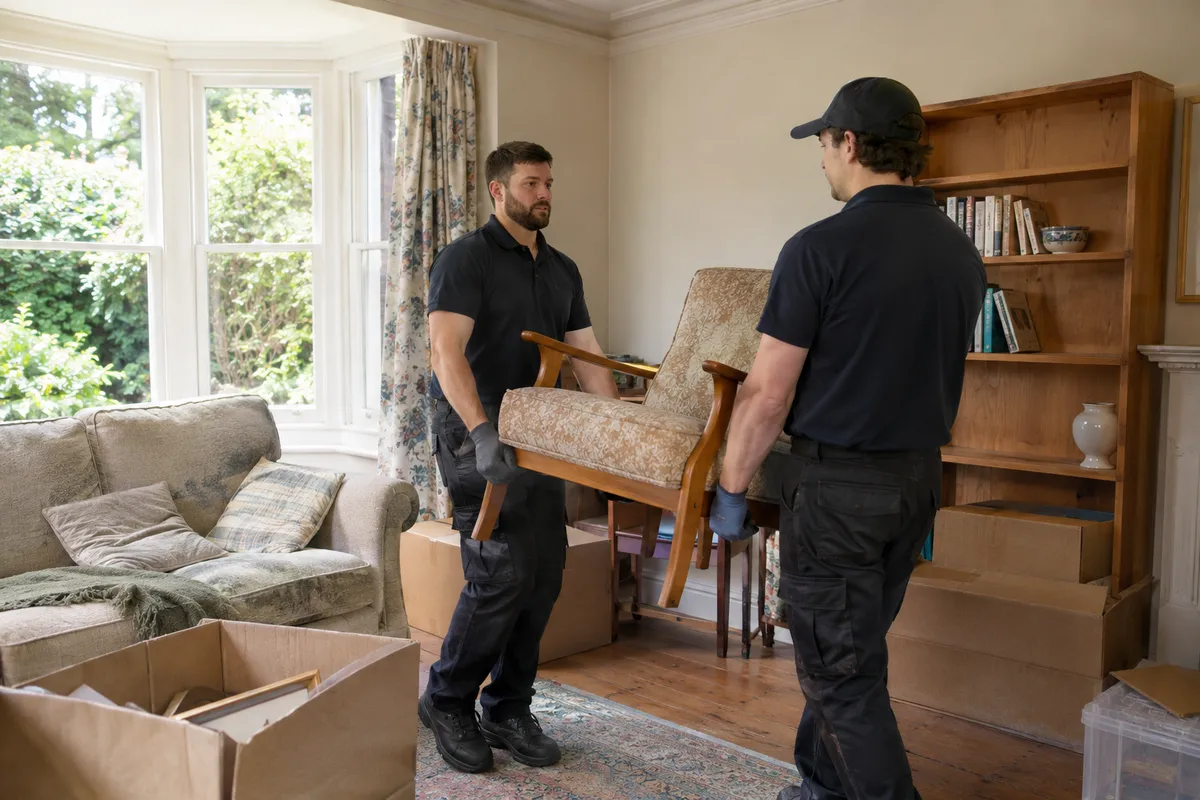
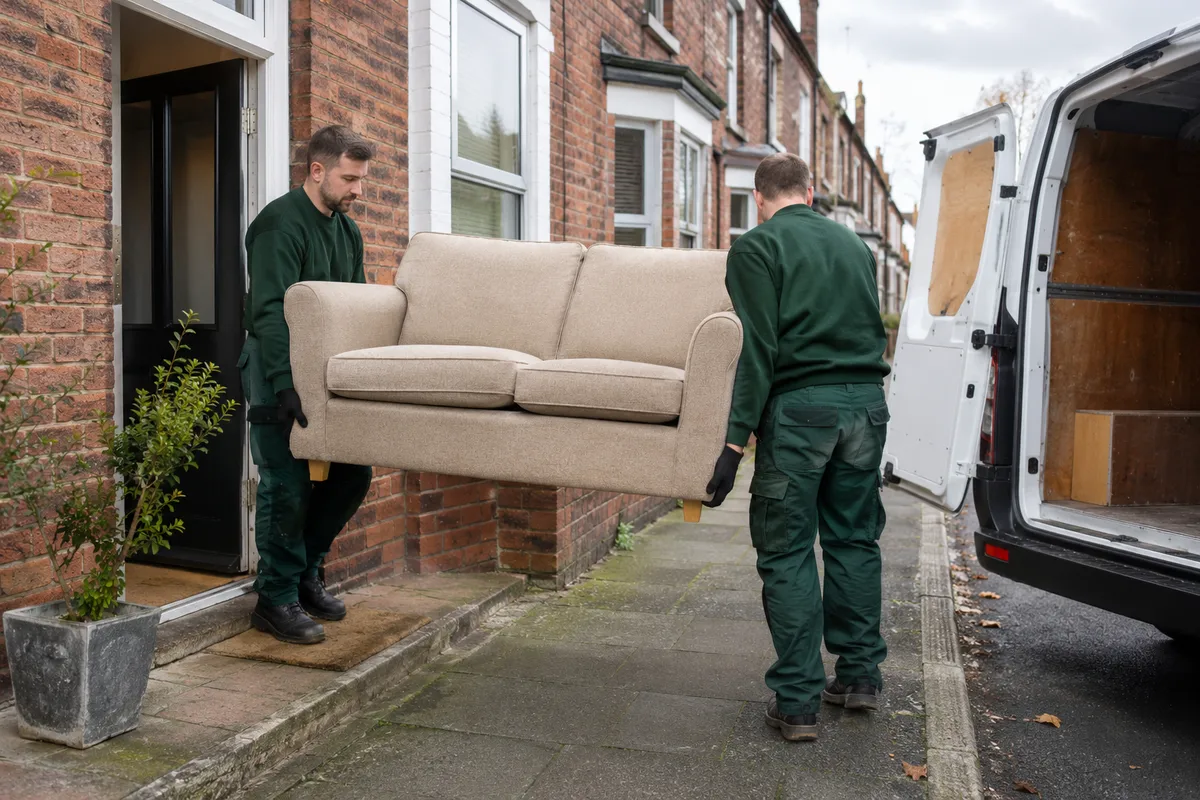
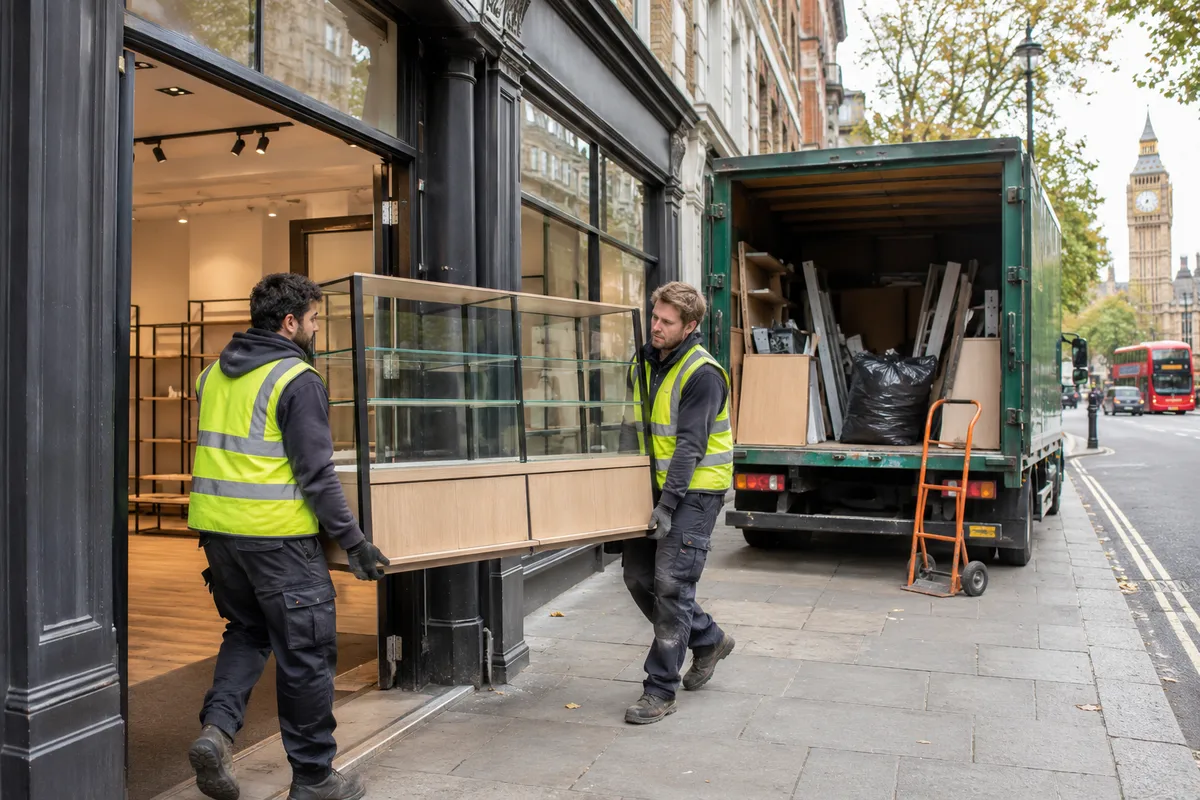
Generated service illustrations show typical collection tasks, not documented local jobs.
| Space | Define the contents | Explain the route |
|---|---|---|
| Occupied flat | Selected furniture, mattress and loose belongings | Floor, stair turns and shared entrance |
| Family house | Rooms included and belongings staying | Front entrance, side access or garden route |
| Shop backroom | Freestanding displays, packaging and redundant stock | Access through shop or separate rear door |
| Working office | Furniture and named electrical equipment | Building contact and route to loading point |
Occupied rooms and the belongings that must remain
Our house and flat clearance service can remove selected unwanted contents from a home that is still in use. We do not treat a room photograph as permission to empty everything visible. Identify the sofa that is leaving, the shelves being retained and any bags that belong to someone else. If a landlord, tenant or family representative is arranging the enquiry, settle those decisions before collection day and explain who will identify the items at the property. A cupboard requires particular care in the description: an empty cabinet is one piece of furniture, whereas a cabinet full of loose possessions adds another part of the load. Mention the approximate quantity and nature of those contents. We also need to know the floor and whether a lift or staircase forms the carrying route. An accurate list helps us collect the right things without repeatedly interrupting the visit for decisions about retained belongings.
Furniture dimensions belong beside the item list
For furniture disposal, the type of piece, its construction and its position can matter as much as its appearance. A two-seater sofa at ground level is a different proposition from a tall wardrobe upstairs, even if both appear on the same enquiry. Describe the furniture in ordinary terms and tell us whether it is assembled, already in sections or fixed to the building. If dismantling may be needed, raise it when discussing the job. We do not want taking apart a fitted installation to be confused with carrying away a freestanding unit. Give dimensions when a doorway or turn is particularly tight, and show the relevant route as well as the object itself. Mattresses and upholstered pieces should be named individually so applicable handling and supplements can be discussed. We confirm the furniture included in the visit before starting to carry it out.
Town-centre premises need an address-specific loading discussion
Ealing Council describes Acton as having a historic town centre and residential areas to the south. That mix makes the actual premises important: a shop with rooms behind it and a house with a private entrance do not share an automatic collection arrangement. We ask which entrance serves the contents and where loading can practically take place. Ealing’s published parking guidance explains that bay uses vary and that loading gaps are subject to signs and kerb markings. We therefore discuss the proposed loading point for your address instead of assuming that a nearby space is available to a clearance vehicle. Explain whether access crosses a shop floor, shared hallway or managed forecourt. Where a building representative controls an entrance, arrange the relevant contact. These details define the carrying work; the neighbourhood name alone does not establish a parking permission, arrival route or loading entitlement.

Backroom collections without an implied shop strip-out
We can discuss unwanted freestanding displays, damaged furniture, packaging and redundant contents from an Acton shop or workplace. Tell us which storage units are empty and which still contain material to remove. Identify electrical equipment separately from desks and chairs, using the appliance and electronic waste service where relevant. If a display remains attached to a wall or wired into the premises, explain that condition before assuming it is ready to collect. Our ordinary clearance enquiry is not a description of electrical disconnection, construction work or certified destruction of confidential information. A manager should also distinguish retained stock and customer property from unwanted material. We discuss a practical scope that keeps those boundaries clear. For a workspace still operating, tell us which doorway and internal route can be used without relying on an assumption that the entire premises will be empty.

Green waste and renovation debris need separate descriptions
A mixed enquiry might include garden cuttings behind the house as well as indoor furniture. We can discuss those groups together, but need to understand them separately. Branches and hedge trimmings are different from soil, broken paving and old fencing; the material affects the proposed collection and quote. Describe any bagged contents rather than simply reporting a number of sacks. The same principle applies to a refurbishment: timber offcuts, rubble, plasterboard and packaging should not disappear into one vague estimate of rubbish. Our garden waste and builders clearance pages explain the relevant services. Tell us where each group stands and whether the route passes through the home or uses a separate gate. Mention unidentified containers or potentially hazardous material before arranging collection. General waste removal does not mean every substance can be accepted, and we confirm the proposed load rather than discovering an unknown material while carrying it.
Choose the right collection for Acton
| Group | Useful description | Collection discussion |
|---|---|---|
| Bed and mattress | Separate frame, mattress and any dismantling need | Furniture disposal |
| Boxes and sacks | Approximate amount and what they contain | Household contents alongside bulky items |
| Green material | Branches and trimmings distinguished from soil | Garden waste collection |
| Refurbishment waste | Rubble, timber and plasterboard named separately | Builders clearance |
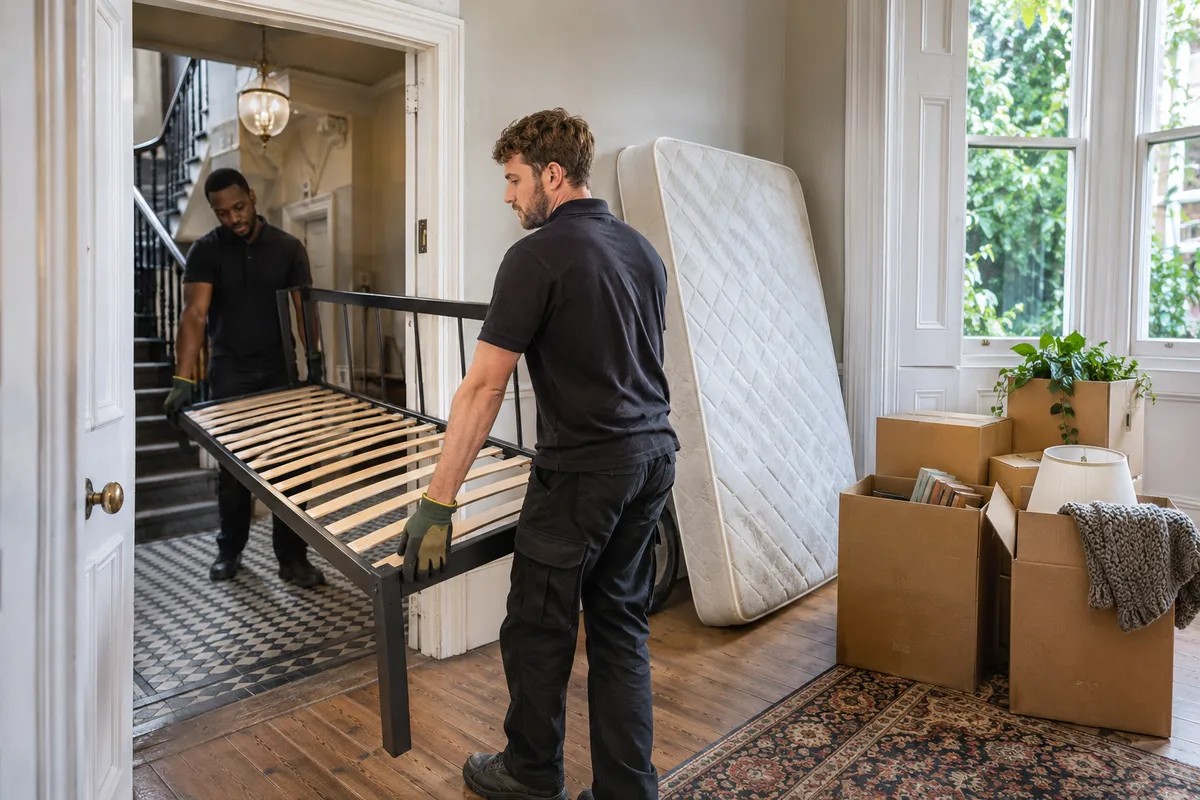
An illustrative split between a flat and its storage cupboard
Consider an Acton resident replacing a bed and dining table while clearing an indoor storage cupboard. This is a realistic enquiry example, not a report of a completed collection. We would identify the mattress and bed frame first, ask about the table’s size and condition, then describe the loose cupboard contents separately. If the cupboard itself stays, that decision belongs on the removal list. The resident could show us the room doorway and any stair turn alongside the item photographs. We would also ask where the vehicle could load and whether the entrance is shared with other occupants. If a refrigerator is subsequently added, it needs its own description because an appliance changes the original material mix. The useful result is one enquiry with several defined groups, rather than a broad promise to remove anything found at the address. We discuss any change to the quote before treating extra contents as agreed work.
| Collection request | Detail to confirm | Reason for asking |
|---|---|---|
| Wardrobe removal | Empty unit or contents included | Loose belongings add to the load |
| Shop display collection | Freestanding or still fixed | Removal is different from a strip-out |
| Appliance removal | Named item and connection status | Collection does not imply disconnection |
| Additional waste | Revised quantity and material mix | The quote should match the agreed load |
An agreed quote and appropriate onward handling
Our current price guide is the starting point for discussing collection charges. The complete quote reflects the amount, materials, access and work agreed for your Acton load, including relevant item supplements or additional requirements. We do not create a separate neighbourhood tariff or publish a guessed price for a room without understanding its contents. Tell us if the quantity changes or another area of the premises is added so we can review the scope before the visit where possible. Collection availability is discussed directly; an enquiry does not confirm a same-day appointment. After carrying and loading the agreed items, we take the waste away for responsible onward handling, seeking reuse and recycling where possible. Furniture condition and material composition affect those possibilities. We do not guarantee that every article will be reused or attach an unsupported recycling percentage to your collection. The job is defined by the contents removed, with any additional cleaning, repairs or property work requiring a separate discussion.
See the current collection price guide, then confirm your complete quote with us. No separate Acton tariff is implied.

Acton: from item list to removal
01
Identify the spaces
Tell us which Acton rooms or business areas contain unwanted items.
02
Separate the load
Describe furniture, loose contents, equipment and outdoor material.
03
Agree the collection
Discuss the address, access, quote and available arrangements.
04
Carry and take away
We remove the agreed contents for appropriate onward handling.
LOCAL COLLECTION AREA
Where we collect in Acton
Our Acton coverage includes household and business enquiries. The marker identifies the town for orientation, not a depot or a precise service boundary. Send the full collection postcode and premises details so we can discuss your address.
Nearby collection areas: Ealing Common · Ealing · Chiswick
Our London and M25 coverage is described on the Areas We Cover page. The local information here concerns the collection enquiry; it does not create a separate neighbourhood branch.
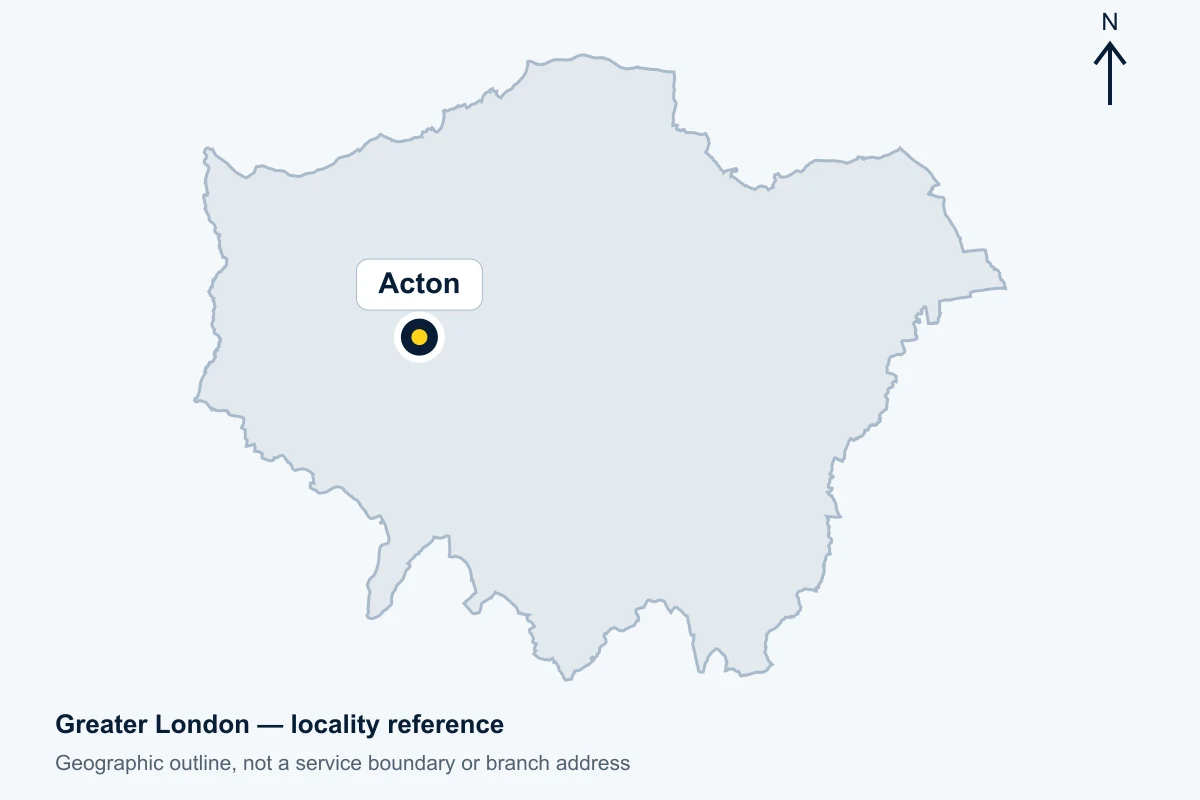
Greater London reference outline: GLA / OS Open Data (OGL). Location: GeoNames UK gazetteer. This is an orientation map, not a service boundary or branch address.
COLLECTION QUESTIONS
Acton removal enquiries: questions answered
Can my Acton enquiry cover the bed but leave the bedroom storage?
Yes. Specify the bed frame, mattress and any associated items leaving, then identify the furniture staying. If drawers contain belongings, explain whether those contents are included. We work from the agreed removal list rather than assuming that the whole bedroom is being emptied.
What should a shop manager send before a backroom collection?
Send a list or photographs distinguishing freestanding displays, loose packaging, unwanted stock and electrical equipment. Add the entrance arrangement and identify anything still attached to the premises. A person at the visit should be able to confirm the agreed items and protect the distinction between waste and retained stock.
Does a nearby Acton parking bay guarantee a loading place?
No. Tell us the proposed loading arrangement and the property’s carrying route. Ealing’s guidance distinguishes different bay uses and loading restrictions, so the actual signs and markings matter. We discuss the practical collection for your address without promising permission to use a particular space.
Can I include the boxes hidden behind a wardrobe?
Include them in the description before the quote is agreed, with an indication of their contents and quantity. Furniture photographs can conceal loose material, so a written addition is useful. If extra boxes are discovered later, tell us so the scope and any price change can be discussed.
How is an Acton furniture collection priced when access is awkward?
We discuss the pieces, their position, the route out and any additional work such as agreed dismantling. Refer to the current price guide and describe the full load, including mattresses or appliances. The complete quote should reflect those requirements before carrying and loading begin.
Do the example collections on this page describe previous Acton jobs?
No. The example explains how we would organise a realistic enquiry. It does not represent a completed local job, and the generated photographs are illustrations of clearance subjects. Your own arrangement depends on the actual contents, access and collection availability discussed with us.
All generated photographs on this page are illustrative service scenes. They do not document jobs in Acton.
Discuss your Acton collection
Call +44 20 3404 3985 with the collection postcode, item list and property details. We will discuss the scope, available arrangements and quote before work begins.
Services for your Acton enquiry
Furniture disposal · Rubbish collection · House and flat clearance