
LONDON & THE M25
Junk Removal
in Alperton.
A managed apartment collection needs the removal list and building arrangements to work together. We organise Alperton junk removal around the bedroom furniture, loose contents and other items you authorise, then discuss the route through controlled doors to loading. The agreed contents are carried, loaded and taken away for responsible handling.
- Carrying and loading included
- A clear quote before work begins
- Licensed and insured waste carrier

FROM ENQUIRY TO REMOVAL
Alperton collections: the process we agree
01
Define the apartment load
Separate components and retained belongings.
02
Confirm building access
Explain doors, lift and loading authority.
03
Agree the complete quote
Include additions and extra work.
04
Review every group
Check the list before onward handling.

Start with the bedroom components
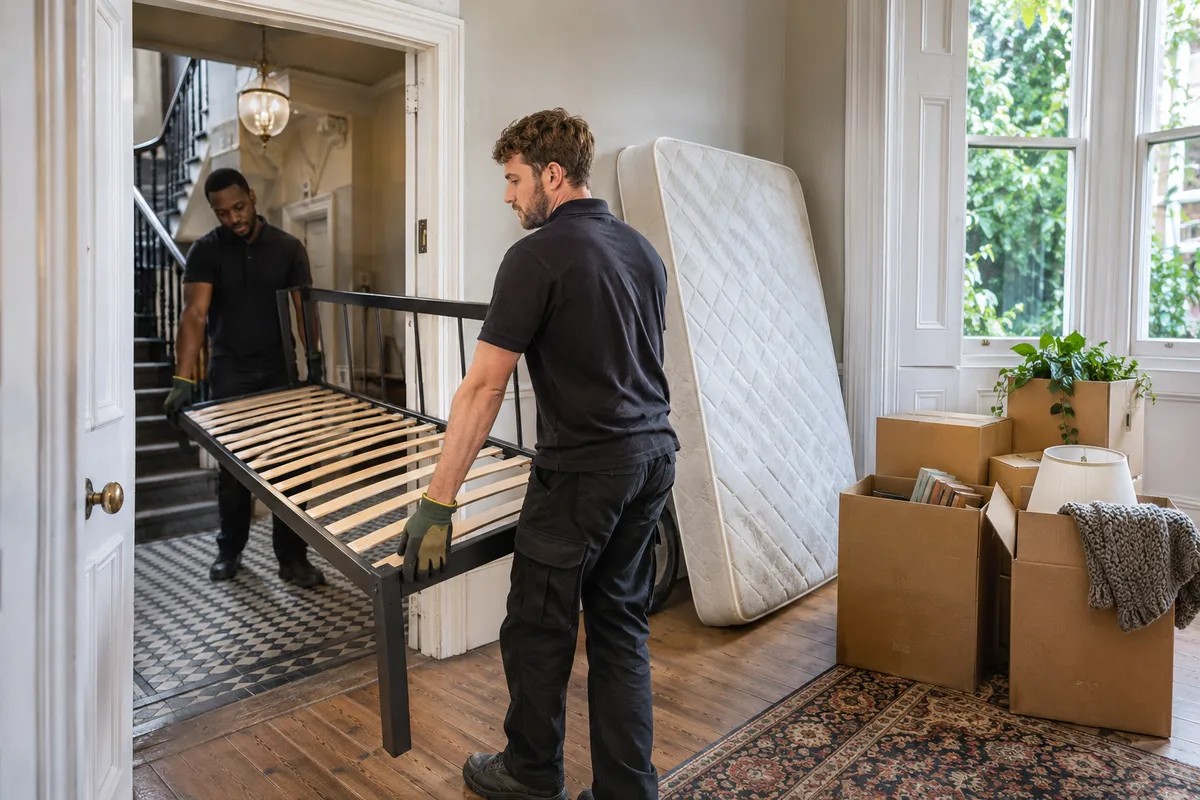
Tell Junk Please which furniture and loose contents are leaving. A bedroom collection may involve a mattress, frame panels, wardrobe sections and boxes, with a different decision for each group. Name the components rather than relying on the phrase clear the bedroom. State what stays, including landlord furniture, clothing and personal belongings. We do not assume everything beside an unwanted bed is included. Explain whether units are empty and describe any contents also leaving separately. If another person owns equipment or furniture, settle authority before booking. Nominate someone who can confirm the final list at the apartment and answer questions during the visit. This gives the collection a defined load, whether it concerns one mattress or several groups spread across the flat. It also makes the final handover easier to review without guessing which belongings were authorised.
Explain construction before assuming a carry-out
A wardrobe assembled inside a room may not leave through the same doorway intact. Give dimensions, construction and condition, including loose glass or damaged parts. State whether furniture is assembled, separated into sections or already dismantled. Any further dismantling needs explicit discussion rather than being assumed within carrying. Attached units and fitted storage require a clear description of proposed work. We do not infer permission to alter the building from a general apartment-clearance request. Keep agreed components identifiable and say if some panels or drawers remain. Check contents for retained papers, keys and belongings before the furniture joins the load. The quote should reflect the actual pieces and work waiting, not merely the original product name. This is especially useful when new furniture has arrived flat-packed but the old item must leave in a different form.
Use Alperton’s changing property context accurately
Brent Council describes Alperton as a growth area developing a waterside residential character alongside employment uses, with schemes at different delivery stages. This provides official context for varied premises, not evidence that all planned homes or infrastructure are complete. Give us the full postcode and actual building entrance. A development name or canal-side location may not identify the door our team can use. Explain the managed access and proposed loading position rather than assuming a public walkway provides a vehicle route. We do not infer permission from an open courtyard or towpath. The official Alperton growth-area information supplies background; the existing premises and relevant restrictions need their own consideration. Confirm arrangements with the responsible building contact before presenting private loading space as available for the collection.
- List mattress and wardrobe components individually
- Identify retained landlord belongings
- Explain every controlled door and lift
- Confirm the actual managed loading arrangement
- Add delivery packaging only when its amount is known

| Group | Describe | Retain separately |
|---|---|---|
| Bed | Mattress and frame components | Bedding and personal contents |
| Wardrobe | Panels or assembled unit | Clothing and papers |
| Boxes | Amount and general contents | Undecided belongings |
| Devices | Type and connection status | Landlord equipment |
Describe the chain of doors from bedroom to loading
Start at the bedroom and work outwards: apartment door, corridor, lift, lobby and any separate gate before the loading position. Tell us which points need a key, code or someone present. A person opening the first door cannot necessarily provide the rest of that chain after leaving. For the wardrobe panels, show the largest rigid piece and explain turns at each stage; for the mattress, give its size and whether the proposed lift can accommodate it. If your building contact requires an access arrangement, establish what has actually been confirmed and communicate it with the enquiry. We do not invent a universal procedure for every development. The practical goal is one continuous route available for the agreed collection, rather than several individually accessible spaces that cannot be used together at the visit.
Describe additions after the bedroom furniture is decided
A replacement project often produces cartons only after the original enquiry. State their quantity when known, distinguishing empty wrapping from boxes still holding household contents. Keep the mattress and wardrobe components visible as the main removal group, with rugs or devices named separately. A screen placed in a bedroom should not disappear into a general box description. If something remains connected or needs work beyond movement, say what is outstanding. Terrace objects also need their own material and access account; their presence at the same apartment does not explain how they join the route through the building. Report uncertain containers as questions for acceptance rather than placing them inside ordinary bags. This gives us a complete description without assuming every item encountered during the room change is already authorised or covered by the proposed collection.
| Contents | Service | Detail |
|---|---|---|
| Apartment contents | House and flat clearance | Furniture and loose groups |
| Work equipment | Office clearance | Authority and devices |
| Refit material | Builders clearance | Density and amount |
| Outdoor additions | Garden waste collection | Material and route |
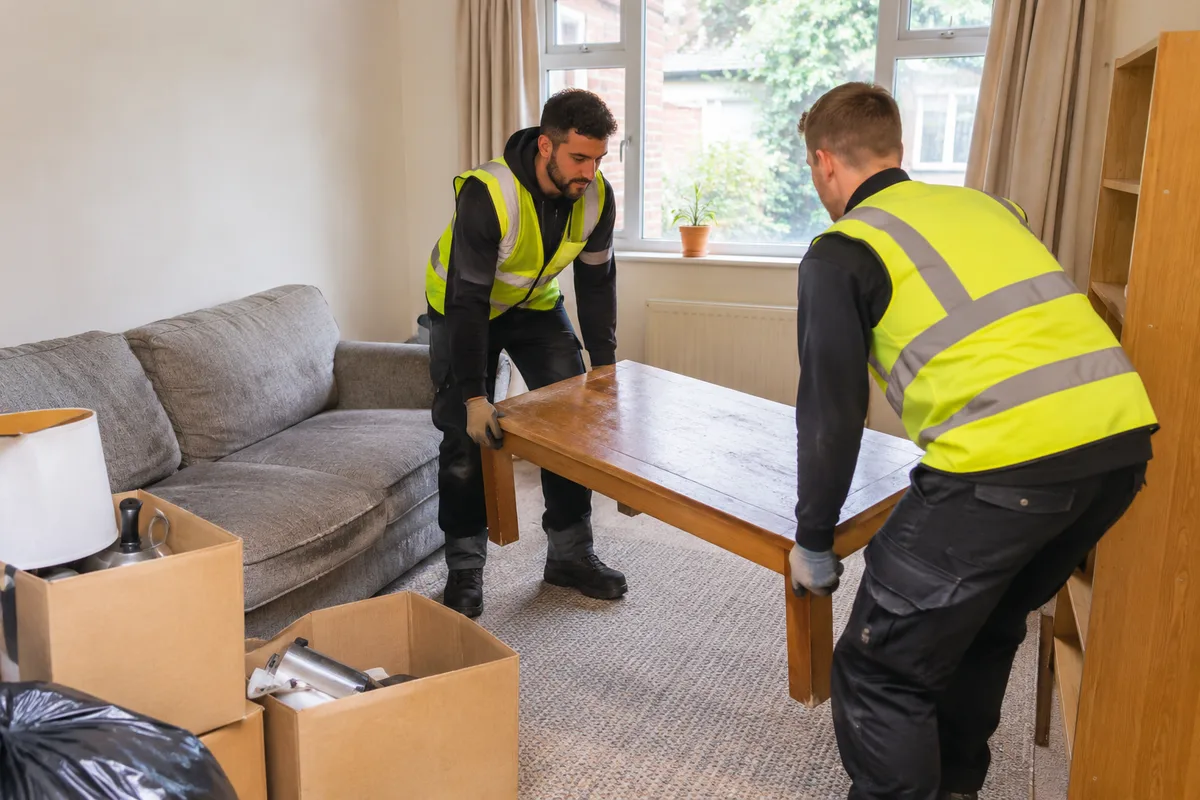
A fictional managed-building bedroom collection
Imagine a resident replacing a bed and wardrobe. The unwanted group is a mattress, dismantled frame, wardrobe panels and boxes of checked household contents. Personal documents, a desk and landlord appliances stay. This is an illustrative planning example, not a completed Alperton job. We would identify all components and ask about the mattress dimensions and route. The resident would explain the lift, two controlled doors and authorised loading arrangement. Retained belongings would be excluded clearly. If delivery cartons are added after new furniture arrives, their type and amount need to be described before inclusion in the quote. A building representative may need to confirm access, while the resident confirms ownership. Keeping those responsibilities clear lets the collection proceed as a defined removal task without assuming every stage of the replacement project is included.
Agree the price when the access chain is confirmed
The bedroom inventory and the building arrangement should describe the same proposed visit. If the first enquiry assumed a lift that is now unavailable, explain the actual alternative before agreeing how the load will be removed. If you have already dismantled the wardrobe, identify that changed starting condition and the components still waiting. The price discussion can then reflect the contents and carry you are asking for. An agreed private loading arrangement should be communicated accurately, including any limitation your premises contact has specified, without treating resident access as blanket vehicle permission. Give timing needs while asking about availability, but do not rely on a collection appointment that has not been confirmed. The useful agreement is a mattress, a defined set of panels and any described additions moving through an available route, not a generic charge based on the development name.
| Point | Confirm | Who knows |
|---|---|---|
| Contents | What is authorised | Owner or representative |
| Doors | Ongoing entry available | Key holder |
| Lift | Usable route for items | Organiser and building contact |
| Loading | Private arrangement approved | Responsible premises contact |
See the current collection price guide, then confirm your complete quote with us. No separate Alperton tariff is implied.
Check the bedroom components before closing the visit
Use the inventory to account for wardrobe doors, side panels, shelves and bed parts as well as the mattress. Components may have been moved to different rooms to make space, so an apparently clear bedroom is not the only completion test. Confirm the separate loose-content group and leave landlord equipment and retained possessions outside the load. Subsequent handling depends on the materials and their condition; it would be misleading to promise the same destination for upholstery, furniture panels and electronics. Reuse and recycling are considered where appropriate without a guarantee for every component. Assembly of replacement furniture and any building handover inspection are separate matters. If later delivery packaging appears, describe that new group rather than assuming the first removal remains open. A definite component check gives both resident and representative a clear endpoint.

LOCAL COLLECTION AREA
Where we collect in Alperton
The map marks Alperton’s verified place position for orientation, not a development entrance, depot or service boundary. Send the full postcode and actual managed-building access. Waterside context does not establish a loading route.
Nearby collection areas: Perivale · Hanger Lane · Wembley
Our London and M25 coverage is described on the Areas We Cover page. The local information here concerns the collection enquiry; it does not create a separate neighbourhood branch.

Greater London reference outline: GLA / OS Open Data (OGL). Location: GeoNames UK gazetteer. This is an orientation map, not a service boundary or branch address.
COLLECTION QUESTIONS
Alperton removal enquiries: questions answered
What access information matters beyond the main door?
Describe the complete sequence to loading, including lobby controls, lift access and separate gates. Identify who can keep that sequence available throughout the collection, not just who can admit the team initially.
How should dismantled wardrobe parts be described?
List the components and show the largest rigid panel. Say where each group stands. This makes the exit discussion and final check more useful than a single photograph of an empty bedroom.
What if our building contact changes the access arrangement?
Send the current confirmed position and discuss the resulting route before work starts. Do not leave the collection based on an earlier lift or loading assumption.
Are new delivery cartons included with the old furniture?
Give their amount and type once they exist and discuss their inclusion. Empty wrapping and cartons containing possessions are different additions, neither of which should be inferred from the original mattress list.
Can a public waterside path replace the loading entrance?
Describe the premises’ actual authorised arrangement. A path offering pedestrian access does not itself establish the vehicle route or permission needed for a private collection.
How do I check all the old furniture has gone?
Review the named panels, shelves, drawers and bed parts wherever they were stored, then the mattress and loose groups. A clear bedroom alone may overlook components placed elsewhere.
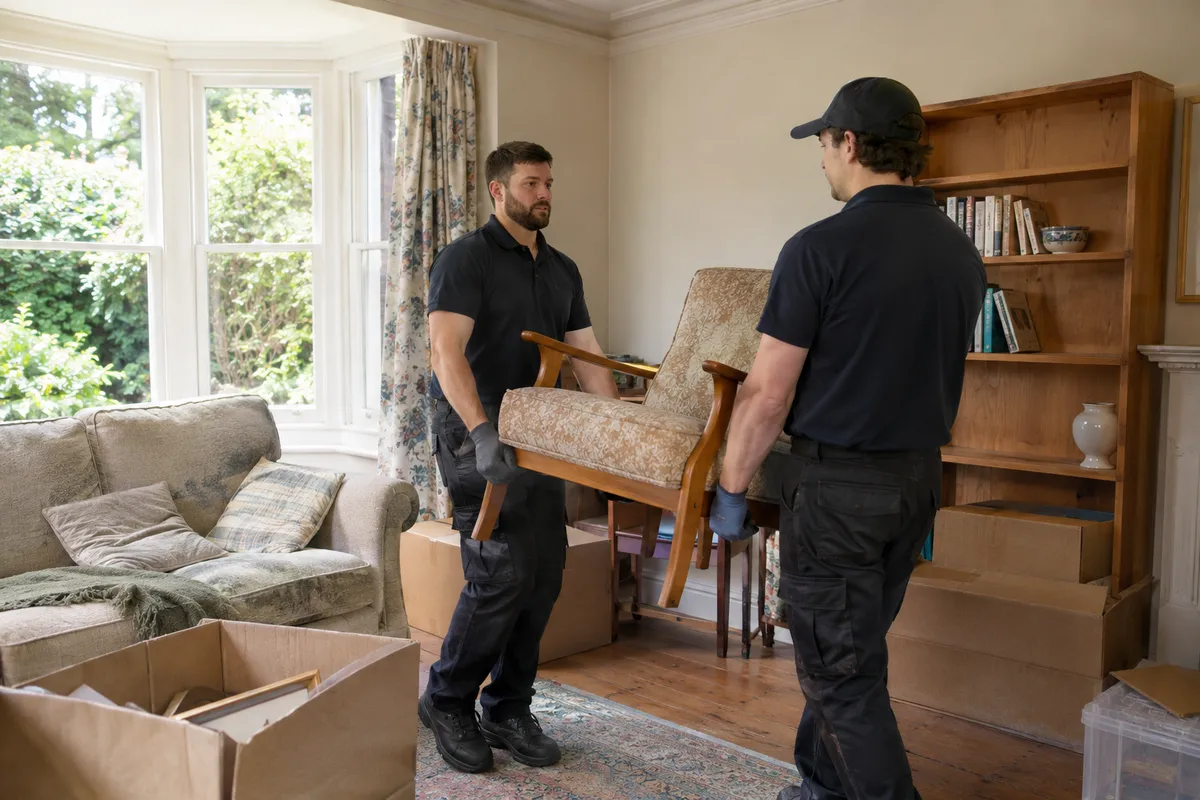
All generated photographs on this page are illustrative service scenes. They do not document jobs in Alperton.
Discuss your Alperton collection
Call +44 20 3404 3985 with the collection postcode, item list and property details. We will discuss the scope, available arrangements and quote before work begins.
Services for your Alperton enquiry
Furniture disposal · Rubbish collection · House and flat clearance