
LONDON & THE M25
Junk Removal
in Bedfont.
We arrange Bedfont removals around the contents of the property and the materials waiting outside. Tell us which furniture, loose belongings and waste groups are leaving, with the entrance and carrying route, so the collection has a clear scope.
- Carrying and loading included
- A clear quote before work begins
- Licensed and insured waste carrier

SPACES, ITEMS AND MATERIALS
Clearance services for Bedfont properties
Furniture and loose belongings should not become one vague room estimate
Our Bedfont domestic clearance service starts with the unwanted contents in each space. List the large pieces first, then add boxes, sacks and material held in drawers or cupboards. A bedroom may have a frame and mattress leaving while its wardrobe stays; a living room may contribute only an unwanted sofa. Tell us those decisions rather than describe the whole room as rubbish. If family members, tenants or an agent are involved, agree the removal list beforehand and identify someone who can confirm it during the visit. We do not decide ownership or the value of personal belongings while loading. Photographs show quantity and condition, but describe anything concealed or outside the frame. The collection and quote should follow the actual contents, not an assumption that every object at the property is included.
- Separate bed frames and mattresses in the removal list
- Describe the actual entrance for rooms near a shopping parade
- Name dense material hidden beneath green cuttings
- Distinguish loose shed contents from the structure
- Identify retained belongings before furniture is carried
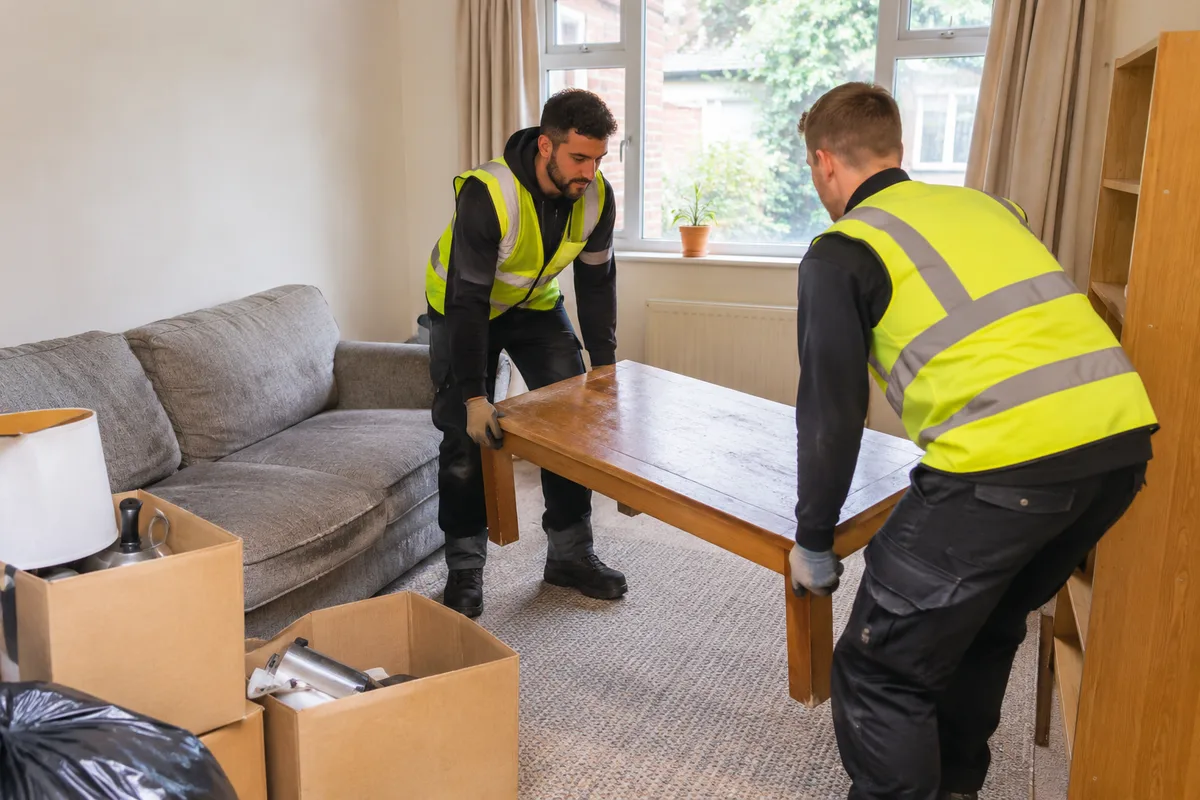
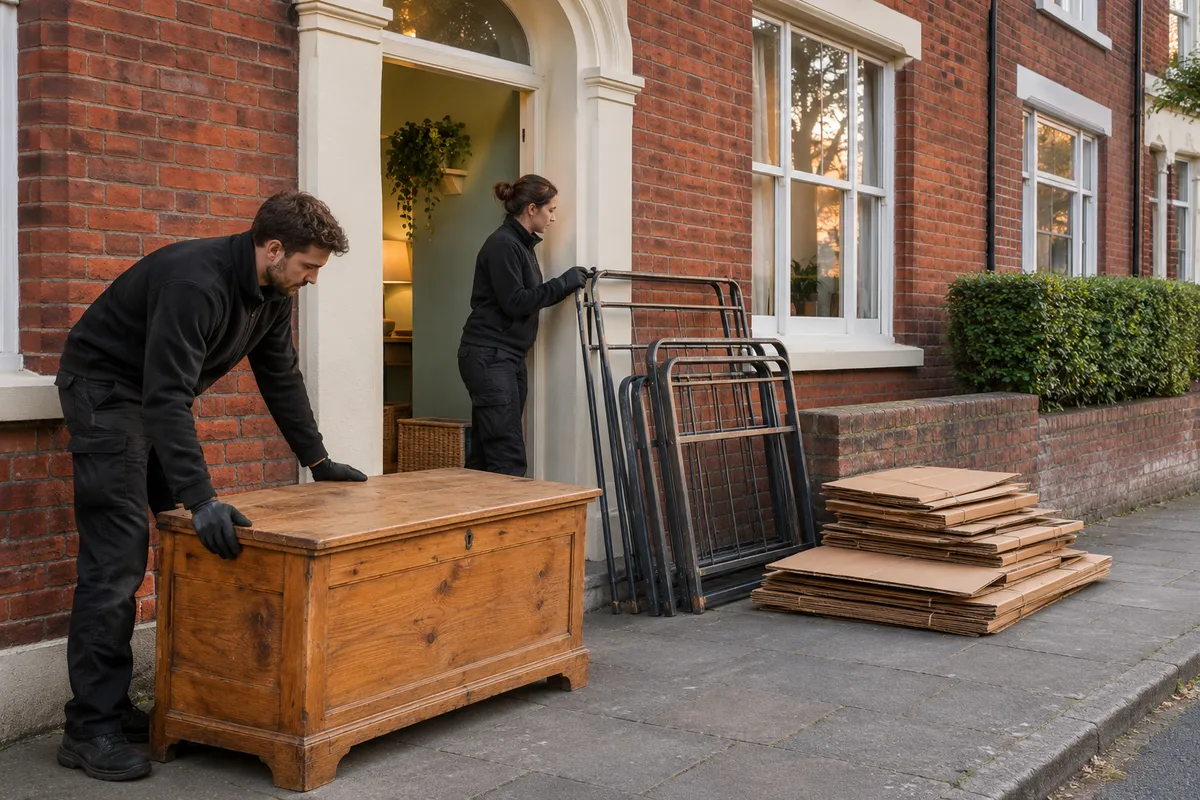
Generated service illustrations show typical collection tasks, not documented local jobs.
| Group | Describe the contents | Settle the boundary |
|---|---|---|
| Bedroom | Frame, mattress, furniture and boxes | Retained storage and possessions |
| Garden | Cuttings, timber, pots and dense waste | Green material versus other contents |
| Storage | Loose belongings and any units leaving | Emptying versus removing the unit |
| Business | Redundant movable contents and equipment | Working stock and fixed fittings |
Bedfont Green context makes the actual entrance important
Hounslow’s Bedfont Green appraisal describes the village setting around Staines Road, including buildings and a small shopping parade. We use that verified mix to ask whether the collection serves a home, flat or business space, rather than assume one type of frontage. Give the full postcode and the entrance used by the unwanted contents. A shop door may not be the route serving rooms above or behind it. Hounslow’s parking guidance distinguishes active loading, signed bays and loading restrictions, so the proposed vehicle position needs its own discussion. Tell us about gates, shared passages or a contact controlling access where relevant. We do not treat a village-green setting as a special loading permission or claim that nearby open space can be used by the collection vehicle. The useful information is the actual route from your load to a practical loading point.
A bed, wardrobe or table needs condition and access detail
For furniture disposal, identify each bulky piece and explain whether it is assembled or already in sections. Name mattresses separately from bed frames and give their number. If dismantling may be needed to move a piece through a doorway or stair turn, discuss the work before booking. Freestanding furniture is different from a fixed unit, so explain attachments rather than assume every object is ready to carry. Tell us the current room and floor, with stairs or a usable lift where applicable. A narrow hallway can matter even for ground-floor furniture. Photographs of the tight parts of the route complement the item photographs. We discuss the removal around the pieces and carrying actually present, including any applicable supplements and additional agreed work, rather than give a general furniture estimate that omits important requirements.

Storage contents add a second load to the furniture enquiry
An empty cabinet and a cabinet full of unwanted belongings are different collection descriptions. Tell us whether the unit leaves, whether its contents leave or whether both are included. Give an approximate quantity and explain the material in boxes or sacks, especially where books, electrical equipment or dense contents form significant groups. If belongings are retained, keep them outside the removal list and separate them from the unwanted material before carrying starts. We also need to know about contents behind a visible stack or in an outbuilding not shown in the main photograph. A nominated person should confirm those boundaries at the visit. This makes a partial household collection practical without requiring the entire property to be emptied. We discuss the complete amount and location before agreeing the quote, rather than discover an unmentioned storage load while removing furniture.

A garden pile needs the hidden material named
Our garden waste collection discussion separates branches and cuttings from timber, pots, old furniture, soil and broken paving. Describe the actual mixture and approximate amount. A photograph of green material does not explain dense waste underneath, so mention anything concealed. Tell us whether it leaves through a side gate, shared passage or the house. If a shed is being emptied, list the loose contents separately from removing or dismantling the structure. Unknown containers and potentially hazardous substances need acceptance confirmed before booking. We do not infer gardening, excavation or demolition from collecting a defined outdoor load. The enquiry should describe the material and carrying rather than rely on the outdoor location as a blanket category. If more waste is uncovered during preparation, update us before the visit where possible so the scope and price can be discussed.

Business and building waste keep their own material boundaries
For a Bedfont workplace, list unwanted desks, seating, cabinets, displays and packaging separately from retained stock and working equipment. Our office clearance service needs a contact who can confirm the list and entrance. Name electronics individually and raise information-security requirements separately; ordinary collection is not certified data destruction. Connected appliances and fixed fittings also require explicit discussion rather than an assumed strip-out. A refurbishment can add rubble, timber, plasterboard and packaging. Describe those materials and approximate quantities through the builders clearance enquiry, including what filled sacks contain. A bag count alone cannot explain weight or acceptance. We discuss the full load before booking, with specialist requirements and unknown substances raised in advance rather than left for the team to identify while carrying.
Choose the right collection for Bedfont
| Detail | What to explain | Why it helps |
|---|---|---|
| Current position | Room, floor or outdoor location | Starting point for carrying |
| Condition | Assembled, in sections or fixed | Work required for removal |
| Internal route | Doorways, stairs and turns | Whether bulky pieces fit |
| Entrance and loading | Actual exit and proposed vehicle position | Practical collection arrangement |

An illustrative bedroom replacement and outdoor clear-up
Imagine a Bedfont household replacing a bed while clearing stored boxes and a mixed garden pile. This is an illustrative enquiry, not a claim about a completed local project. We would name the frame and mattress separately, ask whether the frame is dismantled and describe the boxes’ contents. The garden material would identify cuttings apart from old timber and any paving. We would ask whether the bedroom and outdoor groups use different routes and where loading could practically occur. The household would confirm the furniture and possessions staying. If an appliance is added later, it needs its actual name and connection status before inclusion. We would discuss the complete scope and quote so one collection can cover several clear groups without becoming unlimited removal of every unwanted object discovered around the property on the day.
| Factor | Example | Information needed |
|---|---|---|
| Quantity | Furniture plus several boxes | Full amount rather than room count |
| Material | Cuttings mixed with paving | Different groups named |
| Specific items | Mattress or electrical appliance | Applicable supplements discussed |
| Additional work | Dismantling a bulky unit | Explicit agreement before the visit |
The complete quote and responsible onward handling
The current price guide provides collection bands and relevant additional charges. For your Bedfont load, discuss the full amount, materials, carrying and any extra agreed work before loading. Mattresses, appliances, dense debris and dismantling requirements should be clear in the enquiry. We do not invent a separate local tariff or price an entire property from its room count. Tell us about changes before the visit where possible, including added contents or altered access. Availability is confirmed directly, including short-notice requests. After carrying and loading the agreed waste, we take it away for responsible handling, seeking reuse and recycling wherever possible. The outcome depends on material and condition, so we do not guarantee every piece will be reused or give a fabricated recycling percentage. Cleaning, repairs and further work on the premises require a separate discussion beyond the defined removal.
See the current collection price guide, then confirm your complete quote with us. No separate Bedfont tariff is implied.
Bedfont: from item list to removal
01
Set the list
Choose unwanted contents and identify what remains.
02
Describe materials and pieces
Name bulky furniture, loose contents and dense waste.
03
Agree access and quote
Discuss the actual entrance, loading and availability.
04
Complete the collection
We carry and take away the agreed load responsibly.
LOCAL COLLECTION AREA
Where we collect in Bedfont
Our Bedfont service enquiry uses the full collection postcode and actual property details. The marker identifies the locality for orientation, not a depot or a permission to load at a particular frontage. Discuss your contents and entrance with us.
Nearby collection areas: Feltham · Cranford · Hanworth
Our London and M25 coverage is described on the Areas We Cover page. The local information here concerns the collection enquiry; it does not create a separate neighbourhood branch.

Greater London reference outline: GLA / OS Open Data (OGL). Location: GeoNames UK gazetteer. This is an orientation map, not a service boundary or branch address.
COLLECTION QUESTIONS
Bedfont removal enquiries: questions answered
Can a Bedfont bed collection include the boxes beneath it?
Describe the boxes as a separate group, with an approximate quantity and contents. Name the frame and mattress independently and explain the route out. We discuss the complete load rather than assume stored belongings are automatically included because they stand beneath furniture.
Does the Bedfont Green setting mean the vehicle can use nearby open space?
No access or loading permission follows from the locality description. Give the actual entrance and proposed vehicle position for the premises. We discuss relevant restrictions and the practical route rather than assume any nearby open or private area is available.
Can the wardrobe stay while its unwanted contents leave?
State that the wardrobe is retained and describe the loose belongings separately. Identify their approximate amount and significant materials. The agreed list should distinguish emptying selected contents from removing the furniture, with retained possessions kept outside the waste group.
How should I report paving found under garden cuttings?
Tell us before the visit where possible, with an approximate amount and location. Paving is a separate dense material and should not be included within an estimate of green cuttings. We discuss acceptance and any change to the complete collection quote before inclusion.
Can a shop enquiry include displays that are still attached?
Explain their attachment or connection before booking. A fixed fitting requires a different work description from a detached display ready to carry. We discuss the requirement explicitly rather than assume ordinary loading includes strip-out or disconnection work.
Is a same-day Bedfont collection confirmed by sending an enquiry?
No. Ask about current availability with the postcode, item list and access details ready. We discuss an available arrangement directly. Coverage of the area and receipt of an enquiry do not by themselves establish a booked appointment or arrival time.
All generated photographs on this page are illustrative service scenes. They do not document jobs in Bedfont.
Discuss your Bedfont collection
Call +44 20 3404 3985 with the collection postcode, item list and property details. We will discuss the scope, available arrangements and quote before work begins.
Services for your Bedfont enquiry
Furniture disposal · Rubbish collection · House and flat clearance