
LONDON & THE M25
Junk Removal
in Camden Town.
We collect unwanted contents from Camden Town homes and business premises, with the furniture, loose rubbish and equipment identified before the visit. Our enquiry brings the material list and the property access together, so carrying, loading and the collection price reflect the job you need.
- Carrying and loading included
- A clear quote before work begins
- Licensed and insured waste carrier

COVERAGE & CONTENTS
Camden Town coverage and material groups
We serve Camden Town within our London coverage. The location marker identifies the locality for orientation, not a Junk Please office. Give us the collection postcode and the entrance serving your premises so the enquiry concerns the actual property rather than a general town-centre address.
Nearby collection areas: Kentish Town · Holloway · Highgate

Greater London reference outline: GLA / OS Open Data (OGL). Location: GeoNames UK gazetteer. This is an orientation map, not a service boundary or branch address.
Different uses behind a Camden Town address
Camden Council’s town-centre appraisal describes a mix of terraced housing, shops and larger commercial buildings. That mix matters to our enquiry: a street address alone does not establish whether the items are in a home, an upstairs workspace or a separate business store. We ask which part of the building is being cleared and how it is entered. A shop entrance may be different from the doorway serving rooms above it, and the contents of one occupier must not be confused with another’s belongings. We discuss your premises on that basis, without treating every property on a commercial street as a shop clearance. Tell us who can identify the unwanted contents and whether other people will still be using the building during the collection.
Home contents
Business waste
Outdoor materials
- Identify the occupier and entrance for each part of the load
- List furniture separately from its stored contents
- Name business equipment and attached fittings
- Describe the carrying route and possible loading position
- Raise dense, electrical or unidentified materials before booking

The material list comes before the vehicle load
Our Camden Town collections can include furniture, household clutter, packaging, workplace items and other agreed non-hazardous waste. We separate those descriptions even when you want them removed during one visit. Empty furniture, loose belongings inside furniture and boxed electrical equipment are different parts of the enquiry. We need to know about each group rather than infer the contents from a photograph of the room. Name a refrigerator, mattress or computer screen individually, and describe dense building materials separately from light bags of packaging. That gives us enough information to discuss the collection and applicable supplements. It also prevents an apparently small mixed pile from concealing a material that needs a different handling discussion.
| Collection group | What to identify | Relevant service |
|---|---|---|
| Domestic rooms | Selected furniture and loose belongings | House and flat clearance |
| Business storage | Packaging, redundant stock and freestanding shelves | Shop clearance |
| Workspace | Desks, seating and electrical equipment separately | Office clearance |
| Renovation material | Timber, plasterboard and dense debris by type | Builders clearance |
Removing furniture while the premises remain in use
For a partial clearance, we establish what is leaving and what stays in service. In a home, that could be a sofa and bookcase while the rest of the room remains furnished. In a working business, it might be a spare desk and storage cabinet beside equipment that staff still need. Identify the pieces clearly and tell us whether storage units are empty. We ask about the floor and route out, including doors and turns that may limit a bulky object. If the item must be dismantled, raise that requirement before booking. Our carrying and loading service should not be read as unlimited permission to take apart fitted furniture or disturb retained belongings around the removal route.


Commercial packaging, displays and equipment
A business clearance needs more detail than the name of the business. Freestanding display shelves, boxed stock, flattened cartons and electrical equipment each have their own description. Tell us which displays are redundant, whether anything is attached to the building and whether a manager needs to release the contents for removal. We discuss attached fittings separately from collecting loose items. For an office, identify desks, chairs and electronics rather than grouping everything under furniture. Any requirement concerning stored information also needs its own discussion; ordinary collection does not automatically supply a data-destruction service or certificate. We agree the work around the contents you describe, with a person able to confirm the removal list when the team arrives.
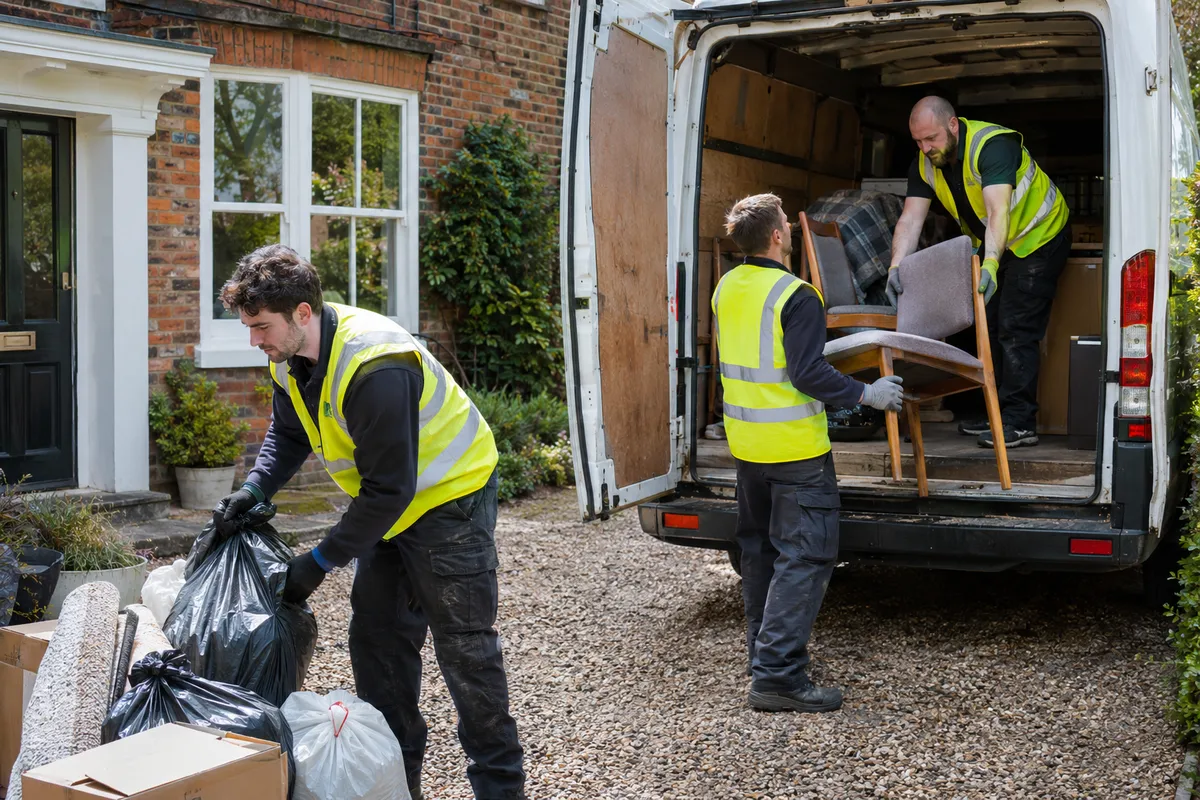
Loading information for the actual street
Camden Council publishes zone-specific parking information and distinguishes loading restrictions shown on street signage. We therefore ask about a workable loading position at your address rather than assume that any nearby space is available. Describe a private courtyard, managed service entrance or proposed public-road position, together with any gate or keyholder arrangement. We do not reproduce a single borough timetable as if it settled every Camden Town collection. The position must be considered alongside the route from the contents to the vehicle. A room near the front of a building can still have stairs or a shared passage between it and the loading point. Those practical details belong in the enquiry before the appointment and price are agreed.
| Question | Information to provide | Why we ask |
|---|---|---|
| Which entrance serves the items? | Residential doorway, shop entrance or service access | Avoid confusing parts of a shared address |
| Who confirms the removal list? | Occupier, manager or nominated contact | Keep retained contents outside the collection |
| Where could loading take place? | Actual available position and access controls | Connect the carrying route to the vehicle |
| Is extra work required? | Dismantling, attached fittings or disconnection needs | Discuss scope before treating it as included |
An example with separate household and business contents
Imagine a premises where an upstairs occupier wants a bed frame and several boxes removed while a business on the ground floor has unwanted shelving and packaging. This is a realistic enquiry example, not a completed Camden Town job. We would establish who authorises each part of the collection and whether the two groups use the same entrance. The bed frame, boxed contents and shop shelving would be listed separately, with any dismantling requirement explained. If only one occupier is making the enquiry, we would not assume that the other occupier’s contents are included. A shared address can make coordination useful, but the scope still needs to identify the actual items and the people responsible for confirming them.

Refurbishment leftovers and outdoor materials
Where a collection follows work at a property, describe the waste produced rather than simply calling it a room clearance. Timber, plasterboard, bagged rubble and old furniture can form different parts of the load. Garden cuttings or branches also need to be distinguished from soil, broken paving and outdoor furniture. We ask where these materials are located and whether they are bagged, bundled or loose. If a rear space is accessed through the occupied premises, include that route in the enquiry. Unknown containers or potentially hazardous substances must be raised before booking, not placed among ordinary rubbish for the team to identify while loading. We confirm the proposed contents and any restrictions before treating them as part of the collection.
From Camden Town enquiry to removal
01
Identify the occupier
Establish which part of the premises is included.
02
Separate the materials
List furniture, loose contents and equipment.
03
Confirm the route
Discuss the entrance, loading and complete quote.
04
Remove the agreed load
Our team carries, loads and takes away the specified items.
| Stage | Collection discussion | Result |
|---|---|---|
| Identify | Separate contents by occupier and material | A defined enquiry rather than an unspecified building clearance |
| Quote | Amount, carrying, supplements and additional work | Agree the complete price before work begins |
| Collect | Confirm which items are leaving | Carry and load the agreed contents |
| Take away | Responsible handling of the actual load | Reuse and recycling wherever possible |
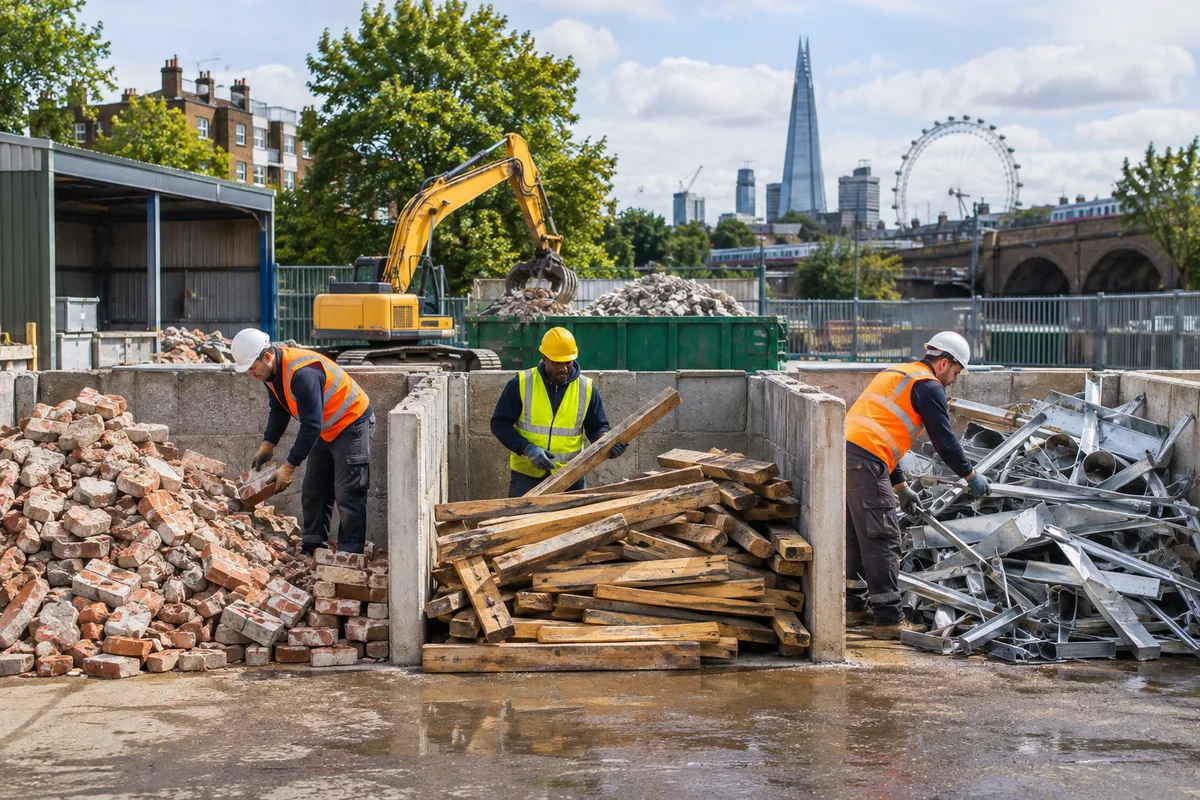
A complete quote and responsible removal
We discuss the amount, materials and carrying involved before work begins. The current collection price guide gives starting bands and applicable supplements; it is not a separate Camden Town tariff or a promise that every later addition is included. Tell us about mattresses, electrical items, heavy debris and additional work so the full quote can be discussed against the actual removal list. If the contents or access change, update us before the visit where possible. Once the agreed items have been carried and loaded, they are taken away for responsible handling, with reuse and recycling wherever possible. We do not claim that every piece will be reused or assign a made-up recycling percentage to a local collection. The service concerns the waste and work agreed, rather than unrelated repairs or cleaning.
See the current collection price guide, then confirm your complete quote with us. No separate Camden Town tariff is implied.
More London coverage near Camden Town
For London and M25 collection enquiries, see the coverage directory. We publish links only to available local pages. Give us your complete postcode to discuss the property; we do not use this map as a boundary or claim a local depot.
COLLECTION QUESTIONS
Camden Town removal enquiries: questions answered
Can one Camden Town enquiry cover two occupiers in the same building?
Describe each part separately and explain who authorises the removal. A shared address does not make another occupier’s belongings part of your collection. We need the item lists, entrances and a person able to confirm what is leaving before arranging the combined scope.
Do you collect shelves that still contain stock?
Explain whether the shelf is empty and identify the contents separately. Stock, packaging and the shelving unit are different parts of the enquiry. Tell us also whether the unit is freestanding or attached, since additional removal work must be discussed rather than assumed.
Can you remove selected furniture from a working Camden Town office?
Yes, describe the redundant pieces and distinguish them from equipment remaining in use. Include the floor, entrance and any managed loading arrangement. Electrical equipment and information-security requirements need to be named separately so the enquiry reflects the actual collection.
Does a space outside the building confirm the loading arrangement?
Not by itself. Tell us the proposed position and any restrictions or management controls affecting it. The route from the items to that position must also be described. We do not assume that an apparently empty public space is automatically suitable for the collection vehicle.
How should refurbishment waste be included with household items?
Name the materials and approximate amount separately from the furniture or household clutter. Rubble, timber and plasterboard should not disappear inside a general bag count. We discuss the complete mixed load and any restrictions before it is included in the quote.
Can I add another room after discussing the first collection list?
Tell us about the additional contents before the visit where possible. Another room can change the amount, materials and carrying involved. We discuss the revised scope and complete price rather than treating an earlier enquiry as permission for unlimited clearance.
All generated photographs on this page are illustrative service scenes. They do not document jobs in Camden Town.
Discuss your Camden Town collection
Call +44 20 3404 3985 with the collection postcode, item list and property details. We will discuss the scope, available arrangements and quote before work begins.
Services for your Camden Town enquiry
Furniture disposal · Rubbish collection · House and flat clearance