
LONDON & THE M25
Junk Removal
in Crystal Palace.
We arrange Crystal Palace collections from the actual building and load, with particular attention to the route between the contents and a loading point. Tell us about steps, gradients, stair turns and managed entrances where they apply. Our team carries and loads the agreed furniture and materials, with the complete price discussed before work begins. An enquiry can cover household rooms, storage or business contents, but every part needs identifying. Give the full postcode and actual entrance so the collection is tied to your property rather than a broad place name.
- Carrying and loading included
- A clear quote before work begins
- Licensed and insured waste carrier

THE CARRYING ROUTE
Planning the Crystal Palace carrying and loading
01
Locate the property
Give the postcode and actual entrance level.
02
Define the contents
Separate unwanted items and retained belongings.
03
Trace every route
Include internal stairs, external steps and store access.
04
Agree the complete collection
Confirm loading, accepted materials, work and price.
05
Carry and remove
We load the agreed waste for responsible handling.

The route may begin above or below street level
Croydon’s local plan describes Crystal Palace and Upper Norwood as settlements on hills, with the district centre focused around the Triangle and nearby borough boundaries. That is verified local context, not a claim that every property has steep access. Tell us what applies to your building: entrance steps, a sloping path, a lower-ground room or an upper-floor flat. We need the complete journey from the unwanted contents to the proposed loading point. A photograph of a door may not show stairs behind it or a garden path below the street. We discuss the actual route rather than infer easy carrying from proximity to the road. The postcode is important because the locality sits close to different borough areas, and street or private-access conditions should be checked for the correct address.
Describe the bulky object against every turn
For a sofa, wardrobe, cabinet or bed, give dimensions where a doorway, landing or stair turn looks close. Our furniture disposal service concerns the agreed pieces in their actual form. Tell us whether furniture is assembled, already separated, freestanding or fixed, and mention glass, damage or loose panels. Requested dismantling needs discussion before the quote. Removing fitted joinery is not automatically ordinary lifting. If a lift is available, explain suitability and any building arrangement rather than assume every item may use it. We carry the agreed contents, so you can describe furniture in its current room without moving it onto a stair or into a shared hall first. The enquiry should establish the whole route, including any steps outside the building, rather than only the internal floor level.
ADDRESS & LOADING
A flat clearance can be limited to the unwanted contents
Through domestic clearance, we can discuss selected items, particular rooms or a wider agreed load. Distinguish the contents leaving from landlord furniture, retained belongings or pieces reserved for someone else. Check drawers and shelves before the agreed furniture is removed. If another person attends, give them the same list and ensure they can open every included storage location. We do not decide that an object is unwanted because it looks old or stands beside rubbish. Explain ownership clearly where a building is shared by several occupiers. A separate store, garden or lower-ground room should be named rather than assumed within a general flat description. The quote needs the contents and carrying involved in those places, not simply the number of rooms in the postal address.
- Explain any entrance above or below street level
- Include external steps as well as the flat floor
- Describe lower-ground stores independently from upstairs rooms
- Use the full postcode for the correct local loading checks
- Name garden material and electrical equipment outside general household boxes
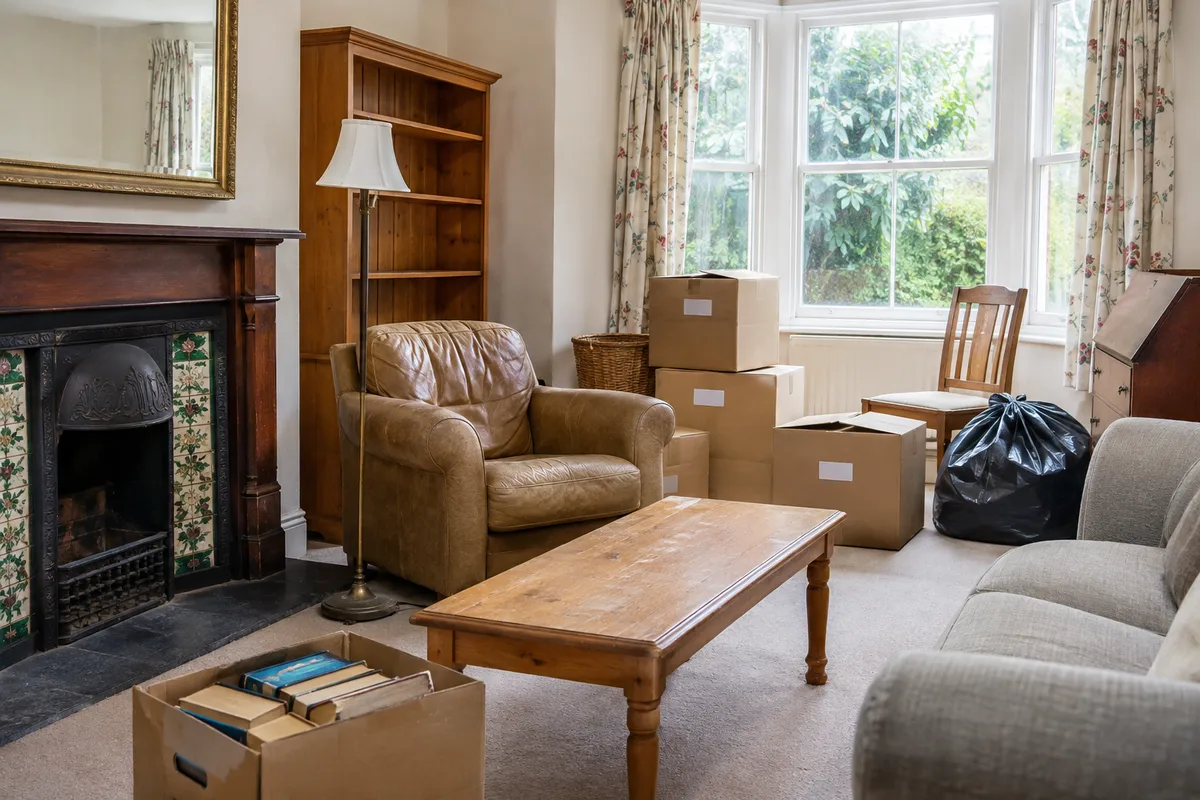
| Feature | Describe | Why include it |
|---|---|---|
| External approach | Steps, gradient or lower-ground path | The route starts beyond the front door |
| Internal stairs | Floor, turns and bulky-item dimensions | Furniture carrying can be discussed |
| Separate store | Level, keyholder and contents | The second location is explicit |
| Loading proposal | Street authority or private-entry contact | Relevant conditions can be checked |
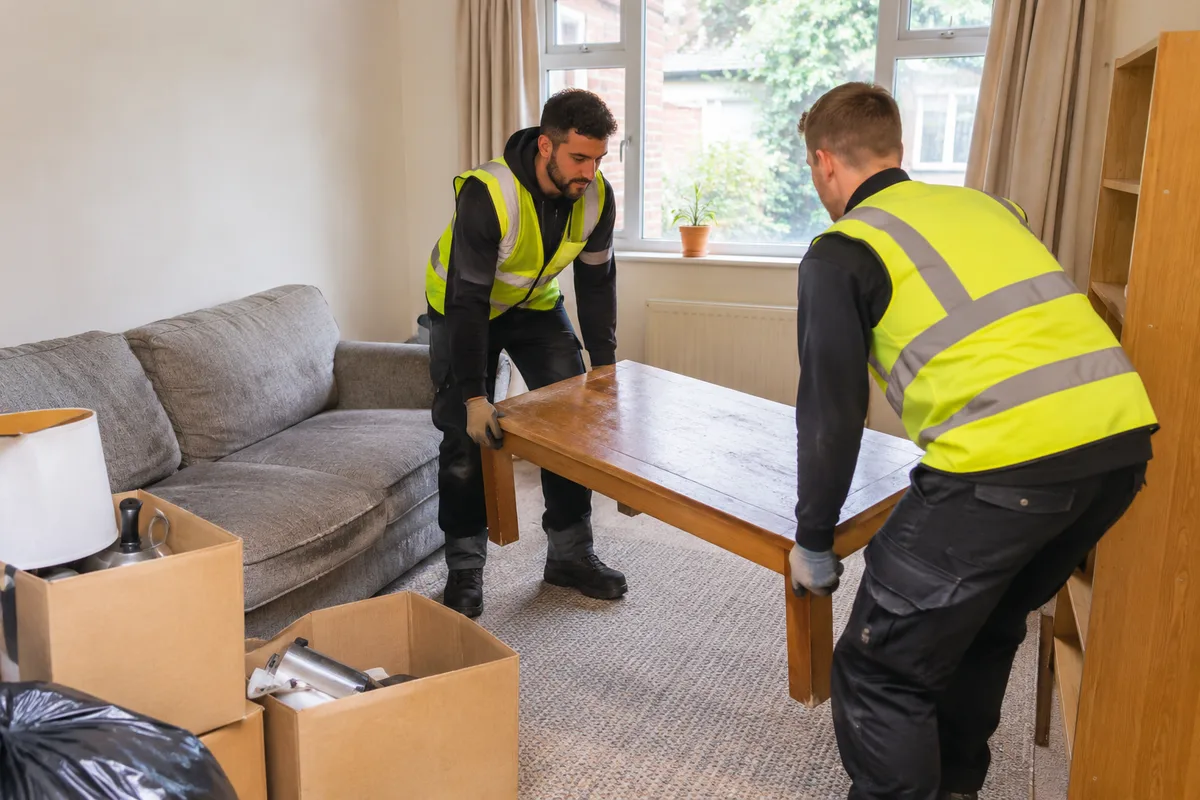
Illustration: a lower-ground store and an upstairs sofa
Imagine a Crystal Palace household replacing a sofa in an upstairs flat and clearing household cartons from a separately locked lower-ground store. This is an illustrative enquiry rather than a claim about completed work. We would ask about the sofa’s dimensions, the internal stair turn and the steps connecting the store to the exit. The two locations might follow different routes. Carton contents also need describing: an old monitor is not ordinary paperwork, and repair rubble should not be hidden in a household box count. A retained cabinet in the store remains outside the removal list. Once the contents and access are clear, we can discuss a complete quote and available appointment. If garden bags are added later, their materials and route need including before relying on the earlier arrangement.
Mixed material is identified before collection day
A collection spread between levels needs an inventory for each starting point. Put the electrical equipment on the list for the room where it actually stands: a printer in the flat is a different carrying task from an appliance in the lower store. For an appliance, tell us what is still connected or enclosed by cabinetry so we can establish the requested work. Repair leftovers need equally useful labels. Show which containers hold broken tiles, which contain lightweight packaging and whether any timber or plasterboard remains loose. We use those distinctions when discussing acceptance and the complete collection. Please identify an uncertain container before it is mixed with known waste. We need to resolve what it contains, rather than treat the fact that it fits inside a box as evidence that it belongs in an ordinary household load.
| Contents | Useful detail | Relevant service |
|---|---|---|
| Sofa and cabinet | Size, form and damaged components | Furniture disposal |
| Store cartons | Actual contents and quantity | Rubbish collection |
| Repair debris | Tiles, rubble, timber or plasterboard | Builders clearance |
| Outdoor material | Green cuttings versus soil and furniture | Garden collection |
Outdoor contents can introduce another level or gate
For outside contents, describe the changes in level in the order we would encounter them. A bag beside a garden door, branches below a flight of steps and an old table behind a lower gate should each have a named position. We can discuss those groups together, but their routes should remain intelligible. Separate the green material from soil and broken paving when listing the contents; an outdoor location does not describe the substance. Explain whether a piece must be carried through an occupied room on the way out. Any work needed to create the waste, such as cutting vegetation or taking a structure apart, requires its own discussion. Our collection assessment concerns the unwanted contents identified and the carrying needed to remove them, rather than an undefined garden project extending across the plot.

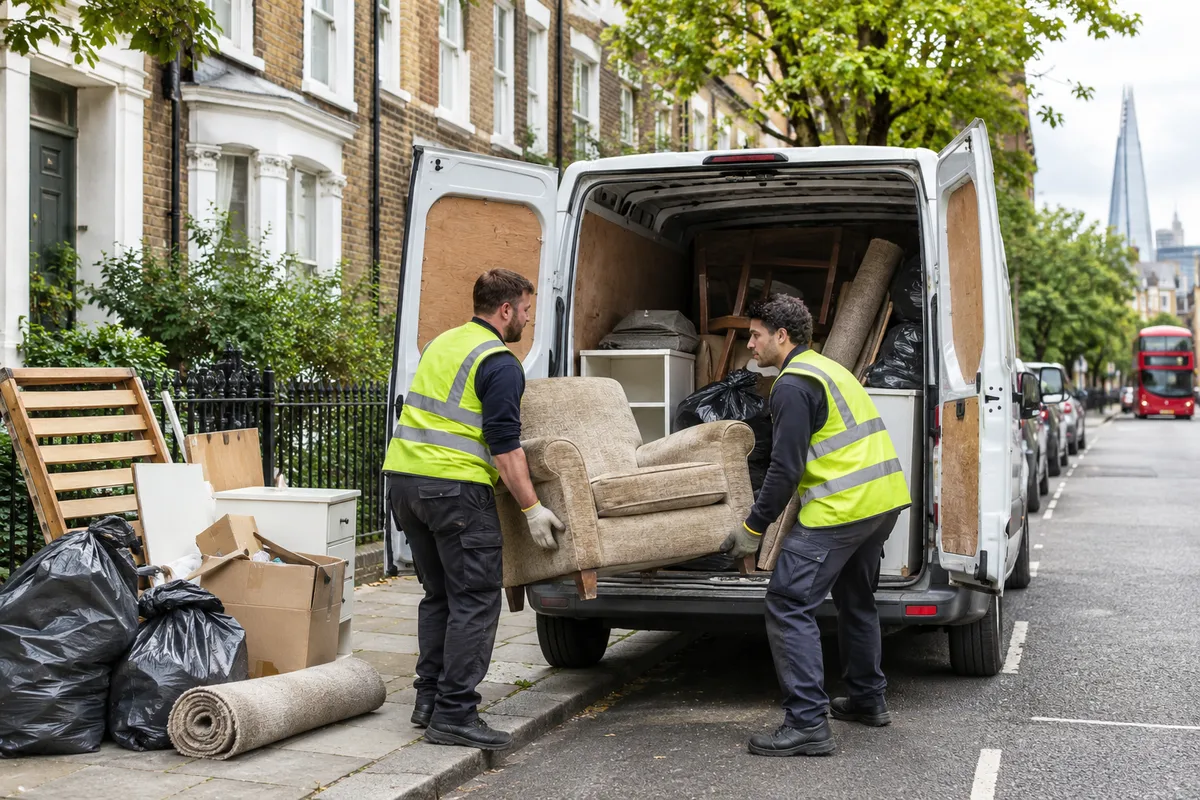
The right authority and private contact matter for loading
Give the specific loading proposal and explain how it connects to the building. Public-road restrictions need checking at the actual address and with the relevant authority; private courts and service areas may have separate management conditions. The cross-borough setting around Crystal Palace is a reason to use the full postcode rather than assume one council rule. Tell us about barriers, managed entrances and anyone controlling entry before booking. Croydon Council’s parking information is an official reference where its authority applies, with location signs still important. An empty bay or customer parking area does not automatically establish use for our vehicle. We discuss current availability and access without inventing arrival times, driving routes or a universal loading exemption for the locality.
See the current collection price guide, then confirm your complete quote with us. No separate Crystal Palace tariff is implied.
| Point | Confirm | Avoid assuming |
|---|---|---|
| Authority | Who may approve removal | Every object in a shared store leaves |
| Additional work | Dismantling or fitted-item request | All joinery work is included |
| Complete quote | Every location and material | An upstairs photo covers a lower-ground load |
| Appointment | Current availability and access | Local coverage guarantees immediate arrival |
The full quote sets out the removal, not unrelated work
We bring the level changes back into the price discussion so the quote describes the real job. The price guide gives our published bands and item supplements; your complete collection needs a list of the accepted contents and the work from each position. Confirm whether the lower store, flat rooms and outdoor bags all belong to the same proposed visit. If one part is undecided, tell us before booking instead of leaving its inclusion to the person meeting the team. We check an available appointment against that agreed scope. On removal, we carry and load the specified material for responsible onward handling, pursuing reuse and recycling where suitable. An unknown destination for an individual old cabinet should not be turned into a guaranteed reuse claim. Other property work, cleaning or repairs should have a separate explicit scope.

LOCAL COLLECTION AREA
Where we collect in Crystal Palace
Crystal Palace is a Greater London locality close to several borough boundaries. The marker provides neighbourhood orientation and does not represent a depot or define service limits. Give the exact postcode and entrance for your enquiry. South Norwood and Streatham are nearby named areas, with collection access and availability confirmed for the actual job.
Nearby collection areas: South Norwood · Streatham · Croydon
Our London and M25 coverage is described on the Areas We Cover page. The local information here concerns the collection enquiry; it does not create a separate neighbourhood branch.

Greater London reference outline: GLA / OS Open Data (OGL). Location: GeoNames UK gazetteer. This is an orientation map, not a service boundary or branch address.
COLLECTION QUESTIONS
Crystal Palace removal enquiries: questions answered
Can you collect from a Crystal Palace property with entrance steps?
Describe the steps, gradient and route from the contents to the loading point. Include internal stairs as well as the external approach. We discuss the actual carrying work rather than infer access from the door’s distance to the road or from the locality’s hillside context alone.
Can an upstairs sofa and lower-ground store share a collection?
List both locations and explain their separate routes. We need the sofa dimensions, stair turns and store keyholder, plus a description of stored contents. The complete quote should cover both carrying tasks rather than use a photograph of the flat to represent an unseen lower-ground load.
Does the Crystal Palace place name identify the parking authority?
Give the complete address and the actual place proposed for loading. Crystal Palace’s cross-borough setting means a locality label alone is insufficient to identify the relevant road controls. Explain private gates or managed entry separately from public-road access. We need the collection route to connect to a position whose conditions have been checked, rather than assume the nearest open space is available to the vehicle.
Can garden material be collected from a different level?
Describe the garden position in relation to the property entrance: above it, below it or reached by a separate gate. Include the individual steps and narrow points that affect the proposed contents. A route suitable for bags may need a different assessment for a table. We also need a material breakdown so soil, paving and green waste are not mistaken for one another.
Will you take apart a fitted cabinet to get it down the stairs?
Tell us the cabinet is fitted and describe the additional work requested. Removing joinery is different from carrying a freestanding item, and the task must be discussed explicitly before the quote. Give dimensions and identify glass or damaged parts so the actual object and route are understood.
What if more cartons are found in the store after the first quote?
Tell us their contents and approximate quantity before the visit where possible. Name electronic equipment, building material and unknown substances separately from ordinary household contents. We review the full scope before loading rather than assume an earlier list automatically covers every later discovery.
All generated photographs on this page are illustrative service scenes. They do not document jobs in Crystal Palace.
Discuss your Crystal Palace collection
Call +44 20 3404 3985 with the collection postcode, item list and property details. We will discuss the scope, available arrangements and quote before work begins.
Services for your Crystal Palace enquiry
Furniture disposal · Rubbish collection · House and flat clearance