
LONDON & THE M25
Junk Removal
in East Sheen.
We arrange East Sheen collections by defining the unwanted furniture, loose contents and equipment. The enquiry also establishes the building entrance and carrying route, so the quote follows the actual load and work.
- Carrying and loading included
- A clear quote before work begins
- Licensed and insured waste carrier
SPACES, ITEMS AND MATERIALS
Clearance services for East Sheen properties
An East Sheen address needs the actual building identified
Richmond’s East Sheen guidance describes Upper Richmond Road West as a high street with retail and commercial uses alongside houses and mansion blocks, including shopfronts at ground level. That verified mix makes the actual premises essential to our enquiry. Tell us whether the contents are in a shop backroom, an upper flat or a house, and give the full postcode. Identify the entrance serving the load rather than assume the public frontage is the collection route. A shared address can contain different occupiers whose belongings and access must stay distinct. Tell us who can confirm the agreed list and any managed entry. We discuss the route from the contents to a proposed loading point without inventing frontage permission, a local timetable or universal access rules. The building and load provide practical detail beyond the area name.
- Identify the actual occupier within a mixed-use address
- Describe the residential or business entrance serving the load
- Name furniture assembly and any tight carrying route
- Keep loose storage material separate from the unit
- Explain the material inside garden and refurbishment sacks

Generated service illustrations show typical collection tasks, not documented local jobs.
| Premises | Load to identify | Decision to confirm |
|---|---|---|
| Flat above business space | Furniture and household boxes | Separate occupier and entrance |
| House | Selected room and outdoor groups | Retained belongings |
| Shop backroom | Movable displays and packaging | Stock and fixed fittings |
| Office | Redundant furniture and named devices | Working equipment and security requirements |
Household removal can be selective even across several rooms
An East Sheen home enquiry can be built around several small decisions rather than a blanket room clearance. Tell us the old seating that is leaving, the boxes that are unwanted and the cupboard that remains. If the cupboard’s contents also leave, make that another group. The list should distinguish belongings being retained by the household, a landlord or another occupier. Where an agent or relative handles access, confirm the choices beforehand so the person meeting us can recognise the agreed items. We do not decide which personal possessions someone intends to save. Photographs help establish the amount, but written details should cover hidden storage and material in separate rooms. This gives the quote a defined set of contents and locations without treating the whole property as available for unlimited removal.
Bulky pieces require assembly and route details together
For East Sheen furniture removal, explain the obstacle, if any, between the piece and its exit. A large table may need a discussion about its legs, while a sofa may face a turn in a communal hallway. Give useful dimensions and show the relevant doorway or corner, not only the object in the room. State whether the piece has already been dismantled, is assembled or remains attached to the building. We discuss any further work before the visit. Mattresses should be listed independently of frames, with the quantity and floor clear. For a flat, explain stairs or the lift arrangement actually available for these pieces. The enquiry should connect every bulky group to its practical route, rather than assume that a photograph of one accessible item describes the rest.
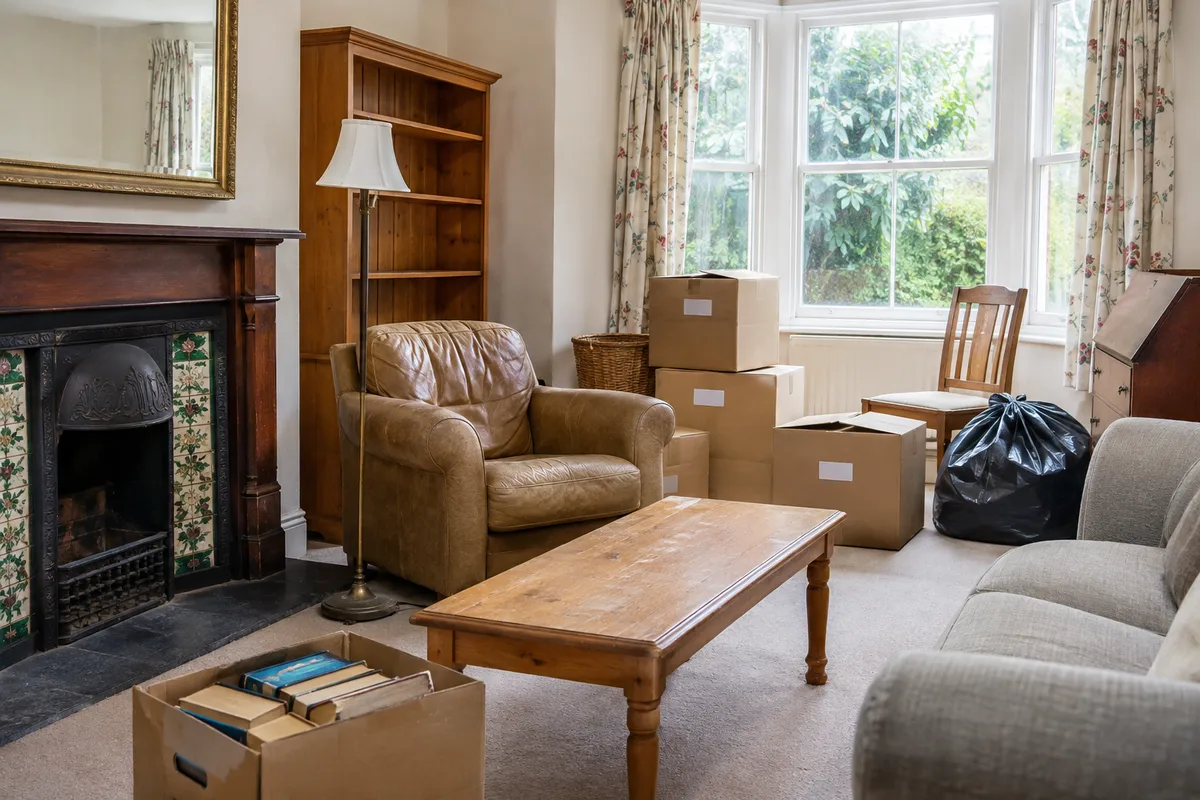
Loose storage contents need their own material description
A storage clear-out in East Sheen is easier to discuss when the loose material is identified before furniture is counted. Tell us whether boxes contain books, household belongings, electrical devices or another significant material. Give approximate quantities and indicate any particularly dense group. Then say whether the shelves and cabinets themselves leave or stay. Retained documents and possessions should be separated from waste so the person confirming collection can follow the list without new decisions. If material behind the visible stack is also included, mention it even when it cannot yet be photographed clearly. We need the complete amount for the enquiry, not an assumption that opening a cupboard later brings unlimited additional contents into the quote. The household keeps responsibility for retention choices while we discuss removal of the material it has released.

Shop and office enquiries separate redundant contents from the premises
An East Sheen business collection needs a distinction between movable contents and alterations to the premises. In the commercial enquiry, name redundant desks, seating, display units and packaging, then explain whether any item remains fixed or connected. The condition of a display determines what work needs discussing; its presence on the shop floor does not make it equivalent to a loose chair. Identify saleable stock and operational equipment staying, with a manager able to confirm the selection. Describe electronics individually and raise security requirements as a separate matter, since ordinary removal does not supply certified data destruction. If cupboards still hold waste, include that loose material independently. We agree a release list and carrying task, rather than infer a full strip-out, electrical work or acceptance of every substance stored in the backroom.

Outdoor and renovation material should not hide behind a bag count
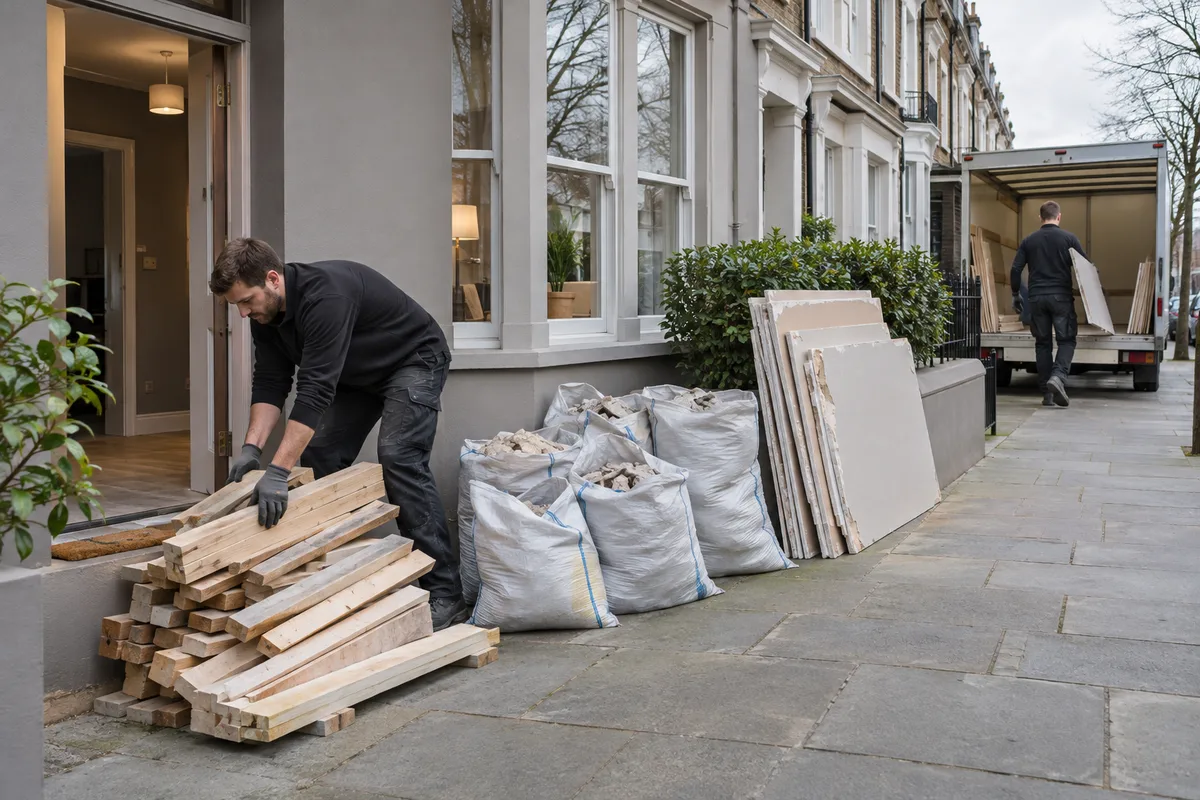
For East Sheen refurbishment loads, tell us what is inside the sacks before using their number as the estimate. Rubble, timber, plasterboard and packaging should remain distinguishable, with approximate quantities and current positions. Furniture being replaced can join the enquiry as its own group. Outdoor material also needs an actual description through the garden enquiry: cuttings are different from paving, soil, fencing or redundant furniture. Explain any dense group hidden underneath the photographed surface and whether it has a separate route to the exit. A shed’s contents should not silently include taking down the structure. Unknown containers need clarification before acceptance can be settled. We discuss the identified waste and carrying, with gardening, demolition or other property work raised independently rather than inferred from the origin of the material.
Choose the right collection for East Sheen
| Detail | What to explain | Purpose |
|---|---|---|
| Piece and quantity | Sofa, frame, mattress or cabinet | Defines bulky contents |
| Assembly | Assembled, in sections or fixed | Additional work discussion |
| Location | Room and floor | Carrying start |
| Exit | Doors, stairs, lift or shared passage | Practical removal route |
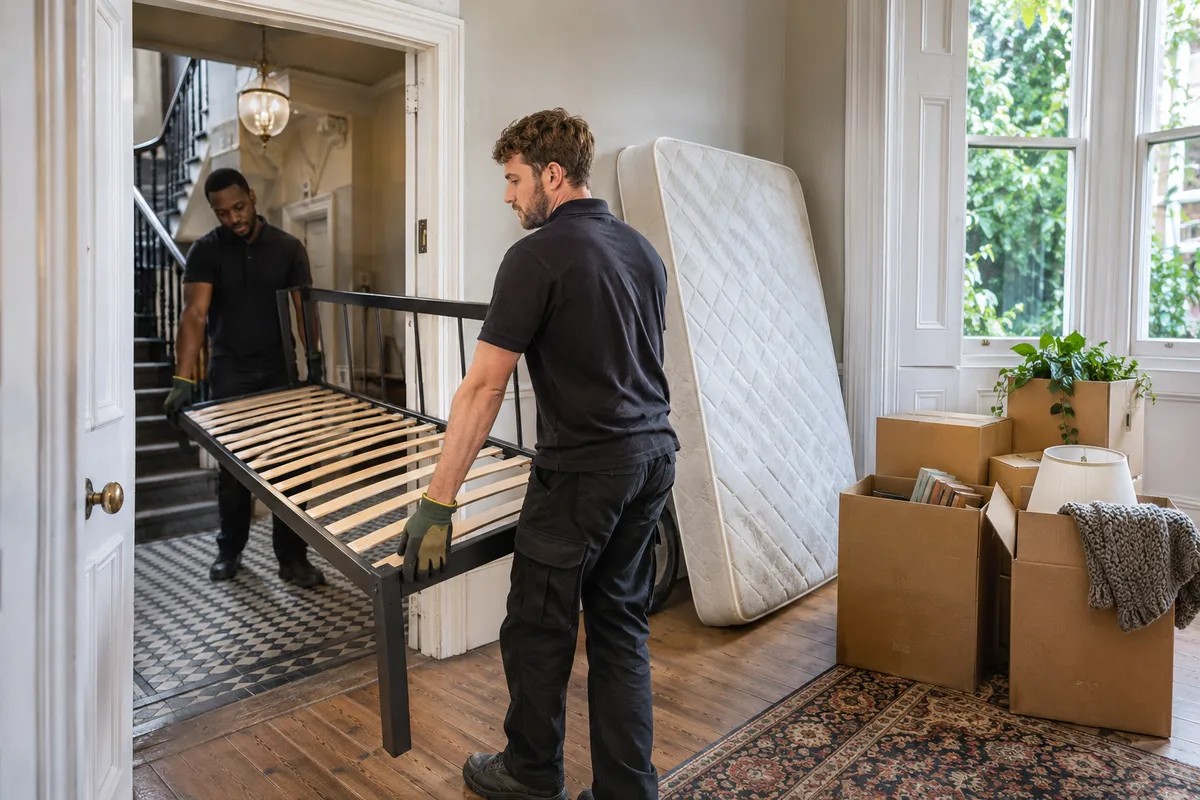
An illustrative upper-flat furniture and storage enquiry
Imagine an East Sheen resident replacing a sofa and clearing boxes from a flat above commercial premises. This is an illustrative enquiry, not a completed local job. We would identify the sofa, describe the boxes and confirm which furniture stays. We would ask about assembly, room and floor, the residential entrance and any stairs or usable lift. A shared address would not make the business’s contents part of the household removal. The proposed loading position would be discussed rather than assumed from the shopfront below. If a mattress is added, it needs its own description; an appliance also needs its name and connection status. We would discuss the complete load, carrying and price before the visit. Several groups can share an enquiry without turning a selective flat collection into unlimited removal or implying access through an unagreed route.
| Factor | Information needed | Discussion |
|---|---|---|
| Loose load | All boxes and cupboard contents | Complete amount |
| Material | Named equipment and dense debris | Acceptance and supplements |
| Access | Actual entrance and loading point | Carrying arrangement |
| Changes | Added items or altered route | Revised full price |
A complete quote and honest recovery expectations
For an East Sheen price discussion, use the current guide alongside a complete list that reflects what the team will actually encounter. Include material hidden in storage, named appliances or mattresses, dense waste and extra work you want discussed. Tell us the location and carrying route for each significant group. We do not assign an unlimited clearance allowance to a flat or room name. If more contents are released before the visit, send the revised information where possible and discuss the full price before loading. Availability is confirmed as part of arranging collection. We remove the agreed load for responsible handling, seeking suitable reuse and recycling without promising an outcome for every object or a fictional recovery percentage. Cleaning, repairs and work on retained parts of the property are further requirements to define separately.
See the current collection price guide, then confirm your complete quote with us. No separate East Sheen tariff is implied.
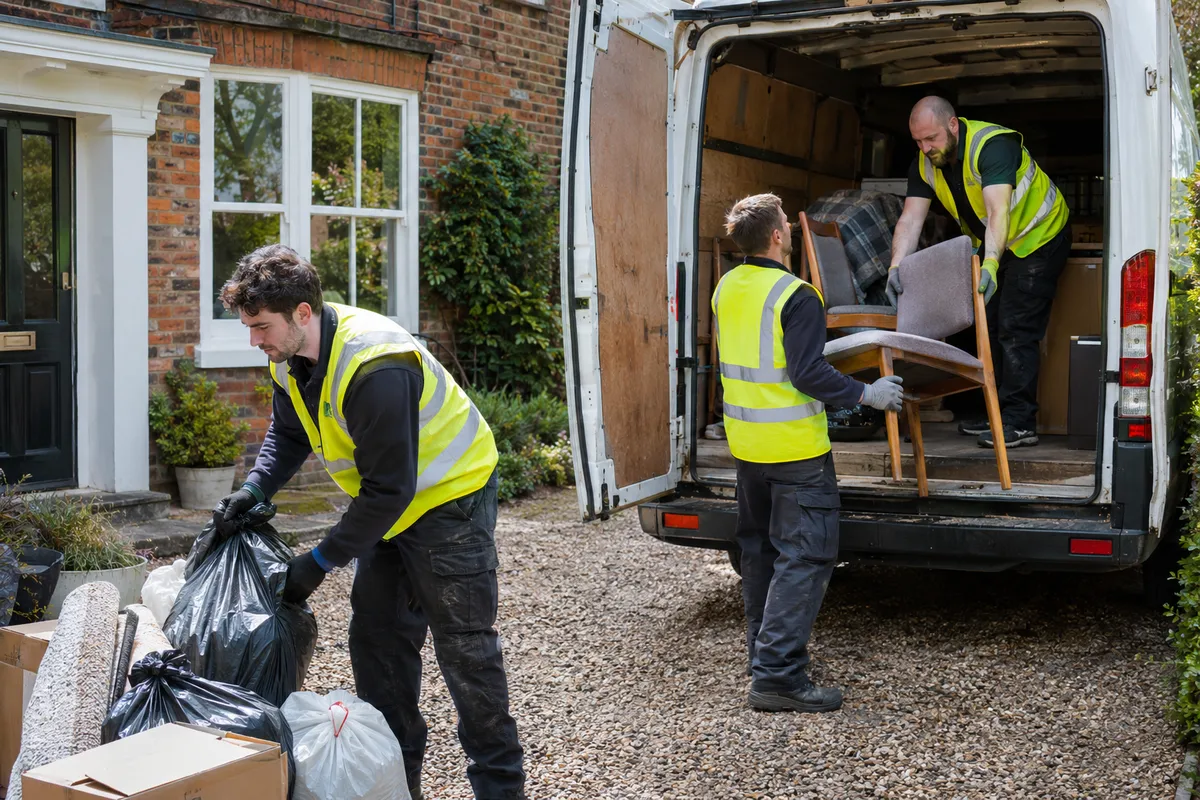
East Sheen: from item list to removal
01
Identify the premises
Confirm occupier, spaces and retained contents.
02
Describe the load
Separate furniture, loose groups and equipment.
03
Agree access and quote
Discuss entrance, loading and availability.
04
Carry and take away
We remove the agreed contents responsibly.
LOCAL COLLECTION AREA
Where we collect in East Sheen
East Sheen collections are discussed from the full postcode and actual premises access. The marker identifies the locality for orientation, not a depot or a loading permission. Explain the contents, occupier and entrance for your address.
Nearby collection areas: Mortlake · Barnes · Richmond
Our London and M25 coverage is described on the Areas We Cover page. The local information here concerns the collection enquiry; it does not create a separate neighbourhood branch.

Greater London reference outline: GLA / OS Open Data (OGL). Location: GeoNames UK gazetteer. This is an orientation map, not a service boundary or branch address.
COLLECTION QUESTIONS
East Sheen removal enquiries: questions answered
Can a flat collection be arranged separately from the business below?
Yes. Identify the household contents and residential entrance, with the floor and route out. A shared postal address does not make another occupier’s belongings part of your collection. We discuss the actual premises and authorised removal list.
What if the shopfront is not the entrance used by my contents?
Give the door or gate serving the rooms and explain the route to the proposed loading point. Mention any contact controlling access. We do not assume the public frontage is the collection entrance simply because it appears in the address.
Can selected furniture leave while the flat remains occupied?
Name the pieces leaving and identify furniture and possessions staying nearby. Add loose contents separately and explain the route out. We discuss that defined collection rather than assume the whole flat is being emptied because a sofa or bed is replaced.
How should a retained cabinet with unwanted contents be listed?
State that the unit stays and describe the loose material with an approximate quantity and significant contents. Keep retained documents and possessions separate. The removal list should distinguish emptying selected storage from collecting the furniture itself.
Can a business include attached displays in its furniture estimate?
Explain the attachment or connection before booking. Fixed fittings need a different work description from detached furniture. We discuss additional requirements explicitly rather than infer strip-out or electrical work from ordinary carrying and loading.
What happens if heavy rubble is added to a household enquiry?
Update us before the visit where possible, naming the material and approximate amount separately from furniture. We discuss acceptance, carrying and any change to the full quote before inclusion. Dense debris should not disappear into an estimate of ordinary household bags.
All generated photographs on this page are illustrative service scenes. They do not document jobs in East Sheen.
Discuss your East Sheen collection
Call +44 20 3404 3985 with the collection postcode, item list and property details. We will discuss the scope, available arrangements and quote before work begins.
Services for your East Sheen enquiry
Furniture disposal · Rubbish collection · House and flat clearance