
LONDON & THE M25
Junk Removal
in Finsbury Park.
Our Finsbury Park collections bring the unwanted contents of rooms, storage areas and business premises into a defined removal list. We discuss the material groups, their location and the person confirming the load before agreeing the carrying, loading and complete quote.
- Carrying and loading included
- A clear quote before work begins
- Licensed and insured waste carrier

COVERAGE & CONTENTS
Finsbury Park coverage and material groups
Our London service includes Finsbury Park. The locality map is for orientation and does not identify a branch, station collection point or a company depot. Give us the complete collection postcode and the entrance serving your contents to discuss the actual visit.

Greater London reference outline: GLA / OS Open Data (OGL). Location: GeoNames UK gazetteer. This is an orientation map, not a service boundary or branch address.
A clear list when only part of the contents is leaving
A property can be ready for a collection while still containing belongings that must remain. We establish that distinction at the start of a Finsbury Park enquiry. Identify the furniture, bags and other items that are unwanted, and describe the retained contents separately where they could be confused. A collection for selected pieces is different from an instruction to empty every room. Tell us who will be able to confirm the removal list at the visit, particularly if the person making the enquiry will not be there. We use the actual contents to discuss the job rather than assume that all objects left in one corner, cupboard or room belong to the collection.
Home contents
Business waste
Outdoor materials
- List the unwanted contents rather than only the room name
- Identify the person confirming the collection on site
- Describe stored belongings separately from the furniture
- Give the full postcode and correct property entrance
- Name electrical, dense or unidentified materials in advance

One locality name, an exact collection address
The council’s Finsbury Park development framework places the town centre where Islington, Haringey and Hackney meet. For our service, that makes the full collection address more useful than a station-area label alone. Give us the postcode and entrance serving the contents, including any different route to a rear store or upstairs premises. We do not apply one assumed borough parking arrangement to every address described as Finsbury Park. The practical loading position and route through the building need their own discussion. Our coverage is a London collection service, not a claim to operate a separate branch at the station or at the point shown on the area map.
| Description | Detail we establish | Collection boundary |
|---|---|---|
| Wardrobe or cabinet | Empty unit or furniture with contents | Loose belongings are discussed separately |
| Boxes and bags | Main material and approximate amount | No assumption based only on container count |
| Retained pieces | Which items must stay | Selective removal rather than a blanket room clearance |
| Nominated contact | Who can confirm the agreed contents | The visit follows a clear removal list |
Furniture and stored belongings are separate parts of the load
If furniture is being removed, tell us whether it is empty or still contains loose belongings. A wardrobe with clothing, a cabinet holding equipment and a box of household clutter need a fuller description than the name of the furniture alone. We ask about bulky pieces by type and approximate size, with their assembled condition and room location. Dismantling or removing fitted storage should be raised explicitly rather than inferred from ordinary carrying and loading. If an item cannot leave through the available doorway as it stands, include that issue before the visit. The agreed scope should explain both what is leaving and any additional work needed to get it out.


Count the materials as well as the containers
Bags and boxes help describe the amount, but they do not identify everything inside a mixed collection. Tell us if household rubbish includes electrical equipment, dense debris or unusual containers. Name mattresses, appliances and screens separately from the furniture. Where a room change or refurbishment has produced timber, plasterboard or rubble, identify those materials instead of treat them as ordinary household sacks. Potentially hazardous substances or unidentified liquids must be raised before booking so that acceptance and restrictions can be discussed. We establish the proposed load before the collection; we do not assume that a general waste enquiry authorises every material discovered while the team is loading.

An example where the nominated contact matters
Imagine a Finsbury Park flat where a householder has arranged removal of a wardrobe, two chairs and boxed unwanted belongings, but another person will meet the team. This is an illustrative situation, not a completed local collection. We would establish the full item list and make clear what the person at the property can confirm. The wardrobe’s contents would need a separate description if they are also leaving, and retained belongings would remain outside the agreement. We would discuss the floor, doorway route and loading position alongside those contents. If the person meeting the team identifies additional furniture, that change would need to be included in the collection and quote discussion rather than treated as automatically covered.
| Material group | What to name | Applicable service |
|---|---|---|
| Household belongings | Furniture, loose contents and specific bulky items | House and flat clearance |
| Electrical equipment | Appliances, screens or other devices individually | Electrical waste |
| Business contents | Displays, stock, furniture and packaging separately | Shop clearance |
| Garden material | Cuttings versus soil, paving or timber | Garden waste collection |
Business material can be grouped without losing detail
For a workplace or retail enquiry, identify desks, seating, freestanding displays, packaging and redundant stock as distinct groups. Tell us which equipment stays in use and whether someone manages access to the premises or loading area. An attached shop fitting needs a different discussion from a movable shelf, while electrical equipment must be named rather than hidden under office furniture. Any specialist information-security requirement should also be raised separately; ordinary clearance does not itself establish certified data destruction. We carry and load the agreed contents, so the enquiry needs enough detail to distinguish waste being removed from the stock, equipment and fittings supporting the business that continues to operate.

Outdoor contents need a location and material description
If the collection also includes garden material, explain what is present and where it is stored. Branches, cuttings and bagged green waste differ from soil, paving, timber furniture or renovation rubble. Name the groups separately and describe any gate or passage between the outdoor space and the loading point. A small pile may still have a carrying route through an occupied property, and that information belongs in the enquiry. We discuss the removal of the identified waste rather than assume it includes gardening, pruning or other maintenance. When outdoor contents are added to indoor furniture or business material, the complete quote should reflect the combined scope before the visit is treated as agreed.
From Finsbury Park enquiry to removal
01
Name the unwanted groups
Identify specific furniture and loose contents.
02
Nominate the contact
Establish who confirms the agreed list on site.
03
Discuss the practical visit
Settle access, loading and the complete collection quote.
04
Remove the defined load
We carry and load the specified items for onward handling.
| Point | Information to discuss | Result |
|---|---|---|
| Actual address | Postcode and entrance serving the contents | The right premises are identified |
| Carrying route | Floor, shared access and bulky-item limitations | The removal work can be understood |
| Load changes | Extra furniture or different material groups | The complete scope and quote are updated |
| Onward handling | The materials agreed for collection | Responsible removal with reuse and recycling wherever possible |
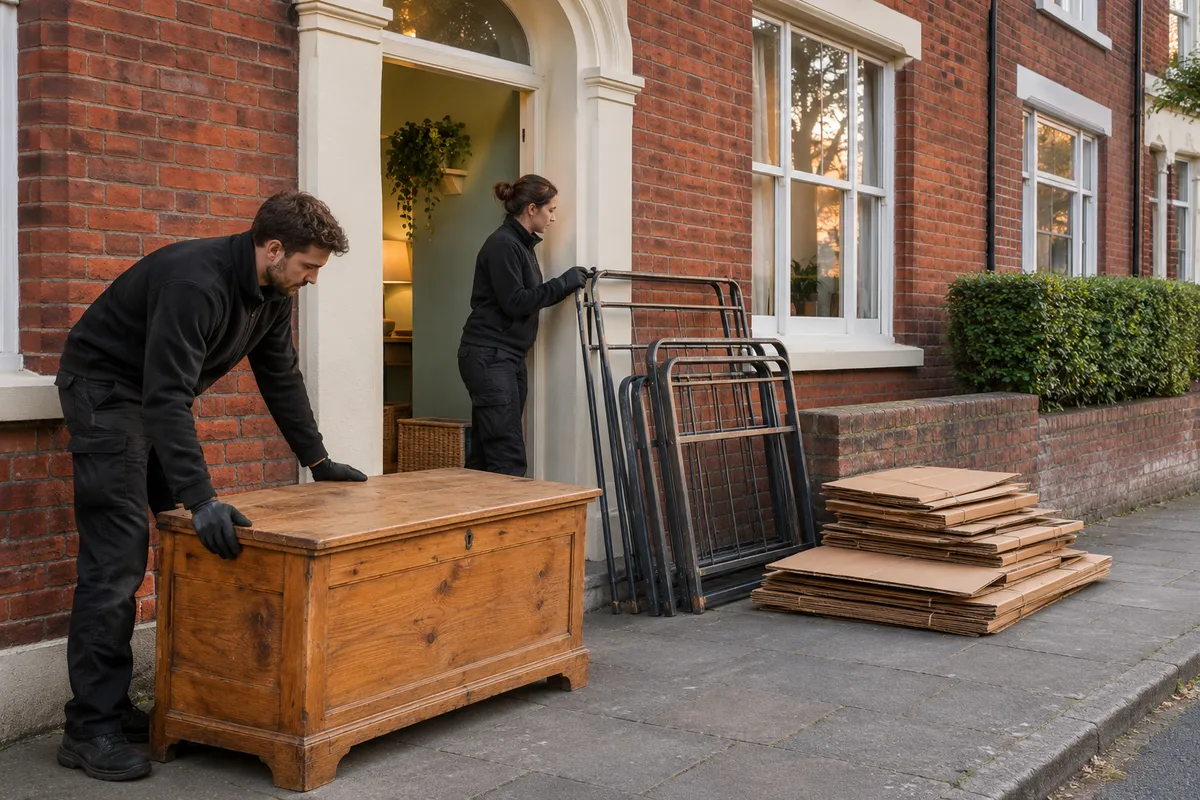
Agreeing the amount, work and onward handling
The collection price is discussed using the actual amount, material types and work involved. Our current guide sets out starting bands and applicable supplements; the locality name does not create a separate Finsbury Park tariff. Explain the carrying route, possible loading position and any extra work, with specific items such as mattresses or electrical equipment named in the enquiry. Tell us about changes before the visit where possible so the quote can remain aligned with the load. Once the agreed contents are carried and loaded, we take them away for responsible handling, aiming for reuse and recycling wherever possible. We do not promise that every piece has the same destination or publish an unsupported recovery percentage for an individual collection.
See the current collection price guide, then confirm your complete quote with us. No separate Finsbury Park tariff is implied.
More London coverage near Finsbury Park
For London and M25 collection enquiries, see the coverage directory. We publish links only to available local pages. Give us your complete postcode to discuss the property; we do not use this map as a boundary or claim a local depot.
COLLECTION QUESTIONS
Finsbury Park removal enquiries: questions answered
Can another person meet your team for my Finsbury Park collection?
Tell us who will be there and ensure the agreed removal list is clear to them. We need to distinguish the specified unwanted contents from belongings staying at the property. Additional items identified during the visit still need to be discussed as changes to the scope.
Does a request to clear a wardrobe include its stored contents?
Describe the contents separately from the furniture. An empty unit and one containing unwanted belongings are different enquiries. Identify also anything being retained so the collection is not based on an assumption that everything inside or beside the wardrobe is leaving.
Is the station-area description enough to arrange the visit?
Give the complete postcode, entrance and property details. The Finsbury Park name does not identify the exact premises, floor or loading arrangement. We organise the collection around the actual address and contents rather than a broad landmark description.
What if I have the same number of bags but the contents change?
Tell us about the changed materials. Dense debris, electrical equipment and light household clutter represent different loads even when the container count stays the same. The description and complete quote need to reflect what is actually being collected.
Can a retail collection include only the unwanted displays?
Yes, identify the specific displays and distinguish them from stock, equipment and fittings remaining in use. Tell us whether the pieces are freestanding or attached. We discuss a defined commercial removal rather than assume that the request authorises a full shop strip-out.
Will outdoor waste automatically use the same route as the furniture?
Explain where the outdoor contents are stored and how they are reached. A gate, passage or route through the premises can create a different carrying task. We discuss both parts of the load rather than assume the indoor furniture route covers the whole collection.
All generated photographs on this page are illustrative service scenes. They do not document jobs in Finsbury Park.
Discuss your Finsbury Park collection
Call +44 20 3404 3985 with the collection postcode, item list and property details. We will discuss the scope, available arrangements and quote before work begins.
Services for your Finsbury Park enquiry
Furniture disposal · Rubbish collection · House and flat clearance