
LONDON & THE M25
Junk Removal
in Hammersmith.
We arrange Hammersmith collections for defined loads from workplaces and homes. We identify the furniture, loose contents and equipment leaving, then discuss the premises entrance, carrying route and loading before agreeing the visit.
- Carrying and loading included
- A clear quote before work begins
- Licensed and insured waste carrier
SPACES, ITEMS AND MATERIALS
Clearance services for Hammersmith properties
Office contents need a release decision before removal
For a Hammersmith office collection, identify the redundant assets before asking the team to enter the workplace. A seating replacement may release chairs while the desks and computers remain in service. A cabinet may be unwanted but still hold active files. Describe those decisions separately so the list reflects what the business is ready to discard. The person confirming the visit should know which pieces and loose contents are included, not simply provide access to a room. Photographs establish quantity and condition, while notes explain retained material that appears among the proposed load. Tell us if anything is fixed or connected. We discuss collection around the items released by the business, rather than infer alterations, disconnection or a complete office emptying from the fact that some furniture has become redundant.
- Identify workstations and equipment staying operational
- Describe cabinets as empty or with loose contents included
- Name devices independently of their packaging
- Explain reception or managed entry for the actual premises
- Connect furniture dimensions to its complete exit route

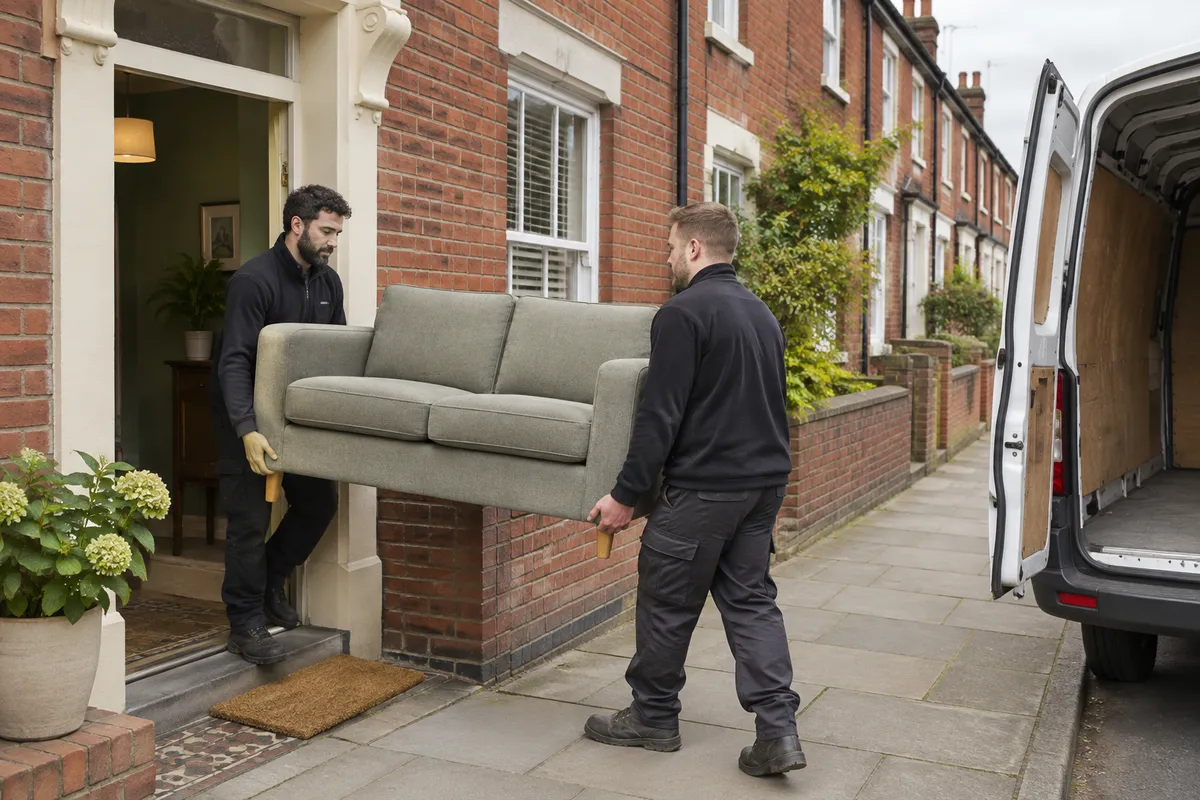
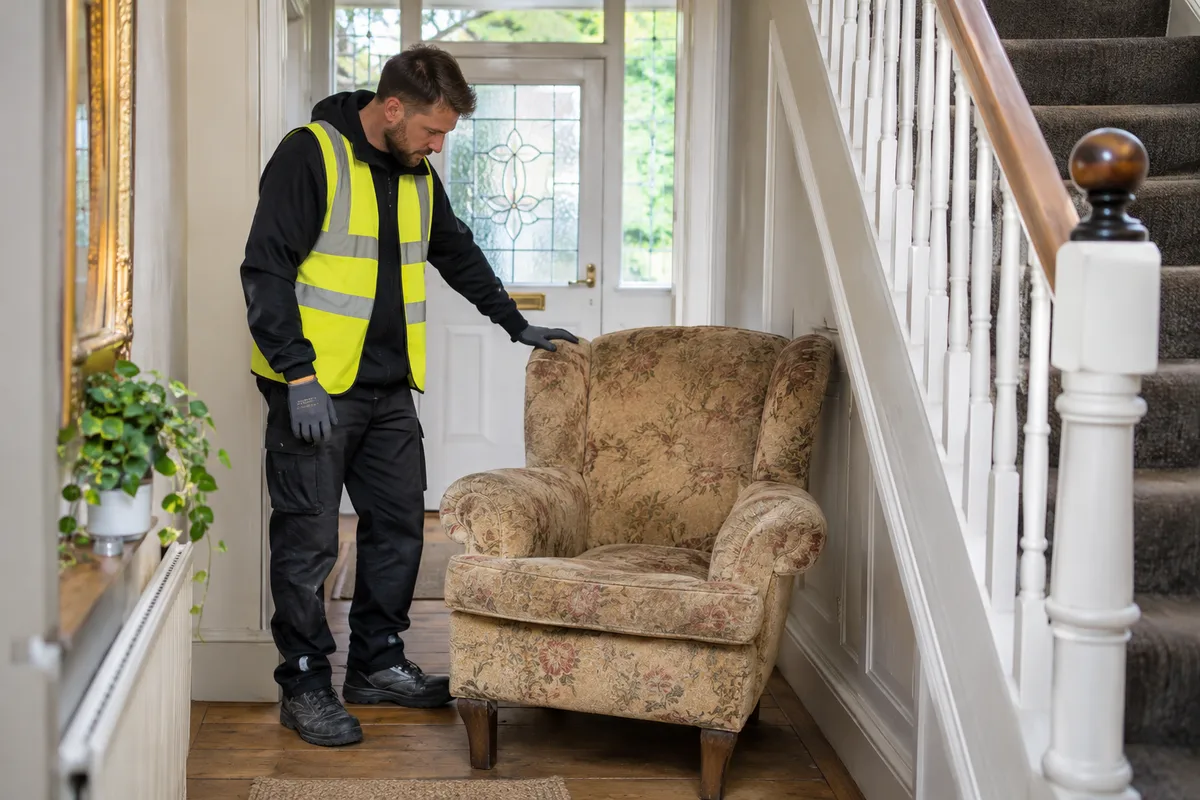
Generated service illustrations show typical collection tasks, not documented local jobs.
| Enquiry | Load to describe | What remains separate |
|---|---|---|
| Office refresh | Chairs, desks, storage and packaging | Working equipment and retained documents |
| Shop backroom | Movable displays and unwanted contents | Stock and fixed fittings |
| Flat collection | Selected furniture and household boxes | Other occupiers and retained belongings |
| Refurbishment group | Named debris and approximate quantities | Demolition and specialist work |
Town-centre commercial density makes the actual entrance important
The council’s Hammersmith parking-zone consultation identifies King Street, Hammersmith Road and office blocks within the central area. That verified mixed commercial setting informs the questions we ask about your premises. A public shopfront, office reception and residential entrance can serve different occupiers. Give the full postcode, building or unit identifier and door serving the unwanted contents. Tell us who controls any gate, reception or managed access and where loading could practically occur. We do not infer permission to use a private service area from its proximity to the building. Current signs and actual restrictions matter at the proposed position. We discuss the route from the rooms to loading without inventing a universal town-centre access rule, fixed vehicle journey or guaranteed arrival at the nearest door. Your actual premises arrangement is the useful collection information.
Electronic equipment has requirements beyond its cardboard box
For Hammersmith workplace equipment, a name and quantity are more useful than a stack of closed cartons. List the computers, monitors or appliances proposed through the electrical waste enquiry. Say where they stand and whether any appliance remains connected or fitted. Removing equipment is a different request from disconnecting services or altering the installation. Information-security requirements also need explicit discussion: ordinary collection should not be taken as certified data destruction. Empty packaging can be another group alongside the devices without obscuring them. If a team elsewhere in the business adds equipment before the visit, update the removal list where possible so acceptance and the full quote can be considered. We need to understand the material being released, not assume every box contains an interchangeable item of ordinary office rubbish.

Flat and household loads can remain selective
A Hammersmith household request may run alongside a move or furniture replacement without encompassing the whole home. Tell us the pieces left for removal and those staying or travelling elsewhere. Include loose storage contents only when they are intended to leave, with their amount described independently of cabinets or wardrobes. An agent, relative or keyholder should have authority to confirm those choices. Access to the property alone does not tell the team which person’s belongings are unwanted. Keep retained papers, keys and everyday possessions separate from the agreed load. We can discuss selected groups across several rooms when the list and locations are clear. Add material hidden from the main photographs before the visit rather than expect a first room estimate to cover every additional cupboard opened during collection.
Furniture requires a route from its current position
For Hammersmith furniture removal, describe the most restrictive part of the journey to the entrance. A chair may be straightforward while an assembled cabinet has to pass a narrow turn. Give useful dimensions and route photographs for the bulky pieces, along with current room and floor. Tell us what has already been dismantled and raise any further work for discussion. Fixed units need their attachments explained instead of being grouped with loose furniture. Identify mattresses independently from frames when beds join the list. If a lift is proposed, explain the actual arrangement for these objects rather than assume its presence settles the route. We can then discuss carrying and additional work for the whole load instead of infer every requirement from a photograph of furniture within an apparently spacious room.

Outdoor and refurbishment groups need their own material list
Where Hammersmith refurbishment material accompanies contents, start with the substances rather than the number of bags. Through the builders-waste enquiry, identify timber, rubble, plasterboard and packaging with approximate quantities and locations. Dense debris should not be hidden inside an office furniture estimate. For outdoor contents, distinguish cuttings from soil, paving, old furniture and timber, including material concealed underneath the visible pile. Explain the route used by each group and whether loose shed belongings are included without the structure. An unfamiliar container needs its contents clarified before acceptance is agreed. We discuss the waste and carrying actually proposed; excavation, demolition, gardening and work on fixed parts of the premises are separate requirements rather than automatic consequences of collecting material left by those activities.
Choose the right collection for Hammersmith
| Item group | Information needed | Scope question |
|---|---|---|
| Computers and monitors | Named devices and quantity | Security requirements raised separately |
| Appliances | Name, position and connection status | Disconnection not inferred |
| Storage units | Empty or contents included | Loose load described independently |
| Fixed fittings | Attachment and work required | Not ordinary detached furniture |

An illustrative office refresh with retained workstations
Imagine a Hammersmith business replacing several chairs and clearing an empty cabinet and packaging while staff retain their desks and computers. This is an illustrative enquiry, not a report of a completed local job. We would identify the furniture, describe the packaging and confirm the retained workstations. The contact would explain the actual entrance, floor and route to a proposed loading point, including any managed access. If monitors are added, they need their own names and any security requirement raised separately. If the cabinet contains loose material after all, that contents group must be described before inclusion. We would discuss the full amount, carrying and quote before the visit. One collection can address several defined groups without becoming unlimited removal from an operating office or implying specialist equipment work that has not been agreed.
| Point | What to explain | Purpose |
|---|---|---|
| Identity | Building, unit and full postcode | Correct address |
| Entrance | Door, reception or gate serving waste | Actual access |
| Internal route | Floor, stairs, usable lift and turns | Carrying requirements |
| Loading | Proposed vehicle position and current restrictions | Concrete visit discussion |
A complete price and responsible handling after loading
A Hammersmith price discussion should resolve the furniture and material list alongside the premises route. Use the published guide for our charging framework, then include the complete amount, named appliances or mattresses, dense waste and additional work. Relevant supplements can only be discussed meaningfully when those groups are visible in the enquiry. If the business releases more assets or the household changes its list, tell us before the visit where possible. Availability is confirmed directly when the collection is arranged. We take the agreed load away for responsible handling, seeking appropriate reuse and recycling opportunities without stating that every object will be recovered or inventing a load-wide percentage. The contents removal should also remain distinct from any cleaning, reinstatement or repair work requested for the premises after the items have gone.
See the current collection price guide, then confirm your complete quote with us. No separate Hammersmith tariff is implied.

Hammersmith: from item list to removal
01
Release the right contents
Confirm redundant items and retained equipment.
02
Separate the material groups
List furniture, loose contents and named devices.
03
Agree the premises plan
Discuss entrance, loading, quote and availability.
04
Carry and take away
We remove the agreed load responsibly.
LOCAL COLLECTION AREA
Where we collect in Hammersmith
Hammersmith collections are discussed from the full postcode and actual premises access. The marker identifies the locality for orientation, not a depot or a right to use a private service area. Tell us the contents, entrance and proposed loading position.
Nearby collection areas: Shepherd’s Bush · Chiswick · Barnes
Our London and M25 coverage is described on the Areas We Cover page. The local information here concerns the collection enquiry; it does not create a separate neighbourhood branch.
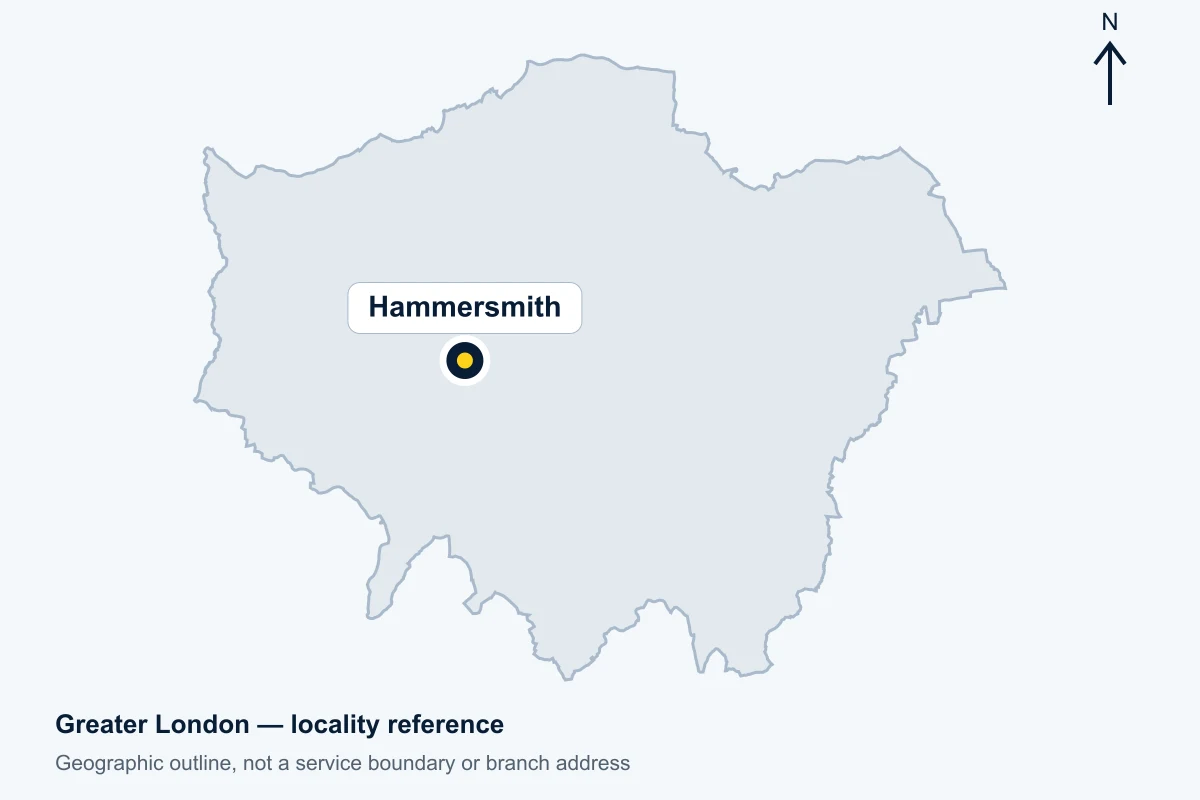
Greater London reference outline: GLA / OS Open Data (OGL). Location: GeoNames UK gazetteer. This is an orientation map, not a service boundary or branch address.
COLLECTION QUESTIONS
Hammersmith removal enquiries: questions answered
Can a Hammersmith office remove old chairs while staff keep working equipment?
Yes. Identify the chairs and any other redundant pieces separately from desks and devices staying operational. A nominated contact should confirm the list and access. We discuss a defined removal rather than assume the entire office is being emptied.
Does office equipment collection include certified data destruction?
Ordinary removal is not an implied certified data-destruction service. Name the devices and raise information-security requirements explicitly before booking. We discuss the collection scope rather than make unsupported promises about specialist handling of stored information.
What entrance information helps for a central Hammersmith building?
Give the door, reception or gate serving the contents, with any contact controlling access. Explain the floor and internal route to the proposed loading point. A public frontage or nearby private area does not itself establish the practical collection arrangement.
Can a supposedly empty cabinet contain additional waste?
Tell us if loose contents are included and describe their approximate quantity and nature. Furniture and stored material form different parts of the load. We discuss the complete amount before the visit rather than assume a cabinet-only estimate covers everything discovered in its drawers.
Are boxed monitors treated as ordinary cardboard packaging?
No. Name the monitors and quantity separately from empty packaging and describe their position. Raise any security requirement explicitly. We discuss the actual equipment load, relevant handling and complete quote before inclusion.
Can extra furniture be added when the office clears more space?
Update us before the visit where possible with the pieces, quantity and location. The quote follows the agreed contents and work. We discuss any revision before loading rather than treat the original enquiry as unlimited removal from every office room.
All generated photographs on this page are illustrative service scenes. They do not document jobs in Hammersmith.
Discuss your Hammersmith collection
Call +44 20 3404 3985 with the collection postcode, item list and property details. We will discuss the scope, available arrangements and quote before work begins.
Services for your Hammersmith enquiry
Furniture disposal · Rubbish collection · House and flat clearance