
LONDON & THE M25
Junk Removal
in Harrow Weald.
An outbuilding can hold several years of household storage alongside garden items and project leftovers. We organise Harrow Weald junk removal by identifying the contents you want taken away, distinguishing them from the structure and checking the route to loading. Our team carries and loads the agreed materials for responsible onward handling.
- Carrying and loading included
- A clear quote before work begins
- Licensed and insured waste carrier

FROM ENQUIRY TO REMOVAL
Harrow Weald collections: the process we agree
01
Identify stored groups
Separate contents, fittings and retained tools.
02
Explain uncertainties
Raise unknown materials and access limits.
03
Agree work and quote
Describe the full carrying route.
04
Check the remaining store
Review the list before onward handling.

Treat the outbuilding as a location
Tell Junk Please what is inside the store rather than using its size as the whole description. A small outbuilding may contain dense building material, while a larger one may hold mostly empty packaging and loose furniture. List the groups you can identify and explain anything not yet inspected. We need to distinguish stored contents from the building itself. A contents-clearance request does not automatically include dismantling walls, roof panels or fitted benches. State whether shelving is freestanding and discuss attached material explicitly. Tools and other retained possessions should be separated from the removal group. If several people use the store, settle ownership before collection and nominate someone who can confirm the agreed contents. The service should follow that authorisation rather than assume everything beyond the door is unwanted. This gives the enquiry a useful scope before the amount, carrying and price are discussed.
Be honest about concealed or uncertain contents
Stored boxes and containers may conceal materials that a doorway photograph cannot explain. Give a general contents description and identify anything unknown. Do not open an unsafe container or disturb uncertain material simply to improve an estimate. Chemicals, paint containers and potentially hazardous substances need to be raised before booking so acceptance and any specialist requirement can be discussed. We do not treat them as ordinary rubbish because they stand beside furniture. Say if boxes are damaged, wet or difficult to inspect. Dense books, tools or project materials also need a different description from light wrapping. Check personal documents and keepsakes before their containers join the removal group; we do not decide which possessions have value. A clear account can include limitations. It is more useful to explain an uninspected corner honestly than provide a confident inventory that does not reflect what is actually there.
Harrow Weald context does not define private access
Harrow Council publishes dedicated Harrow Weald conservation-area information. It supplies an official reference for local character, but not a universal access arrangement for homes and outbuildings. Give us the complete postcode and explain the actual entrance to the store. A rear building might be reached through a side path, across a garden or through the house. Tell us which applies and who can authorise any shared approach. We do not assume a right to use neighbouring land or nearby open space. Nor do we turn conservation designation into an invented rule for loose household contents. The official Harrow Weald conservation information is local context; the existing property route and relevant loading restrictions determine the practical collection discussion. If access depends on a locked gate or another person’s permission, establish that before the visit is agreed.
- List contents separately from the structure
- Explain uninspected or unknown material honestly
- Identify timber, cuttings and hard debris individually
- Describe gates and the full carrying distance
- Keep retained tools and attached benches explicit
| Group | Describe | Do not assume |
|---|---|---|
| Furniture | Size and components | Structure removal included |
| Containers | General contents or uncertainty | Unknown material accepted |
| Timber | Loose or attached | All wood is the same task |
| Green waste | Amount and location | Soil or rubble included |
Describe the whole carry from the store
The distance from an outbuilding to loading matters even when the contents are at ground level. Explain steps, narrow gates, uneven surfaces and turns between the store and the proposed vehicle position. Large cabinets or worktables need dimensions and a description of their construction. If dismantling is proposed, discuss the work explicitly. We should not assume an item can leave through a gate because it fits inside the building. Tell us whether the route is obstructed by retained equipment or another material group. Keep it clear where practical, but do not attempt an unsafe lift to prepare the collection. Someone may need to remain available to open gates or confirm which objects stay. The quote should reflect the real current route rather than a path that might become available after unrelated work. Update us if the entrance or contents location changes before collection.
Keep timber, green waste and hard debris separate
An outdoor store can accumulate offcuts, broken garden furniture, branches and paving in the same corner. Identify those groups separately and give a useful approximate amount. Timber may be loose offcuts, furniture components or part of a structure still attached; those are different descriptions. Cuttings should not conceal soil, rubble or tiles in the enquiry. State what sacks contain and whether material is loose. Name electrical equipment or appliances individually, including any work needed beyond carrying. Household boxes stored outdoors still need a general contents description and ownership decision. We confirm the proposed material mix and any acceptance limits before treating it as one collection. This allows the convenience of a combined enquiry without assuming every outdoor substance is interchangeable. It also helps keep the price connected to the actual load rather than the appearance of the pile.


| Load | Service | Focus |
|---|---|---|
| Household storage | House and flat clearance | Contents and ownership |
| Outdoor material | Garden waste collection | Actual material types |
| Project leftovers | Builders clearance | Density and quantity |
| Work furniture | Office clearance | Furniture and electronics |

An illustrative outbuilding recovery
Imagine a household wanting a garden store available again. The unwanted groups are a broken garden table, loose timber offcuts and boxes of ordinary household contents. Tools, an attached bench and the building structure stay. Nearby branches are proposed as a separate green-waste group. This is an illustration of planning, not a completed Harrow Weald job. We would ask about the table size, the quantity of timber and the general contents of the boxes. The retained bench and structure would be excluded explicitly. We would discuss the side gate and distance to loading for both the store and branches. If unidentified containers are discovered, they need an acceptance discussion before being added. The household can then confirm the settled scope and quote. The aim of reclaiming storage helps organise decisions, while the authorised material list defines our collection task.
Confirm the quote after the final inspection
Our quote considers the amount, materials, carrying requirements and additional work agreed. We do not invent an outbuilding rate for Harrow Weald or price a store solely from its floor area. Identify heavy debris, appliances and dismantling needs before the price is confirmed. Tell us any timing requirements and ask about current availability. An enquiry does not itself guarantee a slot. Before loading starts, update the list if sorting has revealed more contents or someone has removed part of the original group. A gate becoming unavailable can alter the work even when the material is unchanged. Discuss changes promptly so the person attending understands the same scope and price as the organiser. This gives the team a defined instruction and the household a practical way to assess the collection. It also prevents the phrase clear the outbuilding becoming an assumption about unagreed structural or specialist work.
| Check | Confirm | Reason |
|---|---|---|
| Scope | Contents versus attached fittings | Defined work |
| Access | Gate and path available | Real carrying route |
| Materials | Unknown groups raised | Acceptance discussed |
| Handover | Retained equipment identified | Clear completion |
See the current collection price guide, then confirm your complete quote with us. No separate Harrow Weald tariff is implied.
End against the contents list
After loading, review the agreed groups inside the store and any separate outdoor pile. Confirm that retained tools, attached fittings and the structure remain as intended. The load leaves for responsible onward handling, with reuse and recycling considered where suitable to condition and material. We do not guarantee every weathered object will be reused or claim an unsupported local recycling percentage. Removal does not automatically include rebuilding storage, repairing the outbuilding, landscaping or cleaning every surface. Discuss separate requirements explicitly. If moving one group reveals more unwanted contents, describe the addition and agree it before loading. A defined handover lets the household know which task is complete: the authorised contents have been removed and the next stage of using or repairing the space can proceed independently. The collection has a clear boundary even if the wider garden project continues.

LOCAL COLLECTION AREA
Where we collect in Harrow Weald
The map identifies Harrow Weald’s verified place position for orientation. It is not a depot or service boundary. Give us the full postcode and actual outbuilding route rather than assuming nearby open space supplies access.
Nearby collection areas: Wealdstone · Stanmore · Hatch End
Our London and M25 coverage is described on the Areas We Cover page. The local information here concerns the collection enquiry; it does not create a separate neighbourhood branch.

Greater London reference outline: GLA / OS Open Data (OGL). Location: GeoNames UK gazetteer. This is an orientation map, not a service boundary or branch address.
COLLECTION QUESTIONS
Harrow Weald removal enquiries: questions answered
Does outbuilding clearance include dismantling the building?
The contents and structure are separate tasks. Describe exactly what you want removed and discuss attached material or dismantling explicitly. A general contents enquiry does not automatically authorise structural work.
What if I cannot inspect every box safely?
Explain the limitation and identify what is known. Do not disturb unsafe or unidentified material merely to provide an estimate. We need an honest description so the proposed collection and any specialist requirement can be discussed.
Can branches be included with stored furniture?
Describe the branches as a separate material group and give their amount and location. The complete mix and carrying routes need to be considered when discussing the collection and quote.
Do loose timber and a fixed bench count alike?
No. Explain whether timber is loose material, dismantled furniture or attached to the building. Discuss proposed additional work explicitly rather than assuming it is included with carrying.
Can the team decide which tools to keep?
Ownership and retention decisions need to be settled by you or your representative. Identify tools that remain and separate them clearly. We follow the authorised removal list rather than judging usefulness.
Will repairs be carried out once the store is empty?
Repairs, rebuilding and landscaping are separate requirements. The agreed collection concerns carrying, loading and taking away specified contents. Discuss additional work explicitly so the service endpoint is understood.
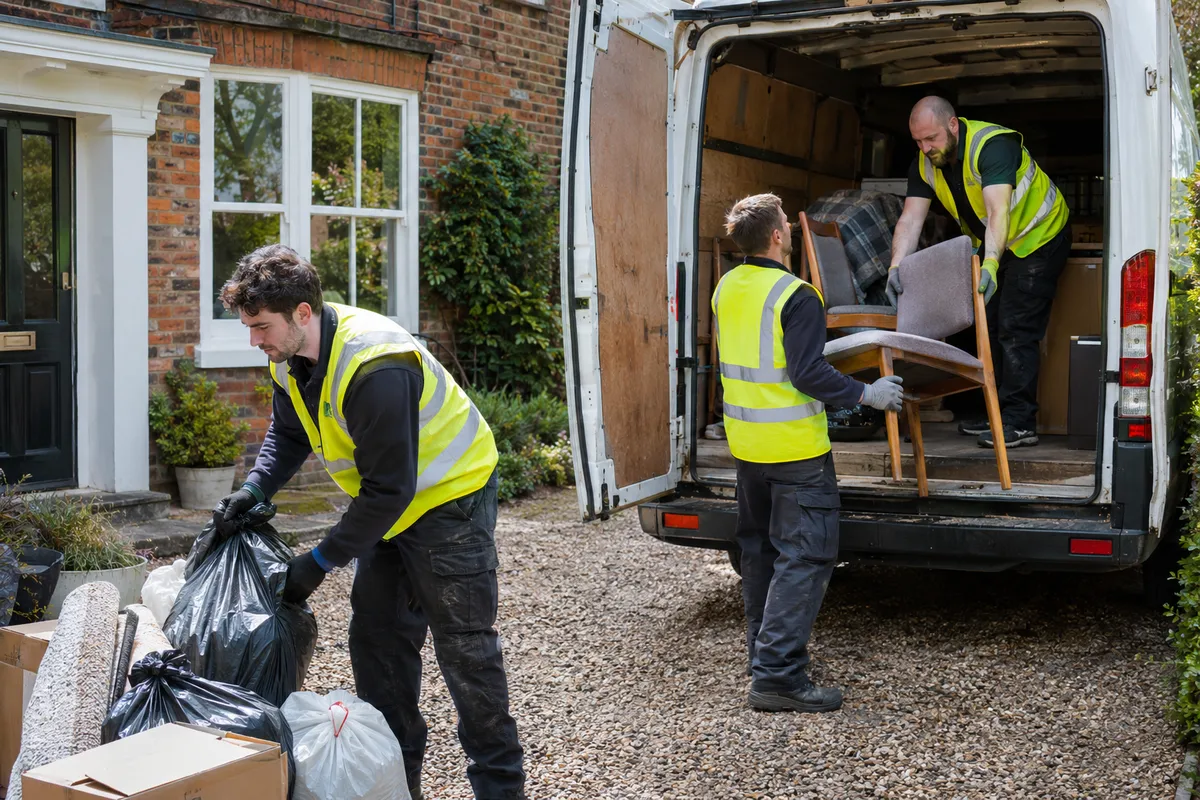
All generated photographs on this page are illustrative service scenes. They do not document jobs in Harrow Weald.
Discuss your Harrow Weald collection
Call +44 20 3404 3985 with the collection postcode, item list and property details. We will discuss the scope, available arrangements and quote before work begins.
Services for your Harrow Weald enquiry
Furniture disposal · Rubbish collection · House and flat clearance