
LONDON & THE M25
Junk Removal
in Highgate.
We collect unwanted furniture, household contents and equipment in Highgate, including items from rooms still used for living or work. The enquiry identifies what is redundant, what remains and how each group leaves the property, before the collection scope and price are agreed.
- Carrying and loading included
- A clear quote before work begins
- Licensed and insured waste carrier

COVERAGE & CONTENTS
Highgate coverage and material groups
We include Highgate in our London coverage. The map marker is a locality reference and does not identify a Junk Please branch. Give us your own postcode and building details to discuss the collection; administrative or planning boundaries do not replace the practical access enquiry.
Nearby collection areas: Archway · Hampstead · Kentish Town

Greater London reference outline: GLA / OS Open Data (OGL). Location: GeoNames UK gazetteer. This is an orientation map, not a service boundary or branch address.
Clearing a working room without clearing everything
A room used for work can hold redundant furniture beside items that are still needed every day. For a Highgate collection, we start by separating those choices. You might want an old desk and spare chair removed while keeping a computer, files and shelving, or you may be replacing the equipment as well. Tell us which description applies. We discuss the removal list rather than assume that a request to clear a study includes every object in it. Loose belongings inside drawers should be described separately from the desk. A person able to identify the agreed contents should be available where the distinction needs confirming at the visit. This keeps a selective collection clearly defined from the first enquiry.
Home contents
Business waste
Outdoor materials
- Identify redundant items separately from equipment still in use
- Describe loose drawer contents as well as the furniture
- Name computers, printers and appliances individually
- Give the full postcode, entrance and carrying route
- Explain outdoor additions and attached fittings before booking

A Highgate postcode identifies the actual premises
The Highgate neighbourhood planning area extends across Camden and Haringey, as recorded by the councils. For our enquiry, this reinforces the need for the complete address rather than a general village label. The collection postcode, entrance and floor tell us where the work takes place; the neighbourhood name does not establish a loading arrangement or one set of street restrictions. Explain whether the contents are reached through a house entrance, shared landing or managed business doorway. We do not treat the planning-area boundary as a service boundary or suggest that we have a separate branch on either side of it. Our London collection is arranged around your premises and the unwanted materials you describe.
| Part of the room | What to distinguish | Collection discussion |
|---|---|---|
| Desk or storage unit | Empty furniture and belongings inside it | Item scope, size and assembled condition |
| Computer or printer | Equipment that leaves versus devices staying in use | Electrical collection requirements |
| Files and loose contents | Only the items identified for removal | Avoid assuming all nearby material is unwanted |
| Packaging and household boxes | Main contents and approximate amount | The complete mixed load |
Desks, chairs and freestanding storage
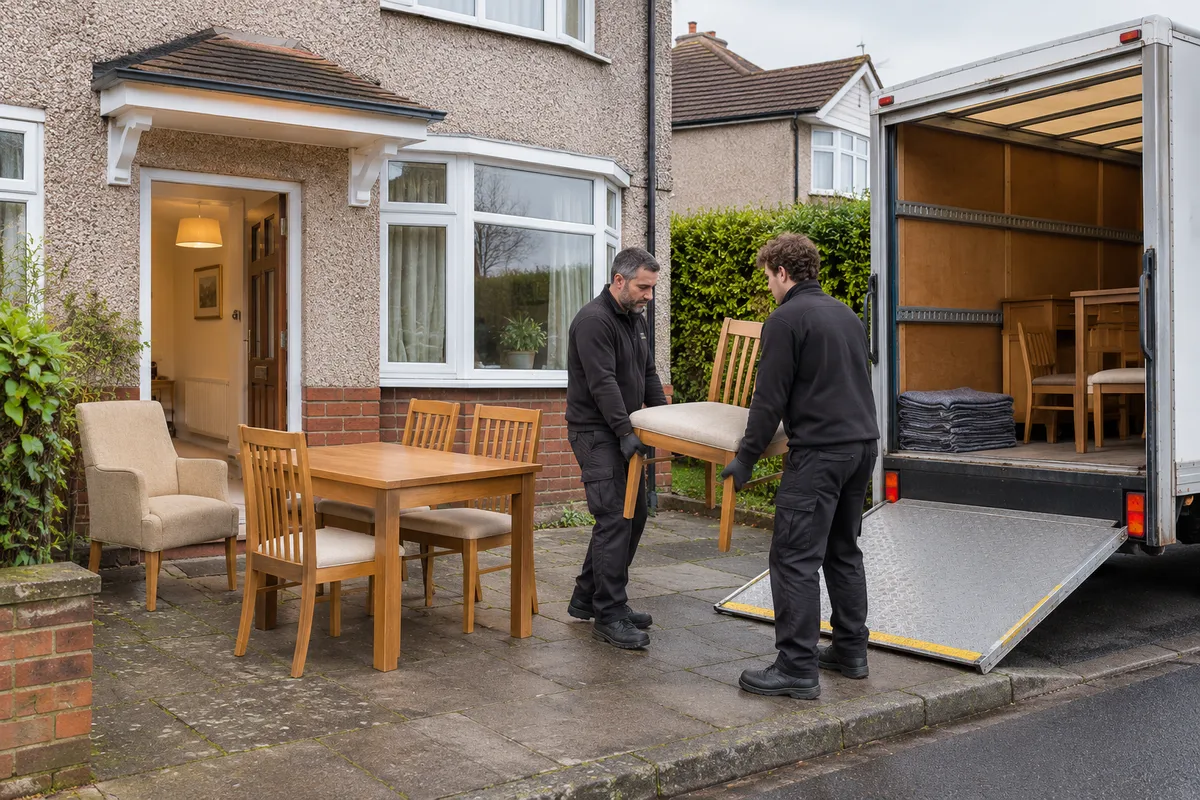
Describe the furniture piece by piece, with its position and assembled condition. A compact desk near the entrance may be straightforward to describe, while a large assembled unit upstairs needs more information about the route out. Tell us if a desktop, cabinet or bookcase will need taking apart before it can leave. That additional work must be discussed rather than hidden inside a general request for heavy lifting. We also need to distinguish freestanding storage from fitted furniture attached to the building. Ordinary carrying and loading do not automatically establish removal of joinery or alterations to a room. If the unit contains books or other belongings, identify those contents separately so the quote reflects more than the empty furniture.
Electronic equipment is not another furniture box
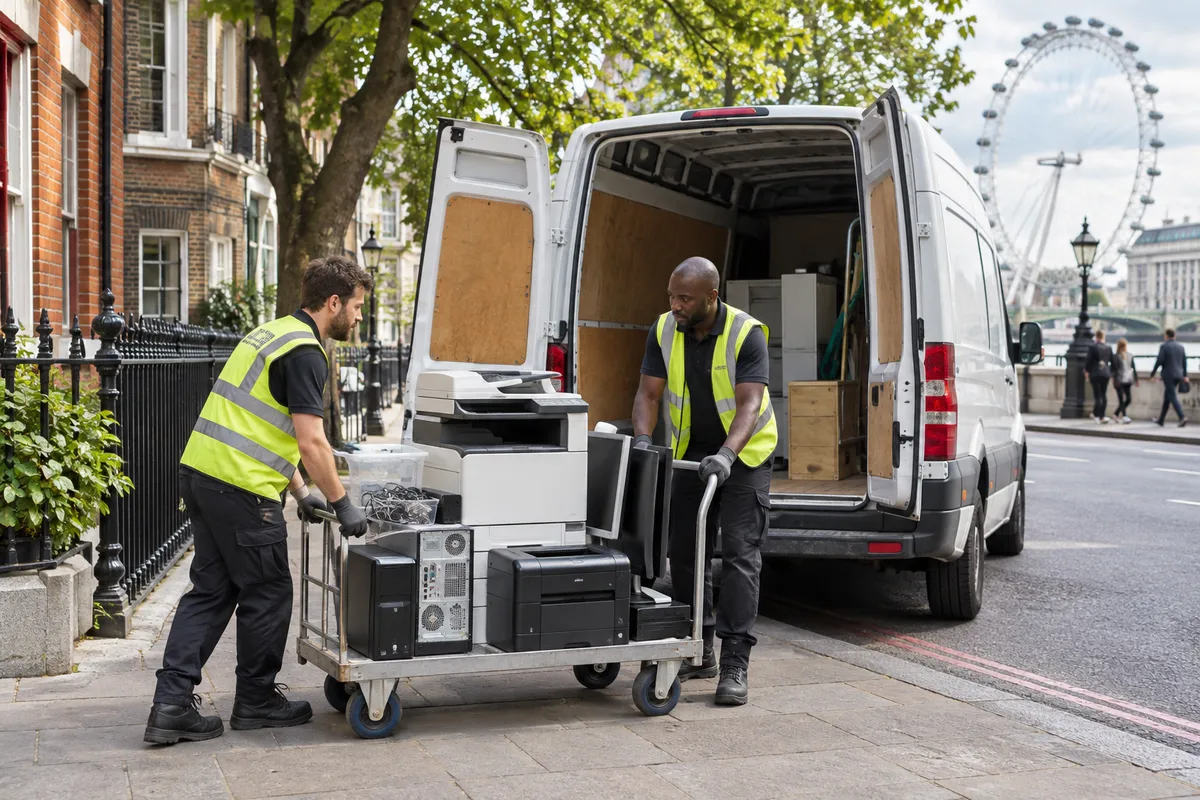
Where a home office or workplace collection includes computers, screens, printers or appliances, name the equipment types. The material description matters even if the devices fit inside a small container. Tell us whether anything remains connected or installed in a fitted position. We discuss collection and loading, without assuming that electrical disconnection or other installation work is included. Requirements concerning information stored on equipment also need to be raised explicitly. Our general clearance service should not be represented as a promise of certified data destruction or a particular security process. Separating electronics from desks and packaging gives the enquiry a clearer scope and allows any applicable handling requirements and supplements to be discussed before the visit.

Household and garden additions belong in the same item list
A workroom collection can be combined in the enquiry with unwanted household pieces or outdoor material, provided each group is described. A mattress, sofa or refrigerator should be named rather than treated as an unspecified extra. For a garden load, distinguish cuttings and branches from timber furniture, soil or broken paving. Explain whether the outdoor contents use a gate or a route through the property, as that carrying task may differ from removing the indoor desk. We do not assume that collecting existing garden waste includes maintenance, pruning or landscaping. Unknown containers and potentially hazardous materials must also be identified before booking. The complete enquiry should show what is going, where it is and which requirements need confirming.
| Proposed removal | Additional point to explain | Reason |
|---|---|---|
| Large desk | Dismantling needed to pass through the exit | Carrying does not define every assembly task |
| Fitted cabinet | Whether it is attached to the building | Avoid assuming joinery removal is included |
| Connected equipment | Disconnection or other installation work | Agree the actual collection boundary |
| Stored electronic data | Any specialist information-security requirement | General clearance is not certified data destruction |
A possible home-office replacement collection
Imagine a Highgate householder replacing a desk and filing cabinet while also removing a printer, boxed household clutter and a broken garden bench. This is an illustrative enquiry, not a record of work completed locally. We would separate the furniture, electrical item and loose contents, then ask where each group stands. The filing cabinet’s contents would need their own description; personal files that remain in use would not be inferred as waste. The garden bench would be discussed as outdoor furniture rather than green cuttings. With those distinctions established, we could connect the carrying routes to the proposed loading position and discuss the full price. Later additions would still need to be included in the agreed scope.

Business premises and building leftovers require explicit boundaries
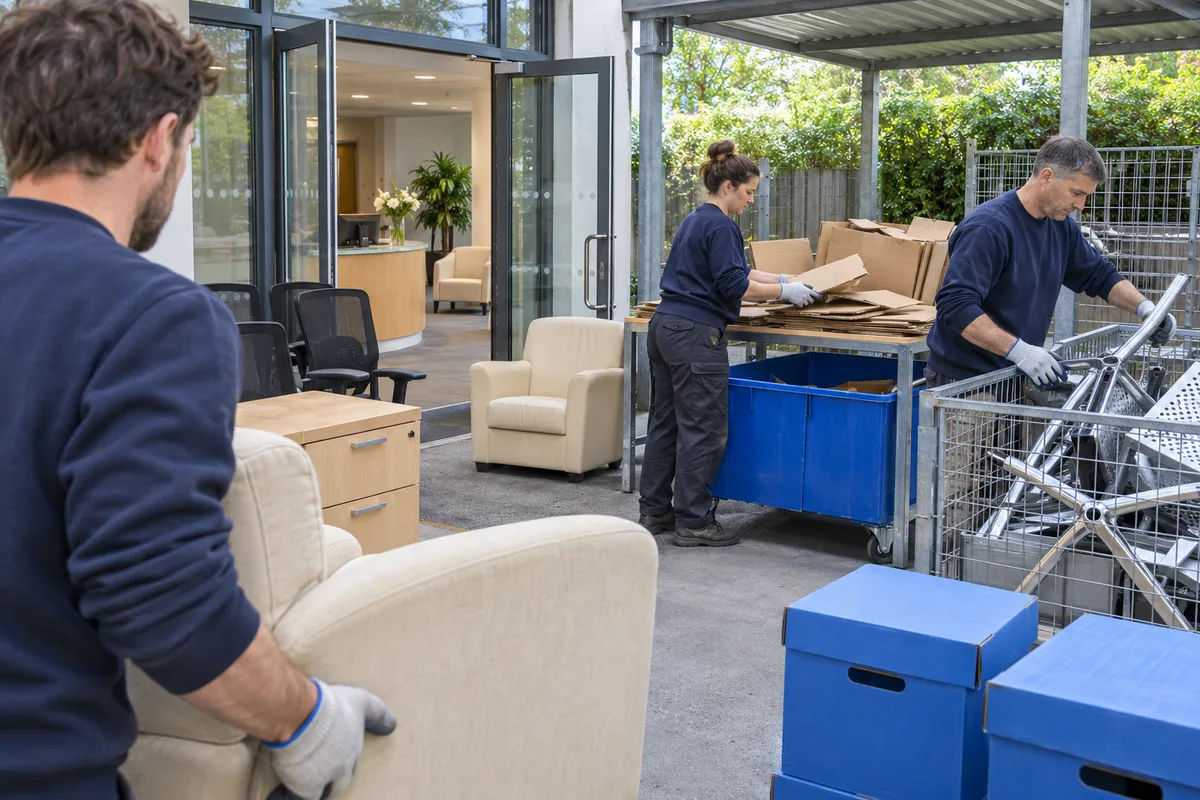
For a commercial address, tell us who can release the redundant items and whether the building manager controls access or loading. A collection might concern selected office pieces, freestanding shop displays or unwanted stock and packaging; it should not be assumed to include an entire business strip-out. If refurbishment debris is present, describe timber, plasterboard, rubble and other materials separately from furniture. Dense bags and light packaging are different loads despite taking up similar visible space. Explain whether additional work is required to release attached fittings. We establish the removal boundaries before the visit, so equipment still in use, retained stock and ongoing building supplies remain outside the agreed collection unless you identify them for removal.
From Highgate enquiry to removal
01
Separate working and unwanted items
Tell us precisely which contents are redundant.
02
Identify the material groups
Distinguish furniture, electronics and loose belongings.
03
Settle access and scope
Discuss the postcode, carrying route and complete quote.
04
Carry out the collection
We load the agreed contents for responsible onward handling.
| Contents | Details to provide | Relevant service |
|---|---|---|
| Furniture and room belongings | Selected items, floor and route out | Domestic clearance |
| Desks and office storage | Redundant pieces and managed access | Office clearance |
| Printers or appliances | Equipment type and installed condition | Electrical waste collection |
| Outdoor contents | Cuttings versus timber furniture or rubble | Garden waste |
Pricing the collection and handling the materials afterwards
Our quote is discussed against the amount, materials and work in the enquiry. The current collection guide sets out starting bands and applicable supplements; we do not invent a separate Highgate rate for a study, household or business collection. Name specific items and explain the carrying route, possible loading point and any additional work. If the contents or access change, tell us before the visit where possible so the arrangement can be updated before work begins. We carry and load the agreed unwanted contents, then take them away for responsible handling, aiming for reuse and recycling wherever possible. A particular reuse outcome or recycling percentage cannot be promised simply because the load contains furniture or office equipment.
See the current collection price guide, then confirm your complete quote with us. No separate Highgate tariff is implied.
More London coverage near Highgate
For London and M25 collection enquiries, see the coverage directory. We publish links only to available local pages. Give us your complete postcode to discuss the property; we do not use this map as a boundary or claim a local depot.
COLLECTION QUESTIONS
Highgate removal enquiries: questions answered
Can you collect an old desk while I keep using the rest of the study?
Yes. Identify the desk and any other unwanted pieces separately from equipment and belongings staying in use. Explain its size, location and route out. We discuss the defined removal list rather than assume that a study collection includes everything in the room.
Should a printer be listed even if it fits in a household box?
Name the equipment type in the enquiry. A container’s size does not establish the material inside it or any applicable collection requirement. We distinguish electronics from ordinary household clutter before agreeing the full mixed load and quote.
Do you provide a data-destruction certificate with computer collection?
Our general collection service should not be treated as a promise of certified data destruction. Raise any information-security requirement separately before booking. We discuss what is being collected and avoid implying a specialist process or certificate that has not been agreed.
Why is the complete address important for a Highgate enquiry?
The neighbourhood name does not identify your entrance, floor or available loading position. Give the postcode and practical building details so the collection can be arranged for the actual premises. We do not infer one universal street arrangement from the Highgate label.
Can a broken garden bench accompany office furniture?
Describe it as an additional material group, with its size and outdoor location. A timber bench should not be hidden inside a description of garden cuttings. We discuss the complete load and both carrying routes before agreeing the collection scope and price.
Does removing a filing cabinet include everything stored in it?
Tell us whether it is empty and identify any loose contents that are also unwanted. Retained files or belongings should remain outside the removal list. A request to collect the cabinet itself does not establish that every object inside or beside it is part of the collection.
All generated photographs on this page are illustrative service scenes. They do not document jobs in Highgate.
Discuss your Highgate collection
Call +44 20 3404 3985 with the collection postcode, item list and property details. We will discuss the scope, available arrangements and quote before work begins.
Services for your Highgate enquiry
Furniture disposal · Rubbish collection · House and flat clearance