
LONDON & THE M25
Junk Removal
in Hillingdon.
Stored family belongings can need a careful removal list before a spare room becomes usable again. We organise Hillingdon junk removal around the contents their owners have authorised, with retained possessions kept separate. We discuss furniture, loose groups and access, agree the collection and carry and load the specified items for responsible handling.
- Carrying and loading included
- A clear quote before work begins
- Licensed and insured waste carrier

FROM ENQUIRY TO REMOVAL
Hillingdon collections: the process we agree
01
Settle the family list
Identify authorised and retained groups.
02
Describe locations and materials
Include furniture construction and outdoor additions.
03
Agree the complete quote
Confirm route and additional work.
04
Review the authorised removal
Check every group before onward handling.
Identify the owners behind the stored groups
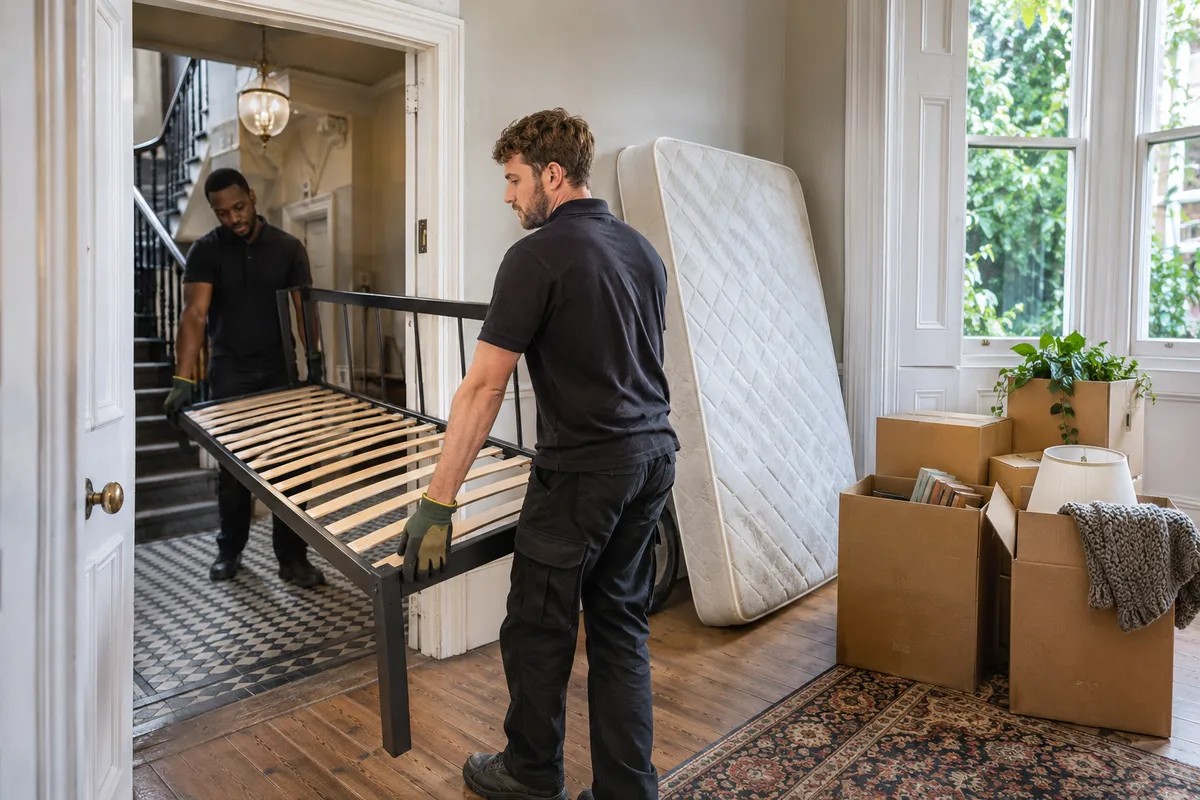
Tell Junk Please which belongings are unwanted and who can authorise their removal. A spare room may contain furniture owned by one person and boxes belonging to several others. Settle those decisions before the visit rather than asking the team to judge what has been abandoned. List substantial furniture individually and describe loose contents by group and approximate amount. State which boxes remain undecided and keep them outside the removal instruction. If a relative is arranging the collection, nominate someone who knows the settled list and can answer questions at the property. Access alone does not establish authority over every possession. A defined instruction helps a household reclaim space while preserving the decisions that belong to the owners. It also gives the representative a straightforward way to review the load when the agreed work is finished.
Check drawers before the furniture joins the load
An old chest or wardrobe can still contain documents, keys, photographs and small keepsakes. Check those contents before confirming the furniture for removal. We do not decide which personal possessions have value. Explain whether each unit is empty and describe any unwanted contents separately. If the furniture stays while its contents leave, make that distinction explicit too. A cupboard name does not tell us which part of the task you mean. Keep belongings being sent to family members away from the waste group where practical. Update the inventory after those collections happen, because an early room photograph may no longer describe what remains. For already dismantled furniture, identify the components leaving and any panels being kept. This preparation keeps the collection tied to settled decisions and reduces the need to resolve ambiguous belongings while carrying is due to begin.
Distinguish Hillingdon the place from the borough
Hillingdon Council lists Hillingdon Village as a specific conservation area within its wider borough information. For this collection enquiry, the local place name should not be treated as a description of every address across the borough. Give us the full postcode and actual property entrance. A house, flat and rear store need individual access details even within the same locality. We do not infer a driveway, building type or loading permission from the name alone. The official conservation-area information provides the local village reference rather than a rule for ordinary loose-content removal. Explain existing gates, steps and shared approaches, and confirm authority for any private space proposed for loading. Current restrictions need consideration for the specific position. The map marker supplies orientation, while the premises supply the practical route and work.
- Settle ownership before the visit
- Keep undecided boxes outside the removal list
- Check personal contents inside furniture
- Describe the actual local address and route
- Name outdoor additions separately

| Group | Confirm | Separate |
|---|---|---|
| Furniture | Empty or containing belongings | Contents retained |
| Family boxes | Owner authorises removal | Undecided containers |
| Electronics | Type and ownership | Live equipment |
| Outdoor addition | Exact object and route | Other garden belongings |
Describe where the authorised family groups stand
For a family-storage job, the location list should identify both the contents and the person’s decision. An upstairs wardrobe may be empty and approved, while boxes alongside it are still awaiting another relative. Tell us about that distinction before describing the route down. Give the wardrobe’s size and explain whether it was assembled in the room, with any dismantling request raised specifically. A landing turn or narrow porch can affect the furniture even where small boxes pass easily. The garden chair in the example needs a location of its own, including the gate serving it. We do not ask you to move heavy furniture to demonstrate the route. Photographs and a practical description can establish what needs discussing. If the approved boxes have already been moved downstairs, use their new position so the enquiry reflects the carry actually required.
Use the family sort to identify contents, not private detail
A useful box description is factual without exposing personal information: books, clothing, crockery or ordinary household objects, with an approximate quantity. It is unnecessary to supply names from documents or photographs of sensitive records. What matters for collection is the material and the owner’s decision. Set electronics aside as named items rather than letting a monitor disappear within a clothing-box count. Project leftovers discovered among stored possessions need a different description again, including their material and amount. Unidentified tins or containers should remain a question for discussion, not be tipped into general bags. Where one relative’s group is approved and another’s is undecided, keep that boundary visible even if the containers look alike. This gives our enquiry enough substance to assess the load while leaving personal sorting and retention decisions with the family.


| Contents | Service | Information |
|---|---|---|
| Stored household items | House and flat clearance | Furniture and loose groups |
| Outdoor objects | Garden waste collection | Material and location |
| Project leftovers | Builders clearance | Density and amount |
| Work equipment | Office clearance | Authority and devices |
A fictional family-storage collection
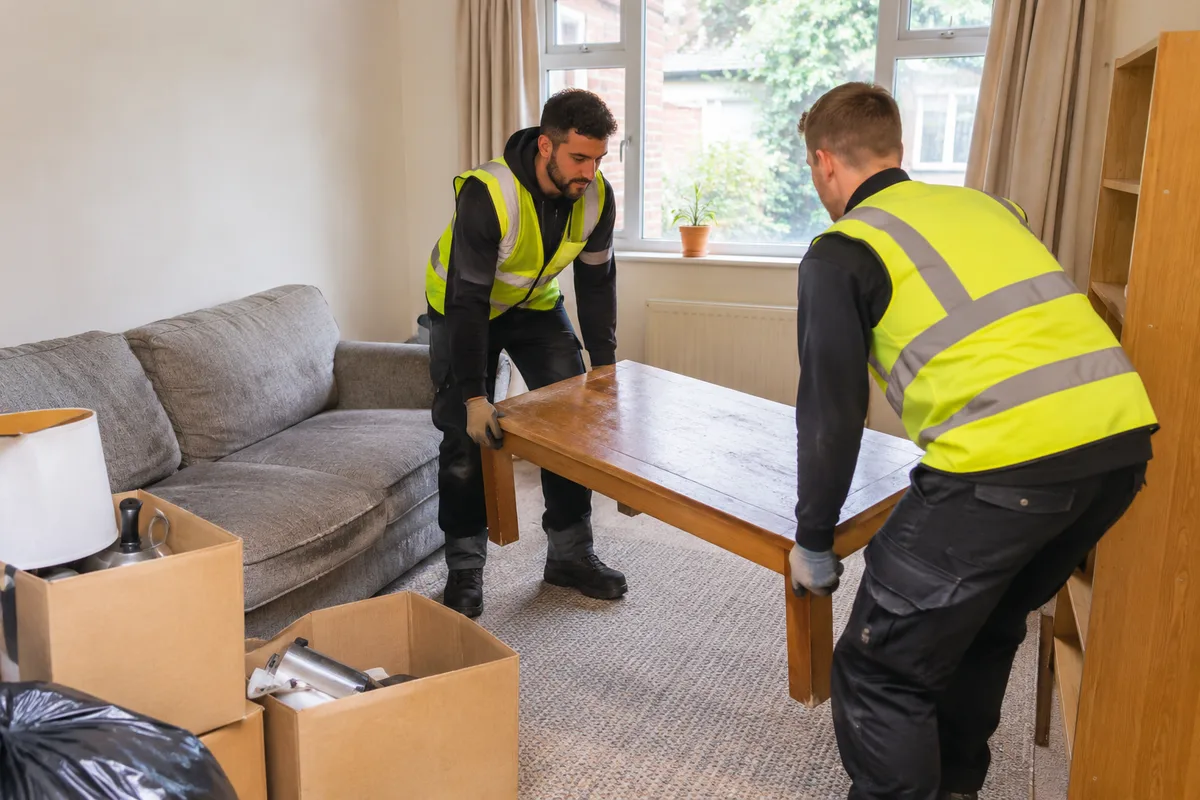
Imagine a household reclaiming a spare bedroom. The authorised load includes an empty wardrobe, old bedside furniture and boxes of ordinary belongings checked by their owners. Other family boxes stay, and a damaged garden chair is proposed as a separate outdoor addition. This is a planning illustration, not a completed Hillingdon job. We would ask about the wardrobe construction and route downstairs, then discuss the boxes and chair independently. The undecided or retained containers would remain outside the instruction. A relative attending could confirm the list and explain the gate serving the chair. If another cupboard is emptied later, its contents need to be described before adding them. The collection removes the agreed group, while the household retains control over the possessions and any future sorting still required.
Bring the final family decisions into the quote
Ask the attending relative to compare the proposed collection with the latest inventory, not an earlier photograph taken before everyone responded. If a sibling has collected a bedside cabinet, record that it is no longer waiting. If another owner has now approved their boxes, describe those additions and their contents before assuming the original figure covers them. The same applies when a furniture item is dismantled or moved to a more accessible room after the enquiry. We discuss the price using the authorised material and work that remain. Include any deadline, such as needing the spare room available, when arranging availability. A clear family representative can then confirm the same list at the visit. This is more useful than a broad instruction to make space, because the price and removal remain tied to decisions the owners have actually made.
| Point | Check | Purpose |
|---|---|---|
| Decisions | Owners agree | Clear instruction |
| Access | Current locations described | Actual carrying |
| Quote | Final contents included | Accurate scope |
| Handover | Retained groups remain | Defined completion |
See the current collection price guide, then confirm your complete quote with us. No separate Hillingdon tariff is implied.
Check the removal by owner and location
At completion, review the agreed wardrobe, bedside furniture, box group and garden chair individually. The room may still contain someone else’s possessions; that is expected where they were excluded. The question is whether the authorised items have gone, not whether every storage area looks empty. Check separate furniture components if they were placed in another room during preparation. The load is then dealt with according to its materials and condition, with suitable reuse and recycling considered without promising an outcome for every family object. Sorting what remains, storing keepsakes and arranging a new bedroom layout are different responsibilities from the agreed removal. If the family later reaches a decision about an excluded group, describe that as a further collection request. This keeps the completed task clear and prevents consent for one set of belongings being treated as consent for the rest.

LOCAL COLLECTION AREA
Where we collect in Hillingdon
The map identifies Hillingdon’s verified local place position, not a borough centroid, depot or boundary of service. Provide the full postcode and actual entrance for the family-content collection.
Nearby collection areas: Uxbridge · Hayes · Ickenham
Our London and M25 coverage is described on the Areas We Cover page. The local information here concerns the collection enquiry; it does not create a separate neighbourhood branch.

Greater London reference outline: GLA / OS Open Data (OGL). Location: GeoNames UK gazetteer. This is an orientation map, not a service boundary or branch address.
COLLECTION QUESTIONS
Hillingdon removal enquiries: questions answered
How can a relative give clear instructions at the visit?
Use the latest owner-approved list and identify the locations of those groups. A representative should know which boxes remain undecided as well as which furniture is authorised, rather than relying solely on possession of the keys.
What if identical boxes belong to different relatives?
Keep their decisions distinct. Explain which group is approved and which remains, using a method the attending person can confirm. Similar containers are not evidence of common ownership or permission.
Do I need to show private documents to describe a box?
No. Give a general material description and approximate amount. Check records and keepsakes yourselves; the collection enquiry needs to understand the load, not the private information inside retained papers.
What if family approval changes after the first quote enquiry?
Provide the revised group and contents before collection is confirmed. Explain additions and removals so the price discussion follows the latest decisions rather than an obsolete room photograph.
Can approved boxes be moved downstairs beforehand?
Tell us their current position if that happens. The carrying account should follow the actual starting location, while furniture still upstairs keeps its separate route description.
How do we judge completion if belongings remain?
Compare the collected groups with the authorised list. Retained or undecided possessions can remain deliberately; the success of a selective collection is the agreed removal, not an empty home.
All generated photographs on this page are illustrative service scenes. They do not document jobs in Hillingdon.
Discuss your Hillingdon collection
Call +44 20 3404 3985 with the collection postcode, item list and property details. We will discuss the scope, available arrangements and quote before work begins.
Services for your Hillingdon enquiry
Furniture disposal · Rubbish collection · House and flat clearance