
LONDON & THE M25
Junk Removal
in Kentish Town.
Our Kentish Town collections are organised around the contents you want removed, from an old bed and boxed belongings to a larger household or business load. We establish the furniture, loose waste and access before arranging the carrying, loading and price.
- Carrying and loading included
- A clear quote before work begins
- Licensed and insured waste carrier
COVERAGE & CONTENTS
Kentish Town coverage and material groups
Kentish Town is included in our London service area. The location map is an orientation reference, not a depot address. For a collection, the useful details are your postcode, the entrance and floor serving the contents, and the materials you want taken away.
Nearby collection areas: Holloway · Camden Town · Archway

Greater London reference outline: GLA / OS Open Data (OGL). Location: GeoNames UK gazetteer. This is an orientation map, not a service boundary or branch address.
A removal list that follows the rooms
For a Kentish Town household enquiry, we find it useful to distinguish the contents of each room before treating them as one vehicle load. A bedroom description might include a bed frame, mattress, bedside drawers and several boxes, but only some of those items may be leaving. Tell us which pieces are unwanted and whether cupboards or drawers still hold belongings. We discuss selected contents as well as larger clearances, so there is no need to label the whole property as empty if people are still living there. A room-based list helps the person meeting our team confirm the job without relying on the position of a few bags as a signal that everything nearby is rubbish.
Home contents
Business waste
Outdoor materials
- Describe the unwanted contents room by room
- Separate mattresses, frames and loose belongings
- Tell us the entrance, floor and route to loading
- Name electrical items before they join the load
- Explain extra dismantling or attached fittings in advance

The local building does not tell us the floor
Camden’s Kentish Town appraisal identifies terraced houses as the predominant building type in its conservation area, with a commercial edge along Kentish Town Road. We use that local context carefully: a terrace frontage does not tell us whether your contents are in one home, a converted flat or a workspace. Give us the entrance and floor serving the items rather than only the street name. Explain any shared stair, entrance step or passage between the room and the possible loading position. We do not claim that every Kentish Town property has a narrow staircase, or infer a special collection rule from a conservation designation. The actual carrying arrangement is established from the premises you describe.
| Room contents | Information we establish | Collection relevance |
|---|---|---|
| Bed and mattress | Frame condition, mattress type and room location | Furniture scope and applicable supplements |
| Wardrobe or drawers | Empty unit versus stored belongings | Distinguishes furniture from loose contents |
| Household boxes | Main contents, amount and any electrical items | Keeps the material mix clear |
| Selected retained pieces | What must remain in the room | Defines a partial clearance rather than a blanket removal |
Beds, storage and the belongings inside them
A bed frame and mattress should be identified separately, even when they are being removed together. Tell us whether the frame is assembled, partly dismantled or already in sections. The same clarity applies to wardrobes and chests of drawers: the empty furniture and any loose contents are different parts of the collection. We need to know about heavy books, electrical equipment or miscellaneous containers stored inside a unit before quoting it as a simple furniture item. If a piece needs taking apart to leave the room, discuss that additional work explicitly. We arrange the agreed carrying and loading; we do not assume that a request to collect one wardrobe authorises unlimited dismantling or removal of fitted joinery around it.

When a room clearance also contains electrical items
A television, small appliance or computer left among household belongings needs to be named rather than counted as another box. We ask about the equipment type and whether it is still connected or fitted into a space. Collection does not automatically define disconnection, plumbing or installation work. If electrical items are being removed alongside furniture, we can discuss the complete load while keeping their specific requirements visible. This is particularly useful when an enquiry begins with a few bulky pieces and smaller equipment is added as the room is checked. Tell us about those additions before the visit where possible, so the quote and material description remain aligned rather than becoming an open-ended promise to remove whatever is found.

Green waste and renovation bags need separate descriptions
We discuss garden material and building leftovers through the relevant services, even if they accompany household contents from the same address. Branches and cuttings are different from soil, broken paving or bagged rubble. Timber, plasterboard and dense debris should be described individually rather than hidden behind a general estimate of rubbish sacks. Explain whether the outdoor waste is loose, bundled or bagged and whether it is reached through a gate or through the occupied premises. An unknown liquid or potentially hazardous material also needs to be raised before booking. We agree what can be collected from the identified load; ordinary household removal should not be read as acceptance of every substance stored in a shed or cupboard.
| Group | Useful description | Service information |
|---|---|---|
| Furniture | Bulky piece, assembled condition and route out | Furniture disposal |
| Electrical items | Name the appliance or equipment | Appliances and electronics |
| Outdoor material | Separate cuttings from soil, rubble or timber | Garden waste collection |
| Renovation leftovers | Identify the debris by material | Builders clearance |
An example of a bedroom changeover
Consider a household replacing a bed and wardrobe while clearing several boxes from the same room. This illustrates an enquiry, not a completed Kentish Town collection. We would identify the mattress, frame and wardrobe first, then establish what the boxes contain and whether any furniture stays in use. The floor and route through the property would help define the carrying. If the wardrobe is too large to leave assembled, that work must be discussed before the visit. The enquiry can then describe a finite set of contents instead of the vague instruction to clear the bedroom. Should a television or further storage unit be added, we revisit the item list and complete quote rather than assuming the original description covers unlimited changes.

Workplace and shop contents can be identified just as clearly
For business premises, we organise the removal list around what staff no longer need. A redundant desk, spare chairs, a display stand and packaging should be distinguished from equipment or stock that remains in use. Tell us who can confirm those choices and whether the entrance or loading area is managed by someone else. Freestanding pieces and attached fittings require different discussions, while electronic equipment must be identified separately from furniture. We do not imply that a general office collection includes certified data destruction or a full strip-out. A specific commercial enquiry allows the carrying and loading to be agreed around the items involved, rather than around assumptions about the size or appearance of the business.
From Kentish Town enquiry to removal
01
List the rooms
Identify the specific contents that are leaving.
02
Distinguish the items
Separate bulky pieces, loose belongings and equipment.
03
Agree the practical visit
Discuss access, loading and the complete price.
04
Collect and take away
We carry and load the agreed items for responsible handling.
| Detail | What you can tell us | What is agreed |
|---|---|---|
| Location | Room, floor and property entrance | The practical collection route |
| Loading | Possible stopping point and access arrangements | How the carrying connects to the vehicle |
| Contents | The complete removal list and any changes | The defined waste collection scope |
| Price | Quantity, material supplements and additional work | The full quote before work starts |
Confirm the full price before the contents leave
The collection price reflects the amount, materials and work discussed. Our current guide gives starting bands and applicable supplements, with electrical items, mattresses and dense waste identified in the enquiry. We also need to understand the carrying route and any additional requirement before the scope is confirmed. Camden publishes street-specific parking and loading information, so we discuss the proposed loading position instead of applying one imagined rule to every Kentish Town street. After the agreed contents are carried and loaded, they are taken away for responsible handling, with reuse and recycling wherever possible. We do not guarantee that every item is reusable or publish an unsupported recycling percentage for a neighbourhood load. The collection remains defined by the contents and work agreed with you.
See the current collection price guide, then confirm your complete quote with us. No separate Kentish Town tariff is implied.
More London coverage near Kentish Town
For London and M25 collection enquiries, see the coverage directory. We publish links only to available local pages. Give us your complete postcode to discuss the property; we do not use this map as a boundary or claim a local depot.
COLLECTION QUESTIONS
Kentish Town removal enquiries: questions answered
Can you clear one bedroom without taking the other furniture?
Yes. Give us the specific removal list and identify the pieces that stay in use. We discuss a partial room clearance as a defined job. A person meeting the team should be able to confirm those choices so that nearby retained belongings are not treated as part of the load.
Should a mattress and bed frame be counted as one item?
Describe both and explain the frame’s assembled condition. The mattress and frame can have different handling and quote requirements. Naming them separately gives us a more accurate enquiry than describing the whole group only as a bed.
Do I need to tell you what is inside the boxes?
Give the main contents and identify electrical equipment, heavy materials or anything unusual. A box of light household clutter and a container of dense debris are different loads. We use the contents as well as the approximate amount when discussing the collection.
Does a terraced address mean you already know the access?
No. Tell us which entrance and floor serve the items, with the stair, doorway or passage details that matter. A building’s appearance does not establish whether the contents are in a house, a converted flat or another part of the premises.
Can old garden sacks be added to the household enquiry?
Describe what the sacks contain and how they are reached. Green cuttings, soil and building rubble must be distinguished even when all are outdoors. We discuss the proposed mixed load and any restrictions before including it in the complete quote.
What if another electrical item is found before the visit?
Let us know the equipment type and where it stands. An addition can change the material mix and applicable supplements. We update the collection discussion rather than assume that an earlier furniture enquiry automatically includes every extra item found afterwards.
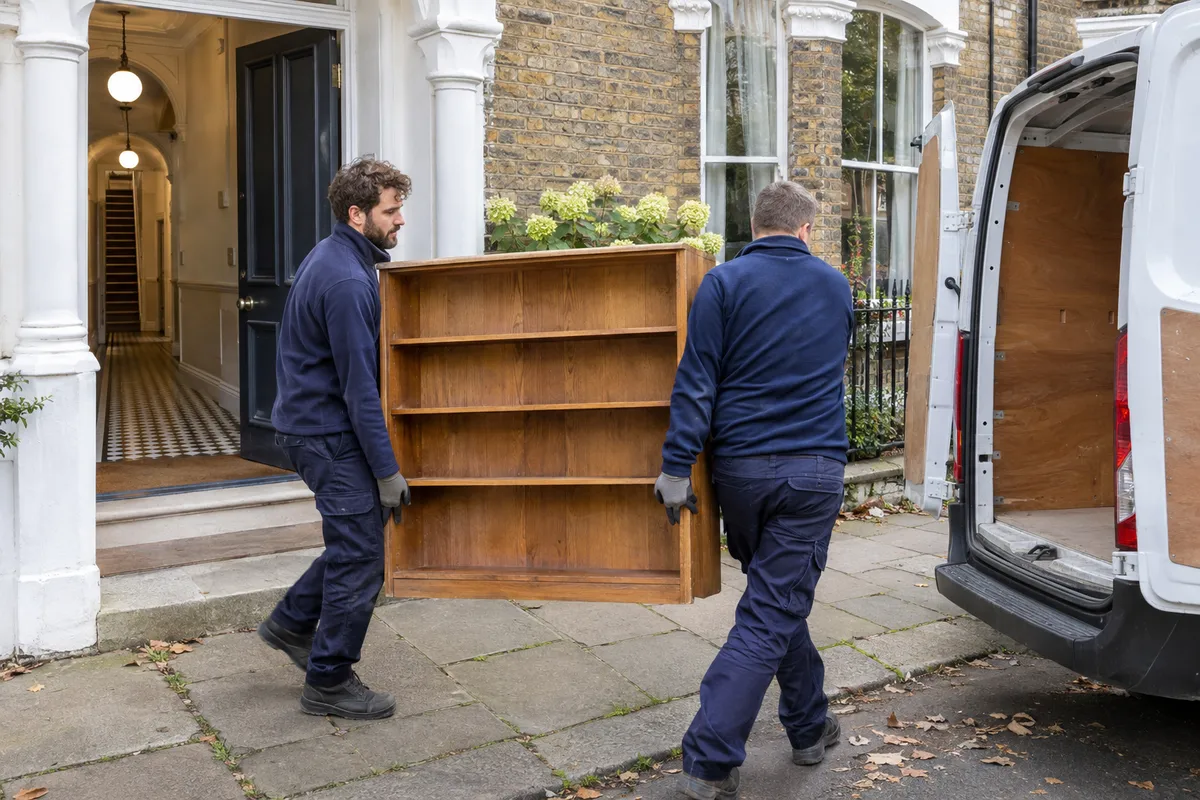
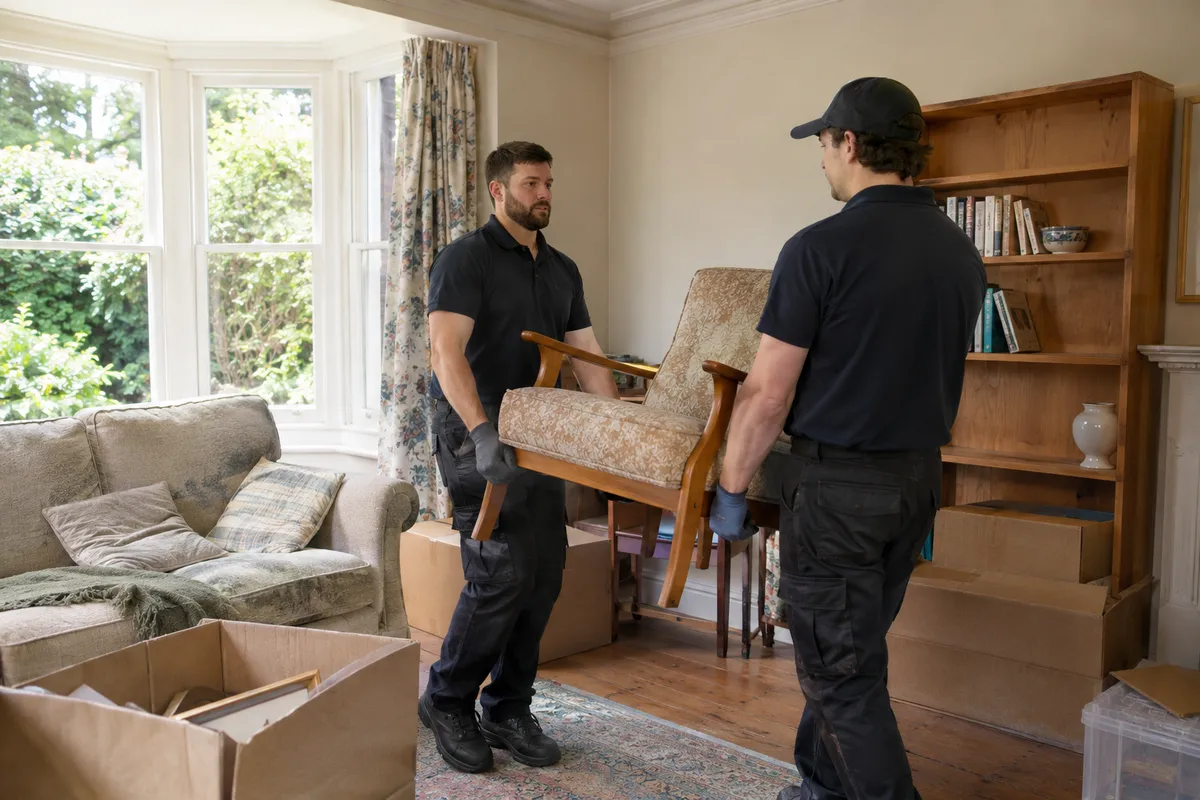
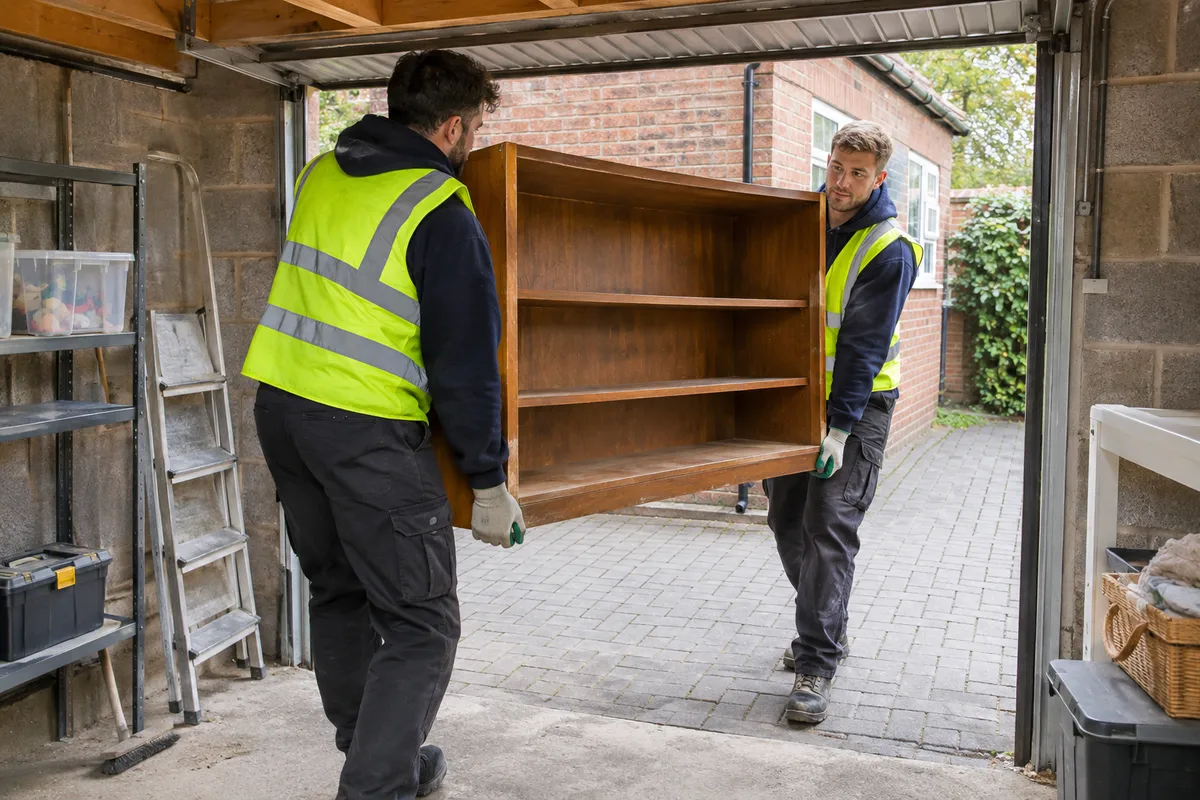
All generated photographs on this page are illustrative service scenes. They do not document jobs in Kentish Town.
Discuss your Kentish Town collection
Call +44 20 3404 3985 with the collection postcode, item list and property details. We will discuss the scope, available arrangements and quote before work begins.
Services for your Kentish Town enquiry
Furniture disposal · Rubbish collection · House and flat clearance