
LONDON & THE M25
Junk Removal
in Kenton.
A selective house clearance needs more than a room count. We organise Kenton junk removal by identifying the unwanted groups in each space and keeping retained belongings outside the instruction. The complete list, material mix and access help us agree a collection that our team can carry, load and take away responsibly.
- Carrying and loading included
- A clear quote before work begins
- Licensed and insured waste carrier

FROM ENQUIRY TO REMOVAL
Kenton collections: the process we agree
01
Define room groups
Identify exactly what leaves each space.
02
Explain the carries
Describe floors, doors and outdoor locations.
03
Confirm scope and quote
Update additions before work begins.
04
Review every location
Check retained and removed groups.

Give each room a clear removal instruction
Begin with the rooms involved and state exactly what leaves each one. In a sitting room this may be a bookcase and two chairs while the sofa stays; in a bedroom it may be only a mattress. Tell Junk Please those distinctions instead of asking for a general three-room clearance. The number of rooms does not describe the volume or work. List substantial furniture individually, then describe loose contents by group and approximate amount. Empty furniture is different from furniture containing unwanted possessions. If a cabinet stays but its contents leave, say so explicitly. This approach also helps when one room contains belongings from several household members. The collection should follow their settled decisions, with a nominated person able to confirm the agreed list. We do not treat the presence of an item in a named room as automatic authority to remove it.
Keep the removal groups visible during sorting
Several rooms can change quickly while a household sorts belongings. Objects may move between spaces and a photographed pile may no longer represent the final load. Keep a simple updated list by location and tell us about additions or retained items. Where practical, group unwanted boxes away from belongings being kept. Do not rely on a mark or colour that has not been explained to the team. Personal papers, keys and sentimental objects need to be checked by their owner before they join the waste group. We do not decide which possessions have value. If relatives are taking furniture first, identify what will remain for our collection after that happens. An updated photograph with a short explanation is more useful than several old images of the same changing room. The aim is a clear final instruction that remains understandable when carrying begins.
Kenton property context requires the actual address
Brent Council’s Mount Stewart conservation appraisal provides a specific local reference within Kenton. It demonstrates why the area should not be treated as one uniform building type, but it cannot tell us how every collection address is entered. Send the full postcode and describe the door or gate the team would use. A house with a side route, an upstairs flat and a room reached through shared space present different tasks. Explain the available loading position and who can authorise use of any driveway or managed courtyard. We do not assume an empty space is available for our vehicle. Nor do we turn conservation status into an invented restriction on ordinary loose furniture removal. The official Mount Stewart appraisal supplies local character context; your premises determine the route and work. Street restrictions need consideration for the specific loading location.
- List unwanted furniture separately in each room
- Separate furniture from cupboard contents
- Keep the inventory current while sorting
- Describe every starting location and route
- Nominate someone who can confirm retained items

| Space | Removal group | Retained group |
|---|---|---|
| Study | Desk and empty cabinet | Files and live equipment |
| Bedroom | Frame and mattress | Wardrobe and clothing |
| Hall cupboard | Agreed household boxes | Personal documents |
| Garden | Specified outdoor objects | Tools and plants |
Plan a collection with several starting points
Explain where each removal group stands rather than giving only the entrance to the house. A wardrobe upstairs, boxes in a front room and garden furniture outside involve different carries. Include the floor, stairs, narrow turns and any lift. Substantial furniture needs dimensions and a description of its construction and condition. If dismantling is required, discuss it explicitly instead of assuming it falls within carrying. Tell us about an attached unit or fitted material before treating it as loose furniture. Keep the shared route clear of retained belongings where practical, but do not attempt an unsafe move to prepare it. If an entrance requires someone to unlock it throughout the visit, arrange that person to remain available. The collection quote should account for the actual locations and agreed work, not an assumption that everything will be waiting beside the front door.
Different rooms can contain different materials
A household collection may combine furniture, bagged contents and electrical equipment, but those groups still need to be named. Books and crockery can be dense even when their boxes look small. Identify mattresses and appliances separately, including anything stored out of use. Connection or specialist work must be discussed rather than hidden inside the item name. If renovation material is included from a spare room, describe its type and approximate amount. Timber, rubble and packaging are different loads. Outdoor additions require the same clarity: cuttings are not soil or paving. Unknown containers or potentially hazardous substances need to be raised before booking so acceptance can be considered. We do not treat a multiroom clearance as permission to collect every substance found in the property. Clear grouping helps us understand the complete proposed load and discuss an appropriate collection arrangement.


| Group | Service | Detail to give |
|---|---|---|
| Room contents | House and flat clearance | Furniture and loose contents |
| Work items | Office clearance | Equipment ownership |
| Outdoor waste | Garden waste collection | Cuttings versus dense materials |
| Project debris | Builders clearance | Material and amount |
An illustrative selective household collection
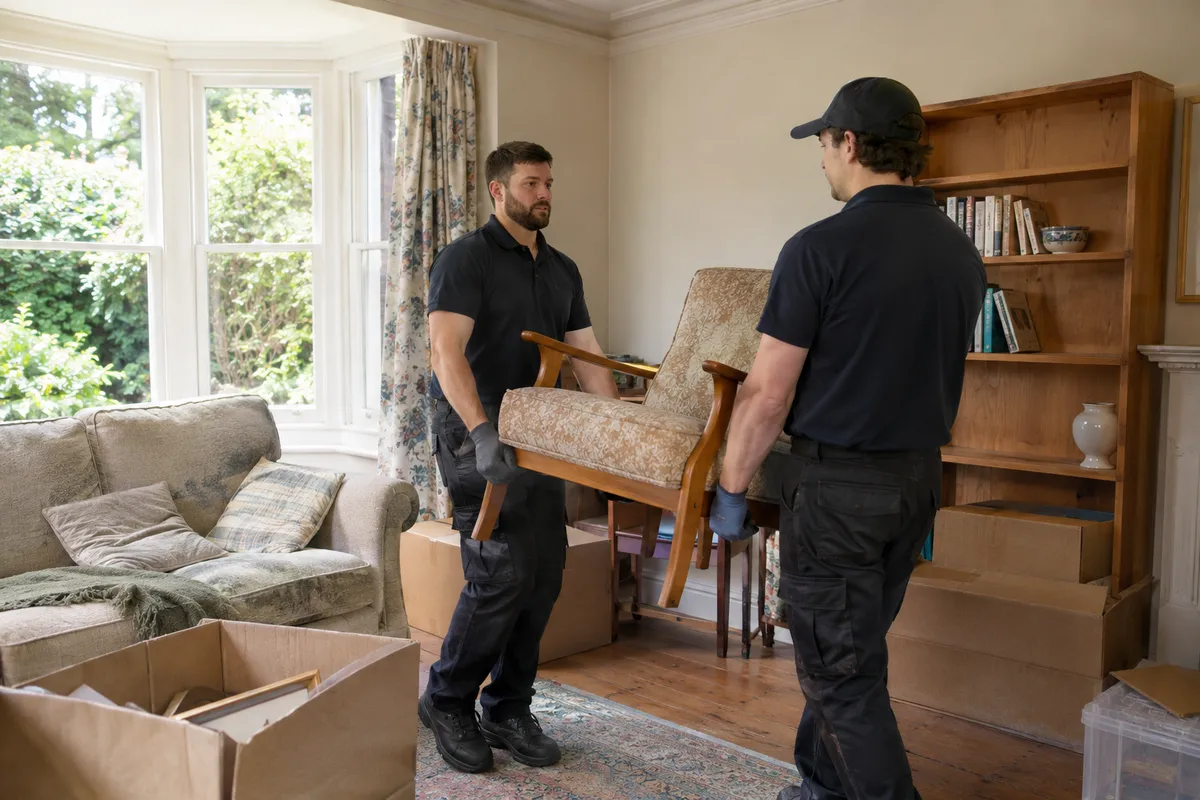
Imagine a household reclaiming a study and part of a spare bedroom. The study desk and an empty cabinet are leaving, while files and a printer remain. In the bedroom, a bed frame and mattress are unwanted but the wardrobe stays. Several household boxes are added from a hallway cupboard. This is a planning illustration, not a completed Kenton job. We would discuss the furniture components and boxed contents separately, then ask about the routes from each location. The retained wardrobe, printer and files would be excluded clearly. If the desk needs dismantling to pass a doorway, that work must be discussed before the collection is agreed. The household could then confirm the final list and price before carrying starts. The rooms supply a useful way to organise the enquiry, but the individual authorised items define what our team removes.
Agree the whole job before loading starts
Our quote reflects the amount, material mix, carrying and additional work agreed. We do not invent a Kenton room-based tariff or assume that two clearances involving the same number of rooms are equivalent. Give us the final contents and access details, then discuss timing and current availability. An enquiry does not itself confirm an appointment. If the household changes the list, update us before the visit where possible. Extra bags, an added appliance or a retained furniture piece can all change the original description. A different route or unavailable lift matters too. Before loading, the person responsible should understand the scope and price being agreed. This avoids relying on an early estimate made before sorting was finished. A clear agreement lets the team concentrate on the defined carrying and loading while the household keeps control over the belongings staying.
| Stage | Check | Result |
|---|---|---|
| Sorting | Owners have decided | Clear authority |
| Enquiry | Locations and materials listed | Defined scope |
| Visit | Changes discussed | Current quote |
| Handover | Each agreed group reviewed | Clear completion |
See the current collection price guide, then confirm your complete quote with us. No separate Kenton tariff is implied.
Check completion room by room
After the agreed load has been carried out, review each location against the list. This is especially useful when furniture components and boxes were spread across several rooms. Confirm that the specified unwanted groups have gone while retained belongings remain. A room containing furniture is not necessarily incomplete if those pieces were excluded from the job. The waste leaves for responsible onward handling, with reuse and recycling considered where suitable to material and condition. We do not promise reuse of every item or state an unsupported local recycling percentage. Collection does not automatically include cleaning, decorating or rearranging furniture that remains. Discuss any separate requirement explicitly. If a newly accessible cupboard reveals additional waste, describe it before it is added. A defined room-by-room handover gives everyone a clear understanding of the collection completed.

LOCAL COLLECTION AREA
Where we collect in Kenton
Kenton’s OpenStreetMap place marker gives orientation, not a depot location or collection boundary. Provide the full postcode and actual entrance. Mount Stewart is specific local context rather than a description of every Kenton property.
Nearby collection areas: Harrow · Wealdstone · Queensbury
Our London and M25 coverage is described on the Areas We Cover page. The local information here concerns the collection enquiry; it does not create a separate neighbourhood branch.
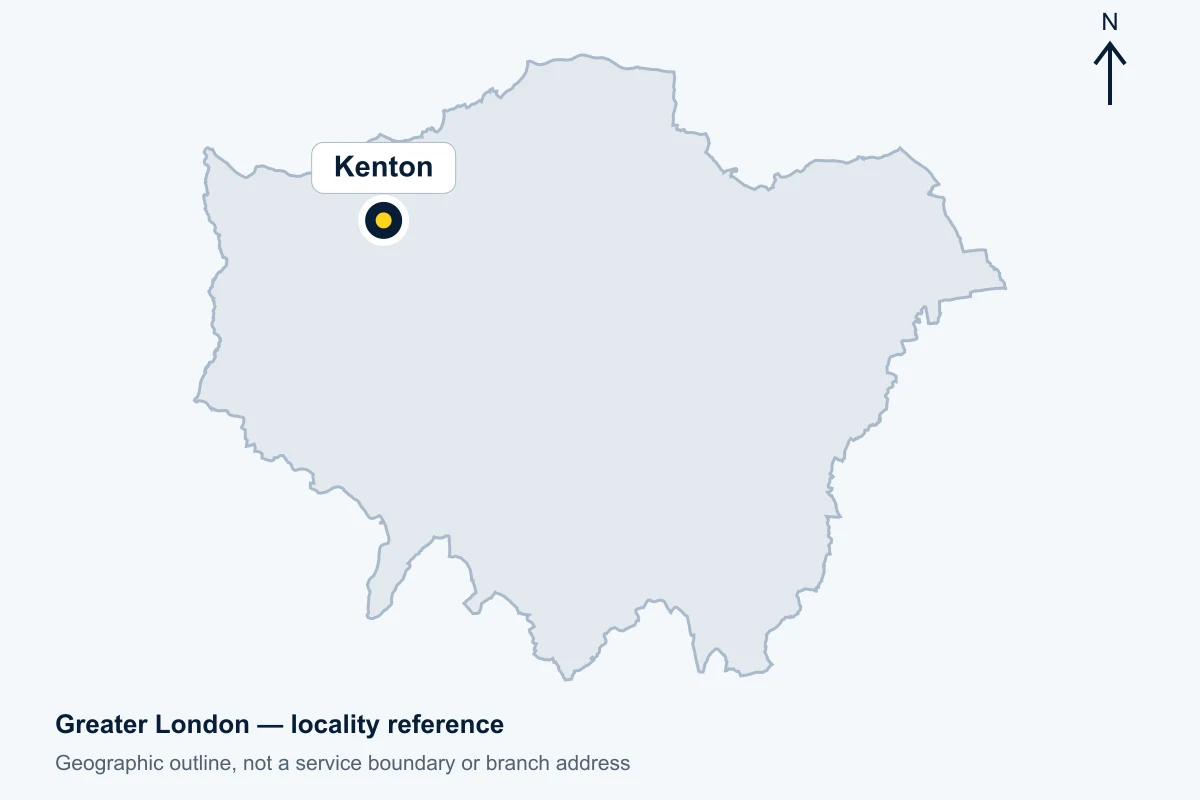
Greater London reference outline: GLA / OS Open Data (OGL). Location: OpenStreetMap Nominatim. This is an orientation map, not a service boundary or branch address.
COLLECTION QUESTIONS
Kenton removal enquiries: questions answered
Can only one item leave a room that otherwise stays furnished?
Yes. Name the item and identify the retained furniture clearly. A room description helps organise the enquiry but does not make every object part of the collection. The team follows the authorised removal list.
Should cupboard contents be included separately?
Yes. State whether the cupboard, its contents or both are leaving. Give a general description and amount for loose belongings. Remove retained papers and personal items before the final collection group is confirmed.
What if belongings move between rooms during sorting?
Update the location list and photographs before the visit where possible. The carrying route should reflect where the contents actually stand. Tell us about added or retained material at the same time.
Can one family member confirm the whole house collection?
Nominate someone who knows the agreed decisions and can authorise the contents. Settle ownership first if several people use the rooms. We should not have to decide which personal possessions are unwanted.
Does the quote depend only on how many rooms are involved?
The amount, materials, access and work matter. One room may hold a single chair or a much larger mixed load. Describe the actual contents rather than assuming the room count defines the price.
Will retained furniture be rearranged after removal?
Rearranging or organising retained belongings is a separate requirement. Our agreed task concerns carrying, loading and taking away specified unwanted contents. Discuss any additional work explicitly so the endpoint is clear.
All generated photographs on this page are illustrative service scenes. They do not document jobs in Kenton.
Discuss your Kenton collection
Call +44 20 3404 3985 with the collection postcode, item list and property details. We will discuss the scope, available arrangements and quote before work begins.
Services for your Kenton enquiry
Furniture disposal · Rubbish collection · House and flat clearance