
LONDON & THE M25
Junk Removal
in Mitcham.
We arrange Mitcham clearances by making the removal instruction practical: which contents leave, who can authorise them and how they reach the loading point. The enquiry may concern several household rooms, a garden store or unwanted business furniture. Tell us the full postcode and describe the load in its present locations. We carry and load the agreed items, with the complete price discussed before work starts. There is no need to turn an uncertain collection into a pavement pile before asking us to assess the work.
- Carrying and loading included
- A clear quote before work begins
- Licensed and insured waste carrier

THE CARRYING ROUTE
Planning the Mitcham carrying and loading
01
Confirm the instruction
Identify who authorises the contents and who attends.
02
List each location
Separate indoor rooms and outdoor storage.
03
Describe materials and route
Name bulky items, dense waste, gates and stairs.
04
Agree the full quote
Confirm accepted contents, work, loading and availability.
05
Carry and remove
We load the agreed waste for responsible onward handling.

Start with the person who can confirm the contents
When several people are involved in a property handover, a clear removal list matters. Tell us whether you are the occupier, a relative or an authorised business contact and identify who will attend. We need an instruction that distinguishes unwanted contents from belongings being kept or collected by someone else. Our house and flat clearance can be discussed for defined rooms or groups of items rather than automatically covering every cupboard. If furniture belongs to a landlord, explain whether it is included. The person providing keys should know the same scope as the person arranging the quote. We do not decide ownership by how old an item looks or whether it stands beside rubbish. Establishing that boundary before carrying starts helps the collection follow the intended handover.
Mitcham has local distinctions; the collection uses your exact address
Merton Council publishes a separate Mitcham policies map and a detailed appraisal for the Cricket Green conservation area. Those official sources identify local places rather than imply that all Mitcham buildings have one character or entrance arrangement. Give us the complete postcode, property type and actual door or gate used to reach the contents. A rear garden, upper-floor flat and separate storage area need their own explanation if included. Tell us whether an entryphone, shared corridor or locked gate lies on the route. The nearby green or main road may help orientate an enquiry, but it does not settle the property access. We discuss the real starting points and proposed loading position before agreeing the visit, without inventing a town-wide route or one parking timetable for the locality.
ADDRESS & LOADING
Furniture and loose belongings are separate parts of the list
Describe bulky furniture individually and explain where it stands. A sideboard, mattress, table and wardrobe have different shapes and carrying requirements. For furniture disposal, dimensions are helpful where doorways or stairs appear tight. Identify damaged parts, loose glass or unstable panels. If you want dismantling discussed, say so before the price is agreed; fitted joinery is not automatically part of ordinary lifting. Loose belongings should have their contents described rather than only a bag count. Clothing, packaging and renovation debris are different material groups even when stored in similar cartons. Check drawers and shelves for things you want to keep. We follow the agreed contents, so retained documents or family possessions should be clearly outside the removal instruction before the furniture leaves.
- Nominate the person who can confirm a family handover list
- Identify furniture reserved for relatives before the collection
- Give the rear store its own contents and keyholder details
- Separate garden cuttings from soil and broken paving
- Update the scope if another person adds an appliance
| Decision | Information to provide | Purpose |
|---|---|---|
| Authority | Occupier or nominated representative | The removal follows a clear instruction |
| Retained items | Dining set reserved for a relative | Nearby furniture remains excluded |
| Included locations | Rooms and rear store | Every carrying route is discussed |
| Access contact | Keys, gate and attending person | The agreed locations can be reached |

A rear store needs more than a note saying garden access
Tell us how the store is reached, including any side gate, steps or passage through the house. Explain whether the same keyholder can open both the property and outbuilding. A large garden does not establish close vehicle access, and a gate suitable for sacks may be too narrow for an assembled cabinet. We need the route from the contents to the proposed loading point. If the garden store contains both unwanted items and retained tools, identify the difference. Our enquiry concerns the agreed contents; removing an outbuilding or altering fixtures is additional work to raise explicitly. You can describe the store as it stands rather than move heavy objects yourself just to reveal a clear floor. Photographs from more than one angle can help explain what is behind larger furniture.
Illustration: a family handover with a retained dining set
Imagine a Mitcham family preparing a property handover with an unwanted sofa, two mattresses and boxed household contents, while a dining set is reserved for a relative. Bags of cuttings and an old bench also stand in a rear store. This is a realistic illustration, not a completed-job account. We would ask who confirms the list, which boxes leave and how the mattresses and sofa reach the exit. The store adds a separate route and material question. If the outdoor bags contain soil or broken paving, that should be named rather than included under cuttings. We can discuss one complete removal with retained items clearly excluded. If another family member adds a refrigerator later, the appliance and location must be included before relying on the original quote.
| Contents | Useful detail | Relevant service |
|---|---|---|
| Sofa and mattresses | Pieces, dimensions and floor | Furniture disposal |
| Household boxes | Actual contents and quantity | Rubbish collection |
| Garden material | Cuttings, soil, paving and old furniture separately | Garden collection |
| Repair debris | Tiles, timber, rubble or plasterboard | Builders clearance |
Garden, repair and electrical materials are identified before booking
For garden collection, distinguish already-cut branches and green material from soil, rubble and outdoor furniture. Collection does not automatically include gardening or landscaping. For repair waste, name tiles, timber, rubble and plasterboard with an approximate amount and whether the material is loose or bagged. Dense debris is different from lightweight packaging. Appliances and electronics should be listed individually, including their connected or freestanding condition where relevant. We do not assume electrical, plumbing or joinery work forms part of collecting an appliance. Raise unknown containers, chemicals and suspected hazardous substances separately before booking. The accepted contents need to be clear at enquiry, rather than an unidentified material appearing among the agreed furniture while loading is under way. We discuss appropriate removal from the actual description supplied.


Connect the carrying plan to a checked loading position
Give us the proposed loading point and explain whether it is on a driveway, shared private area or public road. Include barriers and any contact controlling vehicle entry. Merton’s parking-zone information includes Mitcham and supports local checks, with relevant signs at the address still important. We do not assume an empty space is suitable or that a permit grants every clearance vehicle access. The relationship between the entrance and loading point also matters: a front-room load may leave differently from material in a rear store. Explain both. We discuss current appointment availability with the practical job details. Local coverage does not guarantee immediate removal or an invented arrival time, and we avoid promises about traffic or driving routes that have not been established.
See the current collection price guide, then confirm your complete quote with us. No separate Mitcham tariff is implied.
| Change | Explain | What is reviewed |
|---|---|---|
| Another room added | Contents and access | The amount and carrying work |
| Appliance discovered | Type, location and connected condition | Handling and relevant supplement |
| Fitted item requested | Work beyond carrying | Whether additional work is agreed |
| Different loading position | New access or restrictions | The practical collection arrangement |
Price the complete handover, then take away the agreed load
Our published price guide is the reference for collection bands and relevant supplements. The complete quote needs the amount, material mix, specific items and carrying work, including any additional task requested. Tell us about changes before the visit where possible so the scope can be updated. A business enquiry should similarly identify the authorised furniture, stock or equipment and distinguish retained landlord fixtures. Our office clearance service concerns agreed contents and does not automatically include a strip-out or specialist data destruction. Before loading, the contents and price should match the enquiry. We then carry and remove the accepted load for responsible onward handling, with reuse and recycling where possible. We do not guarantee that every item will be reused or attach unsupported disposal statistics to a Mitcham collection.

LOCAL COLLECTION AREA
Where we collect in Mitcham
Mitcham is a Greater London locality in the London Borough of Merton. The map marks the neighbourhood rather than a depot or company address. Give the complete postcode and entrance for your enquiry. Morden and Colliers Wood are nearby named areas; collection appointments depend on the actual load, access and availability.
Nearby collection areas: Colliers Wood · Morden · Tooting
Our London and M25 coverage is described on the Areas We Cover page. The local information here concerns the collection enquiry; it does not create a separate neighbourhood branch.
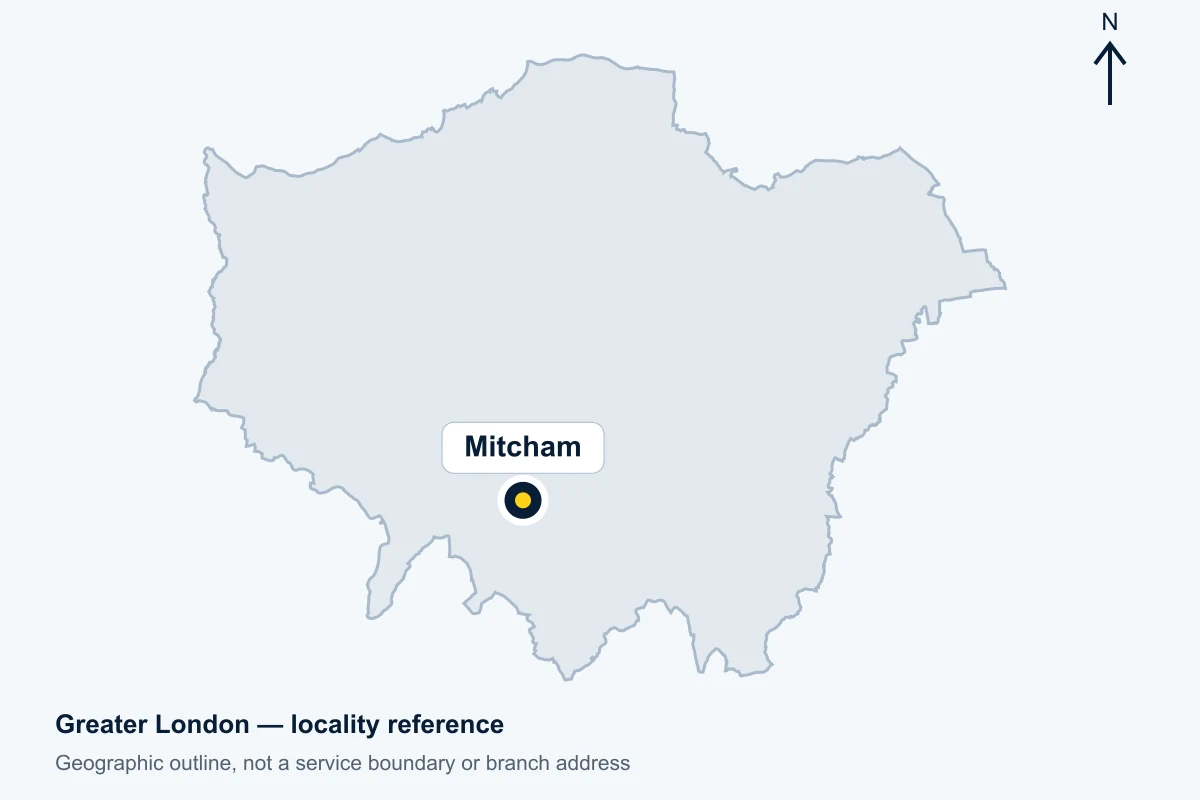
Greater London reference outline: GLA / OS Open Data (OGL). Location: GeoNames UK gazetteer. This is an orientation map, not a service boundary or branch address.
COLLECTION QUESTIONS
Mitcham removal enquiries: questions answered
Can a relative arrange a Mitcham property clearance?
Tell us who authorises removal and who will attend with access. The representative should have the agreed list and know which belongings remain. We discuss a defined clearance rather than decide family ownership from the position or appearance of objects, particularly where several people are keeping different things.
Can you leave a dining set while removing other large furniture?
Yes, identify the retained set clearly in the enquiry and give the attending contact the same instruction. List the unwanted pieces separately, with their rooms and access route. Furniture standing close to the load should not be assumed removable merely because the rest of the room is being cleared.
Does a rear-store collection need a separate keyholder?
Explain how the store opens and whether the attending person can provide entry. It may use a different gate or route from the house. Include its contents explicitly; a domestic clearance does not automatically cover every outbuilding or shared storage space associated with the address.
Can old benches and green cuttings form one enquiry?
List them together as distinct parts of the load, naming the furniture and describing the green material. Soil, rubble and broken paving should be identified separately. Explain their location and carrying route so the complete quote reflects the outdoor task as well as any indoor contents.
What happens if another family member adds a fridge?
Tell us before the visit where possible. Name the fridge, its location and whether it is disconnected and freestanding. We need to review the full scope and relevant handling or supplements. A later appliance is not automatically included in an earlier furniture and household-rubbish description.
Will the collection include cleaning the property for handover?
The agreed service concerns unwanted contents, carrying, loading and removal. Cleaning, repairs or other property work should be discussed separately rather than assumed from the word clearance. A clear scope helps the handover plan reflect the actual work being booked and its complete price.
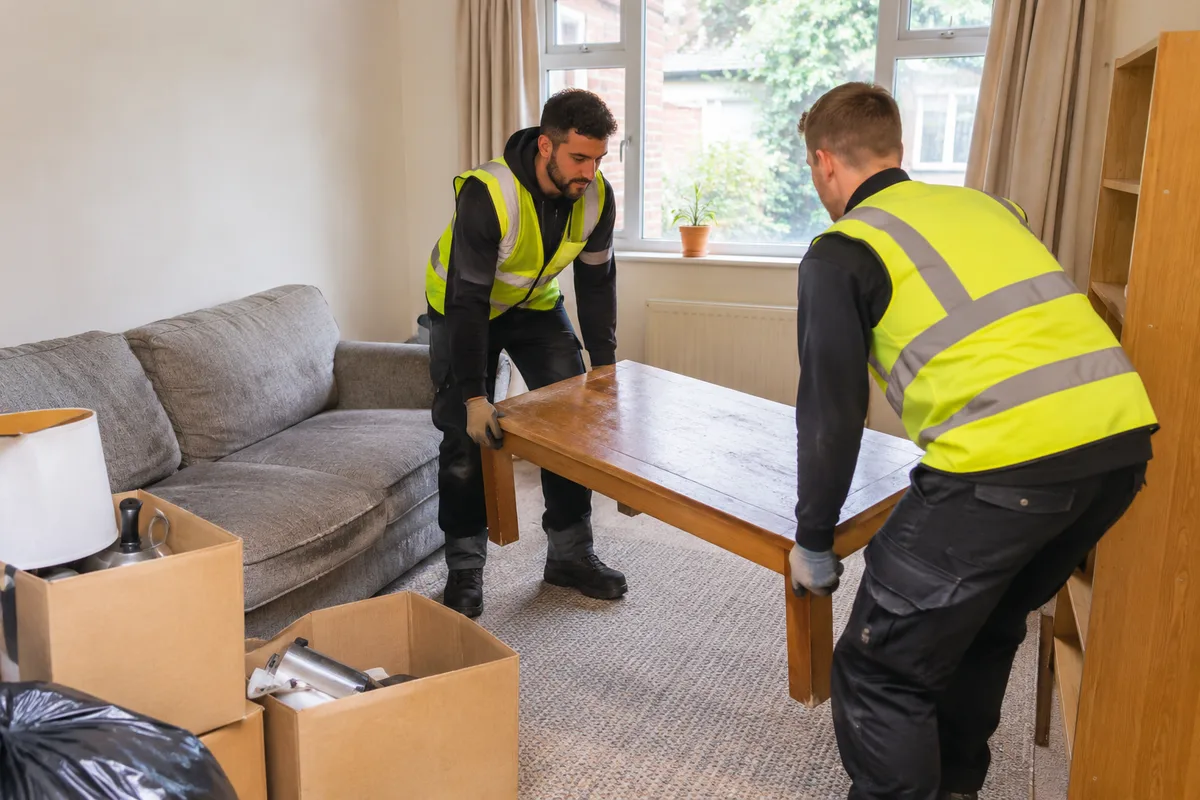
All generated photographs on this page are illustrative service scenes. They do not document jobs in Mitcham.
Discuss your Mitcham collection
Call +44 20 3404 3985 with the collection postcode, item list and property details. We will discuss the scope, available arrangements and quote before work begins.
Services for your Mitcham enquiry
Furniture disposal · Rubbish collection · House and flat clearance