
LONDON & THE M25
Junk Removal
in Mortlake.
We arrange Mortlake removals around the premises and the actual unwanted contents. We define furniture, loose belongings and equipment clearly, then agree the carrying, loading and price for the proposed collection.
- Carrying and loading included
- A clear quote before work begins
- Licensed and insured waste carrier

SPACES, ITEMS AND MATERIALS
Clearance services for Mortlake properties
Different Mortlake building forms need different collection descriptions
Richmond’s Mortlake village guidance describes residential terraces south of the High Street and modern flatted development associated with the riverside area. We use that verified contrast to ask about the actual building, rather than assume a uniform carrying route. Tell us the full postcode, rooms and floor containing the load. Identify the door serving those contents and any stairs, usable lift or shared passage involved. A riverside location does not itself provide vehicle access or a loading place, just as a terraced frontage does not establish that the van can stand at its nearest door. Explain the proposed position and any contact controlling managed access. We discuss the route from the items to that point without inventing a local permission, journey time or new-development rule. Your premises information makes the collection practical.
- Describe the actual building rather than assume riverside access
- Identify furniture staying within a partially cleared room
- Name the material inside sacks and cupboards
- Explain lift or stair routes alongside bulky-piece dimensions
- Keep operational business equipment outside the removal list

Generated service illustrations show typical collection tasks, not documented local jobs.
| Premises | Load to identify | Access detail |
|---|---|---|
| Terraced home | Selected furniture and loose contents | Actual entrance and possible loading |
| Flat | Named bulky pieces and boxes | Floor, usable lift or stairs |
| Office or workshop | Redundant movable contents | Contact and route through premises |
| Outdoor or renovation area | Named material groups | Gate or internal carrying route |
The material list should reveal more than the pile’s footprint
For a Mortlake collection, the most useful estimate separates volume from material. Several cartons of empty packaging can occupy space without resembling a few sacks of dense debris. Tell us what each significant group contains and approximately how much there is. Name large furniture, mattresses and electrical items rather than reduce them to another box-sized unit. Photographs should show the full load, but add a note about concealed contents inside cupboards or behind the visible stack. If a container’s substance is uncertain, clarify it before collection is agreed. We use the description to discuss acceptance, carrying and the complete quote. A list based only on the pile’s footprint can miss a second material group, so the enquiry should explain the objects the team is actually being asked to remove.
Selected household rooms can be cleared without an unlimited scope
A Mortlake household removal may concern one room becoming available again rather than a home being emptied. Identify the pieces that prevent the room being used, then add any loose contents also leaving. State which storage or furniture remains and whether it contains retained belongings. If several people share ownership of the contents, settle the selection before booking. A person opening the premises should know the same list and be able to confirm it. We do not treat the presence of keys as a decision about personal possessions. Include material in another cupboard or room only when it is intended for this collection. This lets us discuss a finite load and its access, while keeping belongings that remain useful outside the removal scope even if they stand close to the unwanted groups.
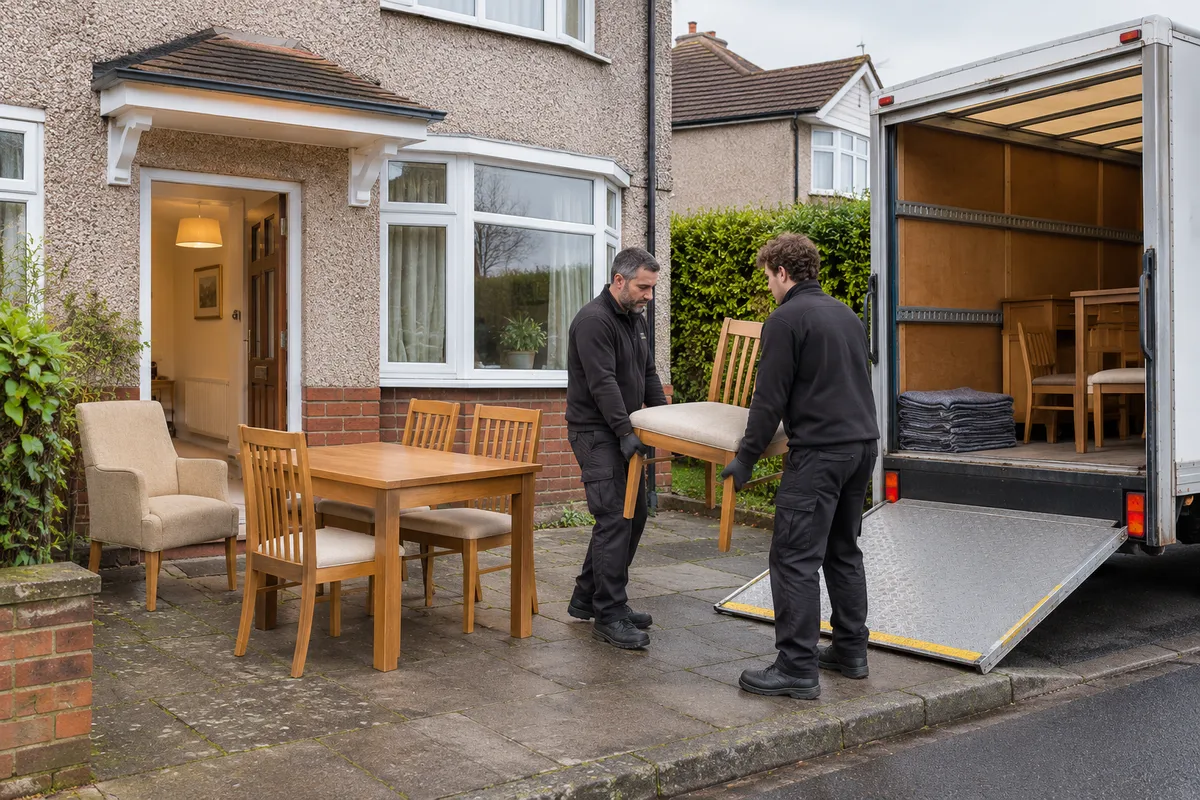
Bulky furniture is connected to its route out
Mortlake flats and houses can need different explanations for the same furniture piece. Tell us where the item starts and the sequence of doors, turns or stairs before it reaches the exit. If a lift is proposed, describe its actual availability for the furniture rather than simply say the building has one. For the item itself, give approximate size and say whether it is assembled, in sections or fixed. Raise dismantling when required so the work can be discussed separately from straightforward carrying. A mattress remains a named item apart from a bed frame. Useful photographs include the difficult point of the route as well as the object. We can then assess the proposed removal around your premises instead of assume that all objects shown in one room share an identical path.

Workshops and offices need a boundary around redundant contents
A Mortlake office or workshop enquiry should say which contents have been taken out of service. List the desks, seating, cabinets and loose material proposed through the office clearance discussion. Distinguish business property being kept, including equipment, stock and customer belongings. Explain whether a cabinet leaves empty or whether its contents also need taking away. In a workshop, an ordinary furniture description should not conceal machinery, process material or unidentified containers; those require their actual names and acceptance discussion. Electrical devices and any information-security need also belong in separate descriptions. We do not infer certified data destruction, disconnection or strip-out from general contents collection. The premises contact should be able to release the listed material and explain its route, so the team can follow an authorised load rather than make operational decisions for the business.

Outdoor and renovation groups retain their own handling questions
For Mortlake waste from outdoor work, the enquiry should distinguish loose plant material from the heavier or manufactured contents beside it. Explain branches, soil, broken paving and old furniture as separate groups under the garden enquiry. Tell us their positions and the path to the loading point; the indoor and outdoor parts of a load need not use the same entrance. If renovation material is also present, describe timber, plasterboard, rubble and packaging by type and approximate quantity. Filled sacks need their contents named. Loose belongings from a shed are a separate question from removing its fabric. Raise unfamiliar substances before booking. We discuss collection of the specified groups, not an assumed programme of gardening, excavation or building work based on how the waste arose.
Choose the right collection for Mortlake
| General phrase | Detail to add | Why it matters |
|---|---|---|
| Bedroom contents | Frame, mattress, boxes and retained units | Defines the actual scope |
| Several sacks | Materials and approximate quantity | Clarifies weight and acceptance |
| Office rubbish | Furniture, packaging and named devices | Separates different requirements |
| Garden pile | Cuttings apart from soil and paving | Does not conceal dense material |
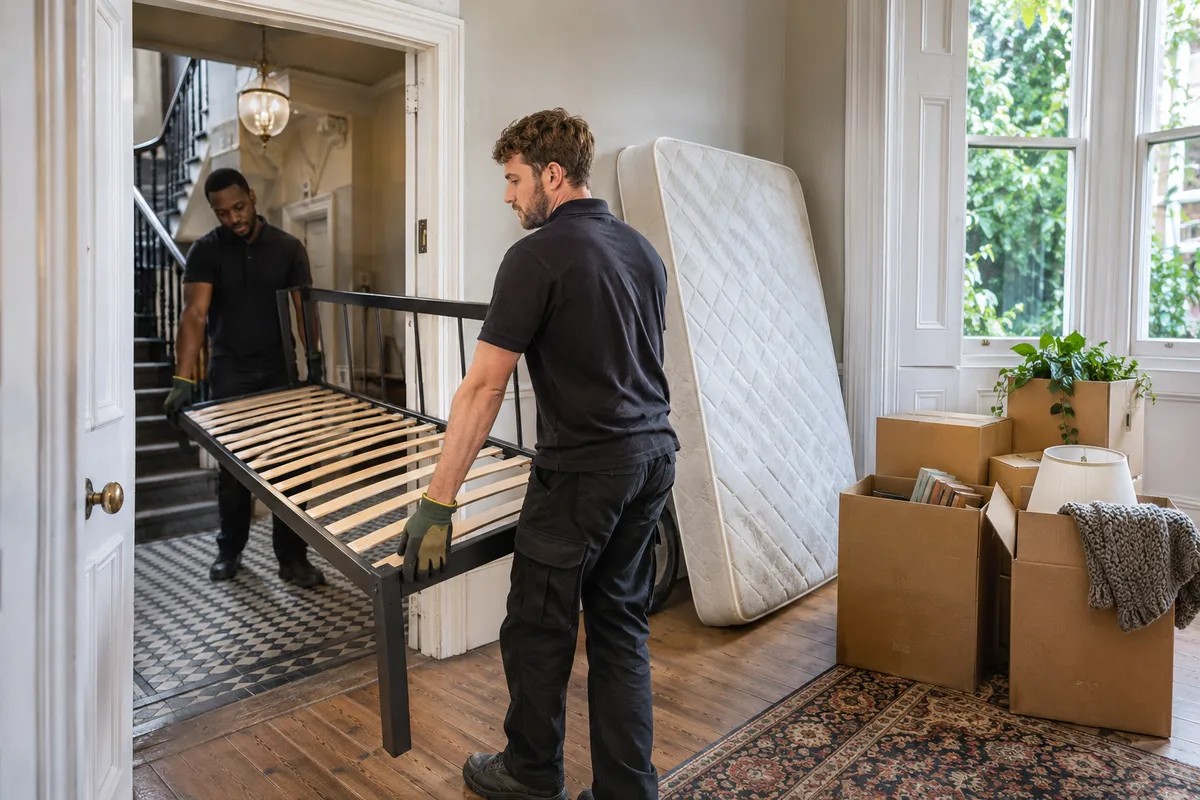
An illustrative flat collection with retained household furniture
Imagine a Mortlake resident removing a bed frame, mattress and stored boxes from a flat while retaining the wardrobe and other room furniture. This is an illustrative enquiry, not a report of a completed local collection. We would identify the bulky pieces, describe the boxes and ask about the floor and route through the building. Any lift or managed entrance arrangement would be explained, with the proposed loading position discussed rather than assumed from a nearby open area. The resident would confirm retained belongings before the visit. If an appliance is added, its name, location and connection status need discussion. If renovation debris also appears, the material and quantity become another clear group. The quote can then reflect the full load and work without making a selected bedroom collection an unlimited clearance of the flat.
| Element | Information needed | Outcome |
|---|---|---|
| Scope | What leaves and what stays | Clear removal list |
| Carrying | Location and complete route | Work understood |
| Price | Amount, materials and supplements | Complete quote |
| Changes | Added contents or altered access | Revised agreement before inclusion |
The full quote and responsible handling follow the agreed contents
The Mortlake quote should make the boundaries of the proposed visit clear. The current charging guide provides the bands and relevant supplements; your complete material list and access describe the particular job. Add mattresses, appliances, dense waste and additional work explicitly so they are considered before the price is agreed. A change in contents or route needs an update where possible rather than an assumption that the first discussion covers every addition. We confirm collection availability directly. Once loaded, the identified waste leaves for responsible onward handling and suitable recovery opportunities. Some furniture may be appropriate for reuse while mixed or damaged material requires different treatment. We make no unsupported guarantee about every object or a load-wide recovery percentage. Other work, such as cleaning or repairs to the cleared space, requires its own description beyond waste removal.
See the current collection price guide, then confirm your complete quote with us. No separate Mortlake tariff is implied.

Mortlake: from item list to removal
01
Describe the premises
Identify the rooms, floor and entrance.
02
Define the contents
Separate furniture, loose material and equipment.
03
Agree the arrangement
Discuss loading, price and availability.
04
Carry and remove
We take away the agreed contents responsibly.
LOCAL COLLECTION AREA
Where we collect in Mortlake
Mortlake collections are discussed using the full postcode and actual property access. The marker identifies the locality for orientation, not a depot or a right to use riverside space. Explain the contents and entrance serving your address.
Nearby collection areas: East Sheen · Barnes · Kew
Our London and M25 coverage is described on the Areas We Cover page. The local information here concerns the collection enquiry; it does not create a separate neighbourhood branch.

Greater London reference outline: GLA / OS Open Data (OGL). Location: GeoNames UK gazetteer. This is an orientation map, not a service boundary or branch address.
COLLECTION QUESTIONS
Mortlake removal enquiries: questions answered
Does a Mortlake riverside address establish a loading place?
No. Tell us the actual entrance and proposed vehicle position, with any contact controlling managed access. A path, open area or nearby courtyard does not itself confirm vehicle access. We discuss the practical collection for the premises without inventing permission.
Can the wardrobe stay when a bed and boxes are removed?
Yes. State that the wardrobe remains and identify the frame, mattress and loose contents leaving. Give their quantity and location. We discuss the selected load rather than assume everything in the bedroom is included because part of it is being cleared.
How do I describe filled sacks from a refurbishment?
Name the significant materials and approximate quantity separately from household furniture. Rubble, plasterboard and timber should not disappear into a bare bag count. We discuss the actual mixture, carrying and acceptance before including it in the complete quote.
Can an office collection include material from a workshop?
Describe the workshop contents separately and identify what they are. Ordinary furniture and packaging differ from unknown substances, machinery or specialist process waste. We confirm the proposed load and work rather than infer acceptance from a shared business address.
What lift information helps with a flat furniture collection?
Explain whether the lift is available for the proposed items and identify any actual building arrangement controlling use. Add tight doors and corridors before or after it. We discuss the complete route rather than assume every bulky piece can use a lift simply because one exists.
Will responsible removal mean every item is reused?
Reuse and recycling are priorities where possible, but condition and material affect suitability. We take the agreed load away for responsible handling without promising every item will be reused or assigning an invented recovery percentage to the collection.
All generated photographs on this page are illustrative service scenes. They do not document jobs in Mortlake.
Discuss your Mortlake collection
Call +44 20 3404 3985 with the collection postcode, item list and property details. We will discuss the scope, available arrangements and quote before work begins.
Services for your Mortlake enquiry
Furniture disposal · Rubbish collection · House and flat clearance