
LONDON & THE M25
Junk Removal
in New Malden.
We help New Malden households and businesses turn an unclear pile of unwanted contents into a defined collection. Start by telling us what needs to go, where it is stored and who can authorise its removal. We discuss the route through the property and the proposed loading point alongside the materials involved. Our team carries and loads the agreed items, so the enquiry can begin with their present positions rather than a pile you have already moved outside. From a redundant dining set to mixed contents after a change of tenancy, an accurate list is the basis for an appropriate quote.
- Carrying and loading included
- A clear quote before work begins
- Licensed and insured waste carrier

THE CARRYING ROUTE
Planning the New Malden carrying and loading
01
Define the contents
Identify the unwanted pieces and any belongings staying.
02
Locate each group
Explain the room, store, garden or business area involved.
03
Discuss access
Describe gates, turns, stairs and the proposed loading point.
04
Confirm the quote
Agree the material list, work, price and available visit.
05
Carry and remove
We load the accepted contents for responsible onward handling.

The postcode identifies the property; the item list defines the job
An enquiry headed New Malden clearance could mean furniture in a family house, boxes in a flat or unwanted stock in a business. We ask which setting applies and how much of the property is included. Give the complete postcode and a contact who can explain the contents. If you are arranging removal for another person, establish which belongings may leave before the visit is discussed. An item described as old storage might be a small shelving unit or a heavy fitted cabinet, so photographs and a short explanation are useful together. We can discuss a collection from a particular room without treating the whole building as unwanted. Our role is to remove the authorised load, not to decide which possessions an occupier or business should retain. That distinction is especially useful when several people are involved in a move.
Front boundaries and garden routes deserve a closer look
Kingston Council’s character study describes paired, two-storey housing with defined front boundaries in parts of New Malden North, alongside local shops around Clarence Avenue. That is neighbourhood context rather than a description of every address. For our collection, the practical question is the opening through which the contents will pass. Tell us about a front gate, a path beside the house or any step between the door and street. If the garden is the starting point, explain whether it has its own usable entrance. A photograph of the frontage does not reveal a locked gate at the rear or a narrow turn beside an extension. We discuss the route that actually exists. Do not assume that a generous-looking plot means our vehicle can approach the waste closely or that private parking is automatically available for loading.
ADDRESS & LOADING
Furniture replacement can be a carefully limited clearance
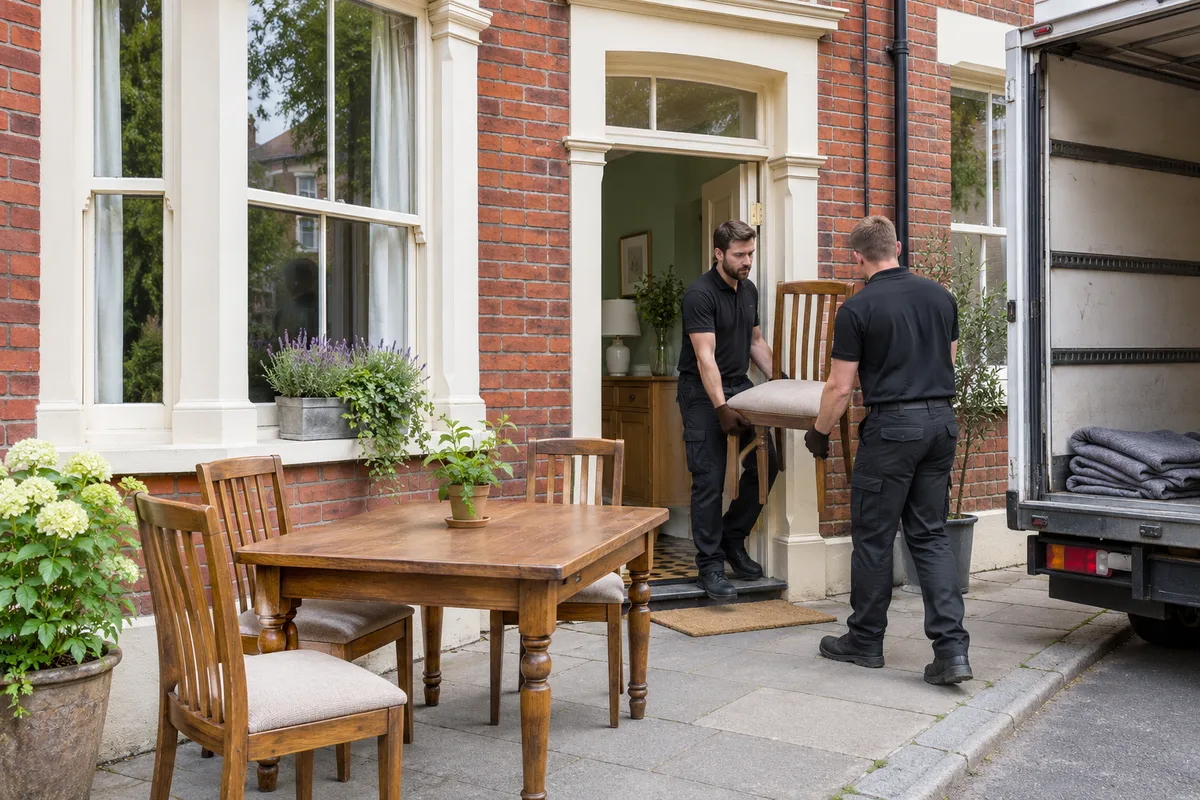
You may want an old table, sideboard and six chairs removed while keeping the rest of a dining room. Through our furniture disposal service, we discuss the named pieces and the work needed to carry them out. Identify glass shelves, detached doors or unstable components rather than leaving them concealed within a broad description. The dimensions of a sideboard are helpful where the exit includes a tight hallway or doorway. If something needs dismantling, tell us before the quote is agreed. A fitted cupboard is different from a freestanding sideboard, and removal of joinery should not be assumed to be part of ordinary lifting. Check that retained contents are out of the furniture before it leaves. Where someone else will attend the collection, give them the same removal list so their instructions match the enquiry.
- List retained and unwanted furniture before combining the load
- Describe the actual gate and passage rather than the plot size
- Separate cuttings, soil and renovation debris in the enquiry
- Name a fitted or connected appliance before requesting removal
- Give the attending representative the agreed contents list
| Load group | Describe | Why it is useful |
|---|---|---|
| Dining furniture | Table, chairs and sideboard with dimensions where relevant | Bulky items and their route can be considered |
| Room-refit debris | Plasterboard, timber, rubble and packaging separately | A bag count alone does not identify materials |
| Garden contents | Green cuttings, pots, soil and outdoor furniture | Collection scope is distinct from garden maintenance |
| Electrical appliance | Type, location and connected condition | Handling and any additional work are discussed |
The difference between a garden collection and a garden project
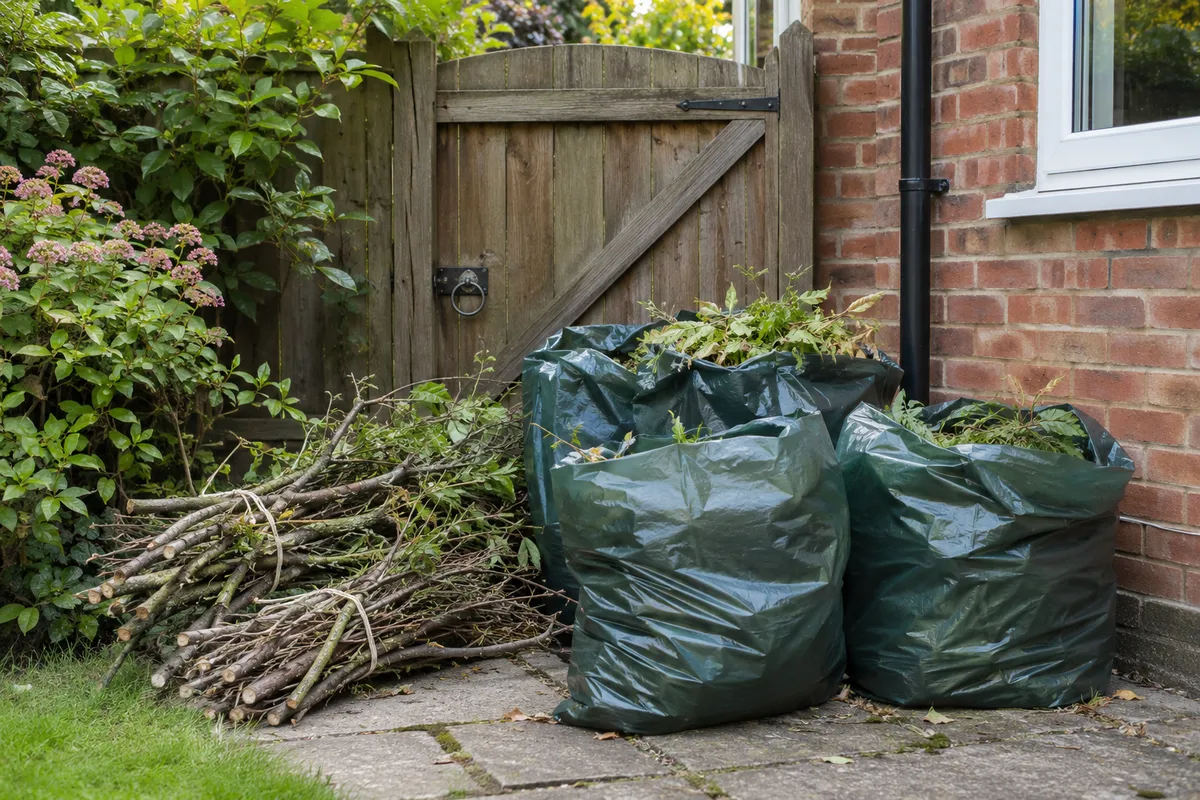
We collect agreed unwanted outdoor material, including green waste, but a request to clear the garden needs a more precise explanation. Name already-cut branches, bags of cuttings, broken pots, old furniture, soil and rubble separately. The garden waste service explains collection; pruning, landscaping and dismantling a structure are additional work to raise explicitly. Tell us whether the material stands on a patio, at the far end of a garden or inside an outbuilding. Long branches and a narrow gate may require a different discussion from a few bags near the front door. We also need to know whether the route passes through a lived-in part of the house. Define what is ready for removal and what work you are requesting, so the quote reflects a collection rather than an unspoken expectation that an entire garden project is included.
Illustration: dining furniture and the remains of a small refit
Consider a New Malden householder replacing dining furniture after work to a ground-floor room. The unwanted load might comprise a table, chairs, a sideboard, a small quantity of bagged plasterboard and cardboard packaging. This is a hypothetical enquiry, not a record of a completed collection. We would ask which material is in each group of bags and whether the room works have finished enough for the carrying route to be usable. If the sideboard is behind a temporary workbench, that position matters. The furniture is not the same part of the load as the refurbishment debris, even if both are in one room. We can discuss the complete removal together, with materials separately identified. If a refrigerator is added from a utility room, the item and second location need to be included before relying on the earlier quote.
| Potential constraint | Useful evidence | Next discussion |
|---|---|---|
| Front boundary | Gate opening and steps | Whether the bulky item can follow that route |
| Side passage | Narrow turn or access through another property | What access is actually available |
| Garden store | Door position and separate key | Where the carrying begins |
| Private loading space | Management contact and entry arrangement | How the proposed loading position is checked |
Electrical and building materials need their own lines on the list
For mixed household rubbish, name appliances and electronic equipment individually. A washing machine, a refrigerator and a box of computer accessories are not interchangeable with ordinary loose contents. Explain whether large appliances are freestanding, already disconnected or still within a fitted installation. The collection discussion does not automatically include electrical, plumbing or joinery work. For refurbishment waste, identify rubble, tiles, timber and plasterboard and explain whether they are loose or bagged. Dense materials affect the assessment differently from bulky light packaging. Raise unlabelled containers, chemicals and anything suspected to be hazardous before arranging removal. We discuss the contents that can be accepted rather than leave an unknown substance for discovery during loading. A useful enquiry gives enough detail to understand what each group contains, without expecting you to guess the eventual disposal destination.


Loading and price are settled from the complete picture
We consider the address, proposed loading position and relevant access restrictions alongside the load itself. Kingston Council provides road-level parking information; a neighbourhood name does not establish a single set of conditions. Tell us about a usable driveway, managed court or service entrance, including who controls it. We discuss the actual arrangement and check applicable signs instead of assuming a nearby bay is suitable. Our current price guide provides the published collection bands and supplements. The full quote depends on the amount, materials, specific items and work agreed. A picture of the table alone will not account for debris in another room or carrying from a garden store. Let us know if the scope changes so the price can be confirmed before work starts. We also check collection availability; a local address does not guarantee an immediate appointment.
See the current collection price guide, then confirm your complete quote with us. No separate New Malden tariff is implied.
| Task | Included when agreed | Raise separately |
|---|---|---|
| Furniture collection | Carrying and loading the named pieces | Fitted joinery or requested dismantling |
| Outdoor waste removal | Taking the accepted materials described | Pruning, landscaping or structural work |
| Business clearance | Removing authorised furniture and contents | Landlord fixtures or specialist data requirements |
| Collection price | The full agreed load and work | Extra rooms, appliances or materials added later |
Business contents leave under a clear instruction
For a New Malden office or shop, distinguish removable business contents from retained fixtures and stock. A nominated contact should identify the agreed load and explain access to any storeroom, upper floor or rear service area. List desks, shelving and chairs separately from monitors, printers and other electrical equipment. Our office clearance and shop clearance services can be discussed for defined contents, without assuming a complete strip-out or specialist data destruction. If another party manages the building, provide the relevant entry and loading arrangements before the visit. Once the agreed material is carried and loaded, we take it away for responsible handling, with reuse and recycling where possible. We do not promise that every item is reusable or attach an invented percentage to a particular New Malden collection. The authorised contents and practical work remain clear from the first list through removal.

LOCAL COLLECTION AREA
Where we collect in New Malden
New Malden is a Greater London locality in the Royal Borough of Kingston upon Thames. The map marks the locality rather than a depot or the wider borough centre. Give the precise postcode for your enquiry, including the entrance used for collection. Norbiton and Worcester Park are nearby named areas; each collection still needs its own property and loading details.
Nearby collection areas: Norbiton · Raynes Park · Berrylands
Our London and M25 coverage is described on the Areas We Cover page. The local information here concerns the collection enquiry; it does not create a separate neighbourhood branch.

Greater London reference outline: GLA / OS Open Data (OGL). Location: GeoNames UK gazetteer. This is an orientation map, not a service boundary or branch address.
COLLECTION QUESTIONS
New Malden removal enquiries: questions answered
Can you collect just a dining set from a New Malden house?
Yes, describe the table, chairs and any other pieces you want removed. We can discuss a limited furniture collection without emptying the whole room. Tell us about dimensions, glass parts and the exit route. Retained belongings should be identified so the authorised removal list is clear to everyone attending.
Do large New Malden gardens automatically allow close loading?
No access assumption follows from the size of a plot. Tell us where the waste stands and describe the gate, passage and proposed loading position. The route may involve steps, tight turns or carrying through the house. We discuss those actual conditions rather than infer vehicle access from a photograph of a wide frontage.
Can room-refit waste be included with unwanted furniture?
Describe both parts of the load in one enquiry, naming plasterboard, timber, rubble or tiles separately from the furniture. Explain whether the debris is loose or bagged and where it is stored. The quote needs the full material mix and carrying requirements, including any location beyond the room shown in your first photograph.
Will garden clearance include cutting down the branches first?
Our waste collection enquiry should identify material already requiring removal. Cutting plants, landscaping or dismantling structures is additional work to discuss explicitly. Tell us what is ready, how much there is and the route out. Do not rely on a general phrase such as garden clearance to establish every possible garden task.
What should a relative know if they are meeting your team?
They should have the agreed contents list, know which belongings remain and be able to provide access to every included location. Tell us who is authorised to confirm the removal. If instructions change, discuss the revised scope before loading so the attending person is not relying on a different understanding of the collection.
Can you price the collection from the New Malden postcode alone?
The postcode helps establish the location, but we also need the amount, materials and access. Use the current price guide as a starting reference and ask for the complete quote. Stairs, particular appliances, dense materials and requested additional work all belong in the description before a collection and its price are agreed.
All generated photographs on this page are illustrative service scenes. They do not document jobs in New Malden.
Discuss your New Malden collection
Call +44 20 3404 3985 with the collection postcode, item list and property details. We will discuss the scope, available arrangements and quote before work begins.
Services for your New Malden enquiry
Furniture disposal · Rubbish collection · House and flat clearance