
LONDON & THE M25
Junk Removal
in Northolt.
Storage furniture and the possessions inside it need separate decisions when space is being reclaimed. We organise Northolt junk removal around the units and loose contents you authorise us to remove. We establish their location and material mix, discuss access and agree the collection before carrying and loading the specified groups.
- Carrying and loading included
- A clear quote before work begins
- Licensed and insured waste carrier

FROM ENQUIRY TO REMOVAL
Northolt collections: the process we agree
01
Separate the decisions
Identify units and contents leaving.
02
Describe the route
Explain construction, floor and narrow points.
03
Agree the complete quote
Include dense and electrical groups.
04
Check the final inventory
Review components before onward handling.
Decide whether the unit, contents or both leave
Tell Junk Please exactly what your storage-clearance request means. A chest of drawers can be unwanted while clothing stays, or its drawers may contain belongings also being removed. A cupboard can remain while the boxes inside leave. State those decisions explicitly rather than relying on the furniture name. List substantial units individually and describe loose groups by approximate quantity and general contents. We do not assume everything inside an unwanted cabinet belongs in the load. Nor does removing a few boxes authorise the cabinet itself. If several people own the stored possessions, settle their decisions before booking. Nominate someone able to confirm the final list at the property. This gives the collection a defined scope and helps you reclaim space without confusing the furniture with the personal decisions still needed for its contents.
Check the small contents before the large furniture
Drawers and shelves can conceal paperwork, keys, photographs and devices that should stay. Check them deliberately before the unit is ready for removal. We do not decide which personal records or keepsakes have value. Keep retained belongings separate where practical and explain any marked groups clearly rather than relying on a colour the team has not been told about. Dense contents such as books need a useful description even if their boxes are compact. Empty wrapping differs from a filled archive box. If part of a unit stays, identify retained drawers, shelves or panels individually. Where the owner cannot attend, give their representative a settled instruction. Access alone does not resolve ownership. A clear contents check makes the enquiry easier to assess and gives the representative a straightforward inventory to review once the furniture and loose groups have been loaded.
Use Northolt’s local context without overextending it
Ealing Council identifies Northolt Village Green as a conservation area and publishes specific information for it. This supplies an official local reference, not evidence that every Northolt property lies within that area or shares one access arrangement. Give us the complete postcode and actual collection entrance. A house, flat and garden store need their own descriptions. We do not infer a loading position or private-access permission from the locality name. The official Northolt conservation information provides background rather than a special rule for ordinary loose furniture removal. Explain existing gates, steps and shared approaches, and confirm who can authorise private space proposed for loading. Current restrictions need consideration for the relevant position. The local marker gives orientation while the individual building and route establish the practical work to discuss.
- Decide unit and contents separately
- Check documents and small valuables first
- Describe dense books and electrical items
- Identify fixed storage and dismantling needs
- Update the final cupboard inventory

| Group | Removal decision | Retain separately |
|---|---|---|
| Chest | Whole unit or components | Clothing and documents |
| Cupboard | Contents, unit or both | Fitted storage |
| Boxes | Amount and general contents | Personal papers |
| Bookcase | Empty or containing waste | Books being kept |
Describe the largest rigid part of the storage unit
For a chest, identify the body of the unit as well as removable drawers. For a bookcase, say whether shelves lift out and whether the frame remains intact. These details make the exit discussion concrete: a drawer can pass a doorway that the carcass cannot negotiate. Tell us where the unit stands, the opening it first meets and any landing turn beyond it. If it is fixed to a wall, raise that before describing it as ready to carry. We discuss any preparation or dismantling required rather than relying on you to test a risky movement. Keep retained drawers or shelves specifically identified if only part of a unit is unwanted. A photograph of the furniture together with the immediate exit is often more informative than an image showing only its front. The aim is to understand the object that will actually move.
Give the cupboard contents a second inventory
The loose contents deserve a list even where the cupboard itself stays. Books may occupy only a few boxes but form a different material group from empty shoe boxes or clothing. Mention crockery and electrical devices separately, with general quantities that reflect what is waiting. If old project material has been stored at the bottom, identify it by substance rather than treating it as another household bag. We can discuss uncertain containers with whatever information is already known; there is no need to open an unsafe item or combine its contents to simplify the pile. Keep personal records and the family’s retained possessions outside this inventory. This second list gives the collection a useful division: furniture components on one side, approved loose contents on the other. It prevents either part from being silently inferred from the word cupboard.


| Contents | Service | Detail |
|---|---|---|
| Household storage | House and flat clearance | Furniture and contents |
| Electrical work items | Office clearance | Devices and ownership |
| Project leftovers | Builders clearance | Material and density |
| Outdoor additions | Garden waste collection | Type and location |

A fictional storage-furniture collection
Imagine a household replacing a chest and reducing the contents of a hallway cupboard. The chest is empty and unwanted; checked boxes of ordinary belongings and books are also leaving. Clothing, documents and the fitted cupboard remain. This is a planning illustration, not a completed Northolt job. We would ask about the chest dimensions and route from its room, then discuss the boxes and dense books separately. The fitted unit would be excluded clearly. If an old monitor is found later, it needs to be named before addition. The household would confirm who can approve the final list and describe the entrance to loading. A settled inventory allows us to discuss the complete quote before carrying. The aim is more usable storage, while the authorised furniture and loose groups define our specific removal task.
Settle the price after choosing the unit’s future
The quote enquiry should reflect whether the chest is leaving whole, certain components are retained, or only contents are to be removed. Changing that decision changes the job description even if it takes place in the same room. Tell us about the final box quantities and whether heavy contents such as books are included. If a relative has taken the unit but the boxes remain, send that update rather than leaving both on the initial list. Discuss the route from their present positions and any preparation you are requesting. We use this settled account when considering the complete price and availability. A photograph of full cupboards early in a sort is only a starting point. The final agreement should be something you can check item by item at the visit, without deciding afresh which part of the storage arrangement was meant to leave.
| Point | Check | Purpose |
|---|---|---|
| Contents | Owners have decided | Clear authority |
| Construction | Loose or attached | Agreed work |
| Route | Doors and stairs described | Actual carrying |
| Handover | Components and boxes reviewed | Defined completion |
See the current collection price guide, then confirm your complete quote with us. No separate Northolt tariff is implied.
Close the job using the two inventories
Review the furniture components first: the chest body, drawers or bookcase parts that were specified. Then review the loose-content group, including any boxes that began in a cupboard remaining at the property. This catches a common source of confusion in selective storage removal: the room looks similar because the fitted unit stays, while its agreed contents have gone. Retained documents and other possessions should still be outside the load. Onward handling depends on the actual materials and condition rather than the fact that all contents came from storage furniture. Suitable reuse and recycling are considered without guaranteeing one destination for every component. Installing a replacement chest or organising the clothes that remain is a separate stage. If another cupboard is opened afterwards, it starts a new decision and description rather than extending the completed collection indefinitely.

LOCAL COLLECTION AREA
Where we collect in Northolt
The map marks Northolt’s verified place location for orientation, not a depot or service boundary. Village Green conservation context does not describe every local address. Provide the full postcode and actual entrance for your collection.
Nearby collection areas: South Harrow · Greenford · Rayners Lane
Our London and M25 coverage is described on the Areas We Cover page. The local information here concerns the collection enquiry; it does not create a separate neighbourhood branch.

Greater London reference outline: GLA / OS Open Data (OGL). Location: GeoNames UK gazetteer. This is an orientation map, not a service boundary or branch address.
COLLECTION QUESTIONS
Northolt removal enquiries: questions answered
Why describe the chest body separately from its drawers?
The rigid body may control the exit route even when drawers move easily. State which components leave and which remain, including removable shelves or panels, so the work is not inferred from one furniture name.
How do I list contents if the cupboard is staying?
Create a loose-content group with approximate quantities and general materials. Make the retained unit explicit. This gives the collection an instruction that does not depend on emptying or removing every part of the storage.
Are several boxes of books a small load?
Describe the books and quantity rather than judging solely by visible space. Their density differs from empty packaging, so the material description needs to accompany the container count.
What if a relative takes the chest before your visit?
Update the enquiry to show what remains, such as the boxes only. The collection and price should follow that changed task rather than the first photograph of furniture and contents together.
Can an attached bookcase be called ready to collect?
Explain the attachment and discuss the work still required. A unit fixed to a wall has a different starting condition from loose panels or a freestanding carcass.
How do I check a contents-only clearance?
Review the authorised box and loose-item list. The cupboard may remain deliberately, so its presence is not a sign that the agreed collection is unfinished.
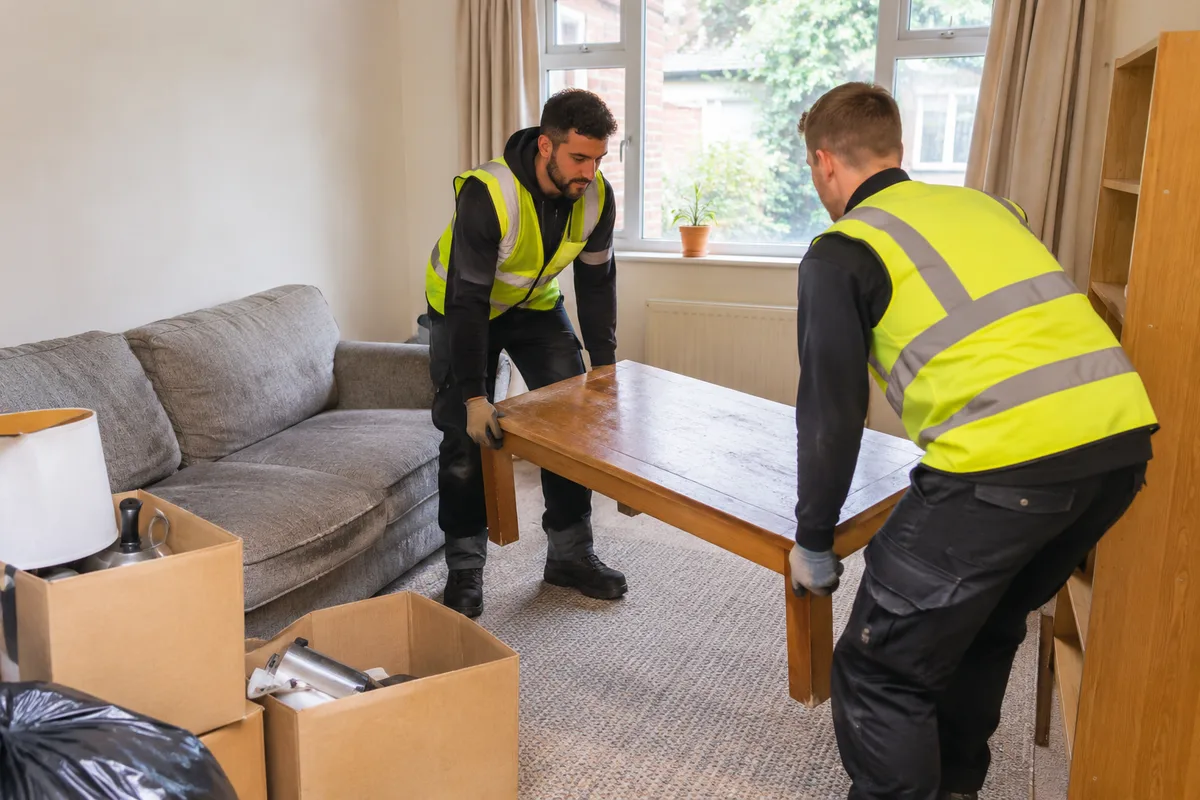
All generated photographs on this page are illustrative service scenes. They do not document jobs in Northolt.
Discuss your Northolt collection
Call +44 20 3404 3985 with the collection postcode, item list and property details. We will discuss the scope, available arrangements and quote before work begins.
Services for your Northolt enquiry
Furniture disposal · Rubbish collection · House and flat clearance