
LONDON & THE M25
Junk Removal
in Northwood.
The main challenge in a furniture collection is often the journey from the room to the vehicle. We plan Northwood junk removal around that journey: identify the furniture, establish what remains inside it, discuss its size and condition, then agree the carrying and loading. Boxes, garden items and other additions can be considered alongside the furniture when they are described clearly.
- Carrying and loading included
- A clear quote before work begins
- Licensed and insured waste carrier

FROM ENQUIRY TO REMOVAL
Northwood collections: the process we agree
01
Identify the controlling item
Describe its construction, condition and location.
02
Trace the exit
Explain doors, turns, stairs and outdoor access.
03
Agree the complete load
Include loose contents and discuss the collection quote.
04
Check every component
Confirm the agreed items have been removed for onward handling.
Begin with the item that controls the collection
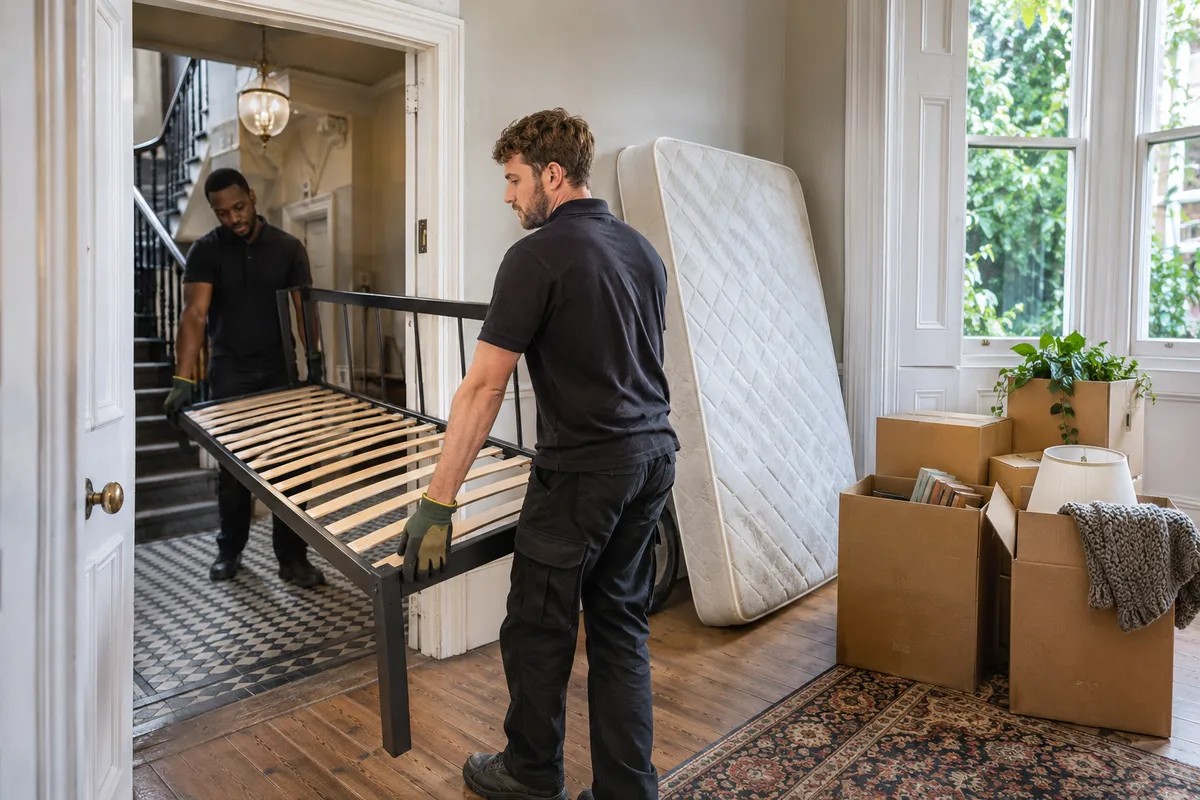
If a wardrobe, sofa or substantial bed is the reason for your enquiry, start with that item. Tell Junk Please where it stands and why it needs removal, then describe the other contents you want collected. A large piece may determine the carrying route even when it represents only part of the load. Give useful dimensions and explain whether it is assembled, in sections or already dismantled. Photographs from more than one angle can help show the object and its immediate surroundings. Include a view of the exit where space is restricted. We also need to know whether the item is empty. Removing a wardrobe does not automatically mean removing everything stored inside it, and taking a desk does not identify the contents of its drawers. Separate those decisions before the visit. This allows us to discuss the actual work without assuming that a broad furniture description covers hidden contents, fixings or specialist tasks.
Describe construction as well as size
Two wardrobes of similar dimensions can create different removal tasks. One may come apart into manageable panels, while another is a rigid cabinet with loose glass. Tell us what you know about the construction and condition, including damaged joints, heavy components or an item previously assembled in the room. Do not start dismantling a large object if that would leave it unstable. Instead, discuss the requirement when enquiring. We need to establish what work is agreed rather than assume that all dismantling is part of straightforward carrying. Fitted units, attached shelving and furniture connected to services require a particularly clear description. We do not treat removal as permission to alter the building. Keep screws, loose parts and panels together where the furniture is already dismantled so the group can be identified. If some components are being retained, point that out explicitly. The collection quote should correspond to the actual components leaving, not merely the original product name.
Use Northwood’s property context carefully
Hillingdon’s Northwood conservation report distinguishes the town-centre area around Green Lane and its relationship with The Glen and Frithwood. That provides official local context without telling us how every Northwood property is entered. A collection from an upstairs bedroom, a ground-floor flat and a garden-facing room each needs its own access description. Give the complete postcode and tell us whether the entrance is reached from a different road or through a managed driveway. We do not infer that a leafy frontage gives our vehicle permission to use private land. Explain the available loading position, any gate controls and who can authorise access. Nor do we suggest a conservation designation creates an automatic restriction on ordinary loose furniture collection. The service should use the existing route with the relevant permission. The official Northwood conservation report is a source for local character; the individual address supplies the practical collection details.
- Start with the largest item and its present room
- Explain construction, loose glass and damage
- Discuss dismantling rather than assuming it is included
- Trace doors, turns, stairs and the outdoor path
- Identify every additional appliance, mattress and box group

| Item detail | Example | Collection relevance |
|---|---|---|
| Construction | Rigid cabinet or separable panels | Defines the proposed handling |
| Contents | Empty wardrobe or stored belongings | Separates furniture from loose waste |
| Condition | Loose glass or damaged joint | Makes the description accurate |
| Location | Upstairs room or ground-floor store | Establishes the carrying route |
Trace every stage of the exit route
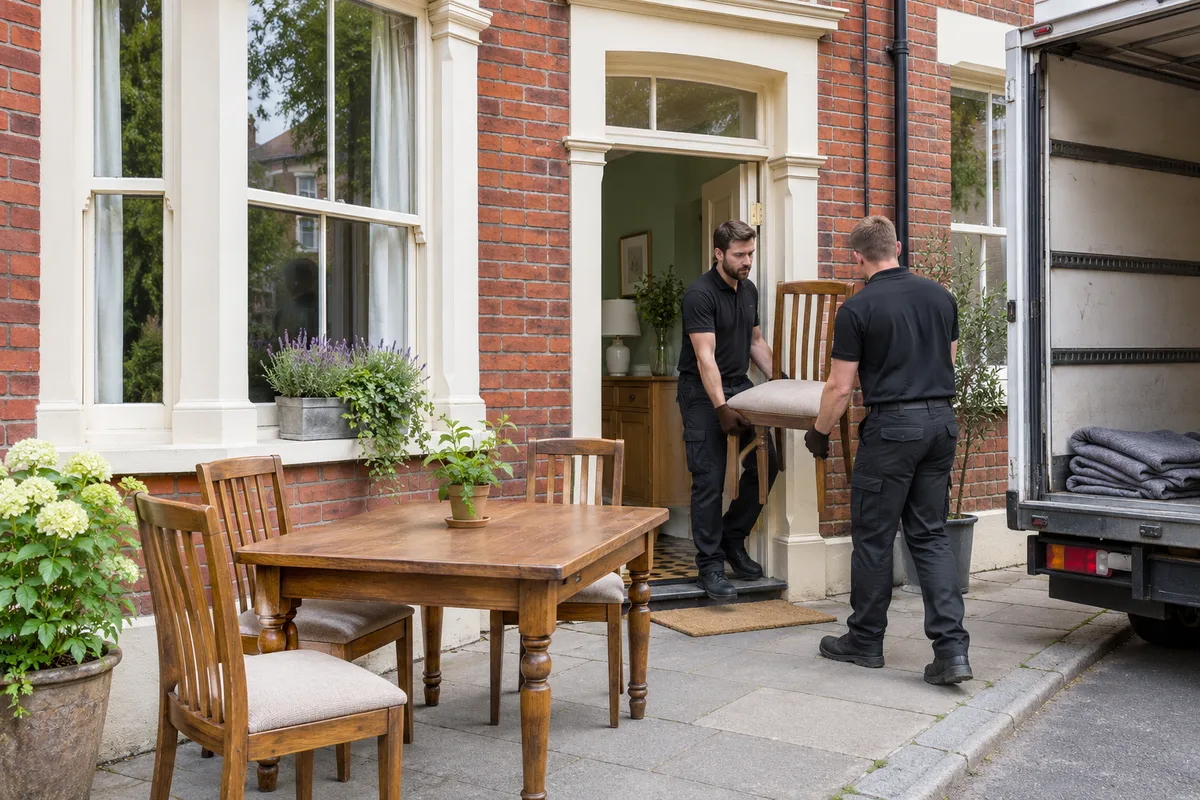
Work through the route from the furniture to the proposed loading point. Start with the room door, then consider a landing, staircase, porch and outside path. The narrowest point may be a turn rather than a doorway. Tell us about bannisters, low ceilings or a step immediately outside the entrance. For a flat, state the floor, lift dimensions where relevant and whether the lift can be used for the proposed item. A passenger lift being present does not prove a bulky wardrobe will fit. If a building manager needs to arrange access, establish that before the visit. Keep retained furniture out of the route where practical, but describe anything that cannot be moved. We should not assume another contractor will create space before we arrive. When there is a long carry through a garden or along a shared corridor, include it in the enquiry. These details help define the work and a realistic arrangement for loading the agreed furniture.
Add the rest of the load without losing detail
Once the bulky item is understood, describe the smaller groups. Boxes of household contents, a mattress, unplugged electronics and garden furniture should each be identifiable. We need their approximate amount and current location as well as their general type. A compact pile of books can be dense, while large empty packaging may be light; neither should be inferred solely from a photograph. Name appliances separately and explain any connection or removal work that remains outstanding. For outdoor additions, distinguish green material from soil, pots and hard landscaping debris. Unknown substances or potentially hazardous containers need to be raised before booking rather than concealed among ordinary bags. We confirm the proposed contents and any restrictions. A combined collection can be useful, but it should still have a defined scope. If a later sort produces several more boxes, update the list before the visit where possible so that the price discussion reflects the whole load.


| Group | Service | Key information |
|---|---|---|
| Household contents | House and flat clearance | Furniture and boxes separately |
| Garden additions | Garden waste collection | Cuttings versus soil and furniture |
| Renovation leftovers | Builders clearance | Material and approximate quantity |
| Office equipment | Office clearance | Desks, storage and electronics |
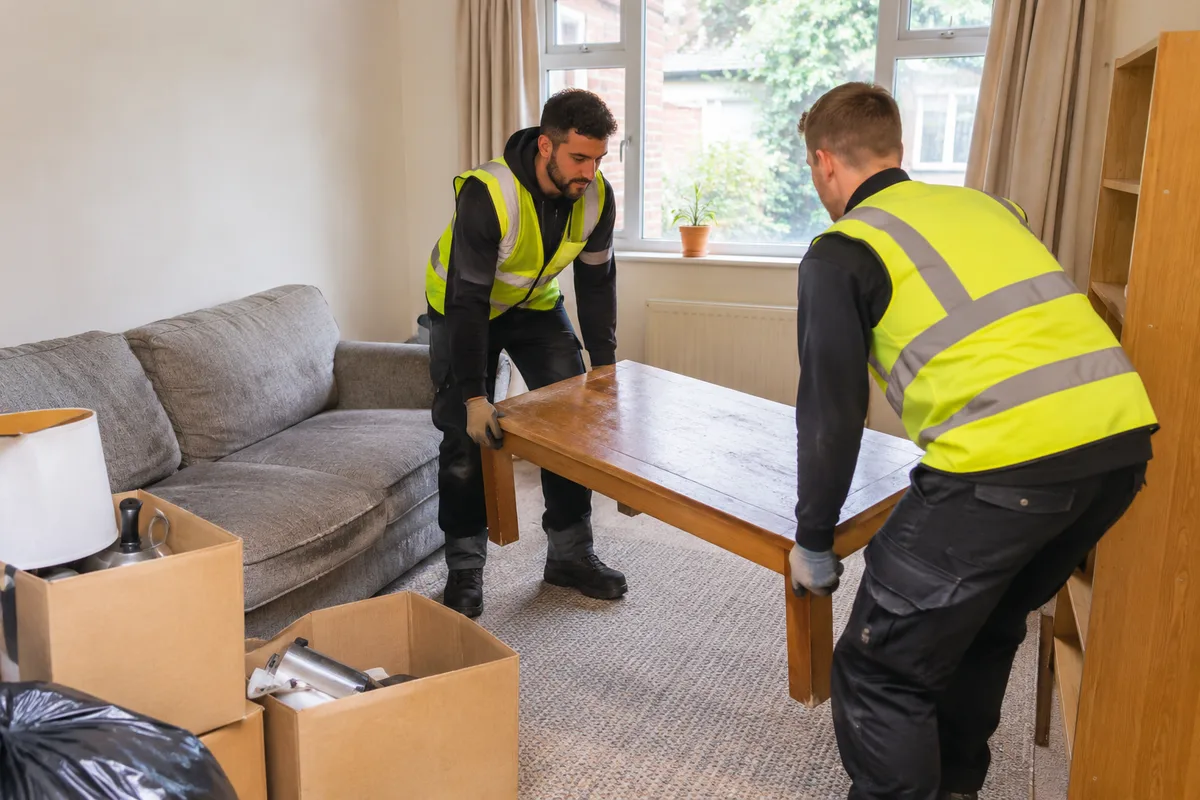
An illustrative upstairs wardrobe removal
Imagine an upstairs bedroom containing an unwanted freestanding wardrobe, a bed frame and several boxes. The wardrobe was assembled in the room, while a chest of drawers and its contents are staying. Downstairs, the household wants an old armchair added to the same enquiry. This is an example of collection planning, not a completed Northwood job. We would ask about wardrobe construction, any proposed dismantling and the route down the stairs. We would distinguish the mattress from the bed frame if it is also leaving, and ask what the boxes contain generally. The retained chest would be excluded explicitly. If the armchair cannot pass through the porch in its present form, that belongs in the same discussion. We would then agree the collection scope and price before carrying begins. The important point is that the large wardrobe establishes a planning question, while the full inventory establishes the load. Neither the room name nor the number of furniture items alone explains the complete task.
Agree the labour and price together
A furniture-removal quote needs the item list, amount, carrying requirements and any additional work that has been discussed. We do not publish an invented Northwood supplement or assume all large furniture attracts the same price. Specific items and applicable service charges need to be considered against the current enquiry. Tell us about your timing needs and ask about availability; the postcode does not itself confirm an appointment. Before loading starts, make sure the agreed description still matches the contents. A wardrobe already dismantled by the owner is a different description from one requiring work, and a lift becoming unavailable can change the route. Share those changes promptly. Extra boxes or an added appliance also need to be identified rather than treated as automatically covered. A clear agreement lets you understand what the collection includes and gives the team a defined job. The useful price is the one attached to the real furniture and work waiting at the property.
| Stage | Question to settle | Tell us about |
|---|---|---|
| Room exit | Can the item leave assembled? | Door and item dimensions |
| Internal route | Are there turns or stairs? | Landings and retained furniture |
| Shared access | Can the route be used? | Lift and manager arrangements |
| Outside loading | Where can loading take place? | Gates, permission and carrying distance |
See the current collection price guide, then confirm your complete quote with us. No separate Northwood tariff is implied.
Complete the furniture task before the next project
After loading, check that all agreed furniture components and loose contents have been removed. This matters where a dismantled item has panels in one room and fittings in another. Confirm that retained pieces remain and that the original removal list has been satisfied. The load then leaves for responsible onward handling, with reuse and recycling considered where suitable. A damaged wardrobe, an upholstered chair and electrical equipment do not necessarily follow an identical route, so we do not promise one destination or an unsupported local recycling percentage. Collection does not automatically include repairing walls, replacing flooring or preparing the room for new fitted furniture. Discuss those separate needs explicitly. If moving the large item reveals further waste, describe it as an addition before it is loaded. A defined end to the collection gives you a usable starting point for the next project and avoids confusing removal of agreed contents with an open-ended room refurbishment.
LOCAL COLLECTION AREA
Where we collect in Northwood
Northwood’s OpenStreetMap place marker is shown for orientation, not as a depot or a promise about every surrounding address. Provide the complete postcode and the entrance used for the collection. The individual property, furniture and route determine the practical arrangement.
Nearby collection areas: West Ruislip · Ruislip · Eastcote
Our London and M25 coverage is described on the Areas We Cover page. The local information here concerns the collection enquiry; it does not create a separate neighbourhood branch.

Greater London reference outline: GLA / OS Open Data (OGL). Location: OpenStreetMap Nominatim. This is an orientation map, not a service boundary or branch address.
COLLECTION QUESTIONS
Northwood removal enquiries: questions answered
Can you remove a wardrobe assembled inside the bedroom?
Explain that it was assembled there and provide its dimensions and construction details. Any dismantling requirement needs to be discussed explicitly. We should understand the proposed work before treating it as a straightforward carry-out collection.
Is a lift enough information for a Northwood flat collection?
We also need the floor, the item size and the route between the room, lift and loading position. A lift may not accommodate a large piece of furniture. Tell us about building-manager arrangements and any access limitation.
Should I dismantle a damaged cabinet before you arrive?
Describe the damage and discuss the requirement first. Do not leave furniture unstable merely to prepare it for collection. We need to know about loose glass, weak joints and separate components so the agreed work reflects the actual condition.
Can I keep part of a dismantled furniture unit?
Yes, identify which panels or components are being retained and separate them clearly. The removal list should specify what is leaving. We do not assume every component near an unwanted item belongs in the collection.
Can a mattress be added to a wardrobe collection?
Include it in the enquiry as a separate item and explain its location and carrying route. The complete material mix and applicable charges need to be discussed. An added mattress should not be assumed to fall within an earlier furniture description.
Does removal include making good the room afterwards?
Repairs and refurbishment work are separate from carrying, loading and taking away the agreed items. Explain any additional requirement clearly. The collection ends against the agreed removal list, rather than an assumption about the next stage of the room project.
All generated photographs on this page are illustrative service scenes. They do not document jobs in Northwood.
Discuss your Northwood collection
Call +44 20 3404 3985 with the collection postcode, item list and property details. We will discuss the scope, available arrangements and quote before work begins.
Services for your Northwood enquiry
Furniture disposal · Rubbish collection · House and flat clearance