
LONDON & THE M25
Junk Removal
in Pinner.
A Pinner clearance can begin with one spare room and expand as drawers, cupboards and garden storage are checked. We help turn those separate decisions into an agreed collection: identify what is leaving, describe where it stands, and discuss the carrying and loading before the visit. Our team removes the agreed contents for responsible onward handling.
- Carrying and loading included
- A clear quote before work begins
- Licensed and insured waste carrier

FROM ENQUIRY TO REMOVAL
Pinner collections: the process we agree
01
Define the room reset
Identify the furniture and contents preventing the room being used.
02
Settle the inventory
Separate retained belongings and describe all additions.
03
Agree access and quote
Discuss the route, material mix and collection price.
04
Check the completed removal
Confirm the agreed contents have been loaded for responsible handling.
Start with the room you need back
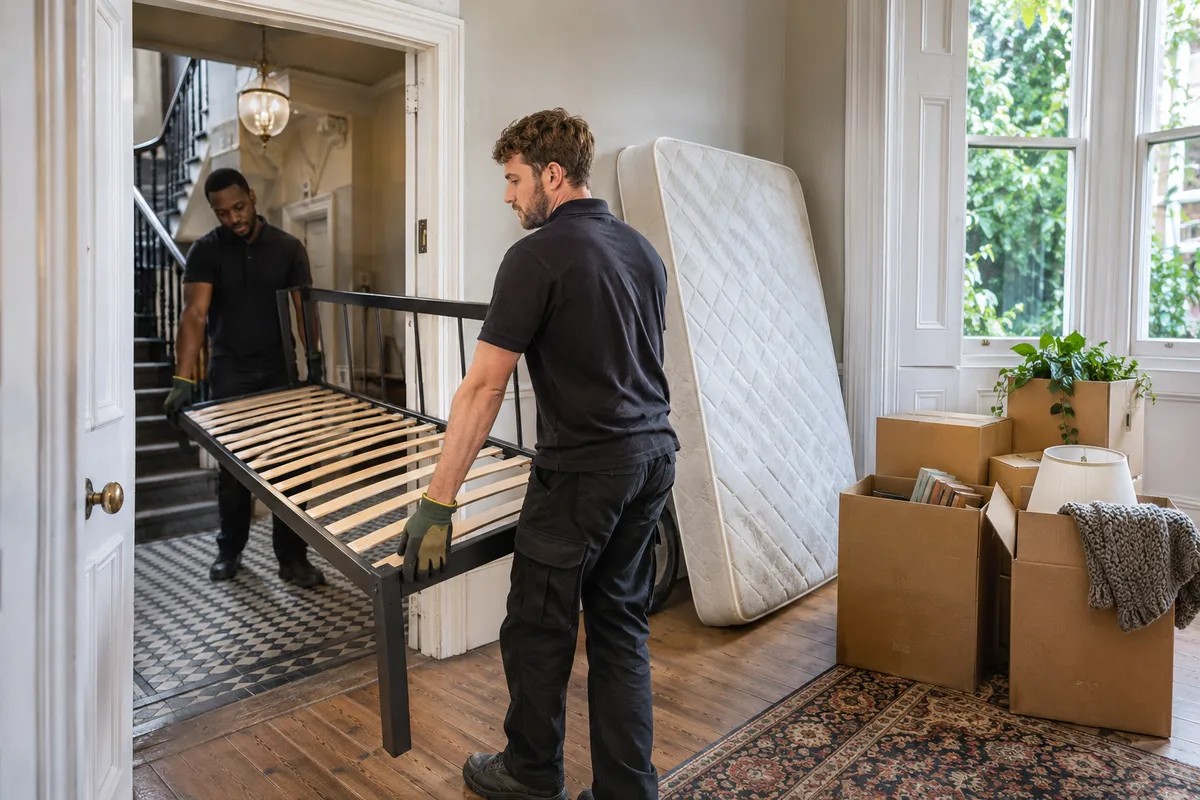
A room reset works best when the purpose is clear. Perhaps a spare bedroom needs to become a working room, or a dining room has gradually filled with furniture awaiting a decision. Tell Junk Please which space you need cleared and which items prevent you using it. A dismantled bed, a wardrobe still full of possessions and six sealed boxes represent different tasks even when they occupy the same floor area. We ask you to distinguish the furniture from its contents, then explain what should remain. This avoids treating a request to clear a room as permission to empty every cupboard. If you are arranging the collection for a relative, identify who can make those decisions at the property. An itemised enquiry also helps when the room contains objects belonging to several people. Decide ownership before loading, and keep anything being retained in a clearly separate position. We can then discuss the removal as a defined job, with the agreed items and carrying work reflected in the quote.
Build an inventory that survives the sorting
The first list is often provisional. Once a wardrobe is emptied, there may be additional bags; once a table is moved, stored packaging becomes visible. Before the collection is confirmed, walk through the proposed load again and tell us what changed. Photographs should show the whole group as well as large individual items, because a close view of one chair does not explain the volume of everything behind it. State whether boxes contain ordinary household belongings, books, electrical items or renovation materials. Dense contents can look deceptively small. Keep personal paperwork, keys and sentimental items out of the removal group rather than relying on the team to recognise them. If some contents are going to family members, arrange a clear separation before our visit. Our collection should follow your finished decisions. We do not decide which belongings have value or assume that furniture is unwanted because it appears old. A shorter, settled list is more useful than a larger description that leaves important ownership questions unresolved.
A garden suburb still needs an address check
Harrow Council identifies several Pinner conservation areas, including Pinnerwood Park Estate, and publishes appraisal and management material for them. That is useful evidence that Pinner is not one uniform property setting. It does not establish the entrance or parking arrangement at your home. For collection planning, describe the actual porch, front path, side gate and any driveway available for loading. A mature hedge or a narrow turn can matter more to carrying than the distance shown on a map. Tell us whether a shared driveway must remain open and whether a gate can be unlocked for the agreed visit. We do not infer that conservation designation prohibits ordinary furniture removal, nor suggest alteration to a building or garden is part of our service. The practical task is to use the access already available safely and with permission. You can consult Harrow Council’s Pinner conservation information for the official local context, while giving us property-specific details for the collection.
- Choose the room’s purpose before making the removal list
- Separate furniture, boxed contents and outdoor additions
- Keep personal papers and retained belongings away from the load
- Describe the largest item and narrowest part of its route
- Tell us about changes before loading begins

| Group | Information to give | Decision before collection |
|---|---|---|
| Wardrobe | Empty or full; assembled size; floor | Confirm whether any dismantling is required |
| Bed and mattress | Frame components and mattress named separately | Keep any retained bedding apart |
| Boxes | Number and general type of contents | Remove personal papers first |
| Outdoor additions | Cuttings, bench or other materials separately | Describe the gate and carrying route |
Take bulky furniture through the route in advance
An empty room is not a workable collection plan if its largest item cannot pass the landing. Measure substantial wardrobes, sofas and tables against the narrowest relevant doorway, and mention bends or stairs when enquiring. We need to know whether furniture is assembled, already dismantled or damaged. Do not assume a dismantling task is included simply because the item is described as furniture removal; discuss the necessary work explicitly. For a flat, explain the floor, lift availability and the route from the lift to a permitted loading position. A communal entrance may need someone present to provide access throughout the job. Keep that person available rather than arranging access only at the start. If an object contains glass or a loose component, identify it before anyone handles it. Our team carries and loads the agreed items, but the enquiry must reflect their actual condition and location. We can then discuss a sensible collection arrangement instead of discovering a hidden access problem after other contents have been loaded.
Keep garden additions separate from room contents
It can be convenient to discuss a garden bench or several sacks of cuttings alongside an indoor clearance. Name those additions individually and explain whether they are reached through the house or from a separate gate. Green waste is different from soil, paving and mixed shed contents, so a photograph of full sacks needs an accompanying description. A shed may contain old tools, timber, paint containers and household belongings; the word shed clearance alone does not identify the materials. Tell us about anything unknown, sharp or potentially hazardous before booking. Do not open an unidentified container merely to improve the list. We confirm the proposed materials and any acceptance limits before treating them as ordinary rubbish. Where a bench is staying and only nearby cuttings are leaving, make that distinction clear. The indoor and outdoor groups can then be considered together without losing track of the separate carrying routes. Added materials still affect the complete scope and should be included when the price is discussed.


| Contents | Relevant service | Useful distinction |
|---|---|---|
| Room contents | House and flat clearance | Furniture plus loose belongings |
| Garden material | Garden waste collection | Green cuttings versus soil and paving |
| Home renovation debris | Builders clearance | Dense material versus bulky packaging |
| Workplace furniture | Office clearance | Desks and storage versus electronics |
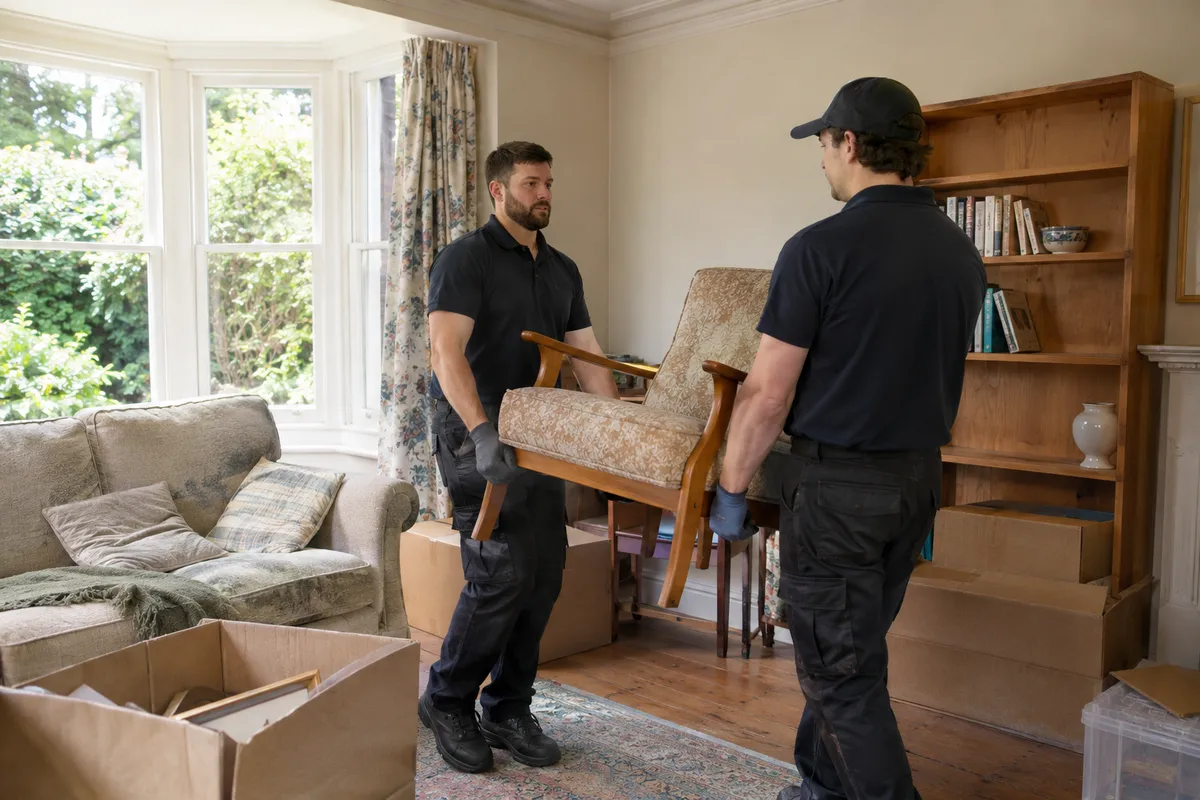
An illustrative spare-room collection
Imagine a Pinner household preparing a spare bedroom for regular use. The proposed load includes an empty pine wardrobe, a dismantled bed frame, a mattress and boxes of unwanted household contents. Downstairs, a broken dining chair is added; outside, the family identifies a small pile of garden cuttings. This is an illustration of planning, not a report of a completed local job. We would ask where the mattress and wardrobe stand, whether the wardrobe needs further dismantling, and how the cuttings are contained. We would also clarify the boxed contents rather than assume they are all light packaging. The family keeps personal papers and a chest of drawers, so those are excluded explicitly. If an appliance is discovered during the final sort, it needs to be named and discussed as an addition. This approach makes a mixed collection manageable: the room provides the starting purpose, while the inventory and access details define what we actually collect. It also keeps a convenient single visit from becoming an open-ended instruction to remove anything found along the way.
Confirm the full price before the room changes
Our collection quote follows the amount, material mix and work involved. The enquiry should include the mattress, electrical items, heavy materials and any additional work, rather than burying them inside a general description of household junk. We do not invent a Pinner price band or promise an unverified appointment time because the address is nearby. Ask about current availability and explain any handover deadline so that a suitable arrangement can be discussed. Before loading starts, the agreed scope and price should be clear. If you have added several bags since the original photographs, say so; the old images no longer describe the complete load. Equally, tell us when items have been retained or collected by someone else. A quote is most useful when it corresponds to what is actually waiting. The same principle applies to access: a lift becoming unavailable or a different entrance being required is information to share promptly. Discuss changes before the team begins carrying so that the service remains understood by everyone involved.
| Check | Why it matters | What to communicate |
|---|---|---|
| Final inventory | The scope may have changed during sorting | Added or retained items |
| Access | The proposed route must be available | Stairs, lift, gates and shared entrances |
| Price | The agreed work must match the quote | Specific items and additional work |
| Decision-maker | Ambiguous belongings need an answer | Who can confirm the removal list |
See the current collection price guide, then confirm your complete quote with us. No separate Pinner tariff is implied.
Finish with a defined handover
Once the agreed contents are loaded, the room should be checked against the removal list. This is the point to confirm that the specified furniture, boxes and outdoor materials have gone and that retained belongings remain in place. Removal does not automatically include repairs, decorating or a full cleaning service, so discuss any separate requirement rather than attaching it to the phrase complete clearance. The waste leaves for responsible onward handling, with reuse and recycling considered where appropriate to the materials and condition. We do not promise an identical destination for furniture, mixed rubbish and electrical equipment, or claim a recycling percentage for a hypothetical Pinner load. If the cleared room reveals another group you want removed, describe it as a further request. Keeping the end of the job as clear as its beginning helps with a home reorganisation, a family move or a property handover. You know which task has been completed, and any remaining work can be considered on its own terms rather than being confused with the original collection.

LOCAL COLLECTION AREA
Where we collect in Pinner
The map marks Pinner’s OpenStreetMap suburb location for orientation, not a company office or a service boundary. Send the complete postcode and property access details so we can discuss the actual collection address. Harrow Council’s Pinner conservation material supplies local property context; the individual premises still determine the carrying route.
Nearby collection areas: Hatch End · North Harrow · West Harrow
Our London and M25 coverage is described on the Areas We Cover page. The local information here concerns the collection enquiry; it does not create a separate neighbourhood branch.
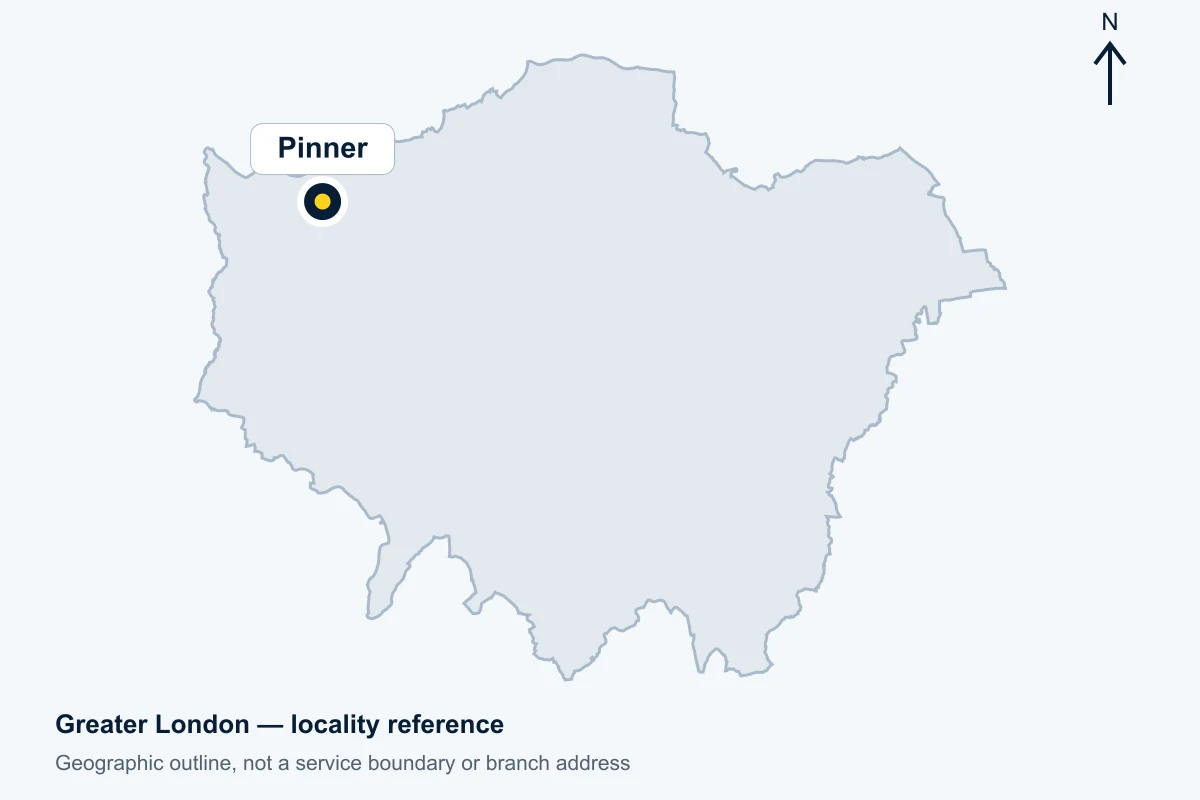
Greater London reference outline: GLA / OS Open Data (OGL). Location: OpenStreetMap Nominatim. This is an orientation map, not a service boundary or branch address.
COLLECTION QUESTIONS
Pinner removal enquiries: questions answered
Can I book while I am still sorting the spare room?
You can enquire while sorting, but tell us which parts of the list remain uncertain. Before the collection is agreed, provide an updated description of the complete load. Newly filled boxes and items discovered inside furniture should not be assumed to be covered by earlier photographs.
Does a wardrobe collection include everything inside it?
Only if those contents have been described and agreed. Explain whether the wardrobe is empty and identify any loose belongings being removed. Keep retained possessions elsewhere, and discuss dismantling separately if the wardrobe cannot leave the room assembled.
What should I tell you about a shared Pinner driveway?
Explain who can authorise its use, whether it must remain open and the position proposed for loading. An available driveway should not be assumed from a photograph or postcode. Tell us about gates, narrow turns and any entrance shared with neighbours.
Can the mattress and garden cuttings go in the same enquiry?
Yes. Name the mattress separately and describe the type and amount of garden material. We also need their locations and access routes. Confirm the complete collection and applicable price rather than treating an outdoor addition as automatically included with the bedroom contents.
Will the team decide which boxed possessions should go?
The removal decisions need to come from you or your authorised representative. Sort personal documents and sentimental belongings before the visit. If several people own the contents, settle those decisions in advance and nominate someone who can confirm the agreed list.
What happens if I find more junk after the room is cleared?
Show us the additional contents and discuss them as a change or further request. The original quote relates to the agreed collection. Extra items, different materials or another carrying route need to be considered before they are added to the loading work.
All generated photographs on this page are illustrative service scenes. They do not document jobs in Pinner.
Discuss your Pinner collection
Call +44 20 3404 3985 with the collection postcode, item list and property details. We will discuss the scope, available arrangements and quote before work begins.
Services for your Pinner enquiry
Furniture disposal · Rubbish collection · House and flat clearance