
LONDON & THE M25
Junk Removal
in Purley.
We arrange Purley collections by understanding where the unwanted load starts and how it can reach a suitable loading point. A garage, rear garden and upstairs room can all contribute to one enquiry, but each route needs explaining. Tell us what should leave, what remains and who can authorise removal. Our team carries and loads the agreed contents, with a complete price discussed before work begins. You can describe heavy furniture or material in its present position rather than move it outside simply to prepare a quote request.
- Carrying and loading included
- A clear quote before work begins
- Licensed and insured waste carrier

THE CARRYING ROUTE
Planning the Purley carrying and loading
01
Locate each group
Identify the rooms, garage and garden positions.
02
Describe the contents
Separate furniture, bags, equipment and retained belongings.
03
Explain the way out
Include gates, gradients, stairs and loading access.
04
Agree the full quote
Confirm accepted materials, extra work and availability.
05
Carry and remove
We load the agreed contents for responsible handling.

A generous plot can still involve a substantial carrying route
Croydon Council’s borough character appraisal identifies many Purley homes with gardens and larger residential plots, including detached housing in parts of the locality. That context makes the exact waste position important. It does not establish close vehicle access or a usable driveway at every address. Tell us whether the contents are beside the front door, in a rear garage or at the end of a garden. Explain steps, gradients, gates and narrow sections on the actual route. If material has to pass through the house, say so explicitly. We discuss carrying from the real starting point rather than infer it from a photograph of the frontage. The size of a garden is not a substitute for knowing how a bulky object or bagged material leaves it.
Start the garage list behind the first visible object
Garages often contain smaller contents hidden by furniture or shelving. Describe the load from more than one angle, identifying boxes, bags and electrical items behind larger pieces. Tell us which shelves, tools or stored possessions are staying. Our domestic clearance service can be discussed for a garage or limited group of rooms without including the whole house. Mention whether the door opens fully and who holds the keys. If a vehicle or retained object blocks access, include that in the enquiry. We need the current condition, not a guess that everything can be shifted easily on the day. An attending representative should know the authorised list, particularly if the garage stores belongings for relatives or other people as well as the occupier.
ADDRESS & LOADING
Furniture dimensions are considered with stairs and turns
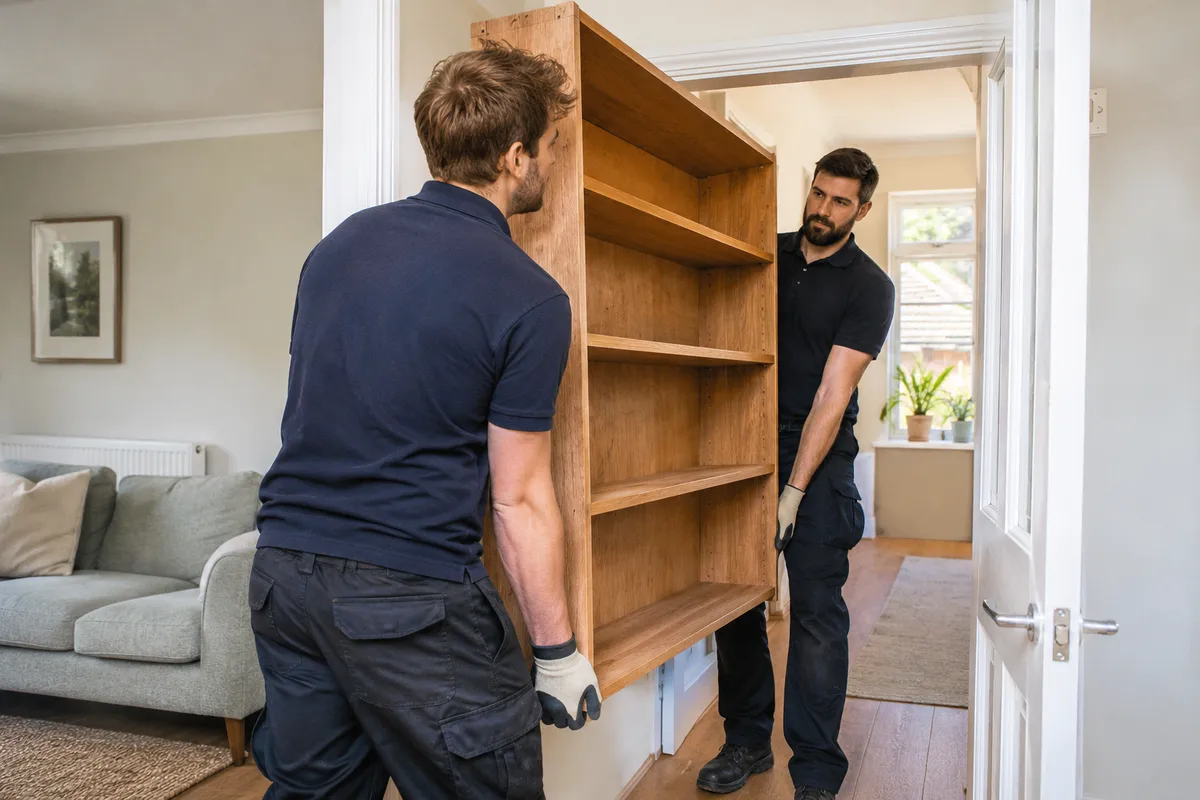
For furniture disposal, name each bulky piece and its location. A wardrobe upstairs, sofa in a sitting room and old garden table can require different routes. Give dimensions where a doorway or turn looks close, and identify damaged parts, glass or loose panels. Tell us whether furniture is freestanding, fitted, assembled or already dismantled. Requested dismantling needs explicit discussion before the quote, while removal of joinery should not be assumed to be ordinary lifting. Check drawers and cupboards for retained belongings before agreed furniture leaves. You can describe the object where it stands; moving a heavy piece onto a drive is not necessary to begin an enquiry. The work should reflect its actual form and the whole route, including any step between the entrance and loading point.
- Locate the waste within the plot rather than show only the frontage
- Explain steps and gradients on the actual carrying route
- Describe hidden garage contents behind bulky furniture
- Identify family belongings reserved for the move
- Name soil, rubble and appliances outside a general garden-bag count

| Location | Explain | Collection consideration |
|---|---|---|
| Rear garage | Separate access, door opening and keyholder | Where stored contents leave |
| Garden material | Gate, steps, gradient and position | Actual carrying route |
| Upstairs room | Furniture size and stair turns | Bulky-item handling |
| Driveway proposal | Entrance, availability and relation to the waste | Loading access to check |

Illustration: rear-garage contents during a family downsize
Imagine a Purley household reducing stored contents before a move, with an unwanted sideboard, spare chairs and cartons in a rear garage. Bags of cuttings are outside, while a mattress needs removing from an upstairs room. This illustrates an enquiry and is not a completed-job claim. We would ask whether the garage has separate access, what the cartons contain and how the mattress reaches the exit. If the garden bags include soil or broken paving rather than only cuttings, those materials need naming. Chairs reserved for a family member should remain clearly excluded. We can discuss the complete load with its separate locations and carrying. A refrigerator discovered behind stored furniture later should be added explicitly before relying on a quote based only on furniture and green material.
Outdoor waste is identified by substance
Our garden waste collection can be discussed for accepted material already requiring removal. Separate branches and green cuttings from soil, rubble, pots, old furniture and equipment. State the approximate amount and whether it is loose or bagged. Long branches and sharp components should also be described. Tell us the gate opening and whether steps or a route through the house are involved. Collection does not automatically include pruning, landscaping or dismantling an outbuilding. Unknown containers, chemicals and suspected hazardous material found in a store need discussion before booking. We establish acceptance of the actual contents rather than treat every outdoor item as green waste. The material breakdown helps connect the full quote to the real work instead of make the collection depend on an undifferentiated bag count.
| Contents | Useful description | Relevant service |
|---|---|---|
| Stored furniture | Named pieces, condition and assembly | Furniture disposal |
| Outdoor material | Green waste versus soil, paving and equipment | Garden collection |
| Refit waste | Timber, rubble, tiles and plasterboard separately | Builders clearance |
| Appliances | Type, location and connected condition | Electrical collection |
Refurbishment debris and appliances need clear additions to the list
For builders clearance, identify timber, tiles, rubble and plasterboard with approximate amounts and bagged or loose condition. Dense material differs from light packaging, even if both are stored together. Explain long pieces, sharp edges and whether the work area provides a usable exit. Name appliances and electronic equipment separately. For a refrigerator or washing machine, state whether it is disconnected and freestanding or remains fitted. Collection does not automatically include plumbing, electrical disconnection or surrounding joinery removal. A business equipment enquiry should raise any specialist data requirement explicitly rather than assume collection establishes a destruction certificate. The proposed load should show every material group before a price and appointment are agreed, including items that were not visible in the first photograph.

The loading proposal is checked at the precise address
Give the full postcode and explain where loading might happen: a driveway, managed area or public road. A drive may be occupied or have an entrance constraint, while a shared private route may need a separate contact. Croydon Council’s parking restrictions information provides an official reference for local checks, alongside actual signs and relevant private arrangements. We do not assume an empty bay grants use or that the appearance of a wide frontage settles vehicle access. Include the relationship between loading and every part of the load, particularly rear storage. We discuss current availability and the practical job details rather than promise immediate removal or invent a driving route and arrival time from Purley’s road connections.
See the current collection price guide, then confirm your complete quote with us. No separate Purley tariff is implied.
| Point | Confirm | Avoid assuming |
|---|---|---|
| Retained belongings | Chairs or boxes reserved for family | All garage contents are unwanted |
| Additional work | Requested dismantling or fitted-item removal | Ordinary carrying covers joinery |
| Changed contents | Hidden appliance or another room | The first quote expands automatically |
| Price and appointment | Full load and current availability | Coverage alone confirms immediate removal |
The complete quote defines the accepted collection
Our published price guide gives current collection bands and relevant supplements. The full quote needs the amount, material mix, specific items and carrying work, including any requested extra task. Tell us about added rooms, appliances or hidden debris before loading so the scope can be reviewed. A supplement alone is not necessarily the complete collection price for an item. For a workplace load, identify the authorised contents and distinguish retained fixtures or stock. Our office clearance service concerns agreed removal rather than an automatic strip-out. After carrying and loading, we remove the accepted waste for responsible handling, seeking reuse and recycling where possible. We do not guarantee a reuse destination for every chair or invent a local recycling percentage. Cleaning, repairs and installation should be discussed separately.

LOCAL COLLECTION AREA
Where we collect in Purley
Purley is a Greater London locality in the London Borough of Croydon. The marker identifies the neighbourhood for orientation, not a depot or service boundary. Give the exact collection postcode and entrance. Croydon and Wallington are nearby named localities, with each appointment arranged from its own load, access and current availability.
Nearby collection areas: Wallington · Carshalton · Croydon
Our London and M25 coverage is described on the Areas We Cover page. The local information here concerns the collection enquiry; it does not create a separate neighbourhood branch.

Greater London reference outline: GLA / OS Open Data (OGL). Location: GeoNames UK gazetteer. This is an orientation map, not a service boundary or branch address.
COLLECTION QUESTIONS
Purley removal enquiries: questions answered
Can you collect from a rear garage in Purley?
Describe its access, door opening, keyholder and relation to the proposed loading point. Include any steps, gate or separate lane. We discuss the actual carrying route rather than assume a garage behind a large plot can be reached closely by a vehicle.
Does a large garden mean the outdoor collection is straightforward?
We need the material location and route, including gradients, gates and any section through the house. A generous plot can still involve substantial carrying or a narrow exit. Describe those actual conditions with the contents so the full quote reflects the work rather than garden size alone.
Can upstairs furniture and garage contents be included together?
List both locations and explain each route out. Name the furniture, boxes and any equipment, with retained belongings clearly excluded. We can discuss the combined enquiry, but an unseen garage or additional room should not be assumed within a quote based only on a mattress or sofa photograph.
How should I describe cuttings mixed with soil or broken paving?
Identify each material separately and give an approximate amount, including whether it is bagged or loose. Green cuttings are different from dense soil and paving. Tell us where everything stands and the route out so acceptance, carrying and the complete price can be discussed before loading.
What if a refrigerator is hidden behind stored furniture?
Add it to the enquiry by name before the visit where possible. Explain its location and whether it is disconnected and freestanding. We need to review relevant handling, supplements and the full scope rather than assume an appliance belongs within an earlier furniture and garden-waste description.
Will garage clearance include dismantling fixed shelving?
Describe the shelving and the additional work requested. Removal of agreed loose contents does not automatically establish joinery or fitted-item work. Tell us what remains and what should leave so the actual task and full quote are explicit before the collection is arranged.
All generated photographs on this page are illustrative service scenes. They do not document jobs in Purley.
Discuss your Purley collection
Call +44 20 3404 3985 with the collection postcode, item list and property details. We will discuss the scope, available arrangements and quote before work begins.
Services for your Purley enquiry
Furniture disposal · Rubbish collection · House and flat clearance