
LONDON & THE M25
Junk Removal
in South Ruislip.
Finishing a utility room or other home project can leave a mixture of loose panels, dense debris and bulky packaging. We organise South Ruislip junk removal by identifying those materials and the work already completed. Our team carries and loads the agreed contents, then takes them away for responsible onward handling.
- Carrying and loading included
- A clear quote before work begins
- Licensed and insured waste carrier

FROM ENQUIRY TO REMOVAL
South Ruislip collections: the process we agree
01
Define loose leftovers
Separate collection from unfinished work.
02
Describe materials and route
Identify dense and bulky groups.
03
Agree scope and price
Confirm preparation and current amount.
04
Review project groups
Check the list before onward handling.
Describe what is already loose
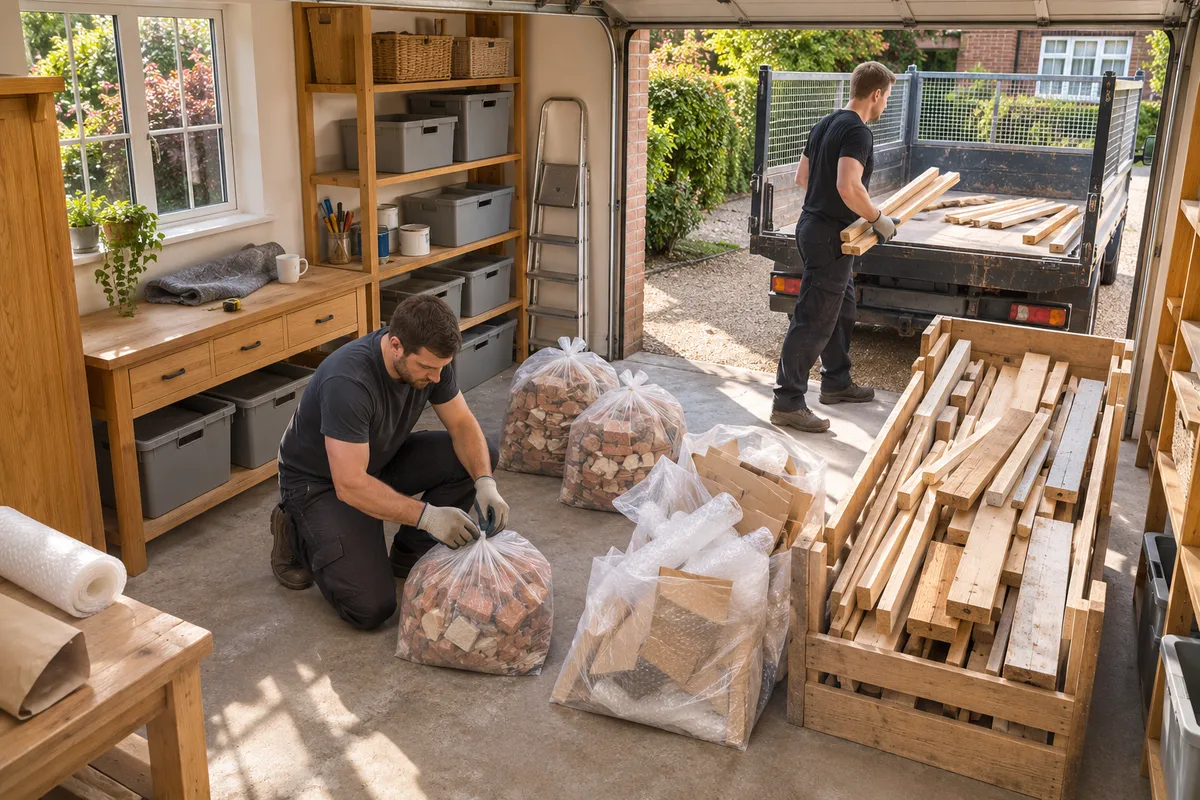
Tell Junk Please which materials are ready for collection and which remain attached or connected. Cabinet panels stacked after removal differ from fitted units still in the room. A collection request should not silently include stripping out the next part of the project. Identify the loose timber, doors, packaging and other contents individually by group and approximate amount. If an appliance is included, name it and explain whether any disconnection work remains. Discuss tasks beyond carrying and loading explicitly. We need the actual proposed work rather than the overall description utility-room renovation. The homeowner and contractor should agree who is responsible for preparing each group. This helps avoid an enquiry that assumes another person will finish a task before the team arrives. The collection then has a clear starting condition and a defined load.
Separate bulky packaging from dense debris
A large pile of empty cartons is not the same load as a small stack of tiles. Describe the material mix, including rubble, ceramic pieces, timber and wrapping, without hiding heavier contents inside a bag count. State whether material is loose or contained and give a useful estimate of each group. Photographs should show the overall amount as well as unusual items, with a written explanation where containers conceal their contents. Do not mix unknown substances into ordinary debris. Paint containers, chemicals and potentially hazardous materials need to be raised before booking so acceptance and specialist requirements can be discussed. We do not treat every item from a renovation as general builders waste automatically. Clear grouping supports a useful quote and responsible handling while keeping the collection tied to materials the service has actually agreed to take.
Use South Ruislip’s actual entrance
Hillingdon’s published site-allocation mapping identifies the South Ruislip station area with locations such as Bourne Court and Station Approach. It provides an official local reference, not permission to use those spaces for loading or evidence that every proposal has been built. Give us the full collection postcode and actual property entrance. A domestic utility room, flat and commercial store can have different access even near the same local centre. Explain any rear gate, shared driveway or managed entrance. We do not assume access through a neighbouring site or an available bay. The official allocation material supplies context; current access and relevant restrictions at your loading position need their own check. Confirm who can authorise private space before presenting it as part of the route.
- State which panels and materials are already loose
- Separate tiles and rubble from packaging
- Name appliances and discuss remaining connections
- Agree responsibilities with the contractor
- Update debris amounts before loading

| Group | Describe | Clarify |
|---|---|---|
| Cabinet material | Loose panels and doors | Anything still fitted |
| Tiles or rubble | Approximate amount | Loose or contained |
| Packaging | Empty cartons and wrapping | Not heavy contents |
| Appliance | Type and location | Connection work remaining |
Plan carrying around the finished and unfinished areas
Tell us where each group stands and whether the route passes through rooms still being worked on. A new unit, stored appliance or contractor equipment can reduce the space available for carrying old panels. Explain doors, stairs, turns and outdoor steps. Large components need dimensions and a condition description, including loose or sharp edges. Keep the path clear where practical without making unsafe lifts or unstable stacks. We should not assume a contractor will open a route before our visit unless that arrangement has been confirmed. If access requires keys or someone present, nominate that person. A separate outdoor pile may involve another carry rather than the same route from the utility room. The quote should reflect actual locations and agreed work. Update us if materials move or the entrance changes before collection so the team does not plan around an outdated project stage.
Include household additions explicitly
A renovation can trigger decisions about old household furniture stored nearby. Those items can be discussed in the same enquiry, but identify them separately from debris. A chair, mattress or box of belongings has its own material and carrying description. Name electrical equipment individually and explain any work that remains before it can leave. For garden additions, distinguish cuttings, soil and hard landscaping material. We confirm the complete proposed mix rather than treating everything at the address as part of the building project. Retained tools and the new fittings should stay outside the load instruction. If several people are working onsite, make sure they know which piles are authorised. A clear inventory prevents usable material being confused with waste simply because it stands beside old panels. It also makes additions easier to price and check when loading is complete.


| Contents | Service | Focus |
|---|---|---|
| Project leftovers | Builders clearance | Material and density |
| Household additions | House and flat clearance | Separate item list |
| Outdoor material | Garden waste collection | Actual type and route |
| Work furniture | Office clearance | Furniture and electronics |

A fictional utility-room finishing collection
Imagine a homeowner arranging removal after old storage has been taken out of a utility room. Loose cabinet doors, timber panels, boxed tiles and delivery cartons are unwanted. A replacement appliance and the contractor’s tools stay. This is an illustrative planning example, not a completed South Ruislip job. We would distinguish the dense tiles from the bulky cartons and ask whether every panel is already loose. If an old appliance is also proposed, its type and connection status need to be discussed separately. The homeowner would explain the route through the side entrance and nominate who can confirm the list. If more debris is produced after the photographs, the amount should be updated before loading. The collection removes the agreed leftovers; it does not automatically become the next stage of dismantling or finishing the room.
Confirm the quote after the work stage is settled
Our quote follows the amount, materials, carrying requirements and additional work agreed. We do not invent a South Ruislip renovation tariff or assume every sack of debris is equivalent. Heavy materials, specific items and tasks beyond carrying need to be identified before the price is settled. Tell us the project deadline and ask about current availability; an enquiry does not confirm an appointment. Before loading starts, check that the list still describes what is waiting. A contractor adding more tiles or removing some timber changes the load. A blocked side entrance can change access without changing the waste. Share those details promptly. The person attending should understand the same scope and price as the organiser. This keeps our collection connected to the completed preparation work rather than assumptions about what another contractor might do before arrival.
| Stage | Confirm | Reason |
|---|---|---|
| Preparation | What contractor has finished | Clear starting condition |
| Enquiry | All material groups named | Accurate scope |
| Visit | Amount and access current | Useful quote |
| Completion | Retained material remains | Defined endpoint |
See the current collection price guide, then confirm your complete quote with us. No separate South Ruislip tariff is implied.
Finish the collection at the agreed project boundary
After loading, review each material group and any household additions against the list. Confirm that retained tools, new fittings and excluded connected items remain. The waste leaves for responsible onward handling, with reuse and recycling considered where suitable to its materials and condition. We do not promise that mixed renovation debris has one destination or claim an unsupported local recycling percentage. Removal does not automatically include installing units, disconnecting services, repairing surfaces or cleaning the completed room. Discuss separate requirements explicitly. If further material is generated after the visit, describe it as another group rather than assuming the original collection stays open through the rest of the renovation. A defined handover gives the homeowner and contractor a clear result: the agreed loose leftovers have gone and the remaining project work has its own scope.

LOCAL COLLECTION AREA
Where we collect in South Ruislip
The map marks South Ruislip’s verified place location for orientation. It is not a depot, loading site or service boundary. Give the full postcode and actual entrance used for the project-material collection.
Nearby collection areas: Ickenham · Eastcote · Ruislip
Our London and M25 coverage is described on the Areas We Cover page. The local information here concerns the collection enquiry; it does not create a separate neighbourhood branch.

Greater London reference outline: GLA / OS Open Data (OGL). Location: GeoNames UK gazetteer. This is an orientation map, not a service boundary or branch address.
COLLECTION QUESTIONS
South Ruislip removal enquiries: questions answered
Does collecting cabinet panels include removing fitted units?
Describe whether the material is already loose. Taking out attached units is additional work that needs explicit discussion. A collection of renovation leftovers should not be assumed to include stripping out the next part of the room.
Can tiles and empty cartons be quoted as one pile?
They can be discussed together, but identify their separate amounts and materials. Dense tiles differ from bulky packaging. Closed containers need a contents description so the quote reflects the actual load.
Who should confirm what the contractor has prepared?
The organiser should settle responsibilities with the contractor and nominate someone who knows the final list. We need the actual starting condition, not an assumption that another person will finish preparation before arrival.
Can an old washing machine be added?
Name the appliance, explain its location and state whether connection work remains. Discuss the proposed task and applicable charges before adding it to the load. It should not be hidden inside general renovation debris.
What if more waste is produced after the photographs?
Update the amount and material mix before the visit where possible. Changes need to be discussed before loading so the scope and quote match what is waiting.
Will the utility room be finished after collection?
Installing units, repairs, service connections and cleaning are separate requirements. Our agreed task concerns carrying, loading and removing specified leftovers. Discuss additional work explicitly rather than assuming it is included.
All generated photographs on this page are illustrative service scenes. They do not document jobs in South Ruislip.
Discuss your South Ruislip collection
Call +44 20 3404 3985 with the collection postcode, item list and property details. We will discuss the scope, available arrangements and quote before work begins.
Services for your South Ruislip enquiry
Furniture disposal · Rubbish collection · House and flat clearance