
LONDON & THE M25
Junk Removal
in Stanmore.
Long-stored belongings are easy to underestimate. Boxes may be spread between an upstairs room, cupboards and an outbuilding, with different decisions still needed for each group. We organise Stanmore junk removal around the contents you authorise us to take, their actual locations and the work required to carry and load them.
- Carrying and loading included
- A clear quote before work begins
- Licensed and insured waste carrier

FROM ENQUIRY TO REMOVAL
Stanmore collections: the process we agree
01
Locate the removal groups
Describe each storage space and its contents.
02
Settle ownership
Separate retained and undecided belongings.
03
Agree the work
Discuss access, material mix and collection quote.
04
Review the cleared groups
Check the list before responsible onward handling.

Locate the contents before estimating the load
Start by identifying the spaces that contain unwanted belongings. A description such as loft contents may refer to items already brought into a bedroom, or to material still stored beyond an access hatch. Those are different enquiries. Tell Junk Please where the contents currently stand and do not imply they are at ground level if they are not. Explain anything you cannot safely inspect. We need to discuss the proposed work and access rather than assume every storage location can be entered as part of ordinary carrying. A room-by-room or location-by-location list helps distinguish the load from the wider household. Count furniture separately from boxes, and identify anything being kept in the same space. If some belongings have not been checked for ownership, settle that before collection. The team should receive a clear instruction about unwanted contents, not be asked to judge what a family no longer needs while loading.
Keep sorting decisions with the people who own them
Stored possessions often belong to more than one household member. A suitcase may be empty, while an apparently ordinary box may contain documents or keepsakes. Check those groups before putting them on the removal list. We do not decide whether personal belongings have value. Keep retained material physically apart where practical and tell us which containers are leaving intact. If you are helping someone else clear storage, identify who can authorise removal and answer questions at the visit. A written group list can be particularly useful when the owner cannot attend. Do not rely on a colour or mark that the team has not been told about. Explain the distinction clearly in the enquiry and confirm it on arrival. When additional bags appear during sorting, update the quantity and general contents. This turns a vague accumulation of old belongings into a defined collection while preserving the decisions that must remain with the owner.
Stanmore’s local character is a starting point
Harrow Council publishes Stanmore Hill conservation material, including an appraisal, management strategy and map. That is an official source for part of Stanmore’s local property context, rather than evidence that every address has the same access. We ask for the full postcode and actual collection entrance. A house on a sloping approach, a flat with a communal lobby and a property with rear storage can present different carrying tasks. Tell us about steps, gates and the available loading position instead of assuming the locality name explains them. We do not infer parking permission from a private-looking drive or describe conservation designation as a special rule for ordinary household removal. The work needs to use access that is available and authorised. Consult Harrow Council’s Stanmore conservation information for the official local reference, while giving us property-specific details for planning the visit.
- State where stored belongings actually stand now
- Identify undecided family possessions before collection
- Describe boxes by general contents as well as number
- Raise difficult storage access before booking
- Keep the final inventory current as sorting progresses

| Group | Useful information | Decision to settle |
|---|---|---|
| Household boxes | Number and general contents | Retained documents removed |
| Furniture | Size, condition and construction | Contents and furniture separated |
| Difficult store | Entrance and current accessibility | Work explicitly discussed |
| Outdoor material | Timber, cuttings or mixed debris | Materials named separately |
Discuss storage access without taking unnecessary risks
If belongings remain in a roof space, cellar or difficult store, state that explicitly. Describe the entrance, steps or hatch and explain whether the contents can be inspected safely. Do not climb into an unsafe area or move heavy boxes down a ladder simply to prepare an enquiry. We need to confirm what work can be agreed; a general household-clearance request should not be taken as automatic acceptance of every access condition. Where contents have already been brought into an ordinary room, tell us that too. The collection description should reflect their current location. For upstairs rooms, explain the staircase, landing and any narrow turns. Bulky furniture requires dimensions and condition details as well as a box count. If an object needs dismantling, discuss it before the visit rather than assuming it is part of carrying. A realistic access account makes the quote more useful and avoids presenting a difficult storage task as a simple front-door collection.
Describe what the containers actually hold
The same number of boxes can represent very different loads. Books, crockery, clothing and empty packaging differ in density and handling. Give a general description without sharing private information, and name unusual or heavy contents separately. Electrical equipment should be identified, including screens and appliances that have been stored out of use. A closed container with unknown material is not automatically ordinary household waste. Mention chemicals, paints, sharp objects or potentially hazardous substances before booking so acceptance and any specialist requirement can be discussed. Do not open an unidentified container merely for our estimate. For outdoor storage, distinguish timber, garden cuttings, soil and mixed debris. If bags are damaged or contents are loose, include that in the description. The point is to understand the material mix and condition well enough to agree the collection. We should not discover a different type of load only after the first boxes are being carried through the house.
| Material | Service | Describe |
|---|---|---|
| Household possessions | House and flat clearance | Authorised removal groups |
| Garden contents | Garden waste collection | Cuttings versus soil and objects |
| Stored project debris | Builders clearance | Dense and bulky materials |
| Work furniture | Office clearance | Desks, storage and electronics |
An illustrative storage-and-bedroom reset
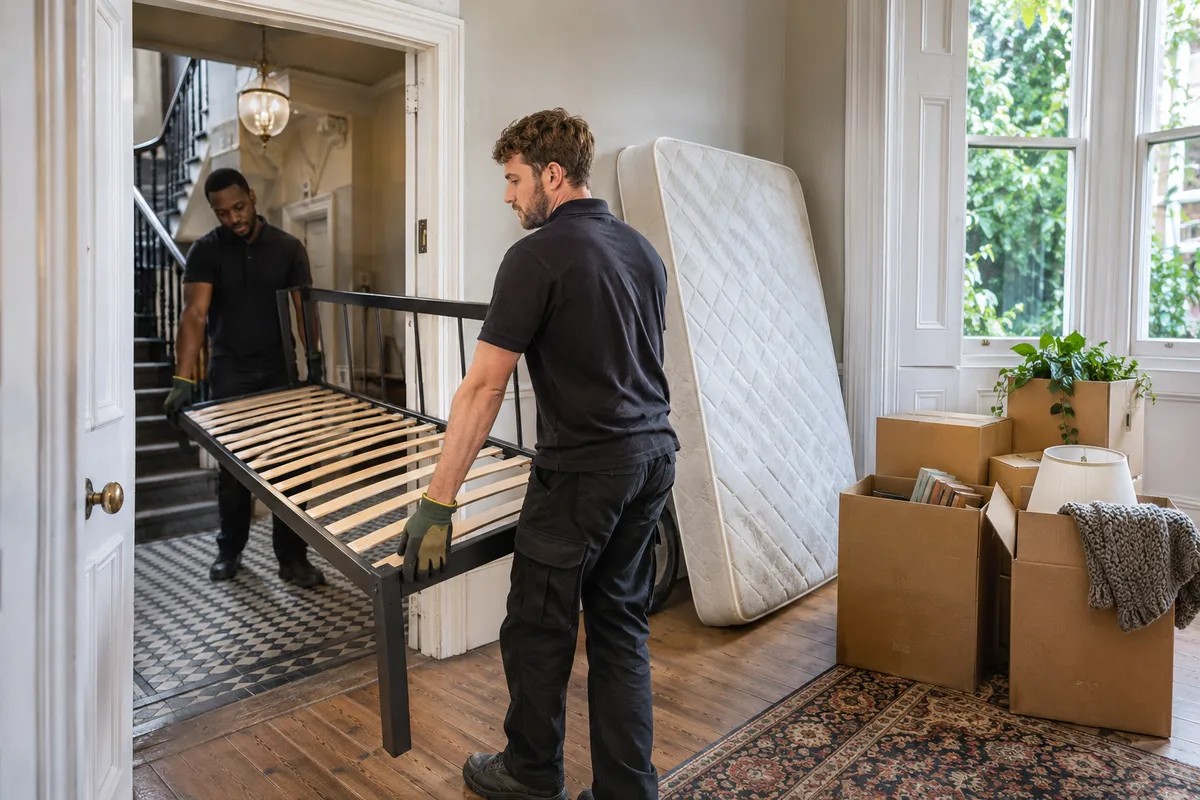
Imagine a household reclaiming an upstairs room that has become a storage area. The unwanted contents include an old bedside cabinet, empty suitcases, boxes of ordinary household belongings and a dismantled bed frame. Other family boxes are staying, and several bags remain in a separate store awaiting a decision. This is a planning example, not a completed Stanmore job. We would define the upstairs group first and ask about the stairs and bed components. We would distinguish any mattress from the frame and confirm whether the cabinet is empty. The undecided bags would stay outside the removal list until their owner authorises them. If they are added later, their contents, location and amount need to be discussed. The service can then follow a settled inventory instead of treating every stored object as unwanted. That is especially useful when a room needs to become usable again but the family is still working through possessions elsewhere in the property.
Bring changes into the quote discussion
Our quote reflects the agreed amount, material mix, access and work. Tell us about mattresses, electrical equipment, dense materials and any additional task explicitly. We do not create a separate invented Stanmore tariff or promise a collection time without checking availability. Explain your timing needs when enquiring, especially if the room is needed for a move or another project. Before work begins, confirm that the photographs and list still match what is waiting. A box group moved downstairs may change the access description; another cupboard being emptied may change the amount. Both should be communicated. If an unsafe or inaccessible store was excluded, it does not become part of the visit simply because it is at the same address. Discuss any extension to the scope and price before loading it. A useful quote is tied to a clear collection instruction, with the owner and team understanding the same contents and work.
| Check | Ask yourself | Tell us |
|---|---|---|
| Ownership | Has everyone decided? | Who can authorise removal |
| Location | Has anything moved? | Current floor and access |
| Contents | Were more boxes added? | Updated amount and materials |
| Scope | Is another store now involved? | Additional work before loading |
See the current collection price guide, then confirm your complete quote with us. No separate Stanmore tariff is implied.
Finish the storage collection with the list in hand
Once loading is complete, check the agreed locations and contents against the list. Stored items can be scattered, so confirm whether all bed panels, boxes and small furniture pieces have been included. Retained and undecided belongings should remain outside the collection. The load leaves for responsible onward handling, with reuse and recycling considered according to its actual materials and condition. We do not promise that every long-stored object can be reused or give an unsupported recycling percentage for a Stanmore collection. Removal also does not automatically include cleaning an inaccessible space, repairing damage or organising possessions that remain. Discuss those separate needs explicitly. If more unwanted contents are discovered later, they can form a further defined enquiry. Ending the visit this way gives the household a clear result: the authorised group is removed, the other belongings are protected by clear decisions, and the next stage of the room or storage project can proceed.

LOCAL COLLECTION AREA
Where we collect in Stanmore
The map identifies Stanmore’s OpenStreetMap place location for orientation. It is not an office marker or a boundary of service. Send the full postcode, actual entrance and current location of the unwanted contents so the collection can be discussed accurately.
Nearby collection areas: Harrow Weald · Edgware · Queensbury
Our London and M25 coverage is described on the Areas We Cover page. The local information here concerns the collection enquiry; it does not create a separate neighbourhood branch.

Greater London reference outline: GLA / OS Open Data (OGL). Location: OpenStreetMap Nominatim. This is an orientation map, not a service boundary or branch address.
COLLECTION QUESTIONS
Stanmore removal enquiries: questions answered
Can I describe loft contents that have already been moved downstairs?
Yes. Tell us their current location and describe the quantity and general contents. The original storage location is less useful than the route the team will actually use. Make clear if further items remain upstairs or beyond a hatch.
Will you enter every storage space during a household clearance?
Access and work need to be discussed explicitly, especially for roof spaces, cellars or difficult stores. Explain the entrance and any limitation. A general clearance request should not be treated as acceptance of every access condition.
How do I protect boxes belonging to another family member?
Keep them separate and identify them as retained. Settle ownership decisions before collection and nominate someone who can confirm the agreed removal group. We do not decide whether stored personal belongings are unwanted.
Do boxes of books need a separate mention?
Yes, identify dense contents such as books rather than describing every box as light household packaging. Give a useful approximate quantity and location. The material mix and carrying requirements help define the collection and quote.
What if some containers have unknown contents?
Tell us before booking. Do not assume unidentified material is accepted with general rubbish, and do not open something unsafe merely to improve the description. We discuss the proposed contents and any specialist requirement before collection.
Can another cupboard be added while the team is present?
Describe the additional contents and discuss the change before loading them. The agreed quote relates to the original scope. More material, another floor or different access may need a revised arrangement.
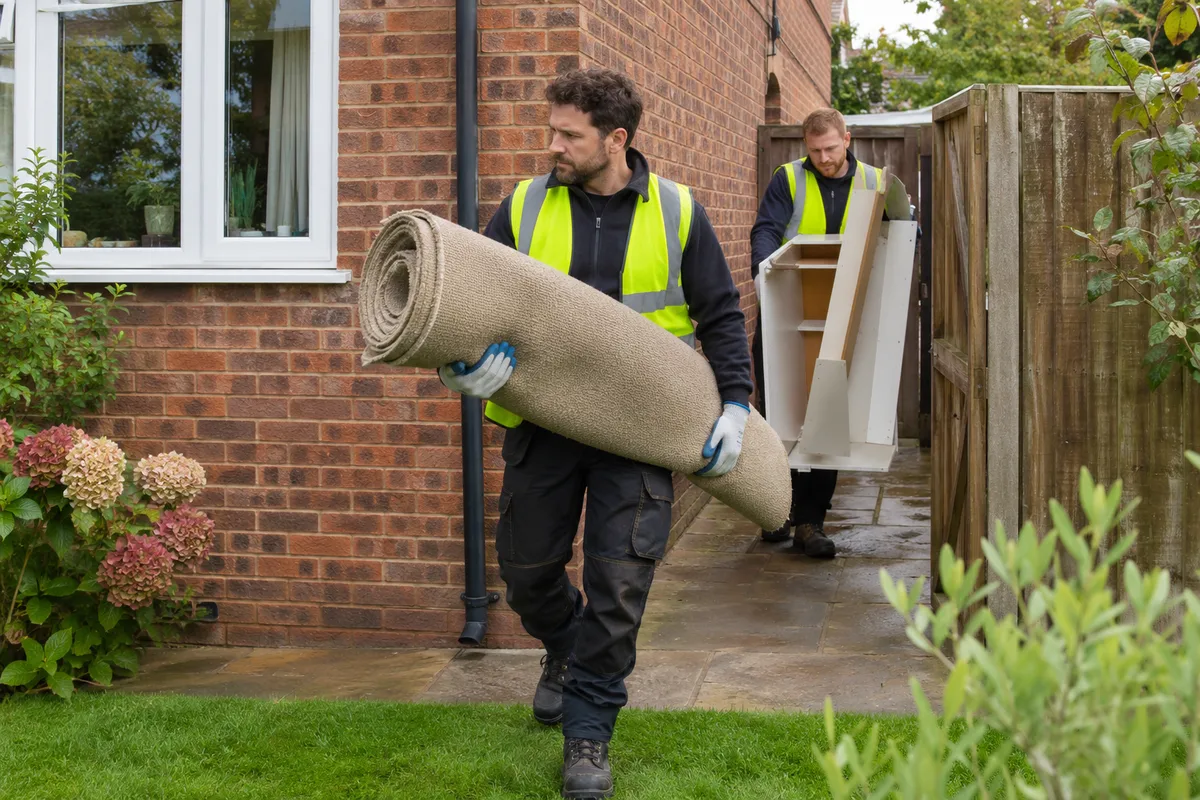
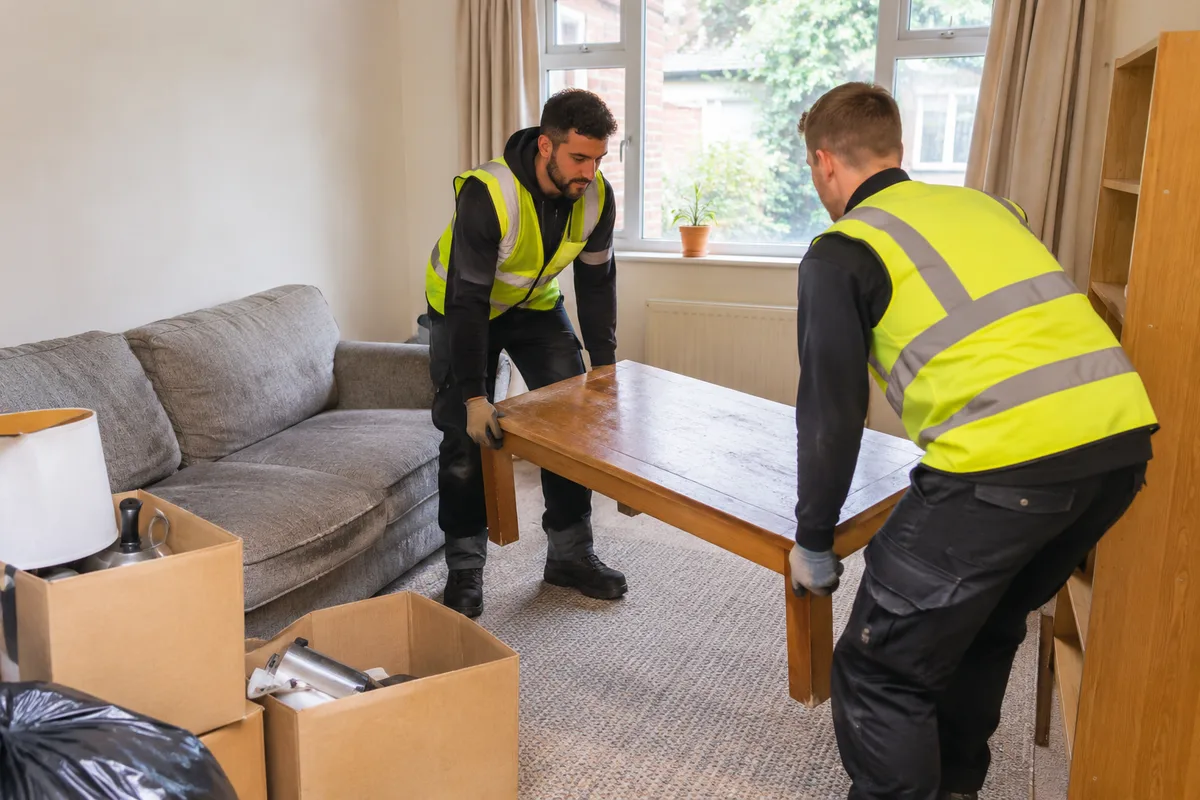
All generated photographs on this page are illustrative service scenes. They do not document jobs in Stanmore.
Discuss your Stanmore collection
Call +44 20 3404 3985 with the collection postcode, item list and property details. We will discuss the scope, available arrangements and quote before work begins.
Services for your Stanmore enquiry
Furniture disposal · Rubbish collection · House and flat clearance