
LONDON & THE M25
Junk Removal
in Teddington.
We arrange Teddington junk collections from the contents you identify, with the furniture, loose material and equipment described clearly. The enquiry also establishes the premises entrance and carrying work so the visit matches the agreed load.
- Carrying and loading included
- A clear quote before work begins
- Licensed and insured waste carrier

SPACES, ITEMS AND MATERIALS
Clearance services for Teddington properties
A storage clear-out can be more precise than a whole-room request
We help Teddington households define the unwanted contents without assuming every object in a room is waste. A storage clear-out may involve boxes and a redundant cabinet, while a spare-room enquiry can add a bed and mattress. Tell us which furniture stays and whether its loose contents also need removing. If more than one family member or occupant owns belongings in the space, agree the decisions before booking and nominate someone who can confirm the list at the visit. Our domestic clearance service follows those boundaries rather than decide what a person should retain. Photographs show quantity and condition, but add material concealed in cupboards, behind stacks or outside the frame. The collection and quote should reflect the full amount identified, giving a selective clearance a meaningful scope without requiring the entire property to be emptied.
- State whether a cabinet leaves empty or with contents included
- Name home-work equipment separately from household boxes
- Describe the actual entrance for high-street backroom waste
- Explain furniture assembly and any narrow route
- Keep soil and paving distinct from garden cuttings
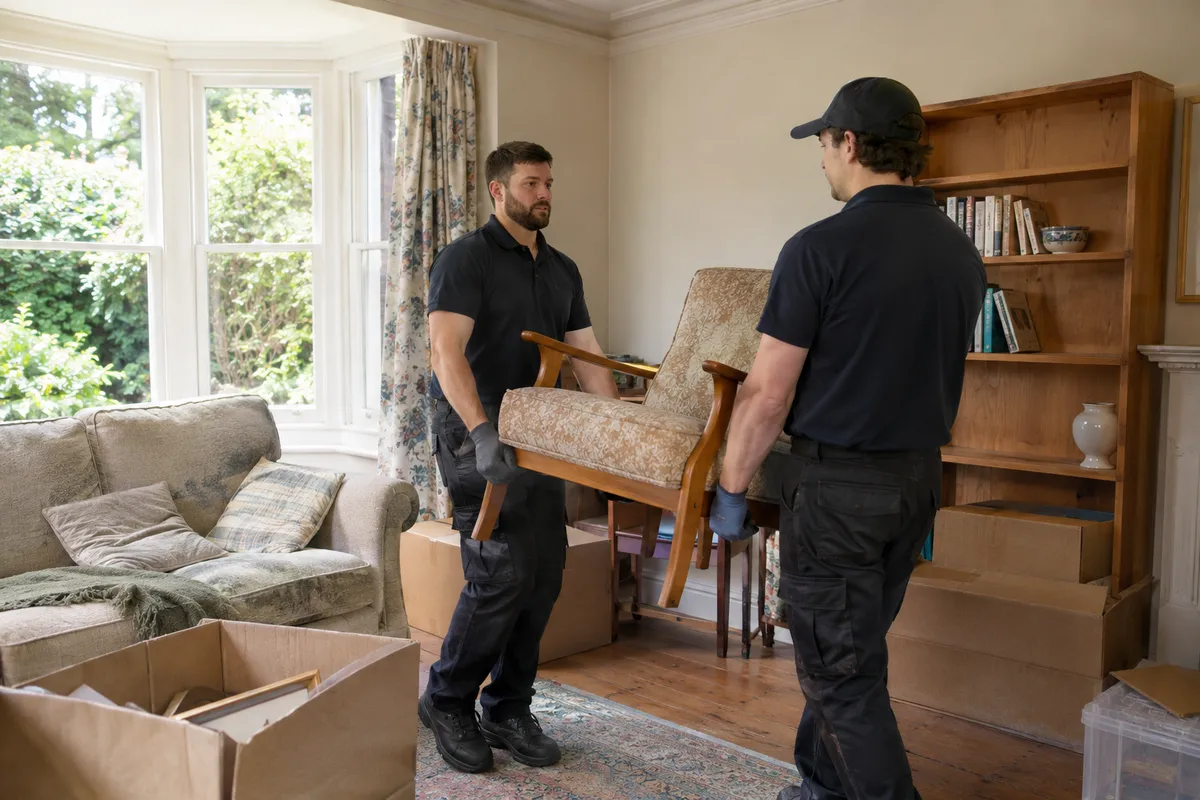
Generated service illustrations show typical collection tasks, not documented local jobs.
| Space | Contents to describe | Decision to confirm |
|---|---|---|
| Storage room | Cabinets, boxes and loose belongings | Furniture staying versus leaving |
| Home work area | Desk, seating and named equipment | Operational items retained |
| Business backroom | Displays, packaging and redundant contents | Attached fittings outside ordinary collection |
| Garden or renovation area | Named green and building materials | Acceptance and carrying route |
Teddington’s separate parking schemes make one area-wide assumption unreliable
Richmond Council lists multiple Teddington zones and separate High Street and Broad Street schemes. We therefore ask for the actual street and premises rather than apply one loading assumption to the whole locality. Give the full postcode and explain the entrance serving the unwanted contents. A shop backroom, a flat above it and a house elsewhere can have different routes. Tell us the proposed vehicle position and any manager controlling gates or managed access. Current signs and the actual arrangement matter; a parking-zone name does not itself grant collection permission. We do not publish a guessed local timetable or promise that the van can stand at every frontage. The useful outcome is a route from the contents to a practical loading point, with carrying understood for your address rather than inferred from Teddington as a general place name.
Furniture should be named by piece and assembled condition
Our furniture disposal service can be discussed for tables, chairs, sofas, beds, wardrobes and other unwanted pieces. Give the approximate size, current room and floor, then say whether each large item is assembled or in sections. Name mattresses separately from bed frames. If dismantling may be needed to leave the room, raise that work before the visit. A fixed unit is different from freestanding furniture ready to carry, so explain attachment or connection. Add stairs or a usable lift for upper rooms and any tight doors or turns along the route. Photographs of the route answer a different question from pictures of the piece itself. We discuss carrying, relevant supplements and additional agreed work together so the quote does not omit important requirements hidden behind a general furniture description.

Cupboards and boxes should not hide a second material load
Tell us what the loose contents are and how much is present. Books, household clutter, clothing, electronic equipment and dense debris should be distinguishable when they form significant groups. A cabinet leaving empty differs from a cabinet with unwanted contents included, while emptying selected belongings from retained furniture is another task. State which applies. Retained documents, keys and possessions should be kept outside the removal list before carrying starts. If a representative or agent arranges access, make sure they can confirm the contents rather than leave the team to decide ownership. A photograph of the front of a stack may not show all the material behind it, so add those groups in writing. We discuss the complete amount before the visit instead of discover an unmentioned cupboard load while removing the furniture.

A high-street business can release movable contents without a strip-out
For a Teddington workplace, list unwanted desks, seating, cabinets, freestanding displays and packaging separately from retained stock and working equipment. A nominated contact should confirm the list and entrance for the office clearance enquiry. Explain whether units are empty and whether displays remain attached to the premises. Ordinary collection should not be interpreted as a complete strip-out or electrical-disconnection service. Name electronic equipment individually and raise information-security requirements separately; removal is not certified data destruction. A business backroom may contain several groups of material, so do not merge packaging, furniture and refurbishment debris into one unexplained estimate. We arrange the carrying and loading around the actual agreed contents and access, with the boundaries established before the visit rather than decided while the premises are being cleared.

Outdoor waste and building debris keep different descriptions
Our garden waste collection discussion separates branches and cuttings from timber, furniture, pots, soil and broken paving. Describe the whole pile, including dense material hidden underneath, and explain whether removal uses a gate, shared passage or route through the home. A shed-content enquiry should distinguish loose waste from removing the structure. For builders clearance, identify timber, plasterboard, rubble and packaging with approximate quantities, including the material inside sacks. A count alone does not describe their weight or acceptance requirements. Unknown containers and potentially hazardous substances need discussion before booking. We confirm the proposed contents rather than assume every material at a property belongs in an ordinary mixed load. Gardening, excavation, demolition and work on fixed installations should be raised separately from collection of identified loose waste.
Choose the right collection for Teddington
| Item | Condition | Access |
|---|---|---|
| Cabinet | Empty or contents included | Room and floor |
| Desk | Assembled or in sections | Doorway and hallway |
| Bed | Frame separate from mattress | Stairs or usable lift |
| Large seating | Type and approximate size | Tight turns and exit |

An illustrative storage reset with a small workplace group
Imagine a Teddington resident clearing a spare room used for storage and home working. The unwanted contents include an empty cabinet, an old desk, a mattress and boxes of household clutter. This is an illustrative enquiry, not a completed local job. We would identify the furniture and mattress individually, describe the boxes and confirm which work equipment remains. If redundant electronics are added, they need their own names and any security requirement raised separately. We would ask about the room and floor, assembled condition and route to the entrance, then discuss the actual loading arrangement. If outdoor material is included later, its type and route belong in the revised list. The quote can then reflect several clear groups without turning a spare-room reset into unlimited removal from every space in the home.
| Element | Information from you | What we discuss |
|---|---|---|
| Contents | Full item list and loose groups | Defined scope |
| Materials | Named electronics and dense debris | Acceptance and supplements |
| Premises | Actual entrance and possible loading | Carrying arrangement |
| Changes | Added items or altered route | Complete quote before loading |
A full quote before the load leaves the property
Use our current price guide when considering collection charges, then discuss the complete Teddington amount, material mix, carrying and additional agreed work. Mattresses, appliances, dense debris and dismantling needs should be named so applicable supplements can be considered. We do not invent a neighbourhood rate or estimate an unlimited clearance from a room count. Tell us about changed contents or access before the visit where possible. Availability, including short-notice requests, is confirmed directly. After carrying and loading the agreed waste, we take it away for responsible onward handling, with reuse and recycling wherever possible. Material and condition affect recovery, so we do not promise every item will be reused or attach an unsupported recycling percentage. Cleaning, repairs and further property work need a separate discussion beyond removal of the defined load.
See the current collection price guide, then confirm your complete quote with us. No separate Teddington tariff is implied.

Teddington: from item list to removal
01
Identify the unwanted contents
Settle what leaves and what remains in use.
02
Describe each group
Separate furniture, stored belongings and equipment.
03
Agree the premises details
Discuss entrance, loading, price and availability.
04
Carry and take away
We remove the agreed load for responsible handling.
LOCAL COLLECTION AREA
Where we collect in Teddington
Teddington enquiries are arranged from the full postcode and actual premises details. The locality marker is for orientation, not a depot or a parking permission. Discuss the contents, entrance and proposed loading point for your address.
Nearby collection areas: Hampton Wick · Hampton Hill · Kingston upon Thames
Our London and M25 coverage is described on the Areas We Cover page. The local information here concerns the collection enquiry; it does not create a separate neighbourhood branch.
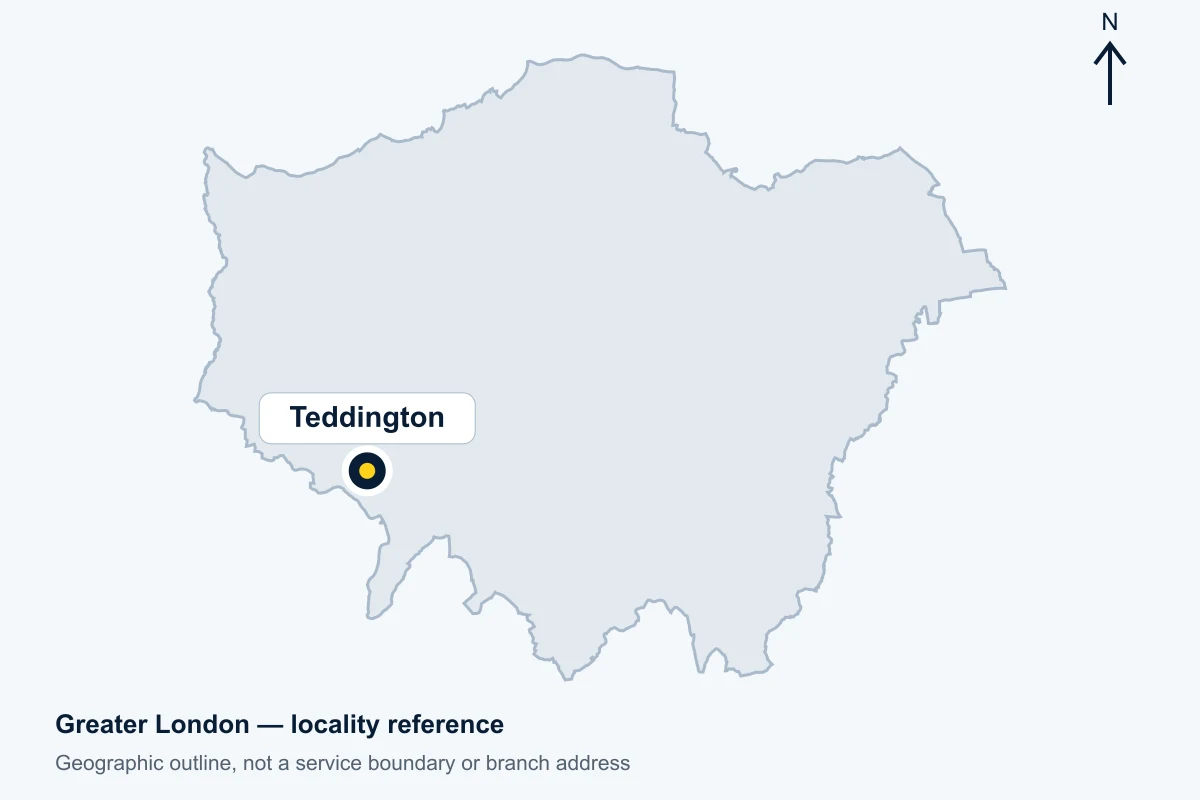
Greater London reference outline: GLA / OS Open Data (OGL). Location: GeoNames UK gazetteer. This is an orientation map, not a service boundary or branch address.
COLLECTION QUESTIONS
Teddington removal enquiries: questions answered
Can a Teddington storage collection leave the room furniture in place?
Yes. Identify the loose belongings leaving and state which cabinets or other furniture remain. Give an approximate amount and significant materials. We discuss a defined storage clear-out rather than assume the whole room is being emptied because some contents are unwanted.
Why is a Teddington zone name not enough access information?
Council information distinguishes multiple local schemes, while the collection still needs the actual address, entrance and proposed loading position. Tell us how contents reach that point. We discuss current signs and premises access rather than apply one area-wide loading assumption.
Can an old desk and a mattress share one enquiry?
Name both pieces separately and describe their location, assembled condition and route out. Add any boxes or other loose material as another group. We discuss the combined amount, relevant supplements and carrying before the full quote is agreed.
How should I describe a cabinet still full of belongings?
Tell us whether the unit, its contents or both are leaving. Describe the loose material with an approximate quantity and identify retained possessions. Furniture and contents are distinct parts of the load, so a cabinet-only description should not conceal additional waste inside it.
Does a shop backroom collection remove fixed displays automatically?
Explain whether displays are attached or connected before booking. A fixed fitting needs a different work description from a detached piece ready to carry. We discuss additional requirements explicitly rather than infer strip-out or disconnection from an ordinary contents collection.
What if unused electronic equipment is found during preparation?
Update the enquiry naming the devices and quantity before the visit where possible. Raise any information-security requirement separately. We discuss acceptance, handling and the revised scope rather than treat electronics as unspecified extra boxes or promise certified data destruction.
All generated photographs on this page are illustrative service scenes. They do not document jobs in Teddington.
Discuss your Teddington collection
Call +44 20 3404 3985 with the collection postcode, item list and property details. We will discuss the scope, available arrangements and quote before work begins.
Services for your Teddington enquiry
Furniture disposal · Rubbish collection · House and flat clearance