
LONDON & THE M25
Junk Removal
in Wealdstone.
A working backroom needs a removal plan that protects the stock and equipment still in use. We organise Wealdstone junk removal around the redundant furniture, packaging and other contents your business authorises us to collect. We discuss the material groups and access, agree the work, then carry and load the specified waste.
- Carrying and loading included
- A clear quote before work begins
- Licensed and insured waste carrier

FROM ENQUIRY TO REMOVAL
Wealdstone collections: the process we agree
01
Identify redundant groups
Separate stock, furniture and packaging.
02
Confirm authority and access
Arrange the representative and loading route.
03
Agree the quote
Include materials and additional work.
04
Review the backroom
Check the list before onward handling.
Define the backroom boundary
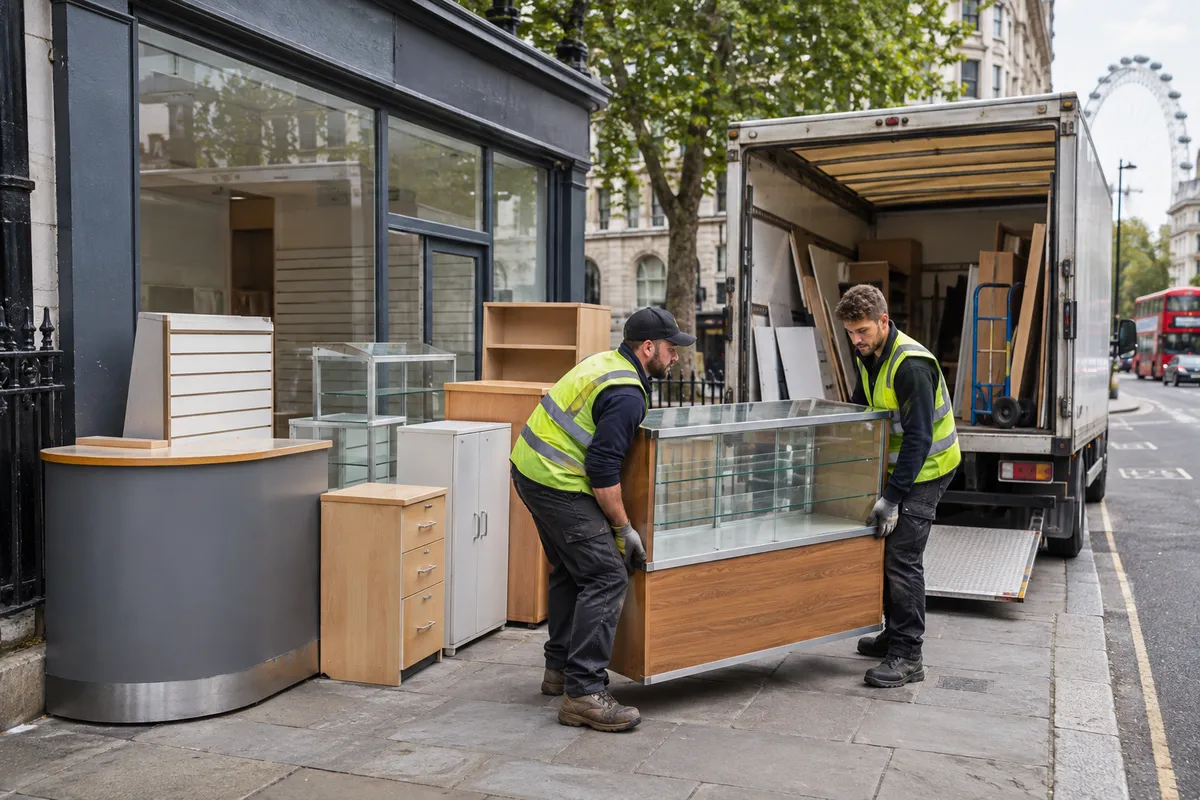
Tell Junk Please which part of the premises needs clearing and what the business still uses. Empty display storage, old chairs and flattened packaging may be unwanted while saleable stock on the next shelf must remain. Do not describe a whole room as waste if only some groups are leaving. List substantial furniture individually and explain any loose contents. The business should nominate a person who can authorise removal and answer questions at the visit. If a landlord owns fittings or equipment, establish that ownership before including them. We do not decide that stock is obsolete or that an apparently empty cabinet belongs to the person arranging access. A precise instruction is useful whether the shop is trading normally, changing its layout or preparing a handover. It gives our team a defined removal group while the business keeps control over its retained contents.
Separate stock from fixtures and loose furniture
A backroom can contain products, packaging, freestanding racks and attached storage in the same small space. Describe those categories separately. Removing loose furniture is different from taking down fitted units or altering the building. Tell us if a rack is fixed and discuss any dismantling requirement before booking. Empty the retained contents from furniture that is leaving and identify drawer units or separate panels explicitly. If products are being disposed of, give a general description rather than assuming every type of stock can travel as ordinary rubbish. Unknown containers, liquids and potentially hazardous materials need an explicit acceptance discussion. Keep private business records out of general waste and do not assume furniture removal includes confidential destruction. The aim is a clear material list with ownership settled, rather than an instruction to clear everything behind a particular door.
Use Wealdstone’s business context carefully
Harrow’s area action plan identifies Wealdstone as a distinct centre with surrounding employment and industrial land. That is useful local context for varied premises, not evidence that our service covers every specialist industrial waste stream. Tell us the type of premises and the exact material proposed. The full postcode and actual entrance matter, especially if the backroom is reached from a service yard rather than the shopfront. We do not describe development proposals in the historical plan as completed work. Nor does the document establish current loading permission. The official Harrow and Wealdstone plan supplies background; the collection arrangement needs the existing access at your address. Explain who controls a shared yard, whether neighbouring units need uninterrupted access and where loading could take place. An open commercial entrance is not a substitute for permission to use the space.
- Authorise the exact commercial contents
- Separate active stock from unwanted groups
- Identify fixed storage and dismantling needs
- Describe rear doors and shared-yard permission
- Name electronics and refit debris separately

| Group | Confirm | Describe |
|---|---|---|
| Stock | Disposal authorised | General material type |
| Racks | Loose or attached | Components and size |
| Packaging | Empty or containing products | Approximate amount |
| Records | Private material removed | Any specialist need raised |
Explain access while the business is operating
Tell us whether customers or staff will be using the premises during the proposed collection. We need the route from each removal group to loading, including stairs, rear doors and any passage shared with other businesses. A rear entrance may be more direct, but we should not assume it is available simply because it appears on a map. Confirm keys and access controls with the responsible person. Large counters, cabinets or tables need dimensions and a realistic exit route. If they are already dismantled, explain where the components are stored; if further work is required, discuss it explicitly. Keep retained stock clear of the agreed route where practical without making an unsafe move. Ask about timing with the full job details ready. A business deadline is useful information, but it does not itself confirm a particular appointment or guarantee that every loading position can be used.
Describe packaging without hiding heavier contents
Cardboard and wrapping can be bulky, while a small group of dense material may require a different assessment. Give approximate quantities and state whether packaging is empty. Do not use the same description for cartons filled with unwanted products. Name electrical equipment individually, including screens, printers or appliances stored out of use. Explain any disconnection work rather than treating it as part of carrying automatically. If a shop refit has left timber, tiles or other building material, identify it separately from the backroom furniture. We need the actual material mix to discuss acceptance and price. Household belongings stored at the premises also need their own authority and description. A collection can combine agreed groups, but its scope should remain explicit. This prevents a convenient backroom visit becoming an assumption that all material found on a commercial site is accepted.


| Load | Service | Enquiry focus |
|---|---|---|
| Work furniture | Office clearance | Furniture and equipment |
| Stored household contents | House and flat clearance | Separate ownership |
| Refit debris | Builders clearance | Material and density |
| Outdoor additions | Garden waste collection | Actual material type |

An illustrative backroom reset
Imagine a shop making space for a new storage layout. The unwanted group includes two empty freestanding racks, a broken staff-room table, redundant chairs and flattened cartons. Current stock, a working printer and attached shelving remain. This is a fictional planning example rather than a completed Wealdstone job. We would ask whether the racks separate, whether the table is loose and where the cartons stand. The shop would identify its authorised representative and explain access from the backroom to the yard. If old product containers appear during sorting, their contents need to be described before they are added. The retained stock and fittings would be excluded clearly. A settled inventory allows us to discuss the complete quote and work. The business can then pursue its new layout separately, with our collection limited to the agreed unwanted contents.
Agree the current load and full work
Our quote follows amount, materials, carrying and additional work agreed. We do not invent a Wealdstone commercial tariff or price the job solely from the floor area of a stockroom. Give us the final groups and route, then discuss timing and availability. Before loading begins, confirm that the description still matches what is waiting. More packaging, added electronics or newly discovered refit debris can change the original scope. Tell us if another contractor has taken the racks or if a previously available yard is no longer accessible. Those changes matter even when the collection remains at the same address. The person responsible should understand the price and contents being agreed. This is especially useful where the owner, manager and key holder are different people. A clear quote gives the team a defined job and the business a practical basis for reviewing completion.
| Point | Question | Who confirms |
|---|---|---|
| Authority | Which contents may leave? | Business decision-maker |
| Entrance | Which door serves the backroom? | Key holder |
| Yard | Is loading authorised? | Premises contact |
| Handover | Is the list complete? | Nominated representative |
See the current collection price guide, then confirm your complete quote with us. No separate Wealdstone tariff is implied.
Hand the cleared storage space back to the business
After carrying and loading, check each agreed group with the authorised representative. Confirm that separate rack components, furniture and cartons have gone while active stock remains. The load leaves for responsible onward handling, with reuse and recycling considered where suitable to condition and material. We do not promise every commercial item will be reused or claim an unsupported local recycling rate. Removal does not automatically include fitting new racks, reorganising retained stock, repairs or a deep clean. Discuss any separate requirement before treating it as part of the backroom collection. If the cleared space reveals another unwanted group, identify it and agree any addition before loading. A defined handover makes the result clear even while the shop continues trading: the authorised waste is removed and the remaining business tasks can proceed with their own scope.

LOCAL COLLECTION AREA
Where we collect in Wealdstone
The map identifies Wealdstone’s verified place location for orientation, not a business depot. Give the complete postcode and actual service entrance. Town-centre and employment context does not establish permission to load from a shared yard.
Nearby collection areas: Harrow · Kenton · Harrow Weald
Our London and M25 coverage is described on the Areas We Cover page. The local information here concerns the collection enquiry; it does not create a separate neighbourhood branch.

Greater London reference outline: GLA / OS Open Data (OGL). Location: GeoNames UK gazetteer. This is an orientation map, not a service boundary or branch address.
COLLECTION QUESTIONS
Wealdstone removal enquiries: questions answered
Can a shop arrange collection while it remains open?
Explain the operating conditions and route when enquiring. Tell us about customer areas, staff access and shared doors so the proposed work can be discussed. Current availability and premises arrangements need confirmation before a visit is agreed.
Are attached storage racks ordinary furniture removal?
Describe the fixings and any proposed dismantling explicitly. Loose racks and fitted storage represent different work. Do not assume a backroom-clearance request includes alteration to the building.
Can cartons of old products be described as packaging?
State whether cartons are empty and describe any contents. Products can change the material mix and acceptance requirements. A photograph of closed boxes does not establish that they contain only light wrapping.
Who should authorise a business collection?
Nominate someone entitled to approve removal of the listed contents. Settle landlord or third-party ownership beforehand. The key holder should also know who can answer scope questions during the visit.
Will business paperwork be destroyed confidentially?
Do not assume general junk removal includes confidential-document destruction. Remove retained records and raise any specialist requirement explicitly. Furniture and the contents of drawers need separate decisions.
Does removal include setting up new storage?
Installing racks and organising retained stock are separate requirements. The agreed collection concerns carrying, loading and taking away specified unwanted material. Discuss any additional work so the handover has a clear endpoint.
All generated photographs on this page are illustrative service scenes. They do not document jobs in Wealdstone.
Discuss your Wealdstone collection
Call +44 20 3404 3985 with the collection postcode, item list and property details. We will discuss the scope, available arrangements and quote before work begins.
Services for your Wealdstone enquiry
Furniture disposal · Rubbish collection · House and flat clearance