
LONDON & THE M25
Junk Removal
in Wembley.
A shared household changeover can leave unwanted furniture in communal rooms and separate belongings in bedrooms. We organise Wembley junk removal around the contents their owners have authorised, with retained possessions kept clear. We discuss the full load and access, agree the collection, then carry and load the specified groups for responsible handling.
- Carrying and loading included
- A clear quote before work begins
- Licensed and insured waste carrier

FROM ENQUIRY TO REMOVAL
Wembley collections: the process we agree
01
Settle household authority
Separate communal and private decisions.
02
Describe the routes
Include floors, gates and loading context.
03
Agree scope and quote
Update changes before work begins.
04
Review each group
Check retained and removed contents.

Settle decisions across the household first
Tell Junk Please which contents are unwanted and who can authorise them. A shared sofa may belong to the landlord, while bedroom boxes belong to different residents. Their presence at one address does not merge those decisions. Settle ownership before booking and nominate someone who understands the final list. We do not decide whether a departing resident has abandoned belongings or whether communal furniture should be replaced. List substantial items individually and describe loose groups by approximate amount and general contents. State what remains, including another resident’s possessions in the same room. A request for a shared-house clearance should not mean every bedroom or cupboard is included. The collection needs a defined instruction that the person attending can confirm without asking the team to judge personal or tenancy decisions while loading is due to begin.
Keep communal and private groups distinct
Organise the inventory by location and ownership. A living-room sofa, hallway storage and bedroom boxes can be discussed together while remaining separate groups. Explain whether furniture is empty and describe contents also leaving independently. Check drawers and cupboards for records, keys and personal belongings. We do not decide which documents or keepsakes have value. Keep retained contents apart where practical and explain any marks clearly rather than relying on an unmentioned colour system. If another resident is collecting their possessions first, update the removal list after that happens. Early photographs may include belongings that no longer form part of the load. A final current inventory is more useful than a series of old room images. It gives the organiser a practical way to discuss the quote and review each authorised group after carrying and loading.
Check Wembley event-day context for the address
Brent Council operates a Wembley event-day parking scheme and provides information for checking whether an address is affected. This matters to collection planning without creating one timetable for every Wembley enquiry. Give us the full postcode and proposed loading position, then use the relevant council information and signs for that location. We do not promise that a resident permit automatically authorises our vehicle or assume an empty bay is available. Private courtyards and driveways need their own permission. The official Wembley event-day parking information supplies the local reference. Explain any managed entrance, shared approach or timing arrangement affecting the actual premises. The locality name alone does not establish the restrictions or route. Raise access questions before a visit is agreed rather than relying on assumptions about distance from the stadium.
- Settle communal and private ownership separately
- Nominate one informed representative
- Keep retained residents’ belongings explicit
- Check event-day information for the actual address
- Describe every floor and outdoor route

| Group | Who confirms | Describe |
|---|---|---|
| Communal furniture | Authorised owner or representative | Exact pieces |
| Bedroom contents | Resident or authorised person | Boxes and furniture |
| Landlord equipment | Owner or agent | Retain unless authorised |
| Rear-garden group | Relevant owner | Objects and material type |
Describe every starting point and exit route
Tell us which floor and room contain each group. A sofa in a communal lounge and boxes upstairs may use the same front door but involve different carrying. Give dimensions, construction and condition for bulky furniture, including whether sofa sections separate. Any dismantling needs explicit discussion rather than being assumed within carrying. Attached or fitted units require a clear proposed-work description. Explain stairs, landings, narrow turns and any shared doors or gates. Someone may need to remain available throughout the work to maintain access and answer scope questions. Keep retained belongings clear of the route where practical without unsafe moves. A rear group may need another path entirely, so describe it separately. The quote should reflect current locations and access genuinely available at the visit. Update us if belongings move or the planned entrance becomes unavailable before collection.
Identify materials beyond the furniture
Shared-house sorting can produce mattresses, electronic equipment, household boxes and project debris alongside seating. Name those groups separately. Dense books or crockery should not be described as light packaging merely because they are boxed. Identify appliances individually and explain any connection work remaining. Tasks beyond carrying and loading need explicit discussion. If garden additions are proposed, distinguish cuttings from soil, pots and paving and give their location. Unknown containers and potentially hazardous substances must be raised before booking so acceptance and specialist requirements can be discussed. We do not treat a household changeover as permission to collect every material found at the address. A clear mix supports the quote and responsible onward handling, while keeping neighbouring, landlord or retained resident belongings outside the instruction unless they are properly authorised.

| Load | Service | Detail |
|---|---|---|
| Household contents | House and flat clearance | Ownership and locations |
| Outdoor additions | Garden waste collection | Cuttings versus objects |
| Project debris | Builders clearance | Material and density |
| Work equipment | Office clearance | Devices and authority |

A fictional shared-house changeover collection
Imagine several residents agreeing to remove an old communal sofa after confirming the owner’s permission. One departing resident also authorises a mattress and checked household boxes, while another resident’s chair and bedroom furniture stay. A small rear-garden furniture group is proposed separately. This is a planning illustration, not a completed Wembley job. We would distinguish the communal and private instructions and ask who can confirm both at the visit. We would discuss the sofa construction, bedroom route and rear gate, then consider the actual loading position and relevant event-day information. If more bags appear during the final move, they need to be described before addition. A settled list lets the collection support the household changeover without asking our team to resolve ownership or assume every room must be emptied.
Agree the quote before residents complete their move
Our quote follows amount, materials, carrying requirements and additional work agreed. We do not invent a Wembley shared-house tariff or assume a room count establishes the job. Mattresses, devices, dense contents and dismantling should be identified before the price is settled. Tell us the move deadline and ask about current availability. An enquiry does not itself reserve a slot or guarantee same-day service. Before loading begins, confirm that the list and price match what remains. Other residents may have removed furniture or added bags since the first photographs. Access changes matter too, including a different loading arrangement or unavailable gate. The person attending should understand the same scope as the organiser. A clear agreement gives the team a defined task and the household an inventory it can check without turning the visit into an open-ended end-of-tenancy service.
| Point | Confirm | Purpose |
|---|---|---|
| Decisions | Every owner agrees | Defined instruction |
| Access | Address-specific loading context | Practical arrangement |
| Quote | Final residents’ changes included | Current scope |
| Handover | Each authorised group reviewed | Clear completion |
See the current collection price guide, then confirm your complete quote with us. No separate Wembley tariff is implied.
Close the collection against the authorised groups
After loading, review communal furniture and private belongings separately against the list. Confirm the specified contents have gone while retained residents’ and landlord possessions remain. The waste leaves for responsible onward handling, with reuse and recycling considered where suitable to material and condition. We do not guarantee every item will be reused or claim an unsupported local recycling percentage. Removal does not automatically include tenancy cleaning, repairs, an inventory inspection or rearranging the household’s remaining furniture. Discuss separate requirements explicitly. If another unwanted group is discovered, identify it and agree any addition before loading. A defined handover makes the result clear to residents who may not all attend: the authorised load is removed, the retained groups remain, and the wider move or tenancy change keeps its own responsibilities and decisions.

LOCAL COLLECTION AREA
Where we collect in Wembley
The map identifies Wembley’s verified place location for orientation, not a depot or stadium loading point. Provide the full postcode and actual property entrance. Event-day restrictions and private access need consideration for the specific collection position.
Nearby collection areas: Alperton · Perivale · Hanger Lane
Our London and M25 coverage is described on the Areas We Cover page. The local information here concerns the collection enquiry; it does not create a separate neighbourhood branch.
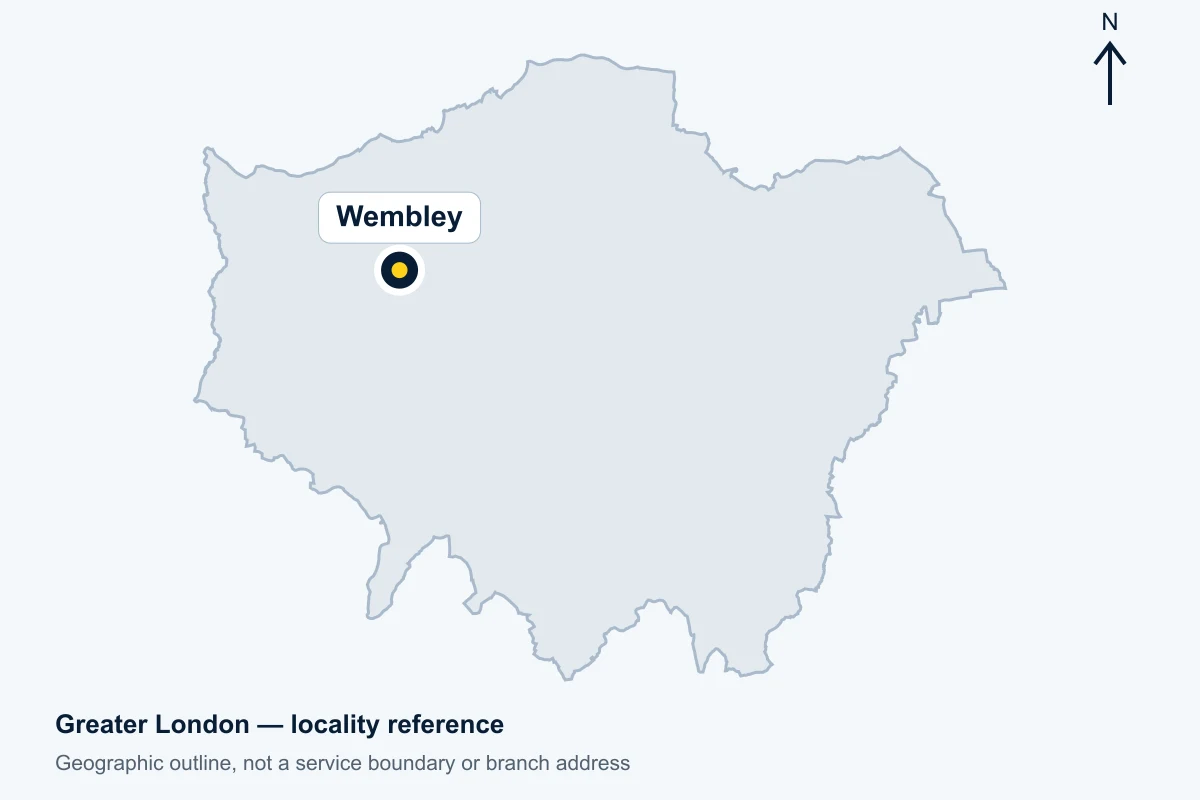
Greater London reference outline: GLA / OS Open Data (OGL). Location: GeoNames UK gazetteer. This is an orientation map, not a service boundary or branch address.
COLLECTION QUESTIONS
Wembley removal enquiries: questions answered
Can one resident arrange a shared-house collection?
They need clear authority for every group included and knowledge of the final list. Settle communal, landlord and private ownership beforehand. The team should not be asked to decide which belongings are abandoned or unwanted.
Does communal sofa removal include nearby personal boxes?
Only if those boxes are described and authorised separately. Furniture and loose possessions need distinct decisions. Keep retained residents’ belongings clearly identified even when they share the same room.
Should event-day parking be checked for every Wembley address?
Use Brent’s official information for the actual address and loading position rather than assuming one rule throughout Wembley. Explain the available arrangement and any private permission. A resident permit should not be assumed to authorise our vehicle.
Can bedroom and garden groups share a visit?
Describe their materials, amounts and separate carrying routes. We discuss the complete proposed collection and quote. Another floor or outdoor location should not be hidden inside a communal-room description.
What if departing residents add bags at the last moment?
Update the amount and general contents before loading. The quote covers the agreed scope, so additions need discussion. Identify any electrical, dense or uncertain material separately.
Does collection include end-of-tenancy cleaning?
Cleaning, repairs and inventory inspections are separate requirements. Our agreed task is carrying, loading and taking away specified unwanted contents. Discuss additional work explicitly so the handover remains clear.
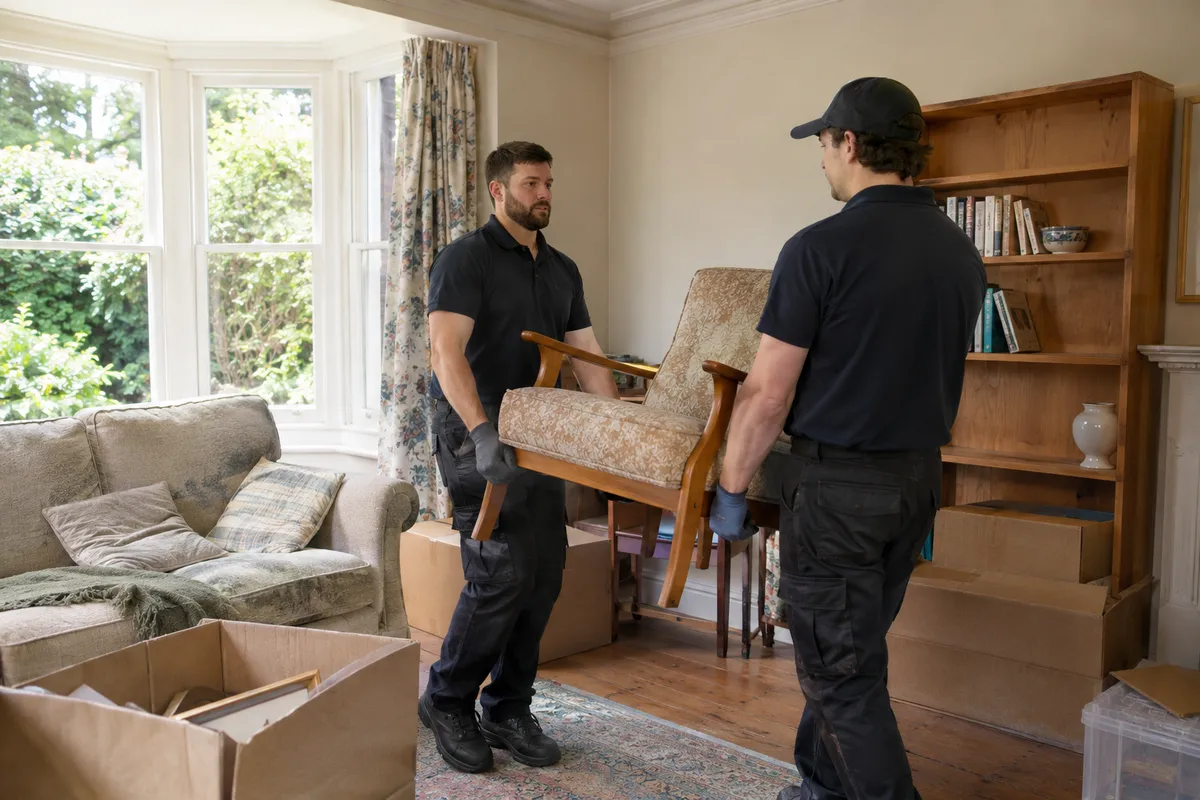
All generated photographs on this page are illustrative service scenes. They do not document jobs in Wembley.
Discuss your Wembley collection
Call +44 20 3404 3985 with the collection postcode, item list and property details. We will discuss the scope, available arrangements and quote before work begins.
Services for your Wembley enquiry
Furniture disposal · Rubbish collection · House and flat clearance