
LONDON & THE M25
Junk Removal
in Wimbledon.
We arrange Wimbledon clearances by establishing what needs to leave, where it is located and how our team can carry it to a suitable loading point. That may mean furniture in a flat, household contents across several rooms or unwanted equipment at a workplace. Give us the actual postcode, the item list and any building access arrangements. We discuss the complete collection price before work begins. You can start the enquiry with the contents where they stand rather than move bulky pieces outside simply to describe the job.
- Carrying and loading included
- A clear quote before work begins
- Licensed and insured waste carrier

THE CARRYING ROUTE
Planning the Wimbledon carrying and loading
01
Identify the address
Explain the actual entrance and property type.
02
Confirm the inventory
Distinguish removable contents and retained belongings.
03
Describe the exit route
Include stairs, lifts, locked storage and loading access.
04
Agree the collection
Confirm materials, full price, work and availability.
05
Carry and remove
We load the agreed contents for responsible handling.

The enquiry begins with your part of Wimbledon
Wimbledon covers properties with different entrances and approaches, so we do not use the area name as a substitute for an address. Merton Council publishes separate parking-zone information for Wimbledon town centre, park and village areas. That verified distinction reinforces the need to check the actual street. Tell us whether the collection is from a house, converted flat, managed block or business and identify the door our team would use. If the entrance is at the side or rear, explain how it is reached. A postal frontage may not reveal the access to an upper-floor property. We discuss the actual contents and their route out, rather than infer a loading arrangement from the nearest landmark or apply one parking timetable to every Wimbledon enquiry.
A handover clearance needs clear ownership of the remaining contents
When an occupier is preparing to hand back a property, the remaining objects can belong to several people. Tell us what you are authorised to remove and distinguish landlord furniture, retained appliances and belongings another person will collect. Through house and flat clearance, we can discuss a defined load without assuming every object in a room is unwanted. An attending representative should have the same list and be able to provide access to any included cupboard or storage area. Check drawers and shelves for belongings you want to keep before the agreed furniture leaves. If some contents are still undecided, do not let their position beside unwanted items become the instruction. We need a clear removal scope before carrying starts, especially when the person arranging the enquiry is different from the person present at the property.
ADDRESS & LOADING
Bulky furniture needs a route through every doorway
For a sofa, bed or cabinet, describe the size and present condition alongside the floor and exit route. Our furniture disposal service includes the agreed carrying and loading, but narrow turns, stairs and lift suitability still need discussing. A lift in the building does not prove that a sofa fits through its door or may be taken that way under the building’s arrangements. Identify glass, detached panels or damaged parts that affect handling. If dismantling is requested, say so explicitly. Taking a freestanding bed apart and removing fitted cupboards are different tasks, so avoid hiding either inside a general request for heavy lifting. We discuss the furniture as it currently stands. There is no need to obstruct a shared corridor by moving it there before the collection has been arranged.
- Give the precise street and entrance for your part of Wimbledon
- Separate tenant belongings from landlord furniture that stays
- Include any locked store in the removal list and access arrangement
- Check bulky furniture dimensions against the full exit route
- Name repair rubble and appliances before the quote is agreed
| Question | Information to provide | Collection purpose |
|---|---|---|
| What leaves? | Authorised furniture and household contents | The load is defined before carrying |
| What stays? | Landlord table or retained equipment | Nearby possessions are not assumed unwanted |
| Where is everything? | Flat rooms and separately locked store | Every included location is assessed |
| Who provides entry? | Named representative with the necessary keys | Access matches the agreed removal list |
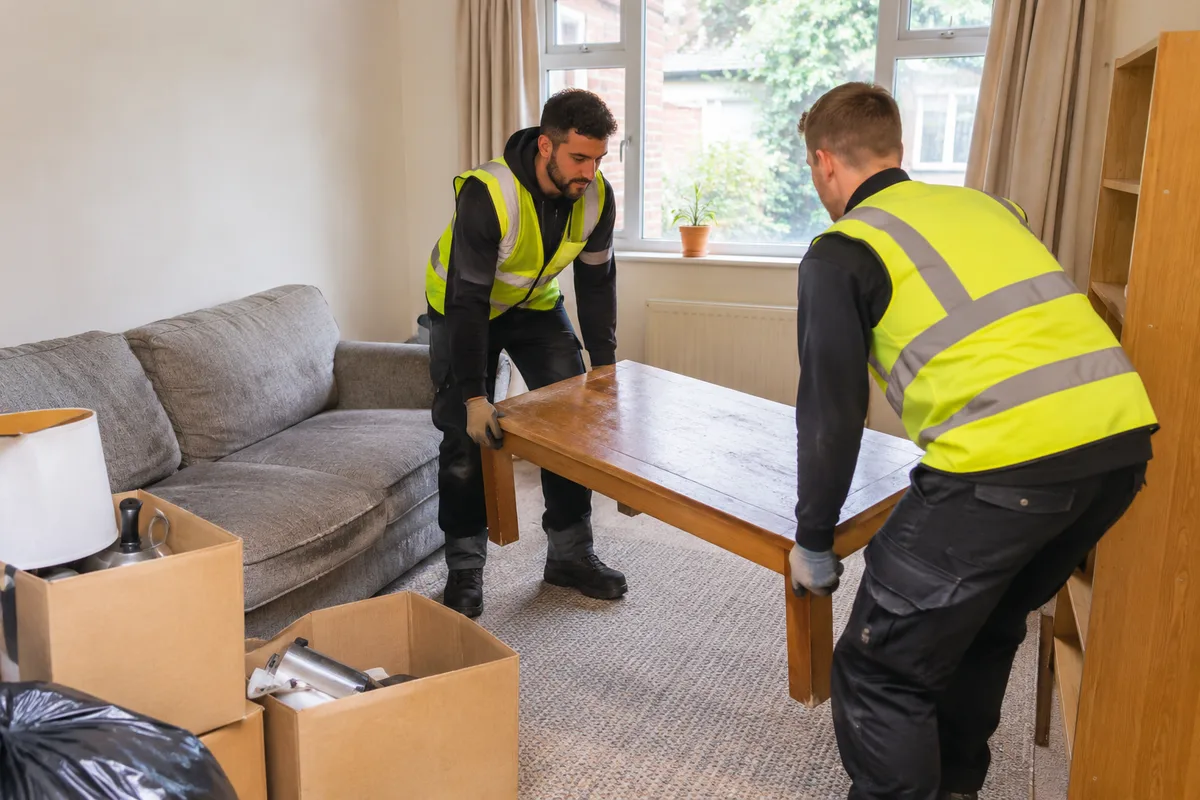
Illustration: furnishing changes before a flat handover
Imagine a Wimbledon tenant with an unwanted sofa, mattress and boxes of household contents, while the landlord’s dining table is staying. This is an illustrative enquiry, not a customer job claim. We would ask which boxes are part of the removal, whether the sofa can pass the stair turn and who will attend with the keys. If a separately locked store also contains unwanted shelves, it must be named as another location. A photograph of the sitting room alone will not account for that carrying. The tenant might later discover bagged tiles from a small repair; those need identifying as building material. We can then discuss a complete mixed collection with a clear price. The retained table remains outside the instruction even if it stands close to the unwanted sofa at the time of the visit.
Material detail prevents a mixed load becoming vague
List household rubbish, electrical equipment and refurbishment materials separately, even when they are stored together. For builders clearance, identify rubble, timber, tiles and plasterboard and explain whether they are loose or bagged. Dense material is different from light cartons or packaging. For appliances, name the type and state whether the item is connected or freestanding. We do not assume that collection includes plumbing, electrical disconnection or removal of surrounding joinery. Garden contents should distinguish green cuttings from soil, rubble and outdoor furniture. Raise unlabelled containers, chemicals and suspected hazardous material before booking. We discuss acceptance of the actual contents rather than treat ordinary rubbish nearby as a guarantee that every substance can join the load. A clear breakdown helps establish the appropriate removal and handling.
| Contents | Useful distinction | Service |
|---|---|---|
| Sofa and bed | Size, assembled condition and floor | Furniture disposal |
| Boxes and rubbish | Actual contents rather than a box count alone | Rubbish collection |
| Repair material | Tiles, rubble or plasterboard named | Builders clearance |
| Electrical items | Appliance or equipment identified individually | Electrical collection |
Loading arrangements need current street and building checks
Give us the proposed loading position and its relationship to the property entrance. A private court may need a fob, a service yard may be managed and a public-road location needs applicable restrictions checked. Merton Council’s parking-zone maps and address information are the official reference for local checks. The council also advises checking kerbside notices, so a broad zone label is not a reason to ignore the signs at the address. We discuss the specific collection arrangement instead of promise that any empty bay will suit our vehicle. Tell us about any known entrance booking or building contact in advance. We do not make up loading exemptions, routes or arrival times for Wimbledon; current availability and access are agreed with the actual job details.

A business clearance is defined by the authorised inventory
For an office, shop or commercial storeroom, list desks, shelving, chairs and other unwanted contents separately from monitors, printers and appliances. Explain whether the route crosses a trading floor or uses a dedicated service entrance. A nominated person should confirm which business possessions may leave and what belongs to the landlord or remains in use. Our office clearance and shop clearance services concern agreed contents, without automatically establishing a strip-out or specialist data destruction. Discuss any additional requirement explicitly before booking. If multiple rooms are included, identify each location and access arrangement. A clear inventory helps connect the business’s instruction to the practical carrying and loading, rather than leave the collection team to decide which furniture or equipment appears redundant.
See the current collection price guide, then confirm your complete quote with us. No separate Wimbledon tariff is implied.
| Detail | Confirm | Avoid assuming |
|---|---|---|
| Stairs or lift | The route suits the bulky object | Every lift accommodates a sofa |
| Loading position | Street restrictions or managed private access | An empty bay grants use |
| Additional work | Requested dismantling or fitted-item removal | All joinery work is included |
| Price and timing | Complete scope and available appointment | A guide band is a confirmed booking |
The final quote follows the full collection description
Our published price guide provides starting collection bands and relevant supplements. The complete quote needs the amount, material mix, specific items and agreed work. Include all locations, awkward carrying and requested extra tasks before relying on the price. Tell us about added contents before the visit where possible, so a newly included mattress, appliance or room can be assessed as part of the scope. We confirm availability for the proposed appointment; a Wimbledon postcode does not itself confirm immediate removal. After carrying and loading the accepted contents, we take them away for responsible onward handling with reuse and recycling where possible. We do not promise a reuse destination for every item or attach an unsupported recycling figure to the job. The service removes the defined unwanted load, with cleaning, repair and installation work outside assumptions about clearance.

LOCAL COLLECTION AREA
Where we collect in Wimbledon
Wimbledon is a Greater London locality in the London Borough of Merton. The marker provides neighbourhood orientation and is not a depot address. Give the complete collection postcode and actual entrance details. Raynes Park and Colliers Wood are nearby separately named areas; a collection is arranged from the job’s contents, access and availability.
Nearby collection areas: Colliers Wood · Raynes Park · Morden
Our London and M25 coverage is described on the Areas We Cover page. The local information here concerns the collection enquiry; it does not create a separate neighbourhood branch.

Greater London reference outline: GLA / OS Open Data (OGL). Location: GeoNames UK gazetteer. This is an orientation map, not a service boundary or branch address.
COLLECTION QUESTIONS
Wimbledon removal enquiries: questions answered
Can you clear tenant contents while leaving the landlord’s table?
Yes, make that distinction on the removal list and ensure the attending person understands it. We discuss the authorised unwanted contents rather than assume everything in a room leaves. Include any separately stored items and make clear which furniture or equipment belongs to another party.
Is one Wimbledon parking-zone rule enough to arrange loading?
We need the actual address and proposed loading position. Merton publishes separate zone and road information, and the applicable signs must be checked. Private courts and managed service areas may have their own arrangements. We discuss that specific access instead of applying a single neighbourhood-wide assumption.
Can the collection include a storage cupboard outside the flat?
Include it explicitly, with its location, contents and keyholder. We need to know whether it uses another route to the exit. A flat collection does not automatically include every cupboard in the building, so the authorised list and access arrangement should cover the actual store you want cleared.
Should I dismantle an old bed before asking for removal?
Describe its present assembled condition and raise any dismantling you want discussed. We need the frame, mattress and exit route information to understand the work. Do not assume every item must already be moved or taken apart; additional work should be agreed before the collection price is confirmed.
Can repair debris be added to a household collection?
Tell us what the debris contains and its approximate amount. Tiles, rubble, timber and plasterboard need identifying separately from light rubbish. We can discuss the complete enquiry, but the material mix and any extra carrying must be included in the agreed scope rather than added unnoticed to a household bag count.
Does office equipment removal include a data destruction certificate?
The published service concerns collection and responsible disposal of agreed equipment. A specialist data destruction procedure or certificate is not established by listing computers for removal. Explain any information-security requirement before booking, alongside the equipment inventory and access arrangements, so the service boundaries are clear.
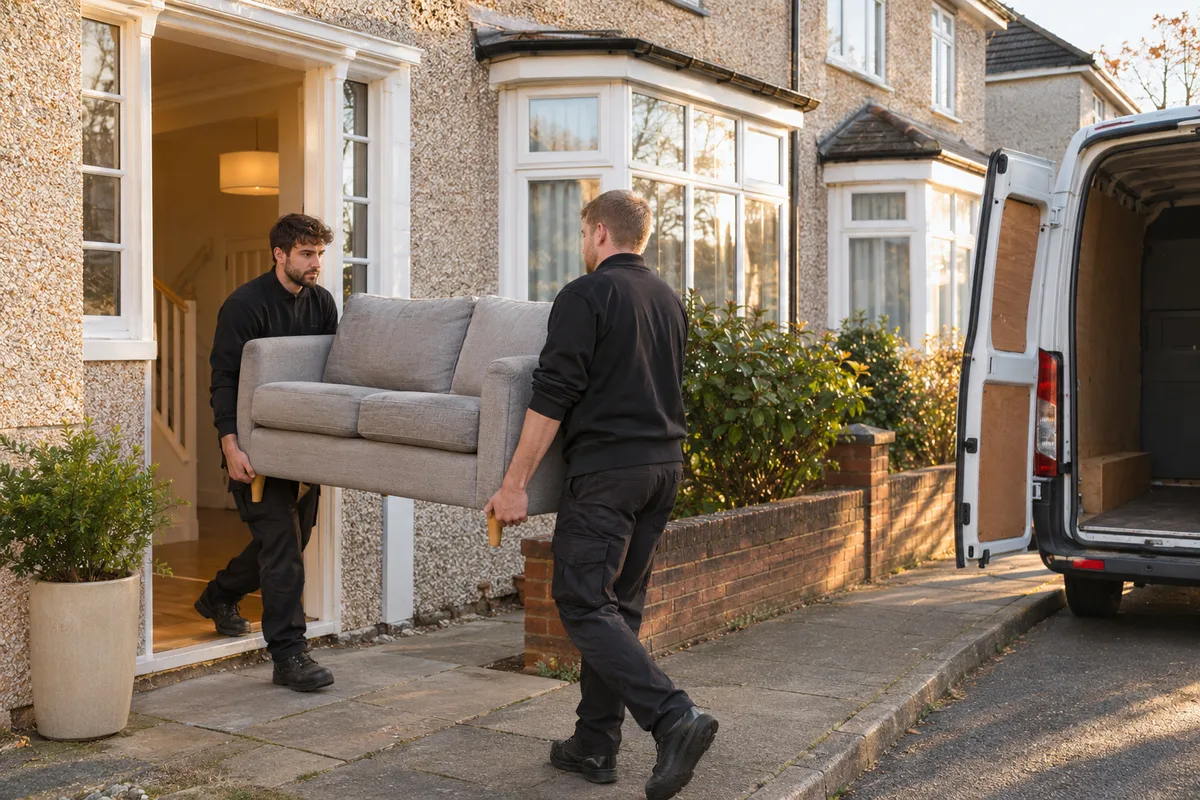
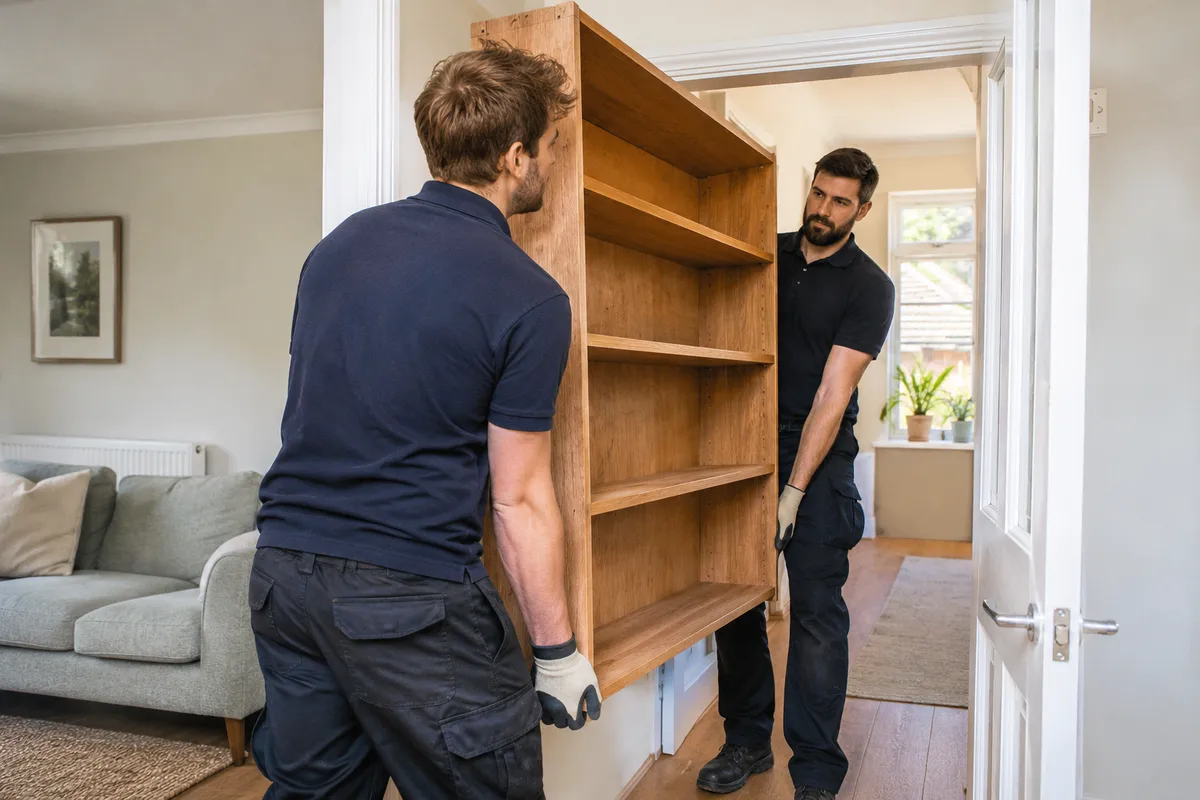
All generated photographs on this page are illustrative service scenes. They do not document jobs in Wimbledon.
Discuss your Wimbledon collection
Call +44 20 3404 3985 with the collection postcode, item list and property details. We will discuss the scope, available arrangements and quote before work begins.
Services for your Wimbledon enquiry
Furniture disposal · Rubbish collection · House and flat clearance