
LONDON & THE M25
Junk Removal
in Cheam.
We arrange Cheam collections for unwanted furniture, household contents and agreed mixed waste, with a practical discussion of how the load leaves the property. A few large pieces can involve more carrying detail than many small bags, so tell us about size, condition and location as well as quantity. Our team carries and loads the agreed items. The full quote is discussed before work begins, using the complete contents and access description rather than an assumed price for a neighbourhood or a photograph of only part of the job.
- Carrying and loading included
- A clear quote before work begins
- Licensed and insured waste carrier
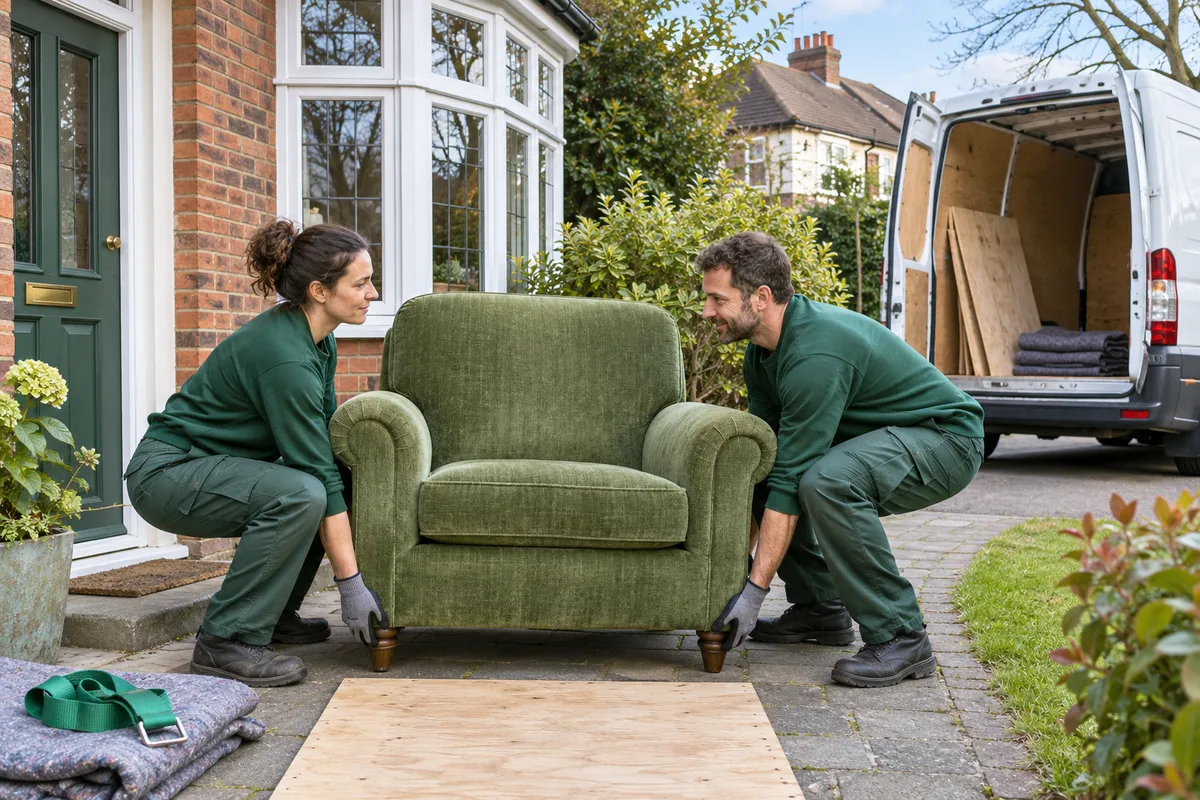
THE CARRYING ROUTE
Planning the Cheam carrying and loading
01
Name the furniture and contents
List unwanted pieces and belongings remaining.
02
Locate every group
Include rooms, garage and garden store explicitly.
03
Describe the route
Explain doors, stairs, gates and proposed loading access.
04
Agree the full quote
Confirm materials, work and available appointment.
05
Carry and remove
We load the agreed contents for responsible onward handling.

Large pieces are described before they are moved
Start with the furniture that needs removing and identify the room where each piece stands. For a wardrobe, sideboard or sofa, dimensions are helpful when the doorway, hall or stairs look tight. Tell us about glass shelves, damaged panels or unstable parts that affect handling. Our furniture disposal service covers the agreed pieces, with any requested dismantling discussed explicitly before the quote. A fitted unit is different from freestanding furniture and should be named as such. We need the object in its actual condition rather than assume every item separates easily. You can leave heavy furniture where it stands while the enquiry is assessed; moving it into a hallway or garden is not a prerequisite for asking about collection.
Cheam context does not replace a property-specific route
Sutton Council publishes a separate Cheam Village conservation-area appraisal and management plan. That identifies a particular local context, rather than mean every Cheam property has the same design or restrictions. Give us the exact postcode and entrance, including whether the collection concerns a house, flat, garage or business. Explain the practical route from the items to the proposed loading point. A gate, step or tight porch can matter more to carrying than the broad locality name. If the property has retained architectural features or fragile components along the route, describe the actual situation without assuming clearance includes changing the building. We discuss removal of agreed unwanted contents, not permission to alter the property. Any additional work needs its own explicit conversation before it becomes part of the collection scope.
ADDRESS & LOADING
A partial house clearance keeps retained belongings clear
A household may be replacing only a sitting-room suite or emptying a spare bedroom while the rest of the home stays in use. Through domestic clearance, we can discuss that defined task. List the pieces and loose contents being removed, and distinguish anything reserved for relatives, a buyer or another room. Check drawers and shelves for belongings you intend to keep before furniture leaves. If a representative will attend, give them the same removal list. We do not decide that a cabinet is unwanted because it looks old or because it stands next to rubbish. Clear authority matters where several people own possessions in the same house. The enquiry should explain which locations are included, with a separate description for a garage or garden store if those contents are also part of the job.
- Give bulky furniture dimensions where the hall or porch is tight
- Identify a retained family cabinet beside unwanted pieces
- Describe garage furniture as a separate location in the enquiry
- Distinguish green waste from old equipment and dense material
- Explain whether the suggested driveway is usable for loading

| Piece | Information to include | Reason |
|---|---|---|
| Sofa | Dimensions, assembled form and room | The full exit route can be discussed |
| Display or storage unit | Glass, loose panels and fixed or freestanding condition | Handling and additional work are clear |
| Bed | Frame, mattress and any dismantling requested | The complete furniture load is identified |
| Damaged table | Broken edges or detached components | The actual condition is understood |

Illustration: replacing a suite while retaining a family cabinet
Imagine a Cheam household removing two armchairs, a sofa and a damaged occasional table while keeping a family display cabinet. This is a realistic enquiry example, not a report of completed work. We would ask about the size of the sofa, any glass on the table and the route through the hall. If spare chairs in a garage are included, their location and door access need adding to the same description. The retained cabinet should remain outside the instruction even if positioned beside the unwanted suite. A box of small electrical equipment discovered later should be named rather than called ordinary clutter. With the complete list and routes understood, we can discuss the quote and available appointment. The example shows why a furniture count alone does not establish the whole practical collection.
Garage and garden contents can create a second carrying task
Tell us exactly where outside or stored material stands. A garage at the back of a plot, a store beside a patio and bags near the front door involve different routes. Explain gate openings, steps, turns and whether contents must pass through the house. For garden collection, distinguish green cuttings and branches from soil, rubble, old furniture and equipment. Collection of unwanted material does not automatically include pruning, landscaping or dismantling an outbuilding. If the garage contains retained shelving or tools, identify what remains before the visit. Photos can show hidden contents from another angle, but add a description of bagged materials. A pile’s location outdoors does not make every component green waste, and a generous garden does not guarantee that a vehicle can reach it closely.
| Location | Explain | Do not assume |
|---|---|---|
| Living room | Hall, porch and retained furniture | Every nearby object leaves |
| Upper bedroom | Floor, stairs and turns | Every frame passes assembled |
| Garage | Door opening and included contents | A whole garage is included automatically |
| Garden store | Gate and route to loading | Vehicle access follows garden size |
Refurbishment material and appliances are named separately
For builders waste collection, tell us whether the load contains tiles, rubble, timber or plasterboard, with approximate amounts and whether the material is loose or bagged. Dense debris needs a different description from lightweight packaging. Long offcuts and sharp pieces should be mentioned. Name refrigerators, washing machines, monitors and other electrical items individually, explaining connected or freestanding condition for large appliances. Collection does not automatically include plumbing, electrical disconnection or removing surrounding joinery. Unknown containers, chemicals and suspected hazardous material should be raised before booking. We discuss what can be accepted for the proposed load rather than assume every substance near household rubbish is included. Clear information supports an accurate quote and appropriate onward handling without inventing weights or disposal claims.


Loading is arranged for the actual street or private space
Give us the proposed loading position and explain how it connects to the entrance. A private drive may be occupied, a shared court may need entry permission and a public-road position needs the relevant restrictions checked. Sutton Council’s loading information is the official reference, including the distinction between loading and parking and the need to avoid obstruction. We do not turn that guidance into a blanket promise that any bay is suitable. Tell us about barriers, managed entrances or known access arrangements before an appointment is agreed. We also need to understand every included carrying route. Current availability is discussed with the complete job details; local coverage alone does not confirm an immediate visit or an invented arrival time.
See the current collection price guide, then confirm your complete quote with us. No separate Cheam tariff is implied.
| Material | Name separately | Service reference |
|---|---|---|
| Cuttings | Green material versus soil and rubble | Garden waste |
| Refit debris | Tiles, timber, plasterboard and packaging | Builders clearance |
| Electrical items | Equipment type and connected condition | Electrical collection |
| Household boxes | Actual contents and approximate amount | Rubbish collection |
The complete quote leads to a defined removal
Our published price guide gives starting bands and relevant supplements. The full quote needs the amount, material mix, particular items and work, including any requested dismantling or additional locations. Tell us if the scope changes before loading so the price can be reviewed. For a Cheam business enquiry, identify the authorised contact and distinguish unwanted furniture or equipment from landlord fixtures and retained stock. Our office clearance service does not automatically establish a strip-out or specialist data destruction. After carrying and loading the accepted contents, we remove them for responsible onward handling with reuse and recycling where possible. We do not guarantee that every piece of furniture will be reused or attach unsupported statistics to the load. Cleaning, repairs and installation should be discussed separately from the agreed waste collection.

LOCAL COLLECTION AREA
Where we collect in Cheam
Cheam is a Greater London locality within the London Borough of Sutton. The map provides locality orientation and is not a company branch. Give the precise collection postcode and actual entrance. Sutton and Worcester Park are nearby named areas; each collection is arranged around its own contents, access and availability.
Nearby collection areas: Sutton · Worcester Park · Carshalton
Our London and M25 coverage is described on the Areas We Cover page. The local information here concerns the collection enquiry; it does not create a separate neighbourhood branch.
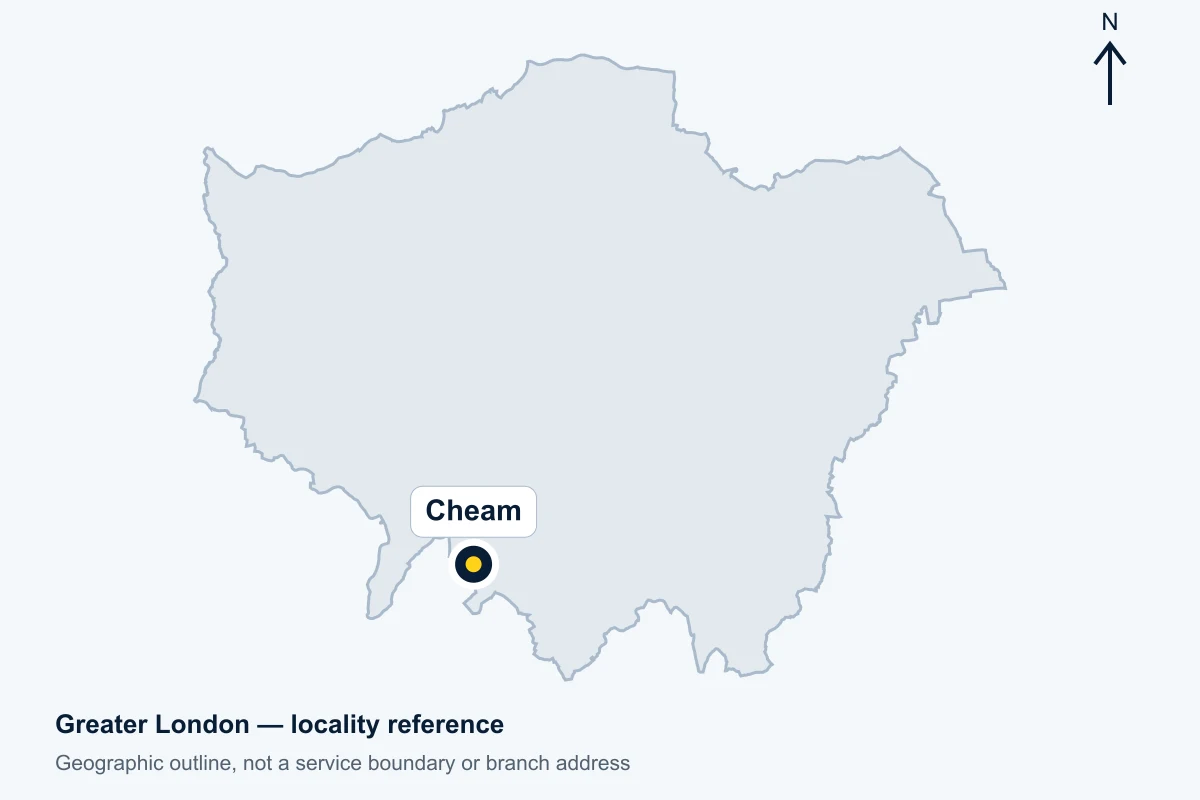
Greater London reference outline: GLA / OS Open Data (OGL). Location: GeoNames UK gazetteer. This is an orientation map, not a service boundary or branch address.
COLLECTION QUESTIONS
Cheam removal enquiries: questions answered
Can you remove a Cheam sitting-room suite while leaving a cabinet?
Yes, identify the sofa, armchairs and other unwanted pieces separately from the cabinet that stays. Tell us about the route and any damaged components. The attending person should have the same list so retained family furniture remains clearly outside the removal instruction even when positioned beside the load.
Does furniture need to be moved into the garden for a quote?
Describe it in its current room, with the doorway, hall or stair route explained. Carrying and loading are part of the agreed service. There is no need to move a heavy piece outside simply to ask about removal; dimensions and useful photographs can help establish the task.
Can garage chairs be included with indoor furniture?
List the chairs and garage location explicitly, including the door and route to the loading point. We can discuss the combined collection, but a quote for sitting-room furniture does not automatically cover unseen storage. Identify any retained garage possessions so the authorised contents are clear before the visit.
Will you dismantle a fitted display unit as ordinary furniture removal?
Tell us it is fitted and describe the work requested. Removing joinery is different from carrying freestanding furniture, so it needs explicit discussion before the price is agreed. Identify glass or loose components too, rather than assume the general phrase furniture removal covers every installation or condition.
Can garden bags join a Cheam furniture enquiry?
Explain what they contain and where they stand. Green cuttings, soil, rubble and old equipment should be distinguished. We can discuss the complete load and carrying routes together, with any applicable handling reflected in the quote rather than treat all outdoor bags as the same material.
Does being in Cheam Village change what collection work is included?
The actual property and agreed scope determine the removal discussion. Describe access constraints and any fixed or fragile features relevant to carrying. We do not assume clearance includes altering a building or removing fitted components. Additional work needs explicit agreement rather than follow automatically from a local designation or address.
All generated photographs on this page are illustrative service scenes. They do not document jobs in Cheam.
Discuss your Cheam collection
Call +44 20 3404 3985 with the collection postcode, item list and property details. We will discuss the scope, available arrangements and quote before work begins.
Services for your Cheam enquiry
Furniture disposal · Rubbish collection · House and flat clearance