
LONDON & THE M25
Junk Removal
in Ruislip.
Downsizing creates several destinations for the contents of a home. Some furniture moves with you, some goes to family and some needs removal. Our Ruislip junk-removal service starts by defining that last group. We discuss the furniture, loose belongings and access, agree the collection, then carry and load the items you have authorised us to take away.
- Carrying and loading included
- A clear quote before work begins
- Licensed and insured waste carrier
FROM ENQUIRY TO REMOVAL
Ruislip collections: the process we agree
01
Set the destinations
Decide which belongings move, stay with family or need removal.
02
Describe the final load
List furniture and boxed contents by room.
03
Agree the collection
Discuss access, availability and the complete price.
04
Review the handover
Check the agreed removals before onward handling.

Plan the removal around the move decisions
A moving date is useful information, but it does not describe the clearance. Tell us which rooms contain unwanted items and whether the decision about each group is final. Junk Please needs a removal list rather than a list of everything in the house. A dining table may be leaving while its chairs are moving with the household; a sideboard may be unwanted while its contents are being retained. Describe those distinctions explicitly. If family members are collecting belongings first, explain which items will remain for us and when you expect the inventory to be settled. We should not assume permission to take an object simply because another collection has been delayed. Identify the person who can confirm decisions at the property. Where an owner cannot attend, their representative needs a clear instruction about the agreed contents. This helps us organise carrying and loading around the actual removal task while the wider move continues separately. It also reduces the risk of a useful piece of furniture being confused with the unwanted group.
Make a room-by-room list with destinations
For a family downsizing enquiry, a simple room-by-room record is often more useful than estimating the house as a percentage full. State what is leaving from each room and keep the retained contents separate. Count substantial furniture individually, then describe boxes and bags by general contents and approximate quantity. Books and crockery should not be described as though they were light packaging. Empty furniture before the visit if its contents are staying, and check drawers for personal documents. We do not assess whether a document or keepsake matters to a family. That decision needs to be made before the item joins the collection group. Photographs can help us understand size and layout, especially where several furniture pieces are close together, but add a written explanation when an image includes things being kept. Revisit the record after relatives have collected their items. A final updated list supports a clearer quote than an early photograph of a room whose contents have since changed substantially.
Ruislip Village context does not define every entrance
Hillingdon Council publishes separate conservation information for Ruislip Village and Ruislip Manor Way. The village appraisal is useful local context, but it cannot describe every collection address across Ruislip. A home may have a short front path, a shared driveway or a rear entrance reached differently from the postal address. Tell us which applies to the actual property. We do not infer the availability of loading space from the age or appearance of a street. Explain whether a private drive can be used and who can authorise access to a managed or shared space. Where loading would be from the public road, the relevant restrictions need to be checked for that location rather than assuming one Ruislip timetable. We do not claim that a conservation designation creates a special furniture-removal rule. Our service uses the access available for the agreed work. See Hillingdon Council’s conservation-area list for the official local reference, and give us the full postcode and entrance details for collection planning.
- Separate the removal list from the moving inventory
- State which family collections must happen first
- Empty retained contents from unwanted furniture
- Describe large furniture and its full exit route
- Update the quote enquiry after the last ownership decisions

| Example group | Decision needed | Collection detail |
|---|---|---|
| Dining furniture | Which table and chairs are leaving | Individual pieces and dismantling |
| Display cabinet | Cabinet and contents have separate destinations | Glass and size identified |
| Household boxes | Personal documents removed first | Quantity and general contents |
| Outdoor furniture | Confirm it belongs in this visit | Location and garden access |
Work backwards from the largest retained doorway
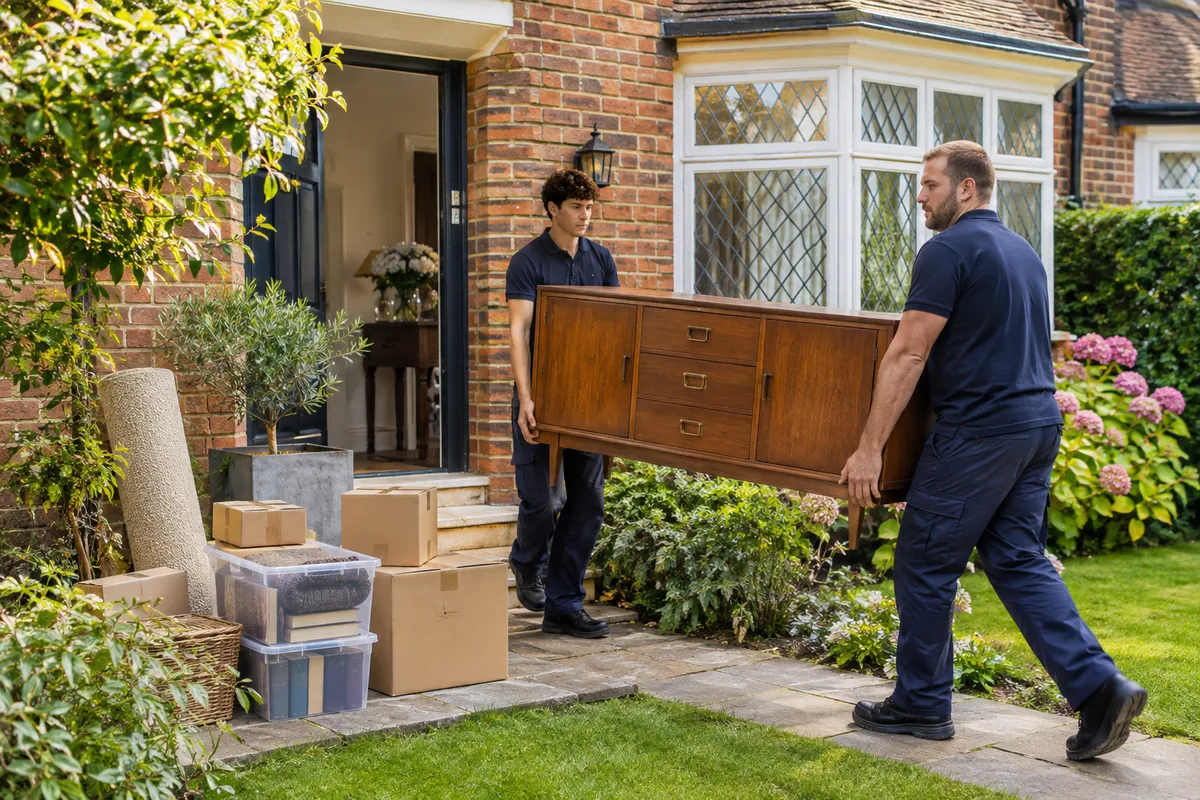
A large sideboard or sofa needs a realistic exit route before the smaller boxes are loaded. Explain where the item stands, its approximate dimensions and the route through the house. Stairs, turns, narrow porches and changes of level all belong in the enquiry. If furniture was assembled inside a room, mention that rather than assuming it can leave in one piece. Dismantling should be discussed explicitly, including whether the item is freestanding or attached. We do not treat fitted cabinetry as ordinary loose furniture without understanding the work. Tell us about fragile or loose parts, including glass shelves and damaged legs. Keep the route clear of belongings being retained where practical, but do not attempt an unsafe move merely to make the collection look ready. For a flat, describe the floor and lift as well as the entrance. The team’s carrying and loading should reflect the real route, not the route that would exist after a different moving company has completed another task.
Household furniture can reveal other material groups
A move often brings stored items into view: garden furniture behind a shed, electronics in a cupboard or leftover tiles under a workbench. These can be discussed in the enquiry, but name the groups separately. A mattress, refrigerator and dense renovation debris should not be hidden within the phrase a few extras. Explain where each addition is located and whether the same carrying route applies. For garden waste, distinguish green cuttings from soil, paving and pots. For business equipment stored at home, distinguish desks from unplugged electronic devices. Unknown containers or potentially hazardous materials require an explicit discussion before booking; their presence does not become acceptable simply because the rest of the collection is household furniture. We confirm the proposed contents and any limitations before loading. Keeping these groups visible also allows you to decide whether they belong in this visit. A downsizing collection can be convenient without becoming an instruction to clear every storage space at the address.


| Group | Relevant service | Explain separately |
|---|---|---|
| House contents | House and flat clearance | Furniture and loose belongings |
| Garden additions | Garden waste collection | Cuttings, soil and furniture |
| Old project material | Builders clearance | Density and material type |
| Work equipment | Office clearance | Furniture and electronics |
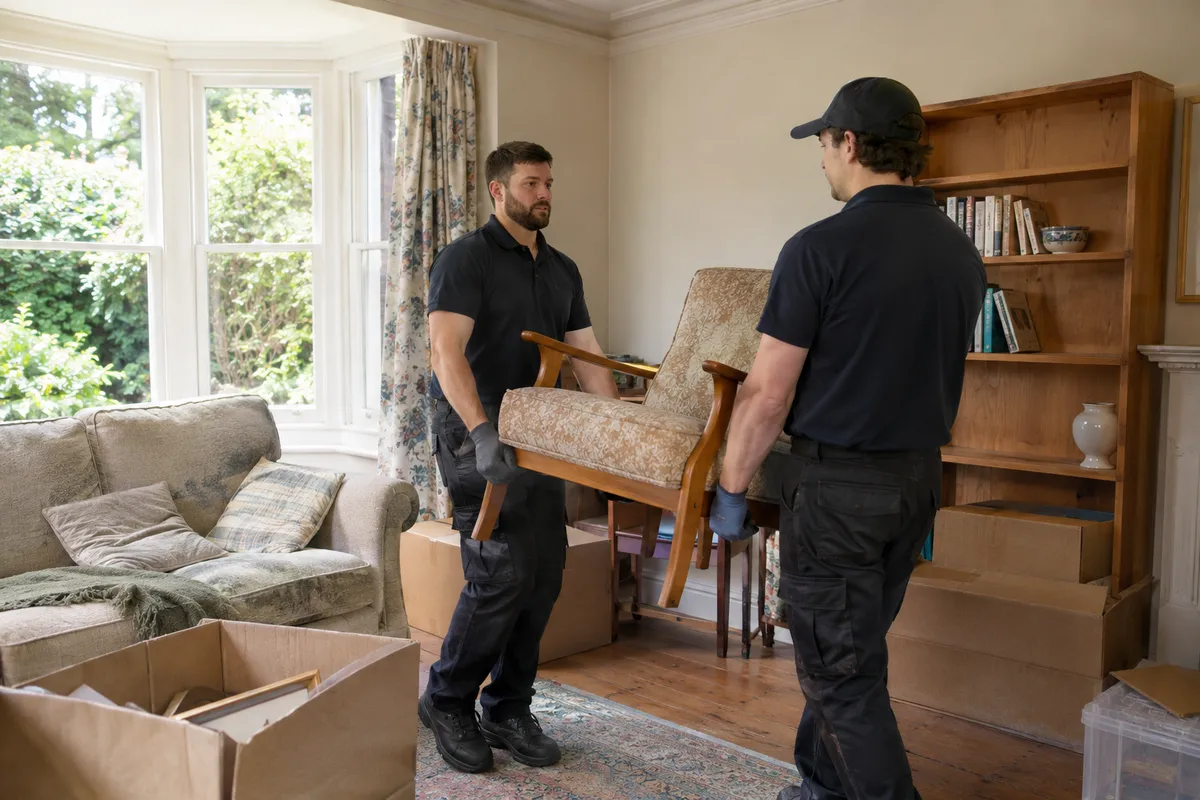
A realistic dining-room downsizing example
Imagine a household moving to a smaller property and retaining its compact kitchen table. The unwanted dining-room group consists of a larger table, six chairs and an empty display cabinet. Several boxes of ordinary household contents are also leaving, while family photographs and glassware have been removed beforehand. This is an illustrative scenario rather than a completed Ruislip job. We would ask whether the table is dismantled, whether the cabinet contains removable glass and how the pieces reach the loading point. If one relative later takes two chairs, the removal list should change accordingly. If a garden bench is added, its condition, location and access need to be described. We would discuss the final collection price against that settled group before carrying starts. The move supplies the reason for the job, but the item list supplies its boundaries. That distinction matters when other people are collecting furniture at different times and the contents visible in the room are changing.
Quote for the collection that will actually happen
We discuss the price using the amount, material mix and work involved, including relevant specific items and any agreed additional tasks. An upcoming completion date does not remove the need to describe the load. Tell us your timing needs and ask about current availability so a suitable arrangement can be considered. We do not promise a confirmed same-day appointment or an invented Ruislip rate. If the moving timetable shifts, let us know promptly; likewise, update the inventory when a family collection changes what is left. Before loading begins, confirm the agreed contents and price. Any additional floor, longer carrying route or unexpected dismantling task should be raised rather than treated as a minor detail after the quote. The aim is a transparent agreement that corresponds to the furniture and loose contents waiting at the property. That remains useful even when the wider move involves estate agents, relatives and other contractors with separate responsibilities.
| Checkpoint | What to confirm | Reason |
|---|---|---|
| Family decisions | Retained and removed contents | Avoid ambiguous ownership |
| Access | Drive, entrance, stairs and lift | Plan actual carrying work |
| Final scope | Changes since photographs | Keep the quote current |
| Handover | Who can confirm the completed list | Finish the removal clearly |
See the current collection price guide, then confirm your complete quote with us. No separate Ruislip tariff is implied.
End with a clear handover of the agreed rooms
After carrying and loading, review the agreed removal groups with the person responsible for the property. Confirm that the unwanted furniture and boxes have gone while the retained belongings remain. A room that still contains a family member’s furniture is not necessarily an incomplete clearance if that furniture was excluded from the collection. The removal list is the reference. The load leaves for responsible onward handling, with reuse and recycling considered where suitable for the materials and condition. We do not guarantee that every item from a downsizing collection will be reused, or give a made-up recycling rate for Ruislip. Nor does removal automatically include decorating, repairs or a full end-of-tenancy clean. Explain any separate requirement clearly. If further unwanted contents become apparent once the room is open, discuss them as additional work. A defined handover lets you see what has been completed and continue the move without confusing the junk-removal service with the other tasks still to be done.

LOCAL COLLECTION AREA
Where we collect in Ruislip
The orientation marker identifies Ruislip’s OpenStreetMap place location, not a Junk Please office. Ruislip Village and other local character areas do not define one access arrangement for every property. Give us the complete postcode, actual entrance and removal list to discuss your collection.
Nearby collection areas: West Ruislip · Eastcote · Ickenham
Our London and M25 coverage is described on the Areas We Cover page. The local information here concerns the collection enquiry; it does not create a separate neighbourhood branch.
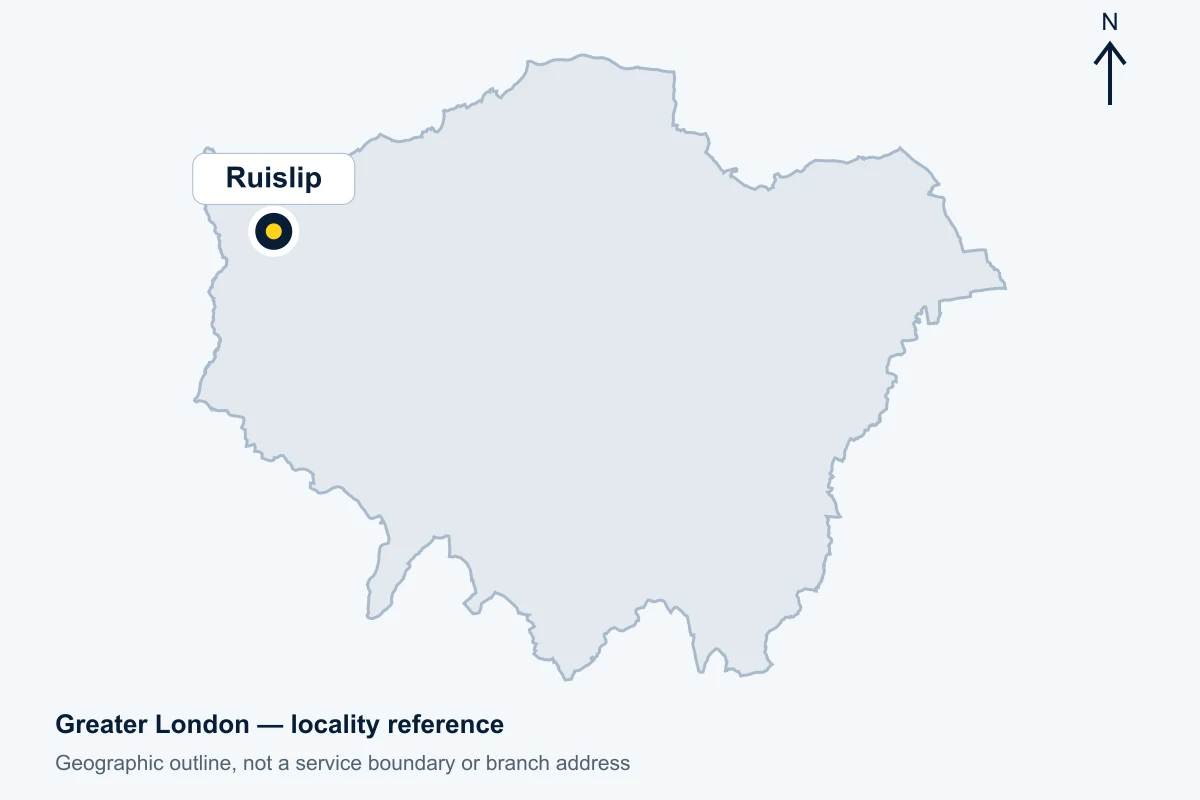
Greater London reference outline: GLA / OS Open Data (OGL). Location: OpenStreetMap Nominatim. This is an orientation map, not a service boundary or branch address.
COLLECTION QUESTIONS
Ruislip removal enquiries: questions answered
Can I arrange removal after relatives collect their furniture?
Explain that sequence when enquiring and identify what will remain for us. Once those collections have happened, update the inventory. We should not treat furniture awaiting a relative as unwanted unless you explicitly authorise its removal.
Does an empty display cabinet need a special description?
Tell us its size, location and whether it contains loose or removable glass. Explain any dismantling requirement and the route out. Empty furniture can still present a substantial carrying task, so its condition and access remain important.
Can you remove only part of a dining set?
Yes, describe the exact pieces being removed and separate the retained ones clearly. A request involving a table does not automatically include every matching chair. The agreed list should reflect your final decision.
What happens if the moving date changes?
Contact us promptly to discuss the collection arrangement and current availability. An altered deadline may affect the timing you need, and changes to other collections may also change the remaining load. Keep both the schedule and inventory current.
Should I include boxes of books in a furniture enquiry?
Include them if they are part of the proposed removal, and identify their general contents and quantity. Dense boxes differ from light packaging. Remove personal papers and anything being retained before the collection group is confirmed.
Will the room be ready for decorating after collection?
The agreed unwanted items will be carried, loaded and taken away. Repairs, decorating preparation and a full clean are separate requirements that should not be assumed. Discuss the work you need so the removal scope is understood.
All generated photographs on this page are illustrative service scenes. They do not document jobs in Ruislip.
Discuss your Ruislip collection
Call +44 20 3404 3985 with the collection postcode, item list and property details. We will discuss the scope, available arrangements and quote before work begins.
Services for your Ruislip enquiry
Furniture disposal · Rubbish collection · House and flat clearance