
LONDON & THE M25
Junk Removal
in Streatham.
We arrange Streatham collections by identifying the unwanted contents and the entrance that actually serves them. The enquiry may involve a flat, family house, business or separately locked store. Give us the full postcode and explain where each group of items stands. Our team carries and loads the agreed load, with the complete price discussed before work begins. You can describe furniture in its present room rather than move it into a shared entrance or onto the pavement simply to ask about removal.
- Carrying and loading included
- A clear quote before work begins
- Licensed and insured waste carrier
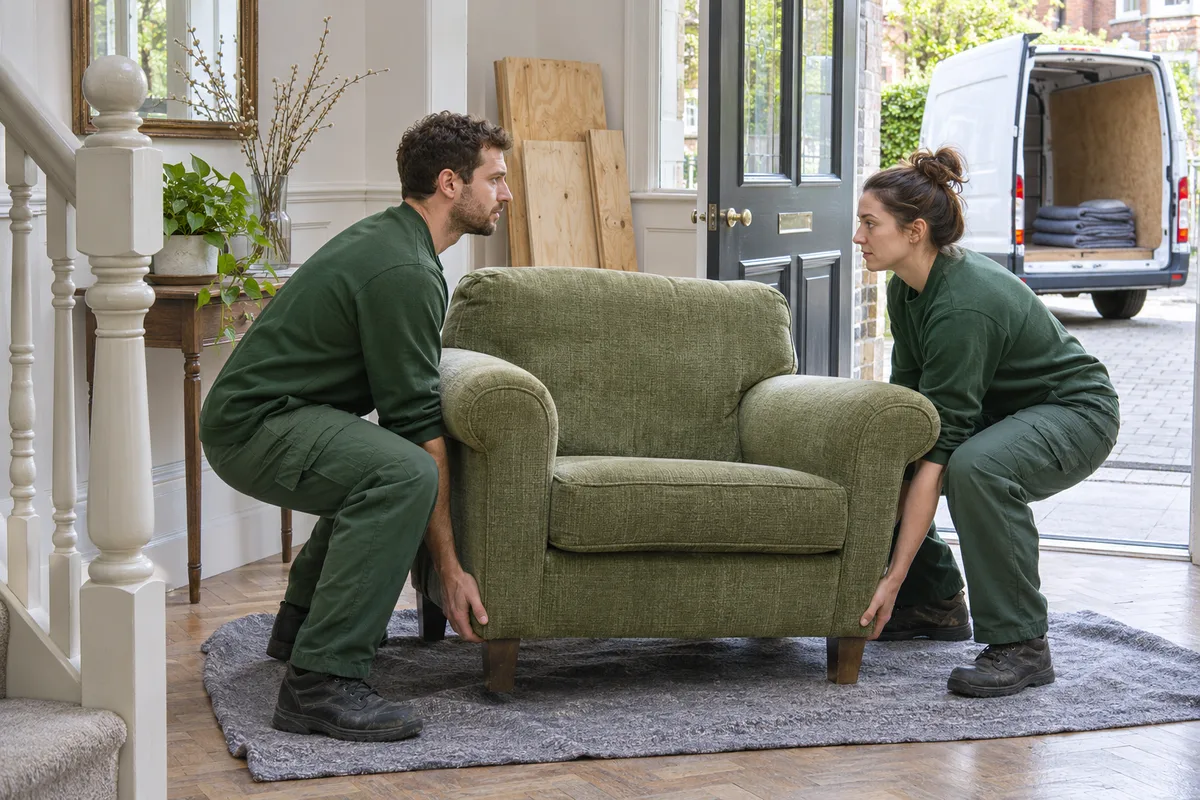
THE CARRYING ROUTE
Planning the Streatham carrying and loading
01
Locate the premises
Give the postcode and actual entrance.
02
Confirm the contents
Separate unwanted items and retained possessions.
03
Describe every route
Include flat stairs, separate stores and outdoor access.
04
Agree the collection
Confirm loading, accepted materials, full quote and availability.
05
Carry and remove
We load the agreed contents for responsible handling.
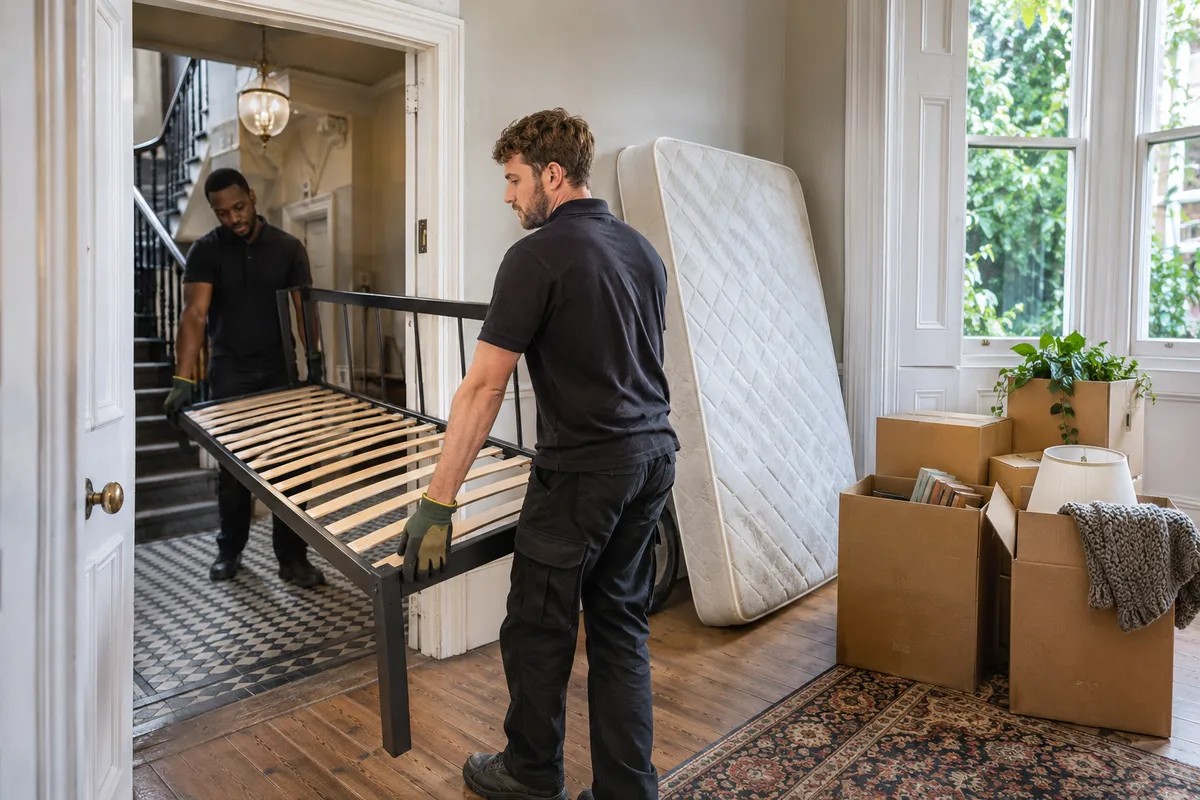
Streatham needs a precise property description
Lambeth Council lists separate conservation-area profiles for Streatham High Road and Streatham Hill, Streatham Common and other nearby residential areas. Those verified local distinctions support asking about your actual building rather than assume one layout across the locality. Tell us whether the collection concerns a house, flat, office or shop and identify the entrance used to reach the contents. A residential door can differ from the frontage named in the postal address. Explain any side passage, entryphone or managed gate, along with the floor and shared access. The full postcode helps establish the property and relevant local checks. We do not invent a depot, driving route or arrival time from the Streatham name or a nearby landmark.
The furniture route starts inside the room
For a sofa, bed, wardrobe or cabinet, describe the present location and the whole exit route. Give dimensions where a doorway or stair turn looks close. Through furniture disposal, we discuss the named pieces in their actual condition, including glass, loose panels and damage. Tell us whether the item is assembled, freestanding, fixed or already separated. Requested dismantling needs agreement before the quote; removal of fitted joinery is not automatically ordinary carrying. For flats, a lift should be described for suitability and building arrangements rather than simply existence. Our team carries the agreed items, so avoid moving bulky furniture into communal space to prepare. The enquiry should show every turn and step that matters, including the route outside the main entrance to loading.
ADDRESS & LOADING
A shared building still needs a household-specific list
Our domestic clearance service can be discussed for a limited group of unwanted items or a wider agreed load. Distinguish furniture and loose contents leaving from landlord appliances, retained belongings and another occupier’s possessions. Check drawers and shelves for things you intend to keep before furniture is removed. If a representative attends, give them the same list and ensure they can open every included cupboard or store. We do not decide that a box is unwanted because it is near rubbish. Shared corridors and storage areas make clear ownership especially useful. A separate store should be named explicitly, with its contents and keyholder, rather than assume a flat collection includes every space associated with the building.
- Identify the actual residential door if the postal frontage differs
- Give separate storage its own contents and access contact
- Describe furniture turns inside and outside the building
- Name appliances and repair debris beyond household carton counts
- Explain private-entry controls alongside the loading proposal

| Location | Explain | Purpose |
|---|---|---|
| Flat entrance | Door position and entryphone or key | The route reaches the correct premises |
| Stairs or lift | Floor, turns and suitability | Bulky furniture carrying is understood |
| Separate store | Contents, keyholder and route | The full location scope is explicit |
| Outside approach | Steps, gate and loading relationship | Internal and external carrying connect |
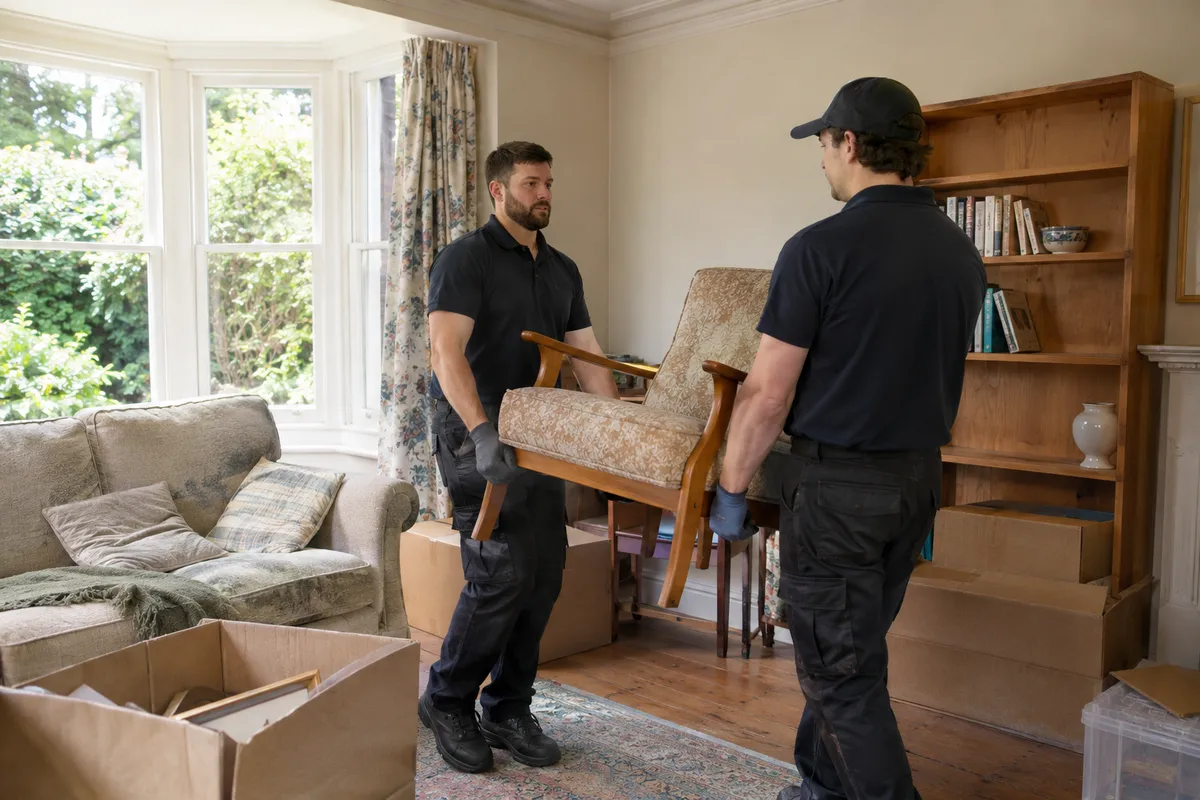
Illustration: a converted-flat collection with a separate store
Imagine a Streatham occupier replacing two armchairs and a mattress, with household cartons in a separately secured store. This is a hypothetical enquiry, not a record of completed work. We would ask about the floor, stair turns and who can open both entrances. The cartons need their contents described; a monitor or bag of repair rubble should not be hidden inside ordinary household clutter. A landlord’s table remains outside the instruction even if it stands beside an unwanted armchair. We can then discuss the combined load and carrying. If the store is reached through another part of the building, that route belongs in the same enquiry. Adding a large appliance later needs a revised description before relying on a quote based only on furniture and cartons.
Electrical and refit material is separated in the enquiry
The contents of the secured store should be visible in the written enquiry, not only in photographs of closed cartons. Name the principal equipment and say whether smaller accessories accompany it. If repair waste is also present, describe the actual substances and how they are stored. A bag of loose fragments needs a material name; its colour or container size gives little information about acceptance or handling. For large appliances, explain what would have to happen before the object can leave its position, including any connection or fitted enclosure. We establish which work is being requested rather than leave trades work implicit in the removal list. Put unidentified liquids, chemicals and other uncertain contents outside the ordinary load description until we have discussed them. Equipment removal also needs any specialist information-security requirement stated in advance.
| Contents | Useful detail | Relevant service |
|---|---|---|
| Armchairs and mattress | Pieces, size and present condition | Furniture disposal |
| Household cartons | Actual contents and quantity | Rubbish collection |
| Refit waste | Tiles, rubble, timber or plasterboard | Builders clearance |
| Garden material | Green cuttings versus soil and furniture | Garden collection |
Garden loads need their own route and material description
For garden collection, explain where the material stands and whether a gate provides separate access or the route passes through the house. Include steps, narrow sections and any locked store. Distinguish already-cut branches and green waste from soil, rubble, old outdoor furniture and equipment. State the approximate amount and whether it is bagged or loose. Collection does not automatically include pruning, landscaping or dismantling an outbuilding. Raise any extra task explicitly before the price is agreed. Retained tools or furniture should remain clearly outside the list. We can discuss a mixed indoor and outdoor load while recognising that the two parts may follow different routes and require different material descriptions. The location outdoors does not make every component green waste.


Loading checks use the actual address and proposal
An accurate entrance description should finish with the proposed transfer to the vehicle. Tell us whether the residential door opens directly onto the street or whether carrying continues through a court, passage or separately controlled gate. The useful loading proposal is the one related to that route, which may be different from the postal frontage. Where Lambeth is the relevant authority, its loading guidance provides the official reference, including the requirement for continuous activity and the different treatment of restrictions. We still consider the signs applying at the position and any private management conditions. Explain who can resolve a locked entrance or service-area arrangement before a visit is agreed. We check availability for the complete collection; the name Streatham does not book an appointment or determine our arrival time.
See the current collection price guide, then confirm your complete quote with us. No separate Streatham tariff is implied.
| Point | Confirm | Avoid assuming |
|---|---|---|
| Authority | Who may approve removal | Everything in shared storage is unwanted |
| Extra tasks | Dismantling or fitted-item requirement | All joinery is included |
| Loading | Actual restrictions and private access | An empty bay guarantees use |
| Price and availability | Full scope and agreed appointment | Coverage confirms immediate arrival |
The full quote describes the agreed removal
The final enquiry should read as one complete instruction even when several doors or locations are involved. We use that instruction to discuss the full quote, referring to the published price guide for current bands and supplements. Include the store contents, indoor furniture and any agreed outdoor material, together with carrying and requested extra work. If a relative or building contact will attend, they should understand which parts are included before the appointment. Tell us when their instruction differs from the original list so the scope can be corrected before removal. We then take away the accepted contents after carrying and loading, with responsible disposal and opportunities for reuse or recycling considered for the material collected. We make no unsupported claim about the eventual use of every object. A business load needs its own authority and any specialist service requirement made explicit.
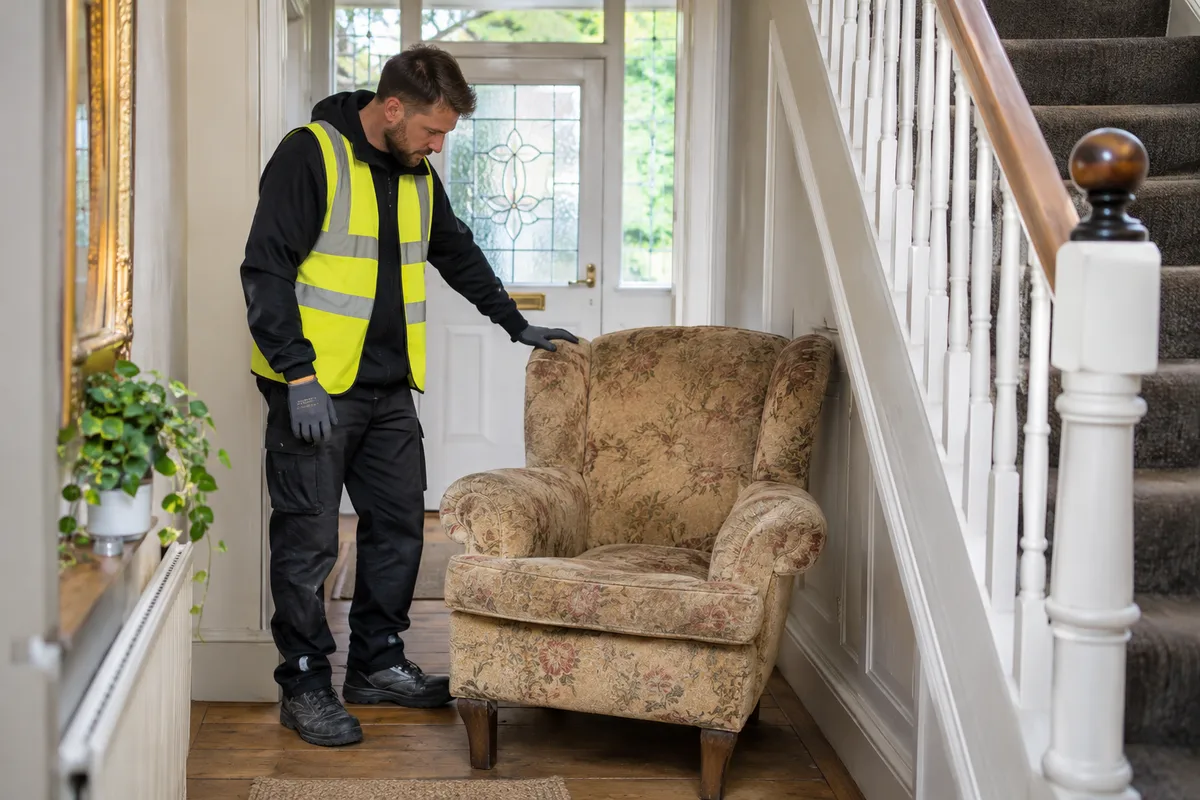
LOCAL COLLECTION AREA
Where we collect in Streatham
Streatham is a Greater London locality with the High Road, Hill and Common separately recognised in Lambeth’s local profiles. The marker is for orientation and is not a company depot. Give the precise postcode and entrance for collection enquiries. Tooting and Crystal Palace are nearby named areas, with access and availability confirmed for the actual job.
Nearby collection areas: Tooting · Balham · Colliers Wood
Our London and M25 coverage is described on the Areas We Cover page. The local information here concerns the collection enquiry; it does not create a separate neighbourhood branch.
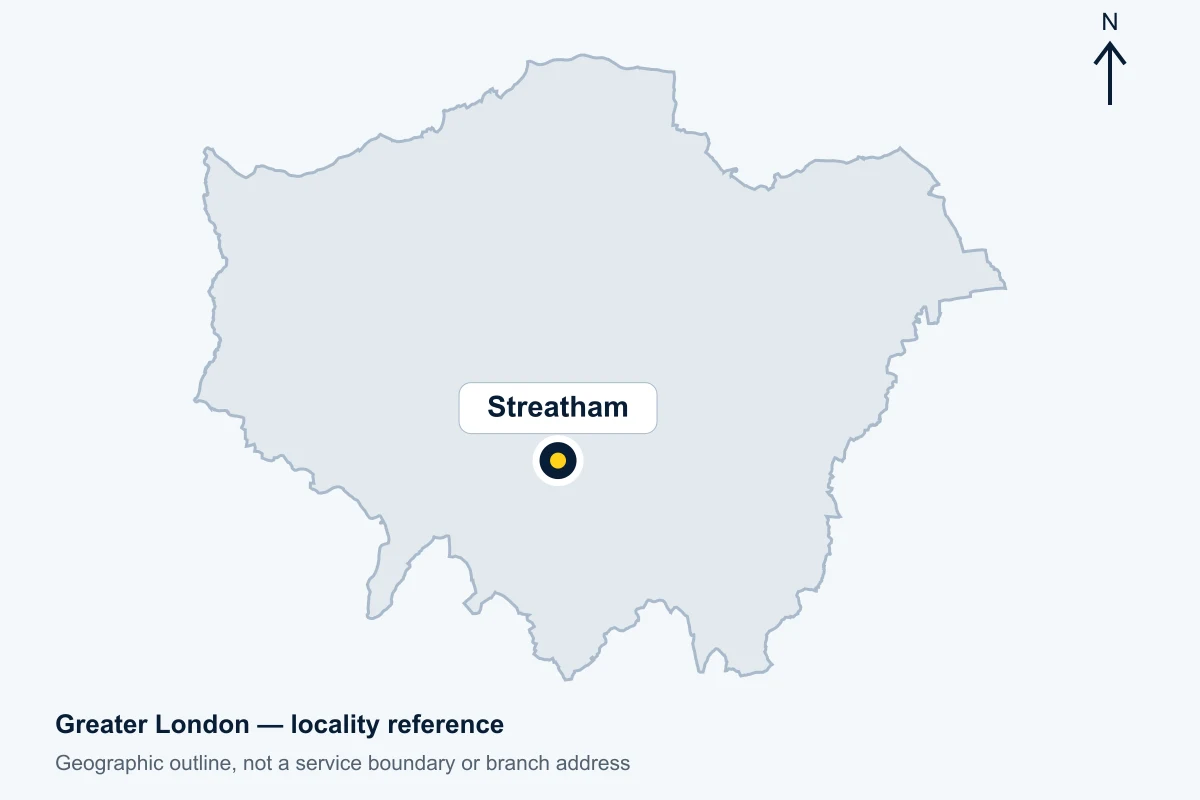
Greater London reference outline: GLA / OS Open Data (OGL). Location: GeoNames UK gazetteer. This is an orientation map, not a service boundary or branch address.
COLLECTION QUESTIONS
Streatham removal enquiries: questions answered
Can you collect from a Streatham flat with a separate entrance?
Tell us where the door is and how it relates to the postal frontage. Include the floor, stairs and any entryphone or gate. We discuss the actual route to the contents rather than assume a main-road address identifies the residential entrance or loading position.
Can a secured store be included with two armchairs and a mattress?
Give the store its own place on the inventory, identifying the accepted contents and who can release them. Explain whether entry is reached from the same hallway as the flat or from another part of the building. We can then connect the two armchairs, mattress and store material to their actual carrying routes, instead of rely on a single description of the front door.
Should household furniture wait in the shared hallway?
Describe it in its current room. Carrying and loading are part of the agreed collection, and moving bulky pieces into communal space is not necessary to begin an enquiry. Explain doorways, turns and stairs so the actual work can be discussed before the visit.
Can repair bags be collected with ordinary household contents?
Name their materials and approximate amount separately. Tiles, rubble, timber and plasterboard differ from lightweight packaging. We can discuss the complete mixed enquiry, but dense debris should not be hidden in a general carton or bag count when the full quote is agreed.
Does Lambeth loading guidance apply identically to every Streatham enquiry?
Start with the exact collection postcode and the position you propose, then identify the relevant authority and any private-access contact. Local guidance supports that check but does not replace the signs at the position. In particular, a managed court and a public bay are different proposals even when both are near the flat entrance.
Will a later appliance fit within the original furniture quote?
Tell us before the visit where possible, naming the appliance, location and connected condition. We need to review the material list, relevant handling and any supplement. An earlier quote for armchairs, a mattress and household cartons does not automatically establish removal of every later addition.
All generated photographs on this page are illustrative service scenes. They do not document jobs in Streatham.
Discuss your Streatham collection
Call +44 20 3404 3985 with the collection postcode, item list and property details. We will discuss the scope, available arrangements and quote before work begins.
Services for your Streatham enquiry
Furniture disposal · Rubbish collection · House and flat clearance