
LONDON & THE M25
Junk Removal
in Tooting.
We arrange Tooting collections by working from a clear room-by-room or area-by-area list. Tell us what is unwanted, where it stands and which items must remain. We discuss the route from those locations to an appropriate loading point, including stairs, shared entrances and separate stores. Our team carries and loads the agreed contents, with the complete price confirmed before work begins. The enquiry can cover a few bulky pieces or a wider mixed load, provided the materials and access are described accurately.
- Carrying and loading included
- A clear quote before work begins
- Licensed and insured waste carrier

THE CARRYING ROUTE
Planning the Tooting carrying and loading
01
Set out the room list
Identify unwanted contents and belongings that remain.
02
Name every material
Separate furniture, electrical items and dense debris.
03
Describe the route
Include stairs, store access and the loading proposal.
04
Agree the complete job
Confirm accepted contents, extra work, price and availability.
05
Carry and remove
We load the agreed waste for responsible onward handling.

A room list makes a mixed household collection concrete
For a house or flat, identify the unwanted contents by location rather than simply ask to clear some junk. A bedroom might contain a mattress and frame, the sitting room a sofa, and a cupboard boxes of loose belongings. Through domestic clearance, we can discuss those defined contents without assuming every room is included. Tell us what stays, including landlord appliances or furniture reserved for another person. Check drawers and shelves before agreed pieces leave. If someone attends on your behalf, give them the same list and access to every included space. We do not decide ownership from appearance or proximity to rubbish. The instruction should show the actual authorised load before carrying starts, especially in a building shared by several occupiers.
Tooting property context supports asking about the individual building
Wandsworth Council publishes a specific Totterdown Fields conservation-area appraisal, reflecting a distinct part of Tooting’s residential context. That does not establish the same layout or entrance arrangement at every address in the wider locality. Give the complete postcode and tell us whether your collection concerns a house, converted flat, managed block or business. Identify the actual door used for access, including any side or rear entrance different from the postal frontage. Explain the floor and any entryphone or locked gate. We discuss the precise property and relevant loading checks rather than apply a single Tooting rule. A nearby station, shopping street or local landmark can orientate an enquiry, but it does not replace the route details needed for the actual contents.
ADDRESS & LOADING
Furniture must be considered in its present form
We use the room list to identify which furniture presents the tightest part of the carrying task. Tell us the dimensions of an assembled bed or cabinet where a landing is restrictive, and explain whether its shape changes if sections are separated. Do not describe requested dismantling as though the item were already in pieces. That work should appear explicitly in the enquiry, along with any fitted attachment, glass component or damaged panel. A mattress and frame should each be named, since one can be removed while the other stays. Photographs of the turn and the object can explain the situation together. The furniture disposal discussion concerns those actual pieces and the agreed handling, rather than a general instruction to take apart anything that proves inconvenient on the day.
- List the bedroom, sitting-room and cupboard contents separately
- Identify furniture staying beside the unwanted bed or sofa
- Name electrical equipment and dense material inside boxes
- Add rear-store access and its keyholder explicitly
- Describe the actual loading proposal rather than assume an empty bay is suitable

| Location | Describe | Access detail |
|---|---|---|
| Bedroom | Frame, mattress and retained furniture | Floor and stair turns |
| Sitting room | Sofa dimensions and assembled condition | Doorway and hallway route |
| Cupboard | Box contents and approximate quantity | Private or shared access |
| Rear store | Authorised contents and items remaining | Gate, keyholder and exit |
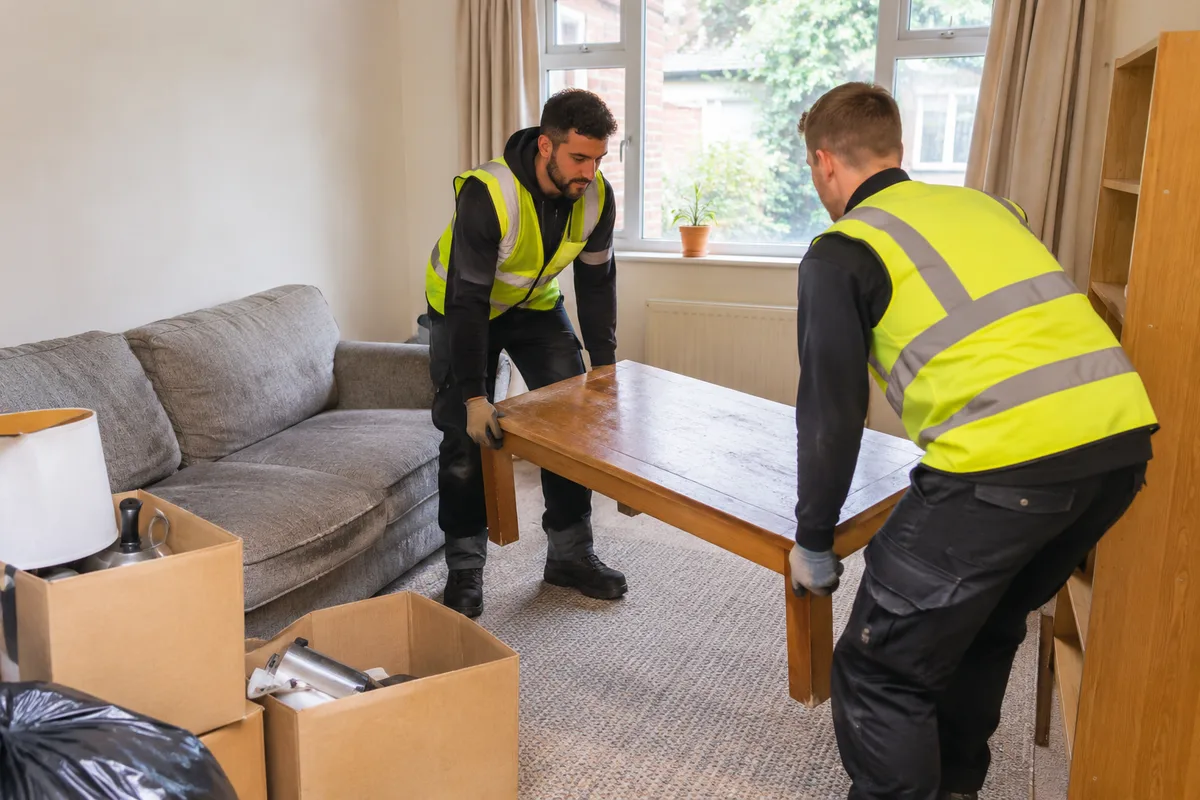
Illustration: a bedroom reset with boxes from a cupboard
Imagine a Tooting occupier replacing a bed frame and mattress while clearing a sofa and boxed household contents from another part of the property. This is an example of a realistic enquiry, not a completed-job claim. We would ask which floor holds the bed, whether the frame is assembled and how the sofa follows the exit route. The cupboard boxes need a contents description rather than only a count. If one holds a monitor and another repair debris, those materials should be named separately. A retained chest of drawers remains outside the list even if beside the mattress. We can then discuss the whole collection and price. If a rear store is added later, its contents, gate and keyholder need including before relying on the first arrangement.
A cupboard or store can hide different materials
A cupboard inventory is useful when it distinguishes the contents without requiring anyone to open every carton during loading. Tell us the broad household categories and identify equipment or repair material among them. For electronics, list the principal devices and any associated accessories; state a data-security requirement separately from the fact that the equipment is unwanted. For heavy repair bags, give the substance and approximate amount, explaining any mixture of materials. Appliances need their location and present connections described, so the collection can be distinguished from installation or trades work. We also need advance discussion of unlabelled containers and substances whose identity is uncertain. This is a contents assessment, not an instruction to transfer every sealed package into the vehicle merely because it sits inside the included cupboard.
| Contents | Identify | Service reference |
|---|---|---|
| Furniture | Pieces, size and damage | Furniture disposal |
| Electrical items | Equipment type and connected condition | Electrical collection |
| Repair waste | Tiles, rubble, timber or plasterboard | Builders clearance |
| Outdoor material | Green cuttings versus soil and furniture | Garden collection |
Garden and rear-access contents need their own explanation
If the collection includes outdoor material, tell us where it stands and whether a side gate, shared passage or route through the house is used. For garden collection, distinguish already-cut branches and green waste from soil, rubble, old furniture and equipment. State the approximate amount and whether material is loose or bagged, mentioning long or sharp pieces. Removing agreed waste does not automatically include pruning, landscaping or dismantling a structure. Any additional task should be discussed explicitly. Identify retained tools or stored possessions beside the waste. The outdoor location should be part of the enquiry in its own right, rather than an unseen addition to a quote for indoor furniture. We can discuss a mixed load while recognising the different carrying routes and materials involved.

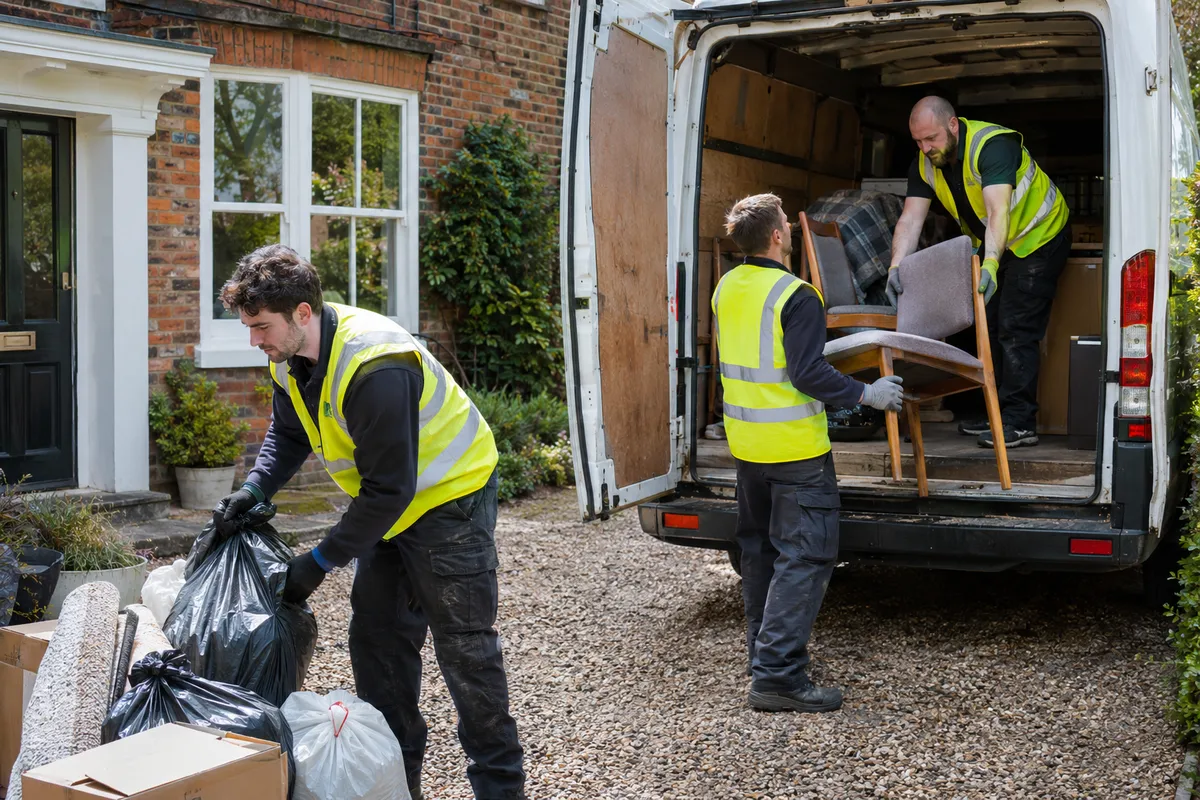
Loading is checked at the actual street or private entrance
Give us the proposed loading position and explain how it relates to the collection door. A private court, managed yard and public road each have relevant conditions to consider. Tell us about any barrier or person controlling entry before booking. We check the actual address and signs rather than assume an empty bay or resident permit settles vehicle use. Wandsworth’s parking information provides an official starting point where its authority applies; a locality name does not substitute for the precise road. The carrying from each room or store should connect to the loading proposal. We discuss current availability with the job details and do not promise a universal loading exemption, fixed driving route or immediate arrival simply because the property is in Tooting.
See the current collection price guide, then confirm your complete quote with us. No separate Tooting tariff is implied.
| Decision | Confirm | Avoid assuming |
|---|---|---|
| Removal authority | Occupier or authorised representative | Everything nearby is unwanted |
| Extra work | Dismantling or fitted-item request | All joinery is ordinary carrying |
| Loading access | Actual restrictions and private entry | An empty space grants vehicle use |
| Complete quote | All materials and locations | Unseen additions are included automatically |
The complete quote reflects the agreed contents and work
Before confirming the collection, we bring the room list back together with the current price guide. The full quote should cover the identified pieces, cupboard contents and any named rear store, along with the accepted material mix and practical work. If a room is removed from the plan or another is added, tell us which contents changed; a revised room count on its own is less useful than the revised inventory. We check an available visit against that description and clarify requested tasks such as dismantling before work starts. Our removal then takes the accepted load away after carrying and loading. Responsible handling includes pursuing appropriate reuse and recycling opportunities, without assigning a made-up result to each object. A business addition needs its own authorised instruction, and cleaning, repairs or specialist equipment work must be expressly discussed.

LOCAL COLLECTION AREA
Where we collect in Tooting
Tooting is a Greater London locality in south London. Its marker gives neighbourhood orientation and is not a depot or service boundary. Give the full postcode and actual collection entrance so the precise property and loading conditions can be checked. Balham and Streatham are nearby named areas, with appointments agreed for the actual load and access.
Nearby collection areas: Colliers Wood · Streatham · Mitcham
Our London and M25 coverage is described on the Areas We Cover page. The local information here concerns the collection enquiry; it does not create a separate neighbourhood branch.

Greater London reference outline: GLA / OS Open Data (OGL). Location: GeoNames UK gazetteer. This is an orientation map, not a service boundary or branch address.
COLLECTION QUESTIONS
Tooting removal enquiries: questions answered
Can a Tooting collection cover selected rooms only?
Yes, identify the unwanted contents in each included room and explain what remains. We can discuss a defined load without treating the whole property as part of the clearance. The attending contact should have the same list, particularly where landlord or other occupiers’ belongings are nearby.
Should cupboard boxes be listed separately from furniture?
Describe their contents and approximate quantity as well as the furniture pieces. Electrical equipment, repair debris and ordinary household belongings are different groups. A general box count cannot show the material mix, so the complete enquiry should explain what is actually proposed for removal before the full quote is agreed.
Can you collect an assembled bed frame from upstairs?
Explain the bed as it now stands, including the frame and mattress separately. If the stair turn looks restrictive, provide dimensions or a useful view of that turn. Tell us what dismantling you want assessed rather than assume either that you must do it first or that every form of taking furniture apart is already included.
Can a rear store be added to an indoor furniture enquiry?
Update the inventory with the store contents and tell us how its key and route relate to the rooms already listed. This gives us a defined addition to assess. A store is not represented adequately by saying there is another room, especially when it introduces electrical items, dense materials or a separate gate.
Will appliance collection include disconnecting it?
Explain whether the appliance is disconnected and freestanding or remains fitted. Plumbing, electrical disconnection and joinery work are not automatically part of collecting it. Those additional requirements need explicit discussion before a price and appointment are agreed, alongside the item type, location and route out.
Does a Tooting postcode confirm same-day removal?
Give us the contents, access and loading information so current availability can be discussed. Same-day requests depend on the schedule and are not confirmed by the locality name alone. The collection needs an agreed scope and full quote, rather than an unverified arrival promise based only on coverage.
All generated photographs on this page are illustrative service scenes. They do not document jobs in Tooting.
Discuss your Tooting collection
Call +44 20 3404 3985 with the collection postcode, item list and property details. We will discuss the scope, available arrangements and quote before work begins.
Services for your Tooting enquiry
Furniture disposal · Rubbish collection · House and flat clearance