
LONDON & THE M25
Junk Removal
in Tottenham.
We organise Tottenham junk removal around the occupier and the actual contents, from selected household furniture to redundant business storage and devices. Different materials remain identifiable even when they form one visit. We discuss authority, access and the full quote before carrying and loading the agreed groups for responsible handling.
- Carrying and loading included
- A clear quote before work begins
- Licensed and insured waste carrier
COVERAGE & CONTENTS
Tottenham coverage and material groups
The map identifies Tottenham’s verified place position for orientation, not a depot or specific High Road loading point. Give the full postcode, occupier and actual entrance. Corridor heritage context does not establish one access rule throughout the locality.
Nearby collection areas: Edmonton · Wood Green · Walthamstow
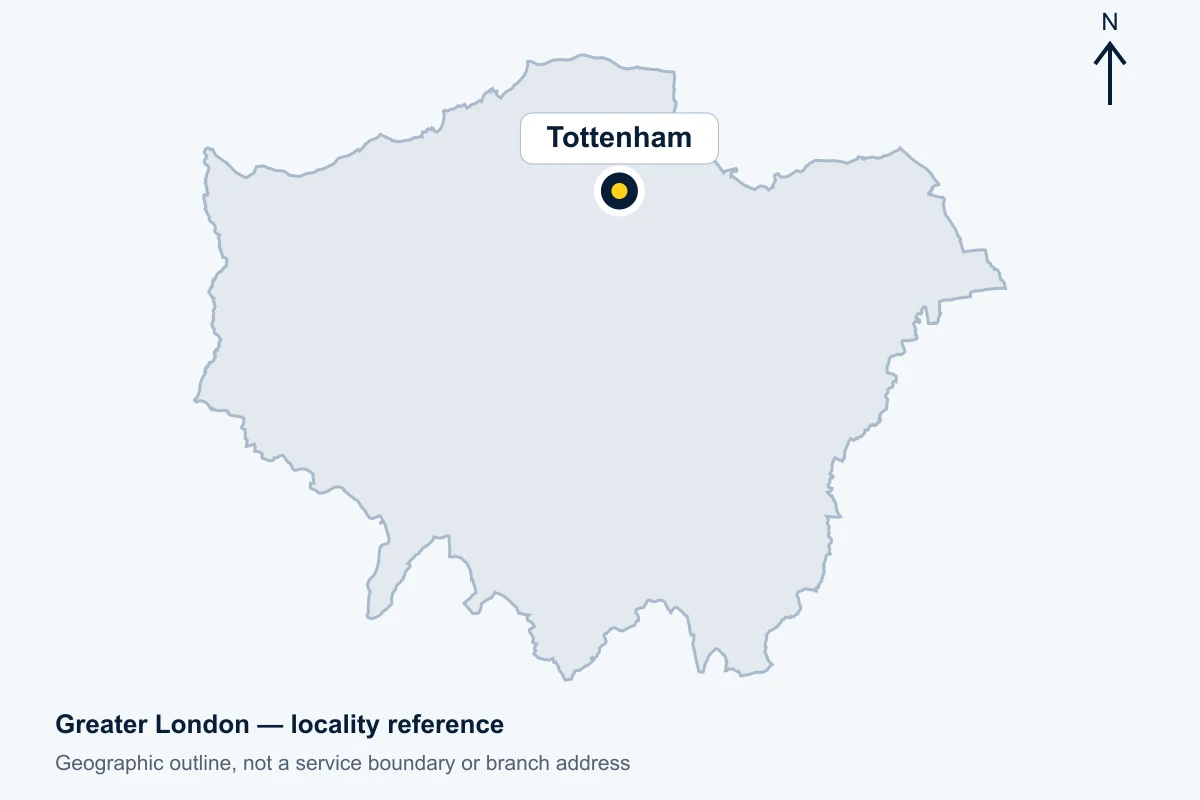
Greater London reference outline: GLA / OS Open Data (OGL). Location: GeoNames UK gazetteer. This is an orientation map, not a service boundary or branch address.
Tottenham’s High Road context needs a precise premises
Haringey Council’s published material covers several conservation appraisals along the Tottenham High Road Historic Corridor. That official context recognises distinct local settings rather than one uniform building arrangement. Tell Junk Please which premises and occupier the enquiry concerns, with the full postcode and actual entrance. A home, display area and upstairs workspace require different contents and carrying descriptions. We do not infer loading permission from a High Road address or turn conservation status into an invented rule for ordinary loose-content removal. The official corridor appraisal report supplies local background; existing access and relevant restrictions at your proposed position need their own consideration. Confirm who controls private or managed space before presenting it as available. The material list and individual premises define the collection, while the locality marker provides orientation only.
Home contents
Business waste
Outdoor materials
- Identify each occupier and removal authority
- Separate displays, products and packaging
- Name workspace devices individually
- Describe repair and garden materials by type
- Explain the actual entrance for every group
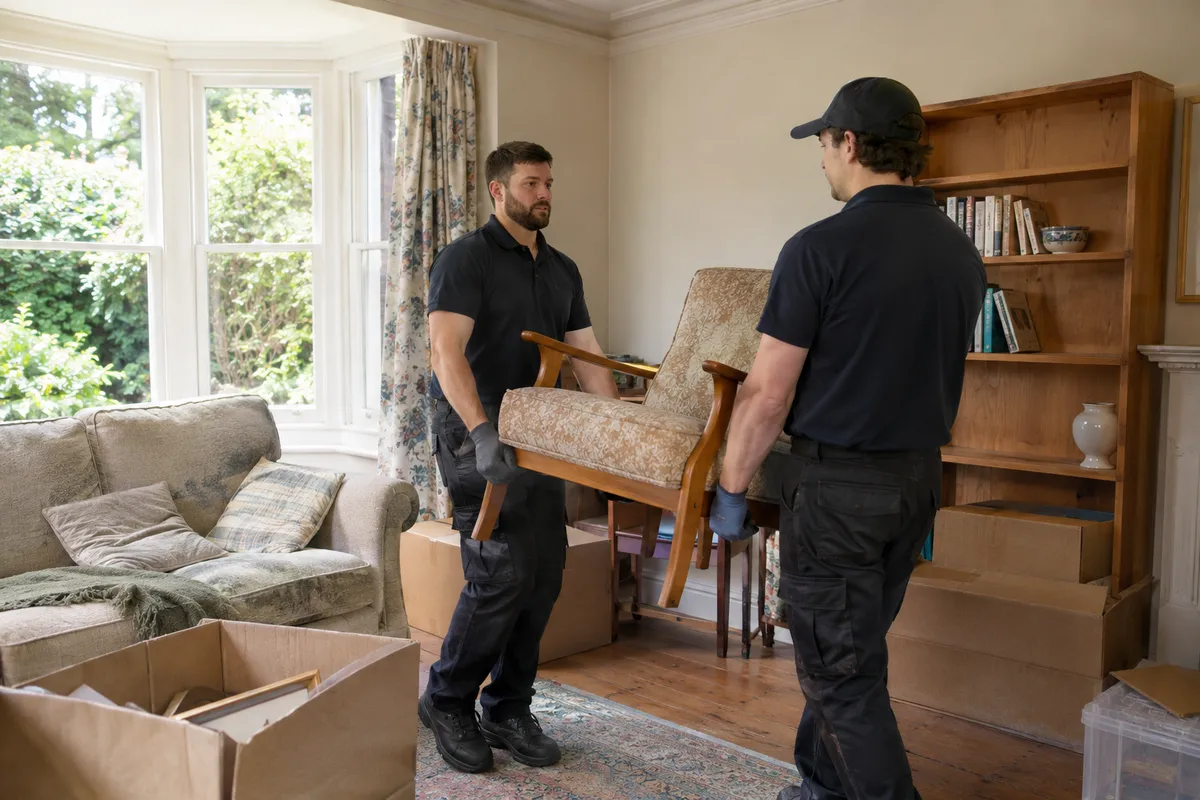
Explain the sofa as a selected household item
For the household part of the example, tell us which sofa is leaving, whether it separates and what remains in use around it. A single approved sofa can be the whole furniture task; it does not make the rest of the room a clearance. Identify loose cushions or detachable sections intended for removal and say if any part is retained. The checked boxes need their own contents and quantity account. Explain whose decision authorises them, particularly where another occupier has possessions in the same room. We do not need private details from those belongings, only enough material information to understand the load. This creates an instruction that can be confirmed at the visit without asking the team to decide whether other furniture looks redundant. It also keeps the household request distinct from the separate business display group.
| Group | Describe | Service |
|---|---|---|
| Domestic rooms | Furniture and loose belongings | House and flat clearance |
| Displays and storage | Loose units, products and cartons | Shop clearance |
| Workspace equipment | Desks and devices | Office clearance |
| Repair leftovers | Timber, tiles and rubble | Builders clearance |
Describe what makes the business display redundant
Tell us which physical parts of the display are unwanted and whether the business is retaining any shelves, rails or base units. Its current construction matters more to the carry than the purpose it once served. State whether it is freestanding or attached, with work to separate fitted parts raised specifically. Products stored on or near it need a different approval and description; a decision about a display should not dispose of saleable stock by implication. Cartons also need their contents stated rather than being assumed empty. The business contact should be able to identify the approved unit while leaving current merchandise and devices outside the load. Where ownership rests with the landlord or another party, resolve that before including it. This makes the enquiry about a defined redundant installation or object, not the business’s whole trading environment.


Keep the electronic and paper decisions visible
If the enquiry includes a workspace device, name it separately from desks and display furniture. State whether the owner has finished using it and what preparation remains. A monitor or printer should not be represented only by the cabinet on which it stands. Records and personal contents in drawers also need a decision before the furniture is approved for removal. We do not infer a requirement to destroy information from the fact that equipment is unwanted; raise any specialist expectation explicitly. For general boxes, explain whether they contain books, household objects or wrapping so density is not guessed from size. Report uncertain containers with what is already known instead of opening unsafe material to complete a photograph. These distinctions keep additional contents from altering the original sofa-and-display task without a proper scope discussion.

Describe the rear-space group as its own collection problem
A rear area may hold garden chairs, branches and material stored during a room change. Describe the objects and substances rather than calling everything outside garden waste. Say whether pots contain soil and whether sacks hold cuttings or hard fragments. If a discarded panel belongs to the display inside, identify that relationship so all its components can be checked together; if it is repair debris, give its material and quantity separately. The condition matters too: cardboard exposed to rain no longer has the same description as dry wrapping inside a store. Uncertain tins or containers should remain an explicit acceptance question, without being emptied into ordinary bags. We can then consider the proposed outdoor addition and its route independently of the sofa. That gives the enquiry a defined rear-space group instead of silently extending permission to every object outside the premises.
| Detail | Tell us | Purpose |
|---|---|---|
| Cartons | Empty or containing products | Actual load |
| Furniture | Components and condition | Agreed handling |
| Outdoor group | Cuttings versus soil and objects | Material mix |
| Devices | Type and preparation | Scope discussion |
Use the largest sofa section and display piece to explain access
A doorway description becomes more useful when it refers to the objects that must pass it. Give the size of the sofa’s rigid section and the widest display component, then explain their respective journeys. They may start on different floors or use different entrances despite sharing a postal address. Tell us about significant turns and access controls along each path. A business contact able to open the shop may not control the household doorway, so identify who will provide each entry. Explain any private loading arrangement that has actually been agreed rather than assuming a rear space is available. We can then discuss carrying against a coherent route for both objects. There is no need for you to attempt an unsafe trial move. The aim is a realistic description of the collection our team would find.
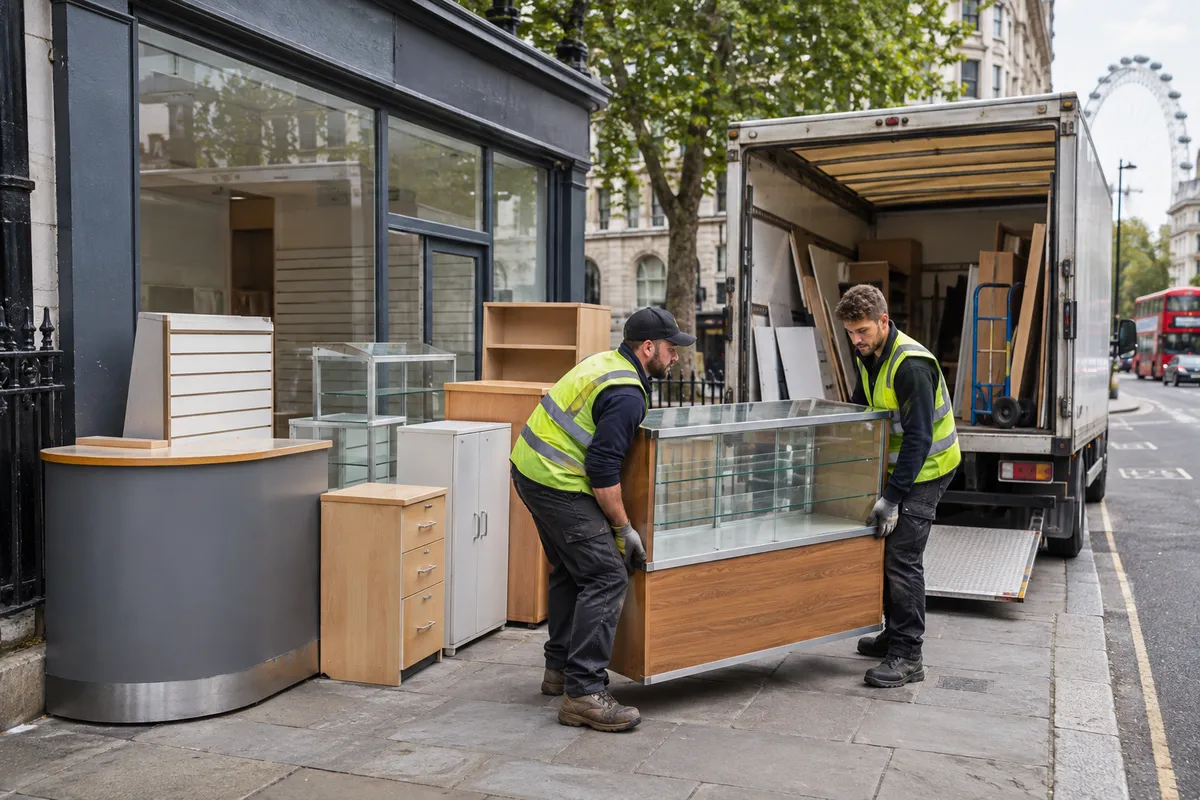
A fictional household-and-display enquiry
Imagine an authorised organiser proposing an old household sofa and checked boxes from one room, plus redundant freestanding display furniture from a separate business space. Retained stock, live devices and another occupier’s possessions stay. This is a planning illustration, not a completed Tottenham job. We would distinguish the instructions and ask who can confirm each group. We would identify the sofa construction, box contents and whether the display is loose. The organiser would explain the different entrances and loading arrangement. If repair debris is later added, its material and amount need discussion before inclusion. The final quote can then follow the settled load and carrying. A shared building can make one enquiry convenient, but it does not merge ownership or automatically authorise every room and substance at the address.
From Tottenham enquiry to removal
01
Identify occupiers
Settle the authorised contents.
02
Separate materials
List furniture, displays and equipment.
03
Agree route and quote
Confirm entrances and additional work.
04
Remove the defined load
Carry, load and take away responsibly.
| Stage | Confirm | Result |
|---|---|---|
| Authority | All occupiers approve | Defined instruction |
| Access | Routes and permission | Practical visit |
| Quote | Final mix and work | Clear price |
| Handover | Separate groups checked | Defined completion |

Confirm the paired task before the furniture moves
Use the final household and business decisions when agreeing the complete price. If the sofa now stays or a display part is retained, update the proposed load; if repair debris is added, give its distinct material and amount. Include the actual carrying arrangements and any preparation you are requesting, rather than leaving them to a general clearance phrase. Timing can be discussed when checking availability, with the appointment itself confirmed. At the visit, the contact should recognise the same paired task. Afterwards, check the specified sofa sections, boxes and display pieces independently, including parts stored elsewhere. The materials receive onward consideration according to condition and type, without promising one identical outcome for all of them. New displays, room repairs and arranging retained stock are separate stages. A definite check closes the removal even when the premises remain busy with other work.
See the current collection price guide, then confirm your complete quote with us. No separate Tottenham tariff is implied.
More London coverage near Tottenham
For London and M25 collection enquiries, see the coverage directory. We publish links only to available local pages. Give us your complete postcode to discuss the property; we do not use this map as a boundary or claim a local depot.
COLLECTION QUESTIONS
Tottenham removal enquiries: questions answered
Can the sofa be the only furniture removed from the home?
Yes. Identify the exact sofa and sections, with retained furnishings clearly excluded. A selective instruction should not require the team to judge what else in the room ought to leave.
How should retained parts of a display be described?
Name the shelves, rails or other pieces staying and the components leaving. Explain the present construction and any preparation requested so the unit is not treated as an all-or-nothing assumption.
Does removing a display decide what happens to its stock?
No. The business needs a separate decision about products and cartons. Describe any merchandise approved for disposal while keeping retained stock distinct from the physical display.
Why give the sofa section’s dimensions rather than only the room?
The rigid section controls how the item passes openings and turns. Describe its size against the actual path; a room name or floor number alone cannot explain that movement.
What if household and business contacts control different doors?
Identify who can provide each entry and maintain it during the collection. A shared address does not establish that one person controls the whole access chain.
How are additions handled after the paired enquiry?
Describe the new group, its material and location before agreeing to include it. The original sofa-and-display account should remain a clear reference rather than silently expanding during sorting.
All generated photographs on this page are illustrative service scenes. They do not document jobs in Tottenham.
Discuss your Tottenham collection
Call +44 20 3404 3985 with the collection postcode, item list and property details. We will discuss the scope, available arrangements and quote before work begins.
Services for your Tottenham enquiry
Furniture disposal · Rubbish collection · House and flat clearance