
LONDON & THE M25
Junk Removal
in Walthamstow.
We arrange Walthamstow collections using a clear inventory of unwanted contents and the actual premises access. We separate furniture, loose waste and equipment, then agree the carrying, loading and full collection quote.
- Carrying and loading included
- A clear quote before work begins
- Licensed and insured waste carrier
COVERAGE & CONTENTS
Walthamstow coverage and material groups
Walthamstow collections are discussed from the full postcode and actual premises access. The marker identifies the locality, not a depot or a permission to load beside a market. Tell us the occupier, entrance and material groups for your enquiry.
Nearby collection areas: Leytonstone · Tottenham · Leyton
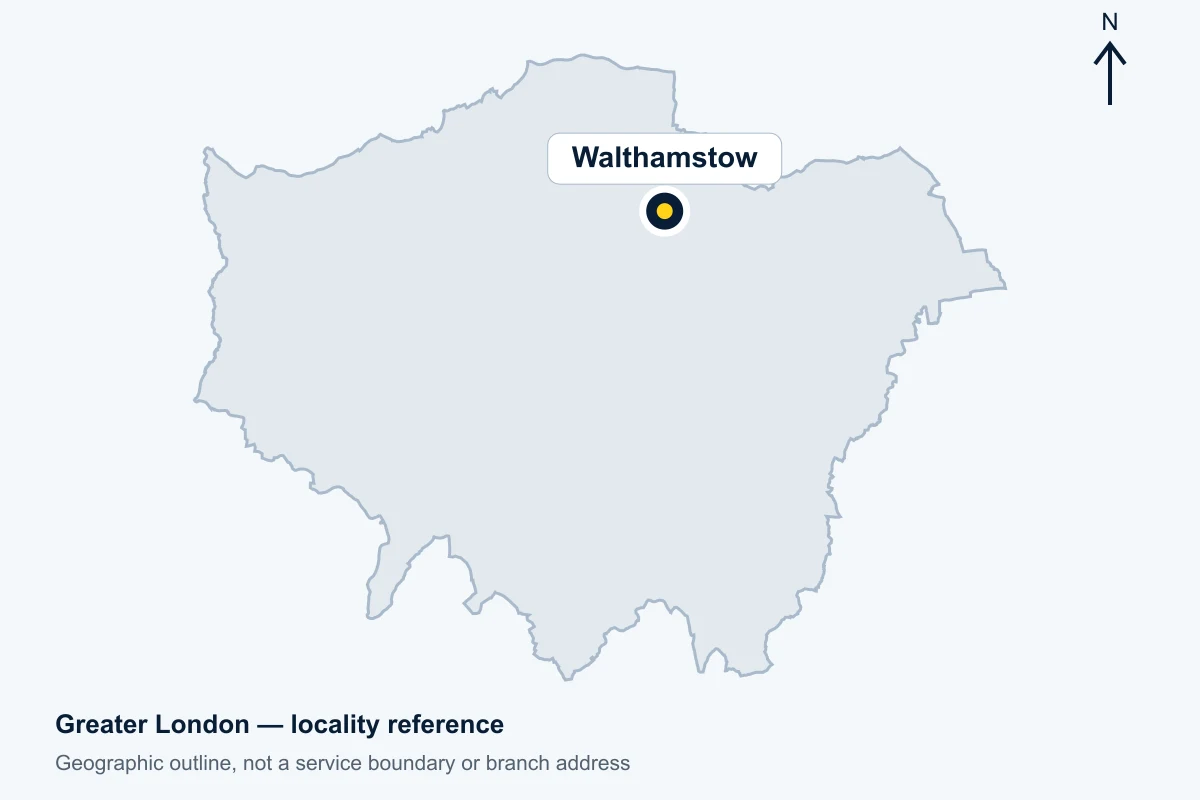
Greater London reference outline: GLA / OS Open Data (OGL). Location: GeoNames UK gazetteer. This is an orientation map, not a service boundary or branch address.
Town-centre activity makes the collection entrance a useful first detail
Waltham Forest Council describes Walthamstow’s centre as a mixture of homes, employment, retail and services, with market activity along the High Street. For our enquiry, that verified setting means the premises behind an address need identifying. A shop, a flat above commercial space and an office can have different contents and access. Give the full postcode, occupier and entrance serving the proposed load. A public frontage or busy market location does not itself establish a vehicle position or permission to cross private space. Tell us who controls any gate or managed entry and where loading could practically be discussed. We do not infer one local servicing arrangement from another premises nearby. The collection route is established for your building and contents, while the locality marker provides orientation rather than a depot or a street-by-street service boundary.
Home contents
Business waste
Outdoor materials
- Identify the actual entrance rather than only the trading frontage
- Keep retained stock and customer property outside the removal list
- Name equipment separately from cardboard packaging
- Describe hidden dense material in outdoor or renovation piles
- Connect bulky-piece assembly to the complete route out
Business contents need a distinction from stock and operational equipment
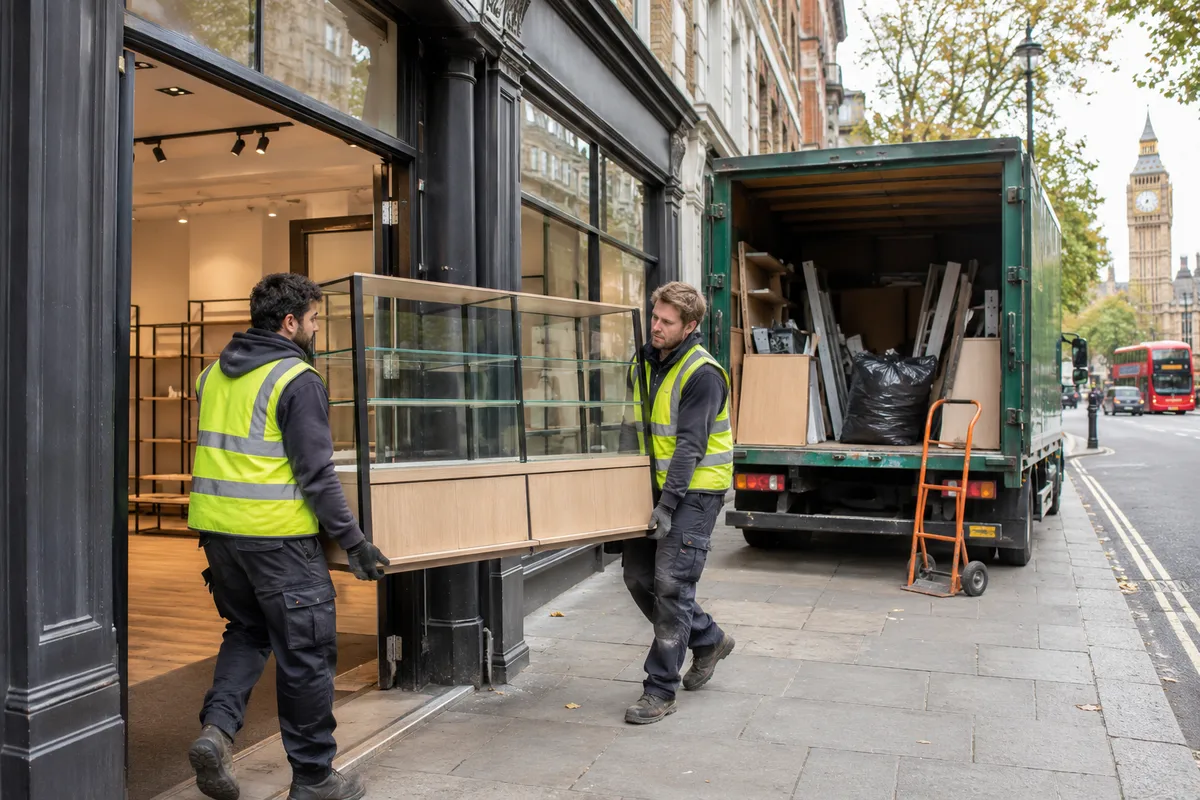
A Walthamstow business load is easier to arrange when the manager describes the unwanted groups before calling the room a clearance. In the commercial enquiry, distinguish old seating, empty storage, movable displays and packaging from stock still for sale. Customer belongings and working equipment should remain outside that release list. Tell us whether any cabinet also contains material for disposal; the loose contents add to the load rather than being explained by the unit’s photograph. Attached or connected fittings require their condition stated before collection is assumed. We can discuss removal of selected redundant contents while other business property stays. The contact meeting us should recognise each group and know which entrance serves it, so the team follows an authorised list instead of deciding which parts of an active store are waste.
| Group | Description to provide | Relevant service |
|---|---|---|
| Business contents | Movable furniture, displays and packaging | Office clearance |
| Household contents | Selected pieces and loose belongings | Domestic clearance |
| Electrical items | Named devices and connection status | Electrical waste |
| Outdoor or building material | Green and dense groups separately | Garden or builders clearance |
Electrical items retain their identity even inside packaging
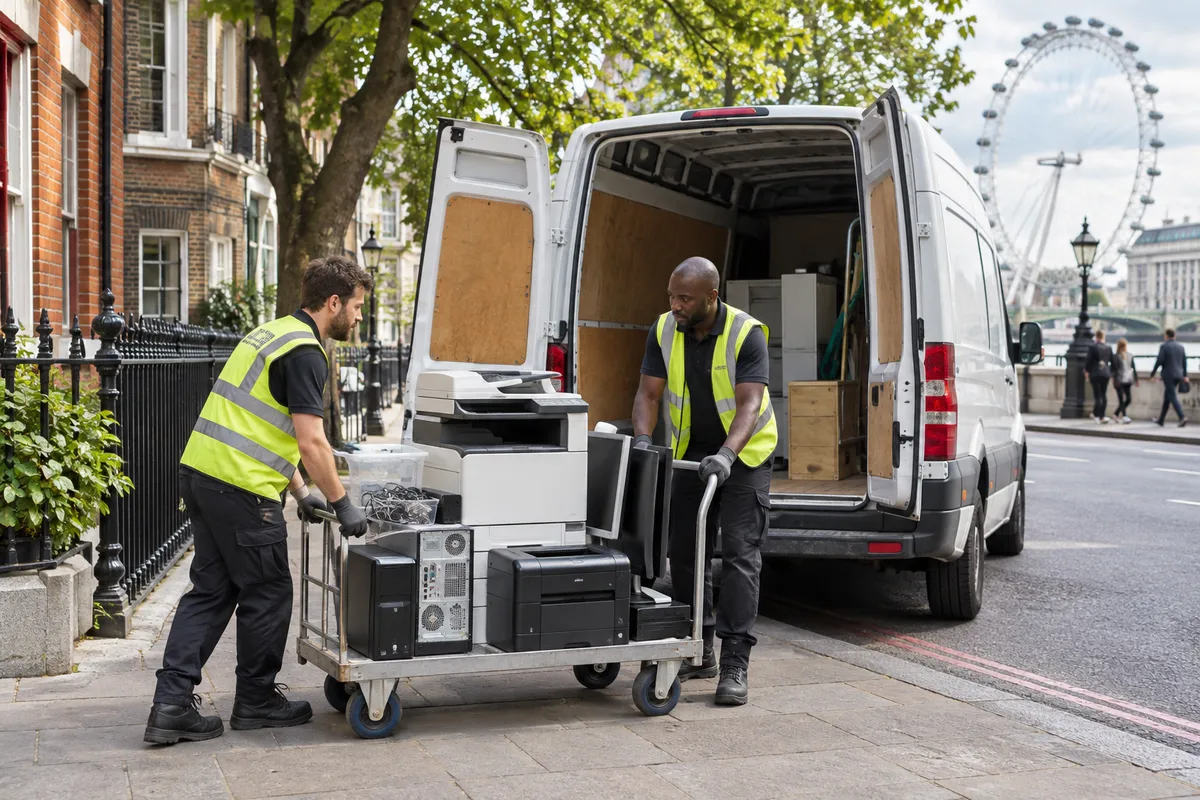
For a Walthamstow equipment enquiry, describe what the devices are, not only how many cartons surround them. A monitor remains an electronic item when boxed; empty packaging should be estimated separately. Give quantity and position, and say whether an appliance is fitted or connected. Taking it away is a different request from disconnecting services or changing the installation. Business information stored on devices needs its own security discussion because ordinary removal is not certified data destruction. We use those details to consider acceptance and relevant item charges in the complete quote. If additional equipment is found while preparing the load, report it where possible before the visit. A furniture-only estimate should not silently expand to include unnamed devices or a specialist service that was never agreed.

Household removals can leave retained rooms and possessions untouched
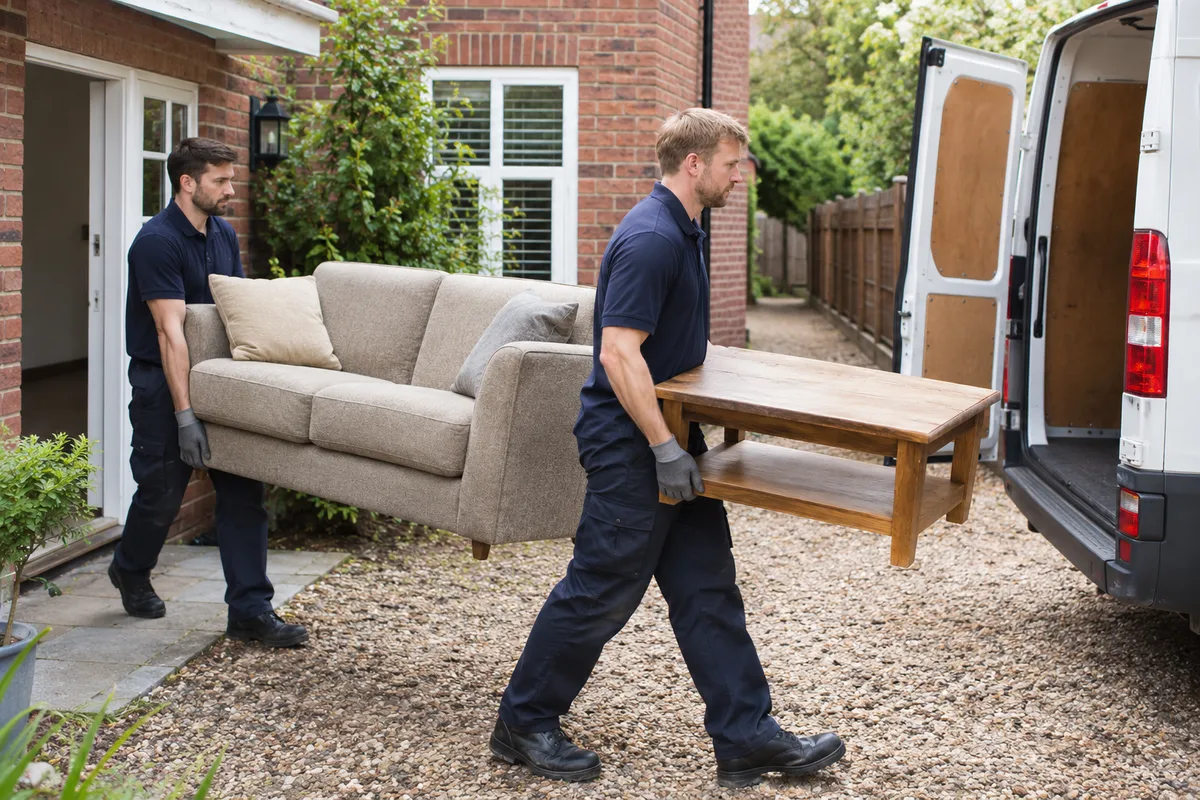
A Walthamstow home collection can be selective even when several rooms contribute material. Tell us the sofa being replaced, the boxes being discarded and the storage that remains. If belongings inside retained storage also leave, describe that loose group independently. Where a landlord, tenant or family member owns different contents, settle the choices before arranging removal. A person opening the premises should be able to confirm the same list rather than leave the team to infer ownership. Keep retained keys, documents and personal possessions away from the waste groups. Include hidden material behind furniture or in another room so the amount can be discussed in full. We assess the proposed collection from those objects and locations, not an unlimited instruction attached to the word house or to the reason a household is moving.
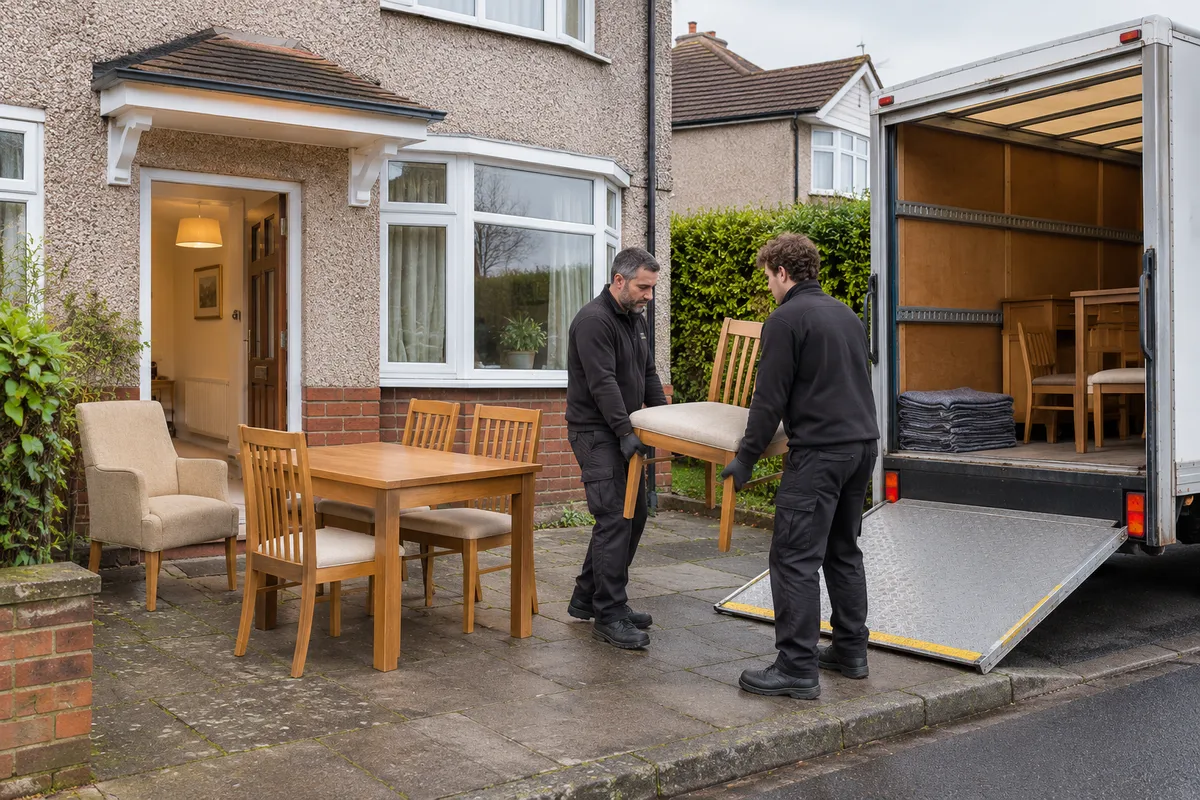
Large furniture requires condition and exit-route information
For Walthamstow bulky pieces, the useful access information is the sequence from the object to its exit. Give the room and floor, then identify narrow doors, stair turns or any proposed lift arrangement for the furniture. An item can leave one space easily but meet a restriction farther along. Describe size and assembly, including all components if already separated. If dismantling is still required, raise that work before booking. Fixed units need their attachment explained instead of appear as ordinary loose furniture. Mattresses are named and counted apart from frames. Pictures of the specific limiting point help us discuss carrying more usefully than another close-up of the object. The quote should follow the actual furniture set and its work, rather than assume the easiest piece shown represents every removal requirement.
| Point | What to explain | Purpose |
|---|---|---|
| Occupier | Authority for the removal list | Another person’s property is not assumed waste |
| Entrance | Actual door or gate serving contents | Correct access route |
| Internal position | Room, floor and tight turns | Carrying requirements |
| Loading | Proposed vehicle position and current controls | Practical visit arrangement |
Outdoor and renovation waste should reveal the whole material mix
For a Walthamstow outdoor load, say which parts are plant material and which are timber, furniture, soil or paving. Explain approximate amounts and anything dense underneath the visible cuttings. If material stands in separate places, describe each path to the entrance rather than assume one gate serves everything. Loose shed contents need their own list apart from the structure. A refurbishment collection should identify rubble, plasterboard, timber and packaging by substance, with filled sacks explained. Counting containers alone cannot establish weight or acceptance. An unfamiliar substance must be clarified before the proposed load is settled. We discuss taking away identified material, while gardening, excavation, demolition or work on fixed parts of the premises requires another explicit description instead of follow automatically from the waste’s origin.

An illustrative shop-storage load near the High Street
Imagine a Walthamstow business clearing an unwanted freestanding display, old seating and packaging from storage while keeping its saleable stock. This is an illustrative enquiry, not a completed local job. We would ask whether the display is detached, describe the packaging and identify the contact confirming the list. The actual entrance and proposed loading position would be discussed rather than assumed from nearby market activity. If an old refrigerator is added, it needs its own name, location and connection status. If refurbishment rubble is discovered behind the cartons, its material and quantity become another clear group before inclusion. We would discuss the complete load, carrying and quote. The same collection can cover several defined groups without becoming unlimited removal from every store room or implying access through a route that has not been agreed.
From Walthamstow enquiry to removal
01
Identify the premises
Confirm occupier and spaces included.
02
Separate the load
Name furniture, loose contents and equipment.
03
Agree access and price
Discuss entrance, loading and availability.
04
Carry and remove
We take the agreed waste away responsibly.
| Factor | Information needed | Discussion |
|---|---|---|
| Quantity | All furniture and loose groups | Complete amount |
| Materials | Named equipment and dense debris | Acceptance and supplements |
| Work | Dismantling or additional carrying | Explicit scope |
| Changes | Added contents or altered route | Full price before loading |

Address-specific loading and responsible handling of the agreed waste
For Walthamstow, we discuss the loading position against the actual address and current controls, using the council’s parking and loading information where relevant. A market-area frontage or empty-looking bay does not by itself confirm vehicle access. Tell us the proposed position and any private gate contact, together with the carrying route. The published guide explains charging bands; your complete amount, material mix, relevant additions and extra work determine the quote discussion. Send changes before the visit where possible and confirm availability directly. The collected load goes for responsible handling, with suitable reuse and recycling considered rather than a universal promise for every object or an invented percentage. Keep any cleaning, repairs or alterations separate from the removal scope when describing what else the premises needs after collection.
See the current collection price guide, then confirm your complete quote with us. No separate Walthamstow tariff is implied.
More London coverage near Walthamstow
For London and M25 collection enquiries, see the coverage directory. We publish links only to available local pages. Give us your complete postcode to discuss the property; we do not use this map as a boundary or claim a local depot.
COLLECTION QUESTIONS
Walthamstow removal enquiries: questions answered
Does a Walthamstow High Street address establish a loading arrangement?
No. Give the actual entrance serving the contents and proposed vehicle position, with any management controls. Nearby market or shopping activity does not itself establish access. We discuss the practical arrangement for your premises rather than infer another business’s service route.
Can a shop clear storage while keeping its saleable stock?
Yes. Identify unwanted furniture, packaging and other contents separately from retained stock and customer property. A nominated contact should confirm the list at the visit. We discuss the defined amount rather than assume every object in storage is waste.
Should a refrigerator in a box be described as packaging?
Name the refrigerator separately, including its location and whether it is connected or fitted. Its packaging does not change the equipment description. We discuss acceptance, relevant supplements and any additional requirement before inclusion in the complete quote.
Can household cupboards stay while selected clutter leaves?
State that the units remain and describe the loose contents with an approximate amount and significant materials. Keep retained documents and belongings separate. We discuss the selected removal rather than assume every cupboard or room is being emptied.
How should a large display still attached to a wall be included?
Explain the attachment and any connection before booking. Fixed fittings need a different work description from detached pieces ready to carry. We discuss additional requirements explicitly rather than infer strip-out or electrical work from an ordinary collection enquiry.
What if rubble is found behind the packaging before collection?
Update us with the material and approximate amount before the visit where possible. Dense debris should be described separately from cardboard and furniture. We discuss acceptance, carrying and any change to the full quote before treating it as part of the agreed load.
All generated photographs on this page are illustrative service scenes. They do not document jobs in Walthamstow.
Discuss your Walthamstow collection
Call +44 20 3404 3985 with the collection postcode, item list and property details. We will discuss the scope, available arrangements and quote before work begins.
Services for your Walthamstow enquiry
Furniture disposal · Rubbish collection · House and flat clearance