
LONDON & THE M25
Junk Removal
in West Ham.
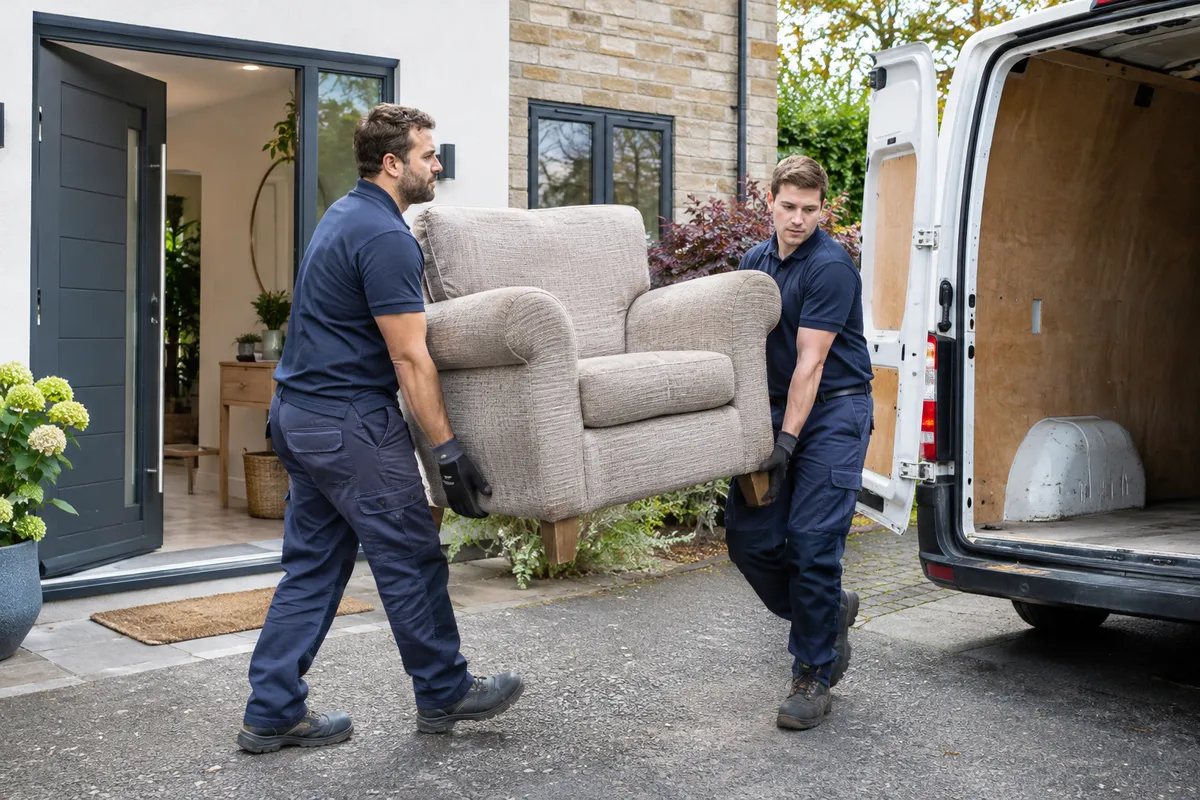
We remove agreed unwanted contents from West Ham properties, with a clear distinction between furniture, loose rubbish, equipment and other materials. Tell us which parts of the premises need collection and which belongings remain. We discuss the load together with the entrance, carrying route and proposed loading point before confirming the full quote. Our team carries and loads the agreed items, so an enquiry can start with contents in their present rooms or stores rather than an assumed pile at the kerb.
- Carrying and loading included
- A clear quote before work begins
- Licensed and insured waste carrier
COVERAGE & CONTENTS
West Ham coverage and material groups
West Ham is a Greater London locality in the London Borough of Newham. The marker gives neighbourhood orientation and is not a company office or depot. Provide the precise postcode and collection entrance. East Ham and Stratford are nearby named areas, with each appointment agreed from its own contents, access and current availability.
Nearby collection areas: Stratford · Forest Gate · East Ham
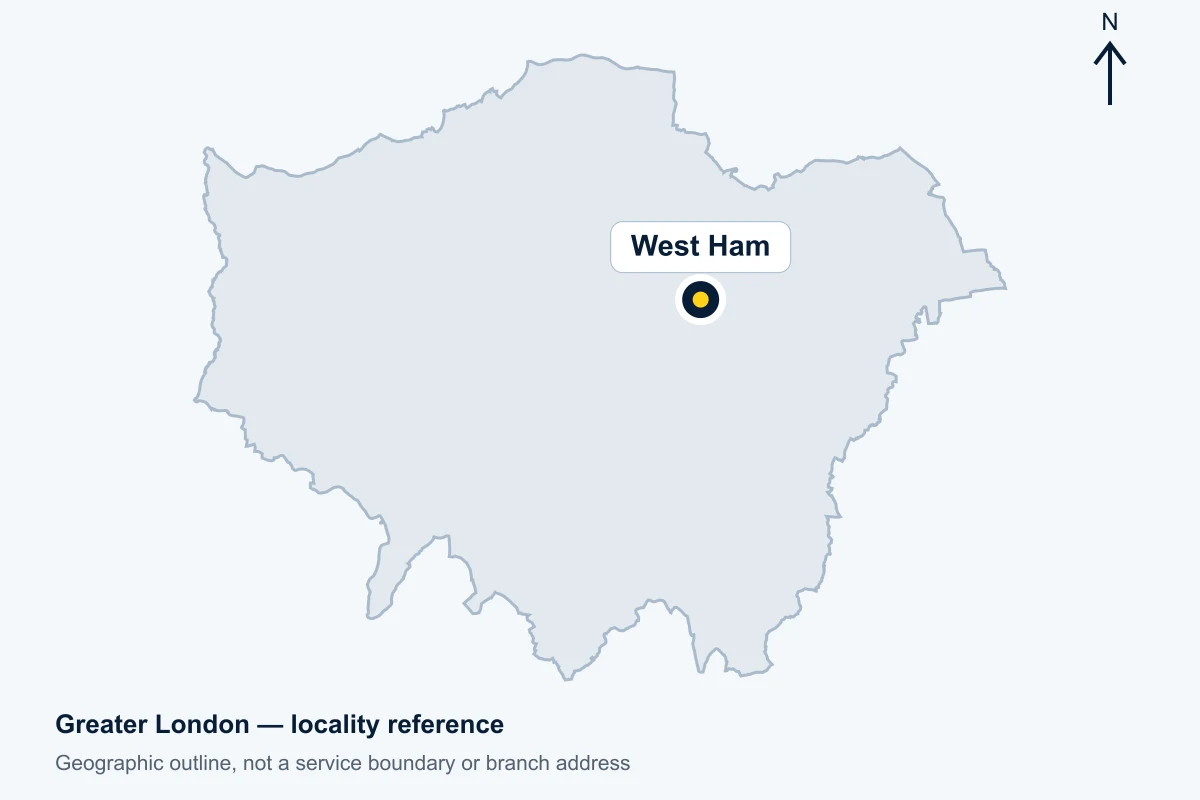
Greater London reference outline: GLA / OS Open Data (OGL). Location: GeoNames UK gazetteer. This is an orientation map, not a service boundary or branch address.
West Ham coverage is established from the precise premises
Newham’s characterisation study describes West Ham as a largely suburban neighbourhood with historic terraces and post-war housing forms, alongside local facilities and shopping parades. That verified context supports asking about the actual property rather than assume every address is the same kind of house. Give us the complete postcode and identify whether the contents are in a home, flat, business or separate store. Tell us the door or gate used to reach them, including any entrance different from the postal frontage. We discuss the actual location within our London coverage without implying a depot or office in the neighbourhood. A nearby park or station can orientate a conversation but does not establish the loading position, internal floor or route needed for removal.
Home contents
Business waste
Outdoor materials
- Identify the actual home, flat or business premises behind the address
- Separate furniture from loose household contents and equipment
- Give shared-passage stores their own keyholder and item list
- Exclude retained stock, shelving and other occupiers’ belongings
- Name dense repair waste rather than hide it within a bag count
Household collections begin with what leaves and what stays
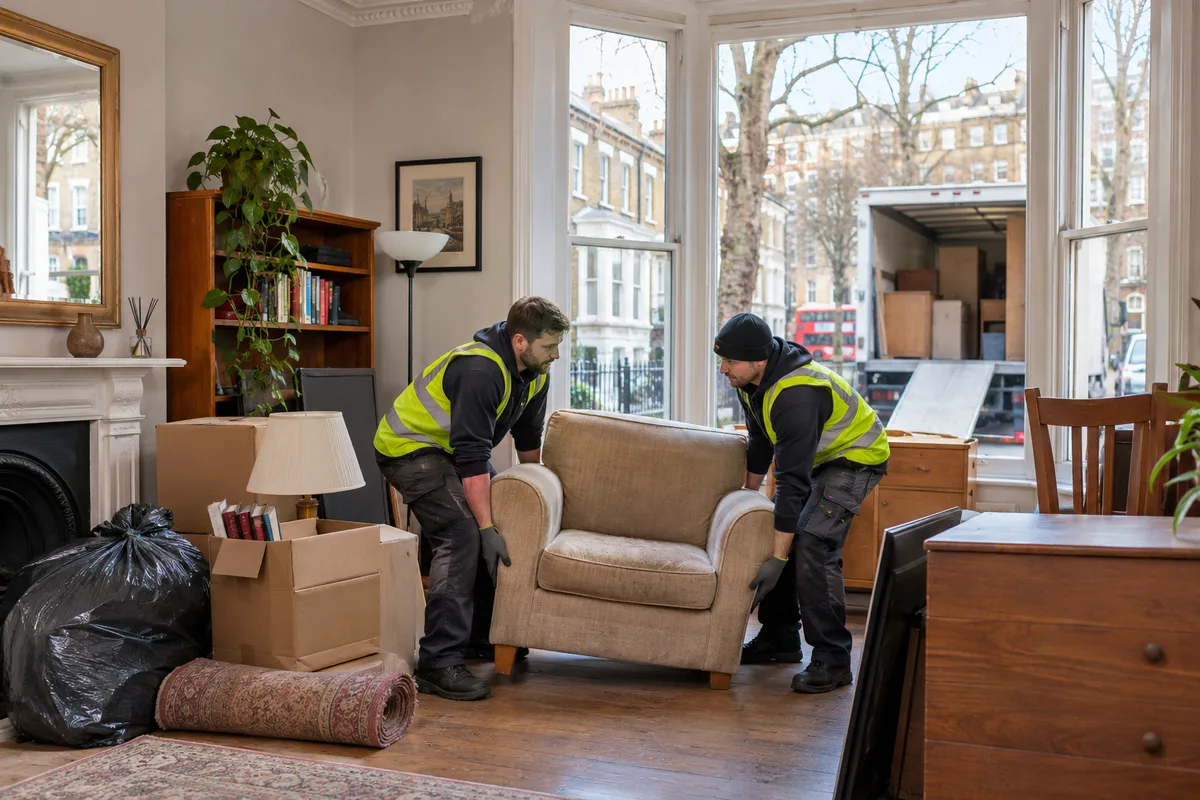
For domestic clearance, describe furniture and loose household material separately. A room might contain an unwanted wardrobe and boxes while a desk remains in use. We can discuss that defined load without treating the whole property as part of the job. Explain which items belong to a landlord, relative or another occupier and are staying. Check drawers, cupboards and shelves for possessions you want to retain before agreed furniture leaves. If someone attends on your behalf, give them the same list and access to every included location. We do not decide ownership from condition, age or position beside rubbish. The removal instruction should identify the actual accepted contents, including any garage or storage area, before carrying begins.
| Group | Describe | Relevant service |
|---|---|---|
| Household contents | Rooms, boxes and retained belongings | Domestic clearance |
| Bulky furniture | Pieces, size and assembled condition | Furniture disposal |
| Business material | Authorised stock, furniture and equipment | Office clearance |
| Renovation debris | Tiles, timber, rubble or plasterboard | Builders clearance |
Furniture and electrical equipment have separate descriptions
A shared-passage enquiry should keep furniture and equipment tied to their owner and starting room. Name the bed frame, cabinet and other pieces, stating whether sections are already detached or further work is being requested. Give dimensions where a particular door or turn appears restrictive. We need to know about fixed attachments, glass and damaged components before agreeing how the piece will be handled. Electronic equipment should be recognisable on the inventory as well: identify the devices and any associated accessories instead of counting one closed box. For large appliances, explain connections or fitted surroundings that affect release from their current position. These details let us discuss additional work and any specialist data requirement separately. A common exit does not make all objects identical carrying tasks or establish authority for another occupier’s belongings.


A business load is defined by its contents, not just its trade
For a West Ham office, shop or business store, identify the authorised contact and list the actual redundant items. Desks, chairs, freestanding shelves, packaging and boxed stock are different parts of an enquiry. Distinguish retained stock, landlord fixtures and other occupiers’ possessions. Our office clearance and shop clearance services can be discussed for agreed contents, without automatically establishing a full strip-out or specialist data destruction. Explain whether several rooms or levels contribute to the load and who can open them. A business name alone does not show whether the clearance is a few spare chairs or a mixed storeroom. Clear material and ownership information connects the company’s instruction to the actual carrying and loading work.

Outdoor and renovation material is separated before the quote
Where outdoor or repair material joins a load using the shared passage, describe how it is currently contained and who is releasing it for removal. Identify green cuttings apart from soil, paving, old furniture or equipment. For renovation leftovers, give the substance and approximate amount, including long offcuts, loose fragments and any sharp pieces that a photograph may not explain. We can discuss the accepted groups together without relying on a total bag count to represent them. Tell us about unknown containers or suspect substances before anything is agreed for loading. If the passage needs another person’s gate opened, connect that arrangement to the material location. Gardening, structural dismantling or work to remove fitted components should be stated as additional tasks to assess, rather than hidden within a request for collecting the already unwanted contents.
| Situation | Clarify | Purpose |
|---|---|---|
| Shared entrance | Correct occupier and door | Access reaches the right premises |
| Locked store | Contents, gate and keyholder | The extra location is explicit |
| Upper floor | Stairs, turns or suitable lift | Carrying is understood |
| Private loading area | Management contact and entry arrangement | Vehicle approach can be checked |
Illustration: a spare-room reset with a separately locked store
Imagine a West Ham household replacing a bed and small cabinet while clearing boxes from a store reached through a shared passage. This is a realistic enquiry illustration, not a completed-job claim. We would ask which floor holds the furniture, whether the frame is assembled and who opens the store gate. The boxes need their contents described; old monitors or repair debris are not ordinary household paper. A retained shelving unit should remain outside the removal instruction. With the inventory and route clear, we can discuss the full quote and an available appointment. If a business sharing the passage wants packaging removed too, that addition needs separate authority and material details. Shared access does not automatically combine every occupier’s contents into the household collection.

Access questions connect each material group to loading
Tell us where every included group stands and how it reaches the proposed loading point. Stairs, tight turns, gates and entryphones belong in the enquiry, including access controlled by another person. A lift should be described for suitability and building arrangements rather than only existence. Our team carries the agreed contents, so moving bulky furniture into a communal area is not necessary to begin. For loading, identify the actual public-road position or private entry proposal. Newham’s loading rules provide an official reference, with relevant signs and private management conditions still important. We do not assume an empty bay or resident permit settles every vehicle restriction. Current availability is discussed with the complete job, without invented travel times or a universal West Ham loading allowance.
From West Ham enquiry to removal
01
Describe the contents
Identify furniture, loose material, equipment and retained items.
02
Locate each group
Give the postcode, entrance and included stores.
03
Agree scope and quote
Confirm materials, access, extra work and availability.
04
Carry and remove
We load the agreed contents for responsible handling.
| Point | Confirm | Avoid assuming |
|---|---|---|
| Authority | Who may approve each load group | Shared access means shared ownership |
| Additional work | Dismantling or fitted-item requirement | All joinery work is included |
| Materials | Equipment and dense waste named | Every carton contains ordinary rubbish |
| Full quote | All locations and carrying work | Later additions are covered automatically |

The complete price and onward handling follow the agreed load
We need one clear collection agreement even when the contents have several owners. Identify the authorised load for each occupier and the routes that would be used, then discuss the full price with reference to the published guide. The amount, material groups and agreed carrying should all be represented. If a business adds packaging to a household enquiry, tell us what is added and who approves it so the scope can be reviewed before loading. The same applies to an appliance found after the first furniture list. We check availability for the complete proposed visit. The accepted contents then leave after carrying and loading for responsible onward handling, with opportunities for reuse and recycling considered according to the actual material. We make no unsupported claim about every object’s destination. Cleaning, repairs and specialist services require their own express discussion.
See the current collection price guide, then confirm your complete quote with us. No separate West Ham tariff is implied.
More London coverage near West Ham
For London and M25 collection enquiries, see the coverage directory. We publish links only to available local pages. Give us your complete postcode to discuss the property; we do not use this map as a boundary or claim a local depot.
COLLECTION QUESTIONS
West Ham removal enquiries: questions answered
Can a West Ham collection include a store reached through a shared passage?
Identify your store and the contents you are authorising, then explain which gate and keyholder provide access. Tell us about any section of the passage controlled by someone else. We can assess that route without confuse permission to use a shared passage with an instruction to remove every occupier’s stored possessions.
Can I keep a desk while clearing the rest of a spare-room load?
Yes, identify the desk as retained and list the unwanted furniture and loose contents separately. The attending person should understand the same instruction. We can discuss a limited clearance rather than assume every object in a room leaves because some furniture and boxes are being removed.
Should a business joining the enquiry provide its own contents list?
Yes, explain who releases that business load and what it contains before the appointment is settled. Its route may share a gate with the household contents, but the inventory and authority remain distinct. We review the combined materials and work so the complete quote describes the agreed addition rather than an open-ended request from whoever is present.
Can a bed frame be collected assembled?
Describe its current form, dimensions and route, including the floor and stair turns. We discuss the actual furniture and any dismantling requested explicitly. Do not assume collection requires you to move or take it apart first, or that additional work is included without agreement.
How should old monitors be listed with household boxes?
Name the monitors and other electrical equipment separately, with approximate quantities and locations. A box count does not show the material mix. Any specialist data requirement needs discussion before booking rather than assume collection establishes a particular destruction procedure or certificate.
Will collecting garden waste include pruning the plants?
The enquiry should identify unwanted material already requiring removal, with green cuttings distinguished from soil, rubble and furniture. Gardening, landscaping or structural work is not automatically part of collection. Describe any additional task explicitly so the full quote reflects the service actually requested.
All generated photographs on this page are illustrative service scenes. They do not document jobs in West Ham.
Discuss your West Ham collection
Call +44 20 3404 3985 with the collection postcode, item list and property details. We will discuss the scope, available arrangements and quote before work begins.
Services for your West Ham enquiry
Furniture disposal · Rubbish collection · House and flat clearance