
LONDON & THE M25
Junk Removal
in Forest Gate.
We arrange Forest Gate removals from a clear account of the unwanted contents and the premises they occupy. The enquiry separates bulky pieces, loose belongings and equipment, then establishes the route and work involved in taking them away.
- Carrying and loading included
- A clear quote before work begins
- Licensed and insured waste carrier
COVERAGE & CONTENTS
Forest Gate coverage and material groups
Forest Gate collections are discussed from the full postcode and actual property access. The marker identifies the locality for orientation, not an office or a loading permission. Explain the occupier, entrance and material groups for your enquiry.
Nearby collection areas: West Ham · Leytonstone · Leyton
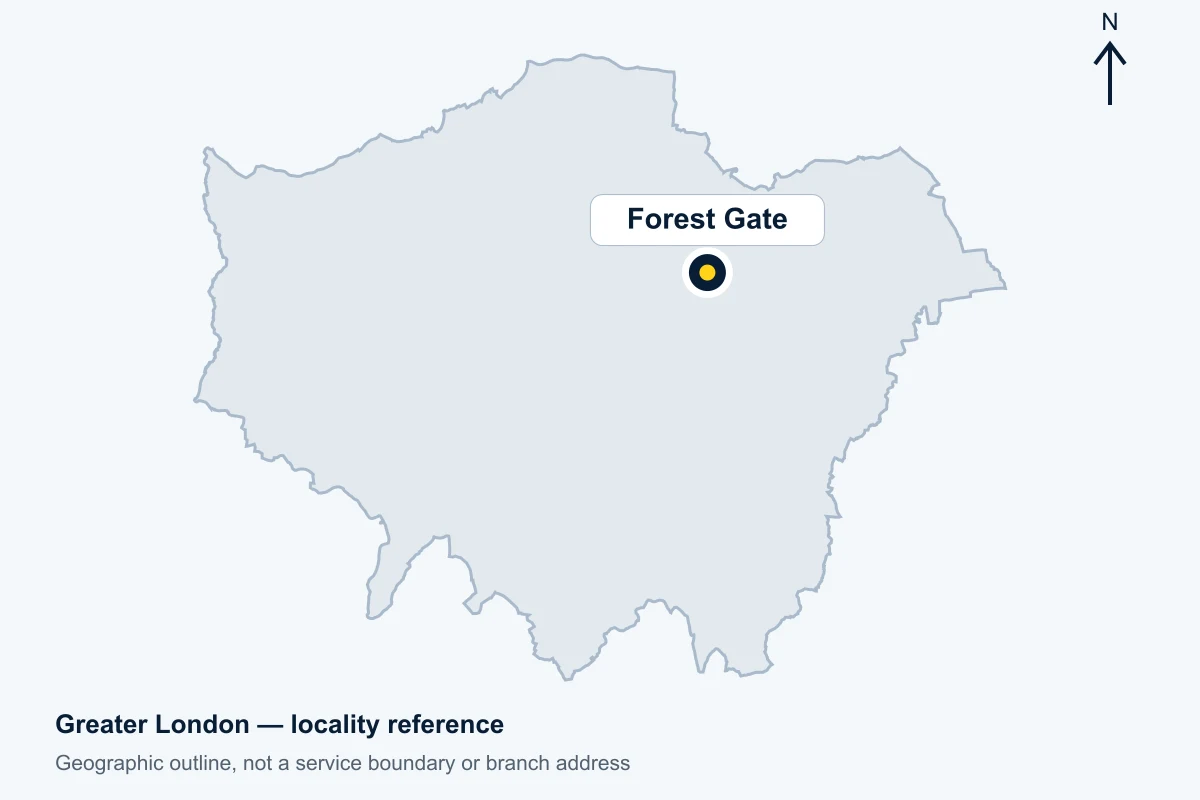
Greater London reference outline: GLA / OS Open Data (OGL). Location: GeoNames UK gazetteer. This is an orientation map, not a service boundary or branch address.
Woodgrange Road context does not replace the actual premises details
Newham’s Forest Gate high-street material identifies Woodgrange Road within the town-centre setting. We use that verified context to ask which premises your enquiry concerns, rather than assume the public frontage supplies all the access information. Give the full postcode, building identifier where relevant and the entrance serving the contents. A backroom, a home above business space and a separate household can have different routes. Explain which occupier authorises removal and who can confirm the list at the visit. Shared geography does not make another person’s property part of the load. The marker on this page provides locality orientation only, not a depot or a promise that every nearby entrance serves the same collection arrangement. Your own rooms, material groups and proposed loading position are the practical details we need.
Home contents
Business waste
Outdoor materials
- Identify the actual entrance serving the unwanted material
- Separate furniture from belongings stored inside it
- Describe item preparation and difficult exit points
- Name electrical equipment independently of packaging
- Reveal dense waste hidden below green material
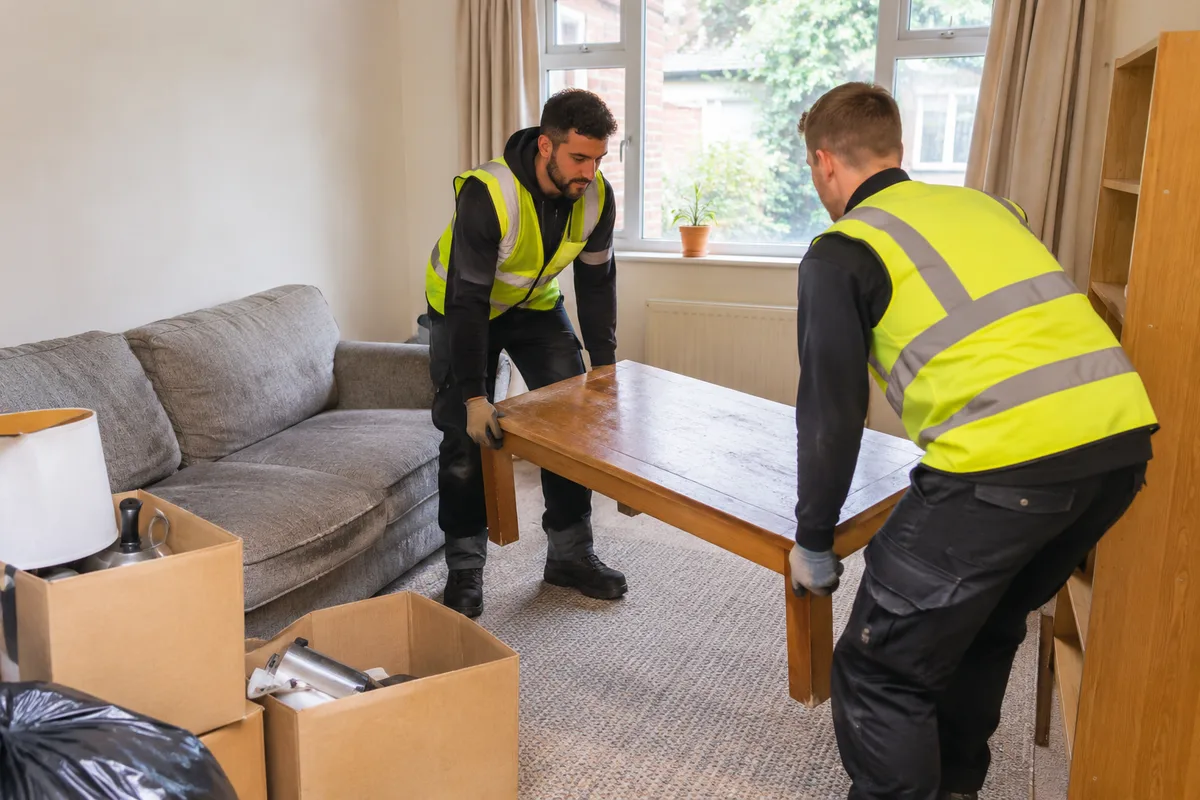
A household list should distinguish furniture from its contents
For household clearance, tell us what is leaving each space and what is retained. A cabinet might be collected empty after belongings are saved, or remain while its unwanted contents leave. Those choices produce different loads. Describe the loose material separately, including approximate quantities and any significant group such as books or electrical devices. Photographs help show a stack’s size but can miss contents hidden in another cupboard or behind furniture. Add that information before the visit. If an agent or relative coordinates access, settle the retention decisions and ensure the person attending can recognise the list. We do not choose which personal possessions a household should discard. Keep retained documents, keys and everyday belongings away from proposed waste. A selected room load can be discussed without treating every object in the surrounding home as included.
| Group | Description needed | Relevant enquiry |
|---|---|---|
| Household storage | Loose contents and whether units stay | Domestic clearance |
| Furniture | Type, preparation and route out | Furniture disposal |
| Business contents | Released assets apart from retained stock | Office clearance |
| Outdoor or renovation | Materials beneath the visible pile | Garden or builders clearance |
Furniture replacement needs the piece’s preparation and path explained
A furniture enquiry should state whether the item is assembled, already separated or fixed into the building. Show the whole set of parts if a table or frame has been dismantled, so nothing belonging to that item is omitted. For large assembled pieces, give useful dimensions and describe the narrowest point on the way out. A room photograph may not show the hallway turn or landing beyond it. Explain the floor and the intended stair or available lift route. Raise any dismantling you need discussed instead of assume the word removal covers it automatically. Mattresses are listed independently from frames with their own number and position. We connect those details to a carrying task, rather than price every piece from the appearance of the most accessible furniture in the enquiry.
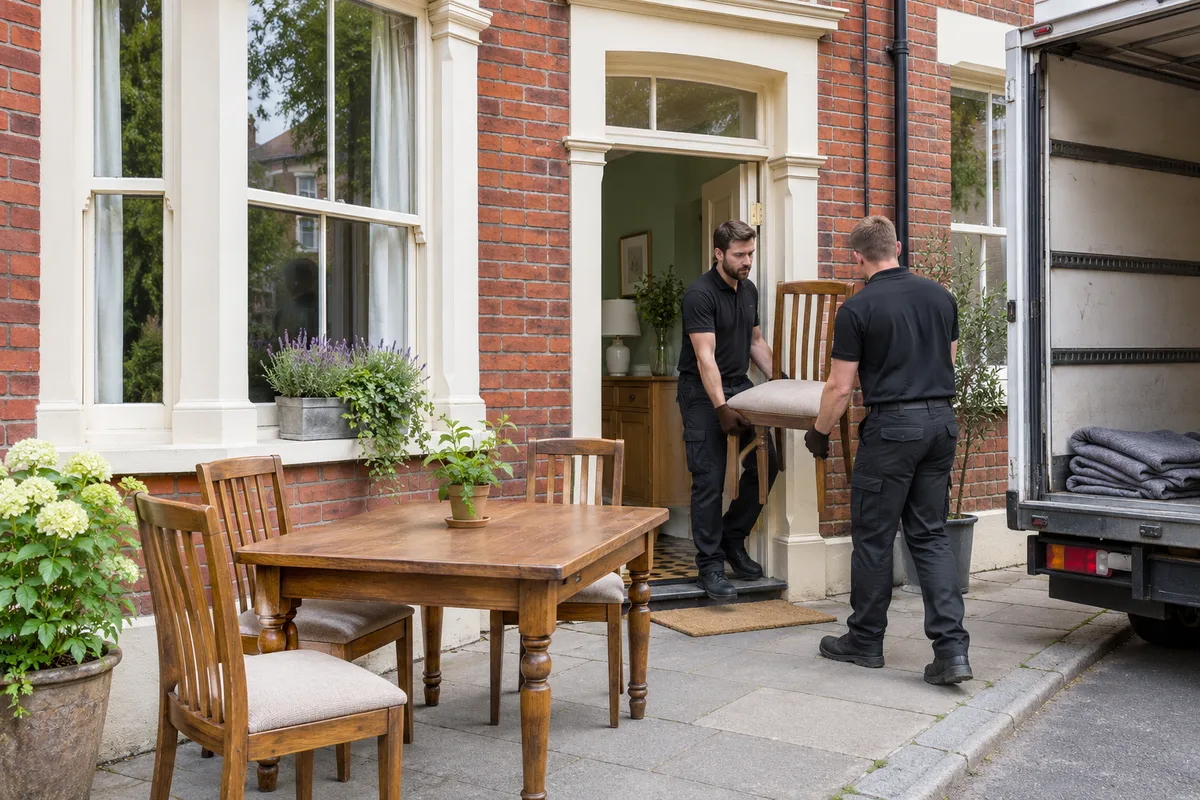

Business contents need an authorised release list
Through the office and commercial clearance enquiry, identify redundant desks, seating, storage, movable displays and packaging. Tell us what remains operational, which stock is retained and whether customer property shares the space. A contact should be able to confirm those boundaries at the visit. Describe the contents of closed cartons and cupboards instead of rely on an undefined estimate of backroom rubbish. If a fitting remains attached or wired, state that condition before treating it as a loose unit ready to carry away. Ordinary contents collection is not a complete strip-out or electrical service. We discuss the actual material and work the business authorises. The trade or premises label alone does not establish acceptance of every substance stored there, and a change in layout does not make every object in the building unwanted.
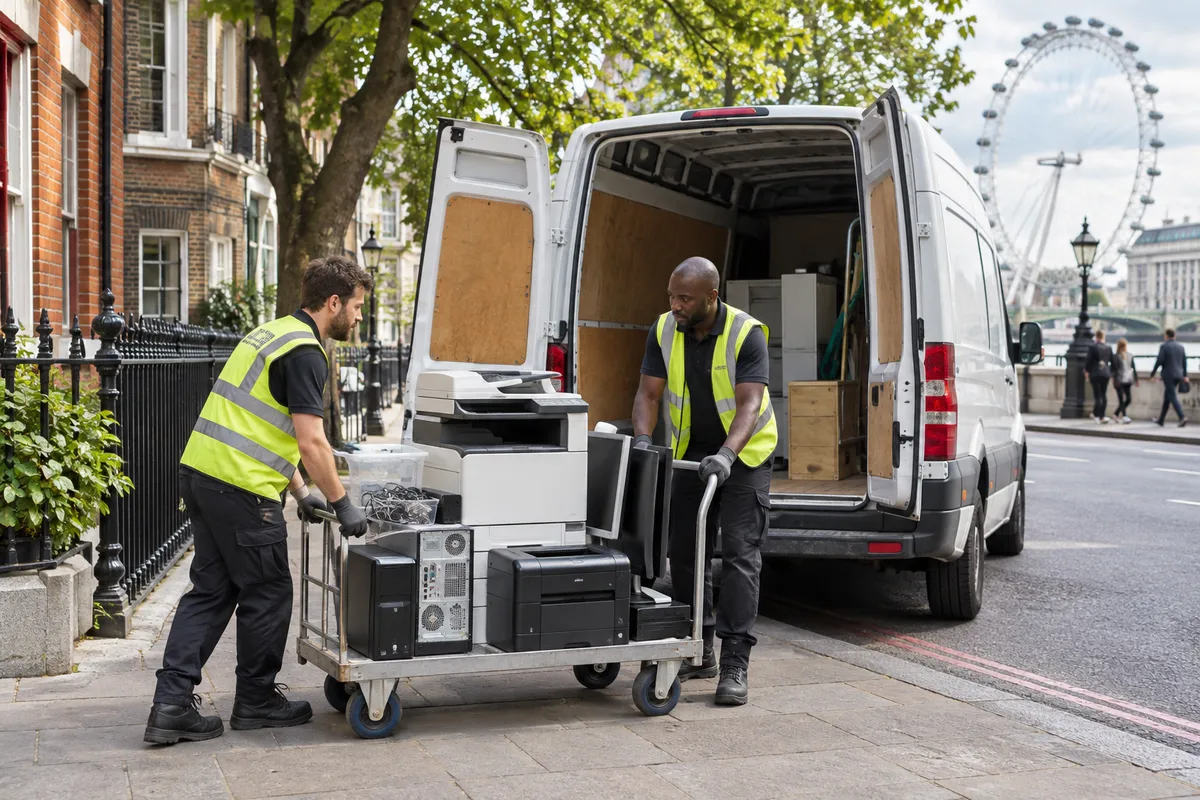
Equipment retains a separate identity within a mixed load
Name appliances and devices through the electrical waste enquiry, with quantity, position and connection status where applicable. A refrigerator or washing machine still fitted into units needs its condition explained; collecting it should not be confused with disconnection or installation. A carton containing monitors is a different description from empty cardboard packaging. For workplace devices, raise information-security requirements explicitly rather than infer certified data destruction from general removal. We discuss acceptance and relevant additions to the complete quote using the actual equipment list. If preparation reveals more devices, update the enquiry where possible before the visit. This lets equipment and ordinary furniture share a defined collection without hiding one material inside another or creating an unagreed specialist task for the team.
| Point | Information to provide | Purpose |
|---|---|---|
| Occupier | Who authorises the contents leaving | Clear removal boundary |
| Entrance | Door or gate serving the rooms | Actual route rather than frontage assumption |
| Carrying | Floor, turns and internal location | Work understood |
| Loading | Proposed vehicle position and current controls | Practical visit discussion |
Outdoor and renovation material should be identified beneath the surface
For garden waste, distinguish branches and cuttings from soil, paving, timber and manufactured objects such as pots or old furniture. Give approximate amounts and mention heavy groups concealed below green material. Explain whether the path to the entrance uses a gate, shared passage or occupied indoor space. A shed’s loose contents should remain distinct from taking down the structure. For builders clearance, describe rubble, plasterboard, timber and packaging, including what sacks contain. Counting the sacks alone cannot explain their weight or acceptance requirements. Identify unfamiliar containers before booking so the substance can be discussed. We arrange collection of the stated contents, with gardening, excavation, demolition or other work on the property defined separately rather than assumed because waste has accumulated during those activities.

An illustrative home-storage collection with a separate garden group
Imagine a Forest Gate household releasing a wardrobe, boxed clutter and an unused dining table, with branches also waiting outside. This is an illustration of an enquiry, not a completed local collection. We would ask whether the wardrobe and table remain assembled, describe the boxes and confirm which storage or belongings stay. The branches would have a separate material and carrying description. If paving is hidden beneath them, its amount must be named rather than included silently as green waste. We would establish the actual entrance and loading position, including any shared route. An appliance added later needs its name and connection status before inclusion. The full quote can then cover the agreed groups without turning storage clearance into unlimited removal from every room or implying work that has not been discussed.
From Forest Gate enquiry to removal
01
Locate the contents
Identify occupier, rooms and entrance.
02
Separate the inventory
Describe furniture, loose material and equipment.
03
Agree the complete visit
Discuss loading, quote and availability.
04
Carry and take away
We remove the specified contents responsibly.
| Factor | Detail to add | Result |
|---|---|---|
| Amount | All furniture and loose groups | Complete inventory |
| Specific material | Devices, mattresses and dense debris | Acceptance and supplements discussed |
| Additional work | Dismantling or carrying requirement | Explicit scope |
| Change | New contents before the visit | Revised full price before loading |
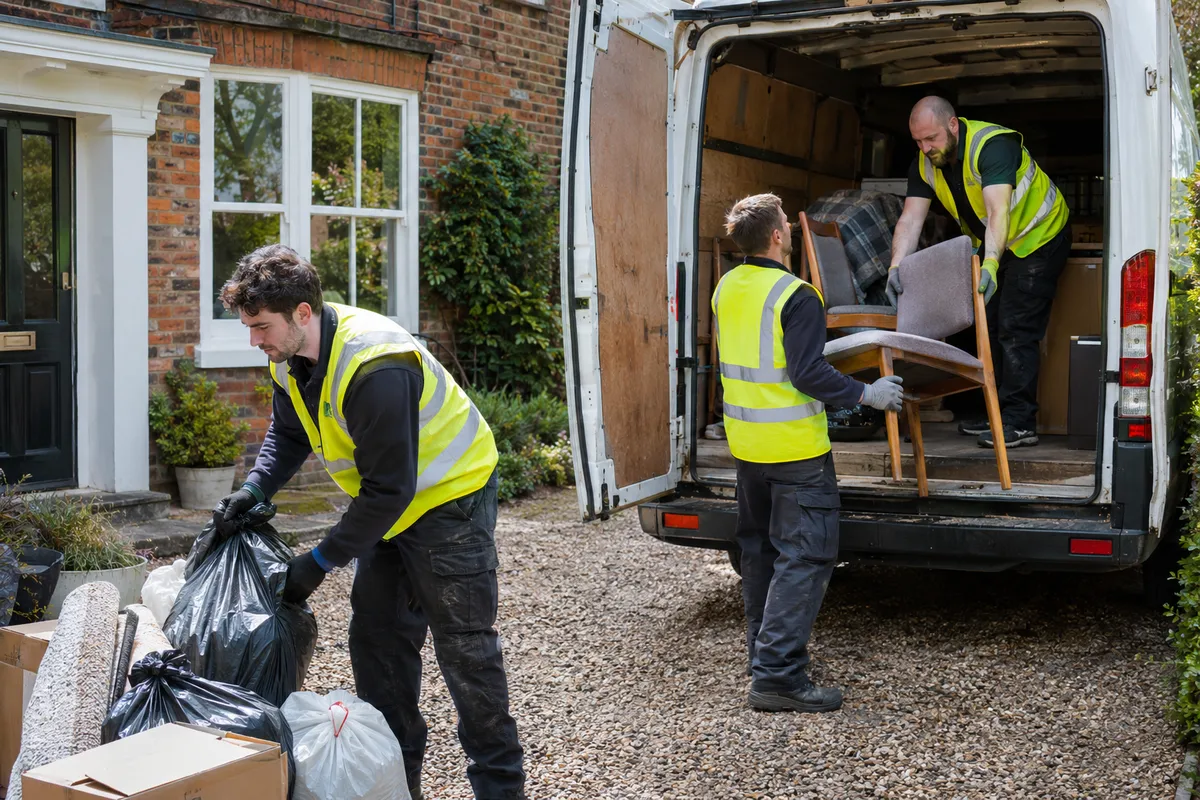
Loading, price and onward handling are part of one clear agreement
Newham explains that parking controls and loading-bay conditions are indicated by street signs. Tell us the actual vehicle position proposed and any private-access arrangement, together with the path from the contents. We discuss quantity, materials, supplements and additional work using that information. The current collection guide gives the charging framework; we do not invent a Forest Gate tariff or unlimited allowance attached to a room name. Report changes before the visit where possible and confirm an available arrangement directly. Once loaded, the agreed waste leaves for responsible treatment and suitable reuse or recycling opportunities. We cannot promise the same recovery outcome for every object or supply a fabricated percentage for your load. Cleaning, repairs and work on retained property need another defined scope beyond taking away the identified contents.
See the current collection price guide, then confirm your complete quote with us. No separate Forest Gate tariff is implied.
More London coverage near Forest Gate
For London and M25 collection enquiries, see the coverage directory. We publish links only to available local pages. Give us your complete postcode to discuss the property; we do not use this map as a boundary or claim a local depot.
COLLECTION QUESTIONS
Forest Gate removal enquiries: questions answered
Is a Woodgrange Road frontage enough information for a collection?
Give the full address and the door or gate serving your own contents. A backroom or home above business premises may use another entrance. We discuss that actual route and proposed loading position rather than infer access from the public frontage.
Can a Forest Gate wardrobe leave while its belongings are retained?
State that the unit leaves empty and arrange the retained contents separately before carrying. Explain the wardrobe’s assembly and route out. The list should identify the furniture being discarded without making the team decide which possessions inside it someone wants to keep.
Should furniture already in pieces still be described in full?
Tell us the item type and include all its components, with their position. Explain any remaining work and the route to the exit. An image of only the largest section may omit other parts that contribute to the proposed load.
Can equipment hidden in office cartons be included as ordinary packaging?
Name the devices and quantity separately from empty cartons. Raise information-security requirements explicitly and state connection status for appliances. We discuss the equipment scope rather than assume its packaging makes it equivalent to cardboard or includes specialist data handling.
What should I do if dense paving appears beneath a green pile?
Update the enquiry with the approximate amount and location. Paving is another material group and should not be hidden within a cuttings estimate. We discuss acceptance, carrying and any price change before it becomes part of the agreed collection.
Does the original quote cover any material found later in storage?
It relates to the contents and work agreed. Tell us about extra groups before the visit where possible, including their material and amount. We discuss the revised complete price before loading rather than treat a storage enquiry as unlimited removal from the property.
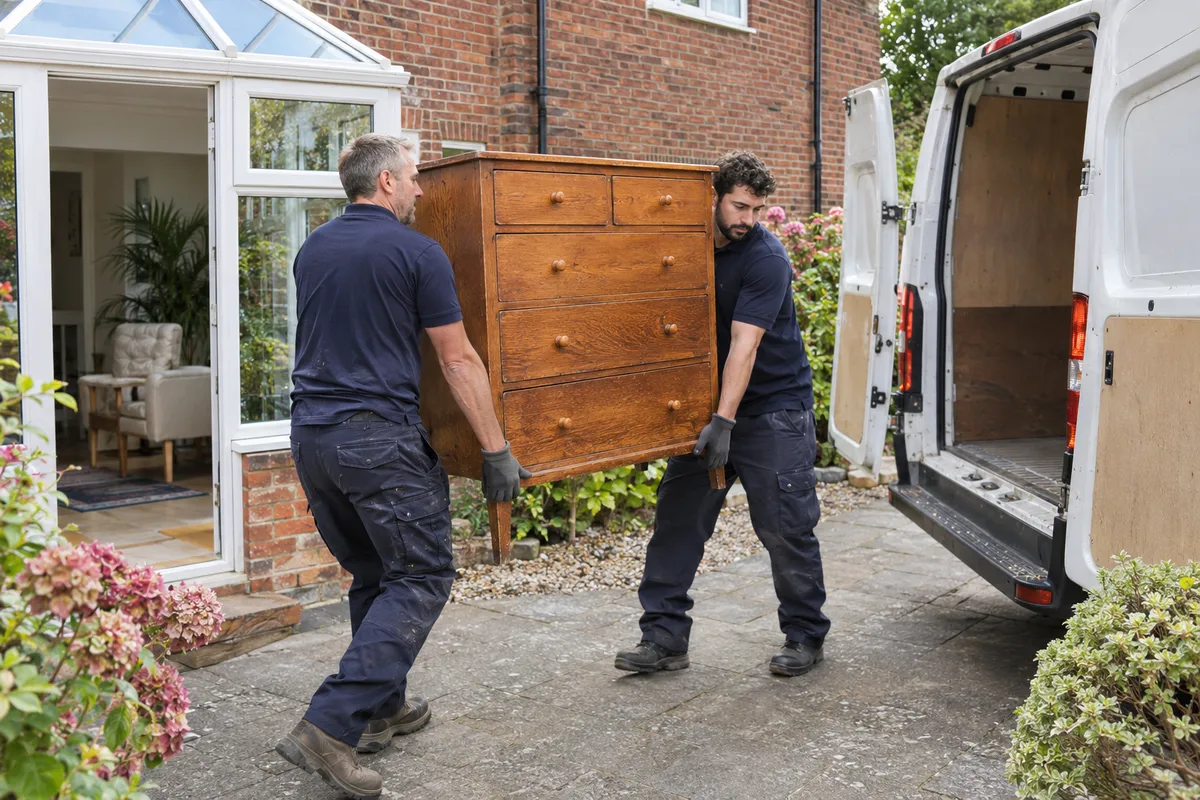
All generated photographs on this page are illustrative service scenes. They do not document jobs in Forest Gate.
Discuss your Forest Gate collection
Call +44 20 3404 3985 with the collection postcode, item list and property details. We will discuss the scope, available arrangements and quote before work begins.
Services for your Forest Gate enquiry
Furniture disposal · Rubbish collection · House and flat clearance