
LONDON & THE M25
Junk Removal
in Leytonstone.
We organise Leytonstone collections from the unwanted contents at your particular address. The enquiry identifies the household or business spaces involved, distinguishes the materials and establishes how the load can leave the premises.
- Carrying and loading included
- A clear quote before work begins
- Licensed and insured waste carrier

COVERAGE & CONTENTS
Leytonstone coverage and material groups
We discuss Leytonstone enquiries using the full postcode and actual premises details. The map shows the locality for orientation, rather than a depot or a street-by-street coverage boundary. Tell us the occupier, material list and entrance serving your address.
Nearby collection areas: Leyton · Forest Gate · Walthamstow
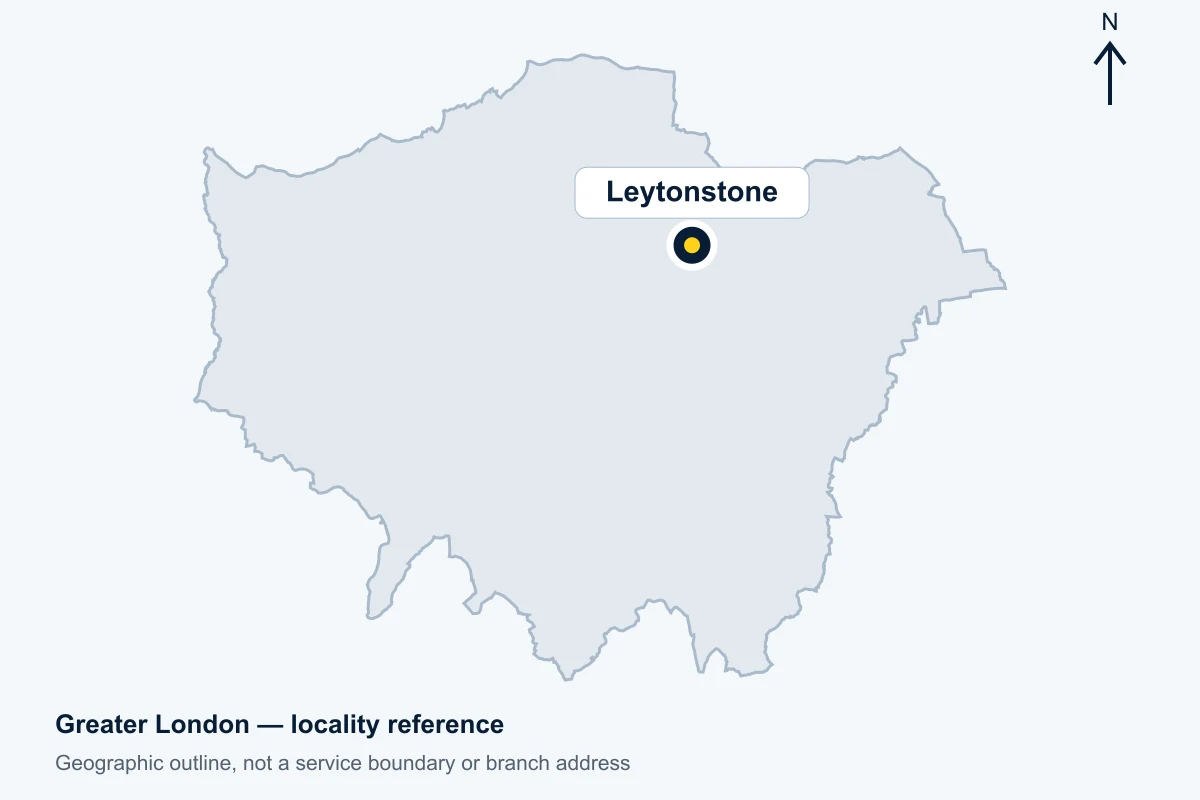
Greater London reference outline: GLA / OS Open Data (OGL). Location: GeoNames UK gazetteer. This is an orientation map, not a service boundary or branch address.
Use the complete address to locate the collection premises
Waltham Forest’s regeneration information describes Leytonstone town centre and the High Road corridor extending towards Newham. We therefore need more than “on the High Road” to understand an enquiry. Send the full postcode and identify the building, entrance and rooms serving the contents. A collection from a flat above commercial space differs from removing a shop’s own stored material, even where the postal frontage is shared. Explain which occupier releases the proposed load and who can confirm it. The map on this page marks the locality; it is not a claim about an office or a precise street boundary. We use the actual address to discuss a workable arrangement rather than assume every High Road property has town-centre access, a rear service entrance or the same relationship between its rooms and the road.
Home contents
Business waste
Outdoor materials
- Give the full premises address along the High Road corridor
- Describe the material inside closed cartons and sacks
- Identify retained belongings before providing access
- Show the limiting point of a bulky item’s route
- Keep garden cuttings separate from paving and soil

Build the load description from objects and material groups
Our first useful inventory separates large pieces from the loose contents around them. For example, a desk, empty cabinet and stack of cartons should not all become an unspecified “office load”. Say what the cartons contain and whether the cabinet is genuinely empty. The same principle applies to household rooms: a bed frame, mattress and boxes are distinguishable parts of a proposed collection. Name appliances, devices and dense materials where present. A photograph helps us understand the arrangement, but a picture of a closed cupboard does not describe its contents. Add a written note about hidden groups, material in other rooms and anything uncertain. This gives us a finite enquiry to assess for acceptance and price. It also keeps retained stock or belongings outside the removal list rather than let their position beside waste decide their fate.
| Group | Useful information | Collection enquiry |
|---|---|---|
| Household rooms | Furniture plus loose belongings, with retained items clear | Domestic clearance |
| Bulky furniture | Size, assembly and the route out | Furniture disposal |
| Workplace contents | Redundant assets apart from active stock | Office clearance |
| Garden or renovation material | Named substances and approximate quantity | Garden or builders clearance |
Household selection is settled before carrying begins
Through domestic clearance, we discuss removals from occupied homes as well as larger clear-outs. A household can release a few pieces without declaring the entire room unwanted. Identify the items remaining, especially where a tenant’s, landlord’s or relative’s belongings share the space. The person providing access should know the removal decisions and be able to confirm the list. Keep documents, keys and possessions you need away from the waste groups. For storage, tell us whether only the loose contents leave, only the furniture leaves or both are included. We do not make those personal choices while loading. If a cupboard not visible in the initial photographs is also being emptied, describe it before the visit. The agreed collection follows the contents released, not an assumption that every space becomes part of the job once the door is opened.

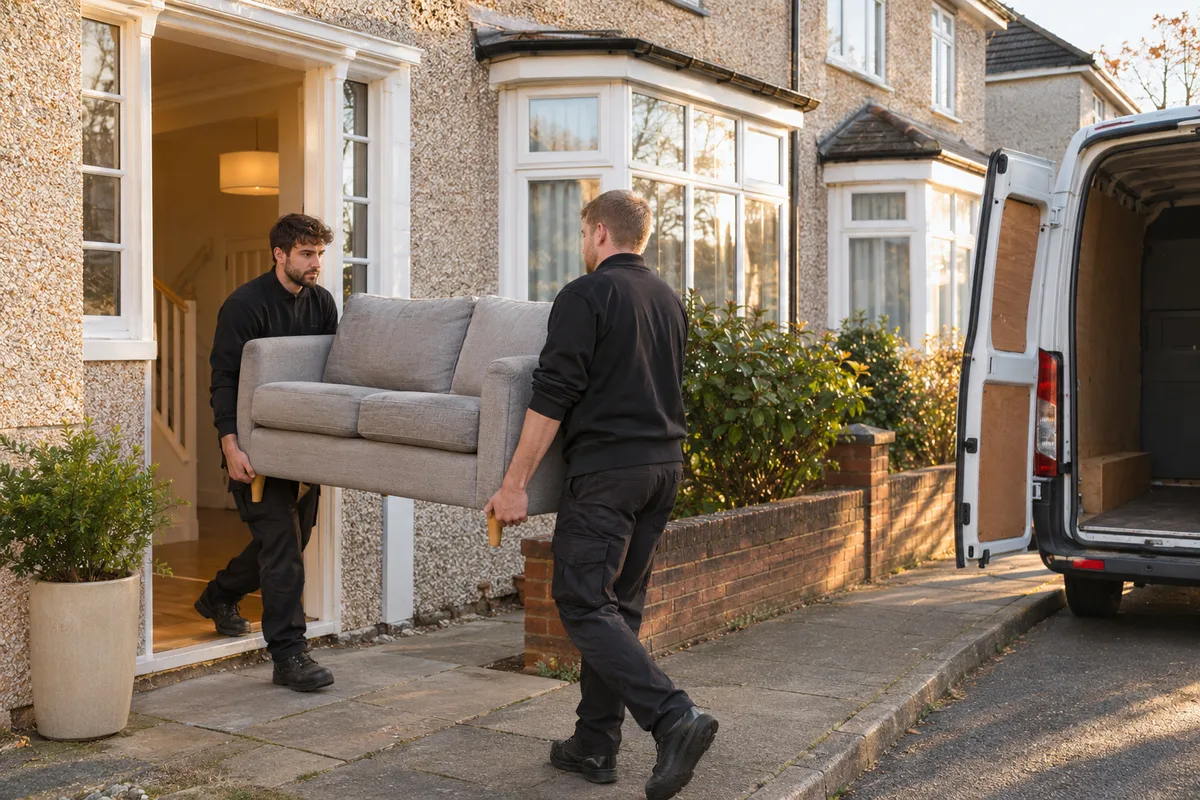
Describe the difficult point in a bulky piece’s exit
A furniture collection needs the object’s construction and its route considered together. Tell us the type, approximate size and current position, then explain any point where the exit becomes narrow or turns. A sofa may reach the hallway but still have a landing turn to negotiate; a table may have removable legs but remain assembled at enquiry stage. Raise dismantling as work to discuss, and explain fixed attachments rather than group fitted units with loose furniture. Name each mattress apart from its frame. Add the floor and proposed stair or available lift route for upper rooms. Photographs of a particular restriction can be more informative than another close-up of the item. We discuss the actual carrying task for all bulky pieces instead of assume that one easily accessible object represents the whole load.

Renovation and garden groups need their contents revealed
For builders clearance, list the approximate amount of rubble, timber, plasterboard and packaging separately enough for the mix to be understood. Filled sacks need a description of what is inside; identical bags can hold very different weights. If replaced furniture joins the debris, identify it independently rather than include it under the sack count. Outdoor material also requires detail through the garden waste enquiry: plant cuttings differ from paving, soil, old fencing and garden furniture. Say what lies under a photographed pile and explain the route from each group to the exit. A shed’s contents are distinct from taking down the structure. Unknown containers should be identified before booking. We discuss collection of the listed materials, with gardening, excavation or demolition raised separately rather than inferred from how the waste arose.
| Question | Detail needed | Purpose |
|---|---|---|
| Who authorises removal? | Occupier or nominated representative | Clear ownership boundary |
| What is in the boxes? | Significant contents and quantity | Complete material description |
| How does furniture leave? | Doorways, stairs and turns | Carrying requirements |
| Where is loading proposed? | Actual position and current controls | Practical visit arrangement |
A business list distinguishes redundant contents from active assets
Our office clearance enquiry can include desks, chairs, cabinets, movable displays and packaging. Explain what is out of use and which stock, customer property or equipment must remain. A manager should be able to release the right contents at the visit. Attached fittings need their condition stated because ordinary contents removal is not a complete strip-out. For electrical items, give names and quantity through the equipment enquiry, including connection status for appliances. Raise information-security requirements independently; collecting devices is not certified data destruction. We need the actual material rather than the business trade alone. A store full of closed cartons can conceal retained stock or another waste group, so describe those decisions and quantities before treating the area as a single load ready to take away.

An illustrative spare-room collection with additional outdoor material
Consider a Leytonstone household releasing an old bed, an empty desk and several boxes from a spare room, with branches waiting in the garden. This is a planning example, not a report of completed local work. We would identify frame and mattress, ask whether the desk is assembled and describe the boxes’ contents. The branches would be another group with their own carrying route. If broken paving is also present, it needs its amount named rather than disappear within a green-waste estimate. We would establish who confirms the retained possessions, which entrance serves each group and the proposed loading position. An appliance added later would need its connection status discussed. The result is one defined enquiry across two spaces, without treating a spare-room reset as unlimited removal of everything found in the home or garden.
From Leytonstone enquiry to removal
01
Locate the premises
Identify occupier, rooms and actual entrance.
02
Describe every group
Separate objects, loose contents and materials.
03
Agree the complete arrangement
Discuss loading, quote and availability.
04
Take the load away
We carry and remove the agreed contents responsibly.
| Factor | Description to add | Outcome |
|---|---|---|
| Amount | All large and loose groups | No hidden second load |
| Materials | Mattresses, devices and dense waste named | Acceptance and supplements discussed |
| Work | Dismantling and carrying requirements | Explicit collection scope |
| Change | Revised contents before the visit | Full price aligned before loading |
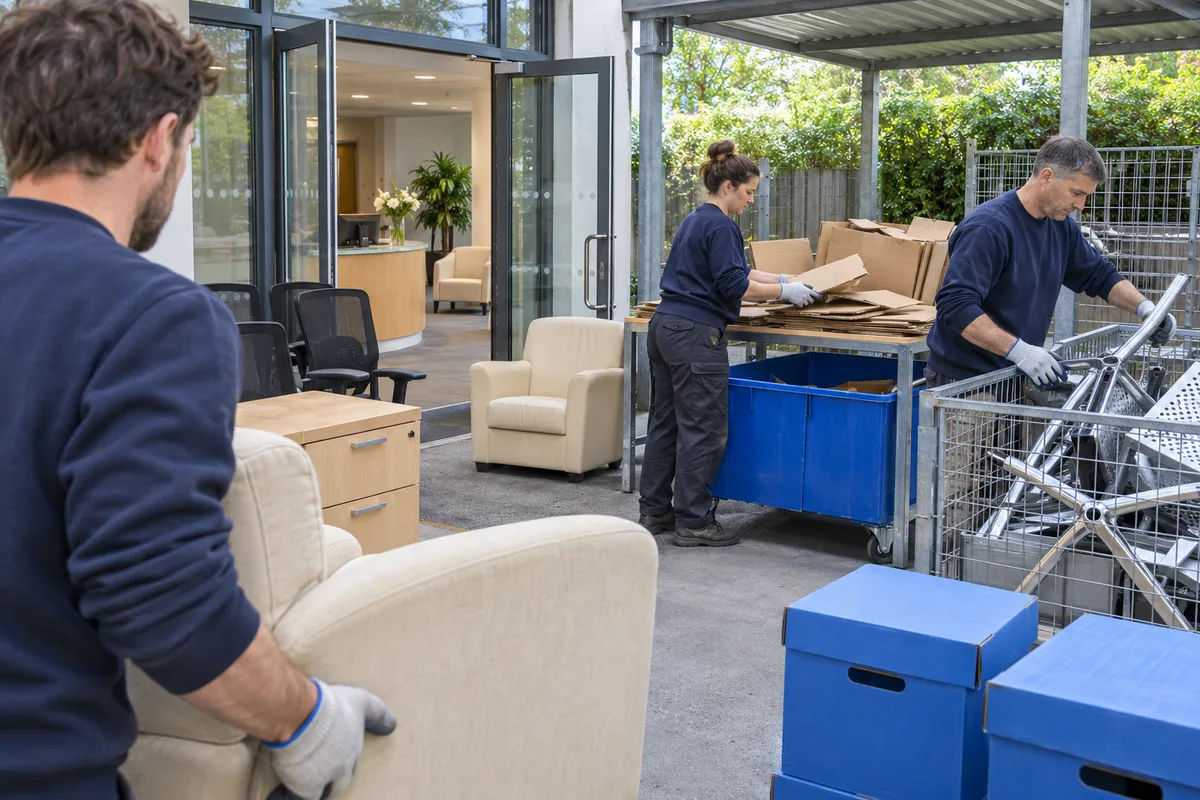
Agree the vehicle position and full collection price
Waltham Forest provides address-specific parking and loading information in its traffic-order mapping. Describe the proposed vehicle position and relevant controls, alongside the path from the contents. A nearby empty space does not establish access to private premises or permission to use a frontage. Include the actual contact for any managed gate. Our price guide supplies the charging framework; the complete amount, materials, supplements and agreed work describe your own quote. Send changes before the visit where possible, with availability confirmed directly. The collected contents leave for responsible handling and suitable reuse or recycling opportunities. We do not invent a recovery figure or promise every object has the same outcome. Further cleaning, repairs or property work require their own scope beyond removing the specified waste.
See the current collection price guide, then confirm your complete quote with us. No separate Leytonstone tariff is implied.
More London coverage near Leytonstone
For London and M25 collection enquiries, see the coverage directory. We publish links only to available local pages. Give us your complete postcode to discuss the property; we do not use this map as a boundary or claim a local depot.
COLLECTION QUESTIONS
Leytonstone removal enquiries: questions answered
Why is the complete postcode needed for a Leytonstone High Road enquiry?
The corridor serves different premises and extends beyond the immediate town centre. Give the building and entrance as well as postcode. We use those details to discuss your actual rooms and loading arrangement rather than assume every High Road frontage has the same access.
Can I include a desk with a bed and mattress from a spare room?
List the desk, frame and mattress separately, then add any loose boxes or other material. Say whether furniture is assembled and explain its route. We discuss the actual combined load without turning the spare room into an unlimited clearance.
Should a box of equipment be counted as empty cardboard?
Tell us the devices and quantity inside it. Packaging does not replace the equipment description. For an appliance, explain whether it is connected or fitted, and raise any information-security requirement for business devices separately before collection is agreed.
What if the cupboard stays but some contents leave?
Identify the retained unit and describe only the loose material being discarded. Separate belongings you need from that group before the visit. The person confirming removal should be able to recognise the agreed contents without asking the team to make personal retention decisions.
Can paving found beneath branches be added without explanation?
Name the paving and approximate amount as dense material, independently of the branches. Tell us before the visit where possible so acceptance, carrying and any price revision can be discussed. A green-waste description should not conceal another substance.
Is a free-looking space near the entrance enough to confirm loading?
Describe the proposed position and the controls or private management affecting it. We need the route from the contents as well. A space being empty at one moment does not itself settle access or the collection vehicle’s loading arrangement.
All generated photographs on this page are illustrative service scenes. They do not document jobs in Leytonstone.
Discuss your Leytonstone collection
Call +44 20 3404 3985 with the collection postcode, item list and property details. We will discuss the scope, available arrangements and quote before work begins.
Services for your Leytonstone enquiry
Furniture disposal · Rubbish collection · House and flat clearance