
LONDON & THE M25
Junk Removal
in Dagenham.
We collect agreed unwanted contents in Dagenham by establishing the material groups and locations before the visit. A household enquiry may include furniture indoors, cuttings outside and repair debris stored in a garage. We bring those parts into one clear discussion, with the carrying, loading and complete price agreed before work begins. Tell us the full postcode and describe what is ready to leave. Our team handles the agreed removal from the stated positions, so you can explain a mixed load without first moving heavy objects to the road.
- Carrying and loading included
- A clear quote before work begins
- Licensed and insured waste carrier

COVERAGE & CONTENTS
Dagenham coverage and material groups
Dagenham is a Greater London locality in the London Borough of Barking and Dagenham. The marker provides neighbourhood orientation and is not a company depot or office. Give the exact postcode and collection entrance. Barking and Romford are nearby named areas; every appointment is arranged around its own contents, access and availability.
Nearby collection areas: Romford · Hornchurch · Barking
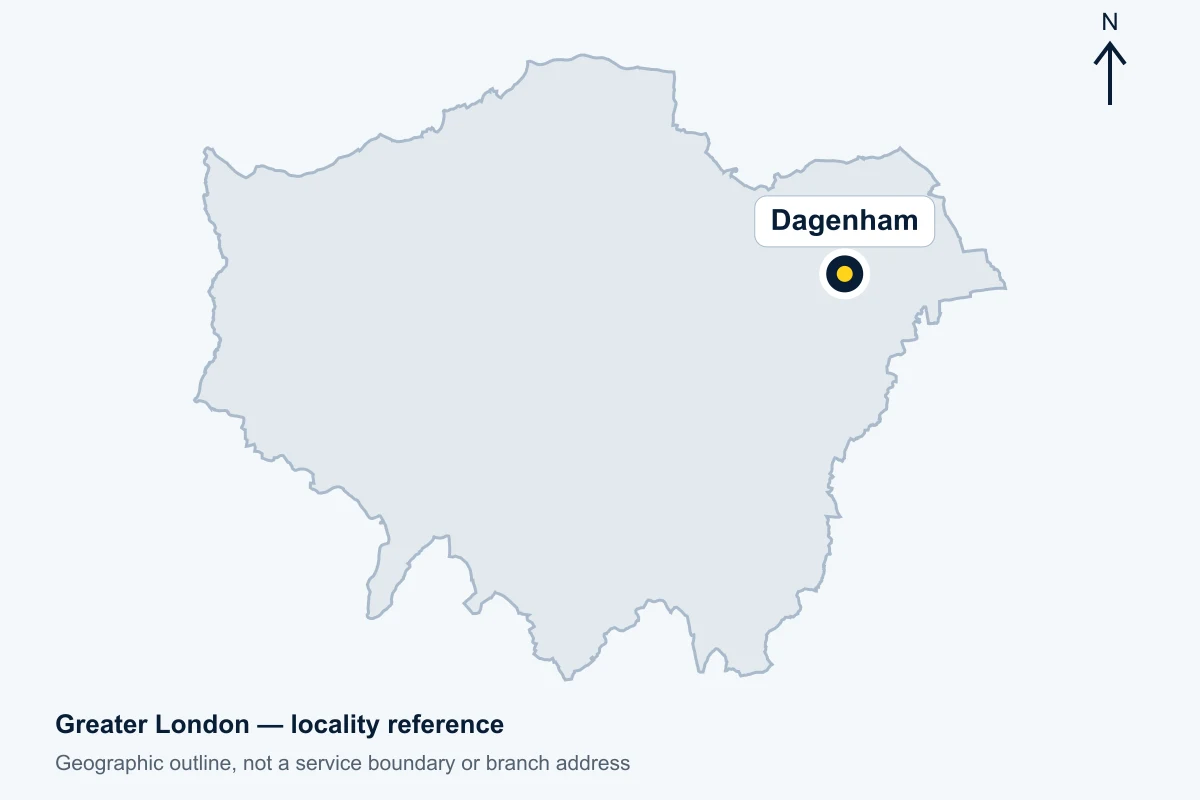
Greater London reference outline: GLA / OS Open Data (OGL). Location: GeoNames UK gazetteer. This is an orientation map, not a service boundary or branch address.
Outdoor contents are described by material and position
For a Dagenham garden enquiry, tell us whether the load consists of branches, green cuttings, old furniture, soil, paving or equipment. Each group needs its own description, even when gathered near the same gate. The garden waste service can be discussed for accepted material already requiring removal, with its approximate amount and loose or bagged condition. Explain long branches and sharp pieces. Give the starting position within the garden rather than only a photograph of the frontage. A store at the rear, bags near the house and furniture beside a garage can involve different carrying. We need the usable gate or route through the property and the person providing access. That makes the enquiry about the actual outdoor collection and the work involved.
Home contents
Business waste
Outdoor materials
- Locate garden material within the plot and explain the actual gate
- Distinguish cuttings from soil, paving and old outdoor furniture
- Describe garage timber and repair debris separately from cartons
- Identify retained tools and household furniture clearly
- Name an added fridge or other appliance before the price is finalised

Dagenham neighbourhood context helps us ask the right property questions
The council’s local plan identifies Dagenham Heathway and Becontree as a specific policy area and describes the historic Becontree Estate as a place with a distinct existing character. Its illustrated housing context includes gardens and residential streets. We use that verified information for orientation, without applyinging one layout to all of Dagenham. Tell us whether your premises are a house, flat, business or separate storage location and give the exact postcode. Explain the actual collection entrance, floor and approach. A side gap visible from the road may still contain a narrow gate or steps, while some contents may need to pass through the home. The neighbourhood marker identifies Dagenham rather than a company base. We establish access from the actual address instead of promising a route from a local landmark.
| Material group | Information we need | Service |
|---|---|---|
| Garden material | Branches, cuttings and other contents distinguished | Garden collection |
| Indoor furniture | Named pieces, form and condition | Furniture disposal |
| Renovation debris | Timber, tiles, plasterboard or rubble | Builders clearance |
| Electrical items | Type, location and connected condition | Electrical collection |
Furniture and loose household contents form a defined inventory
We can discuss selected rooms and unwanted pieces through domestic clearance. List the sofa, bed, table or cabinets individually and describe loose bags or cartons by contents. Tell us which furniture remains in use and which belongings are reserved for relatives or owned by a landlord. Clear instructions matter when a room is being changed rather than emptied completely. Check drawers and shelves for retained possessions before furniture leaves. If someone attends for you, they should have the agreed list and be able to open every included room, garage or store. We carry and load the specified unwanted contents. Items belonging to another person need their own clear authorisation, rather than being included because they stand beside the waste.


Renovation leftovers are assessed as the materials they contain
A garage can hold a mix of timber offcuts, broken tiles, plasterboard and packaging after a household project. For builders clearance, give an approximate amount of each group and state whether it is loose, bagged or mixed. Dense rubble needs identifying because its collection differs from lightweight cartons. Describe long pieces, exposed sharp edges and the path from the work area. A photograph taken from one side may miss material behind a cabinet, so explain the whole pile. Let us know whether the route is ready for carrying while other work continues. We discuss removal of the agreed debris; requests to take fitted units out or perform additional building tasks belong in the scope explicitly, with the price established before the visit.

Appliances and equipment are named before the quote is settled
Tell us about refrigerators, washing machines, screens, printers and other electrical items individually. State their locations and approximate quantities, including whether a large appliance is disconnected and freestanding. Our electrical collection enquiry records that part of the load separately from furniture and loose rubbish. Any request for plumbing, electrical disconnection or access through fitted joinery needs discussion as additional work. For computers from a business, describe specialist data or certification requirements before booking rather than infer them from equipment removal. Unknown substances, chemicals and unlabelled containers also need raising in advance so acceptance can be confirmed. We want the agreed load understood before carrying, rather than find a different material among the contents after the visit starts.
| Location | Explain | Collection implication |
|---|---|---|
| Dining room | Table, chairs and retained pieces | The furniture list is defined |
| Garage | Hidden material and door access | The full repair load is visible |
| Rear garden | Gate, steps and material position | Outdoor carrying is included accurately |
| Utility area | Appliance condition and route | The added equipment is explicit |
Illustration: a dining-room change and material from the garden
Consider a Dagenham household replacing a dining table and chairs after room repairs, with bagged cuttings waiting in the garden and timber offcuts in the garage. This is a hypothetical illustration of an enquiry, not a customer-job claim. We would ask whether the table is assembled, which bags contain green material and how the garage and garden connect to loading. Soil or broken paving should be named if present. A retained tool rack remains outside the removal list. If an old fridge is added from a utility area, its type, condition and route need including before the earlier quote is used. The household can then discuss the entire accepted load and appointment, instead of describe one convenient pile while omitting the other locations.
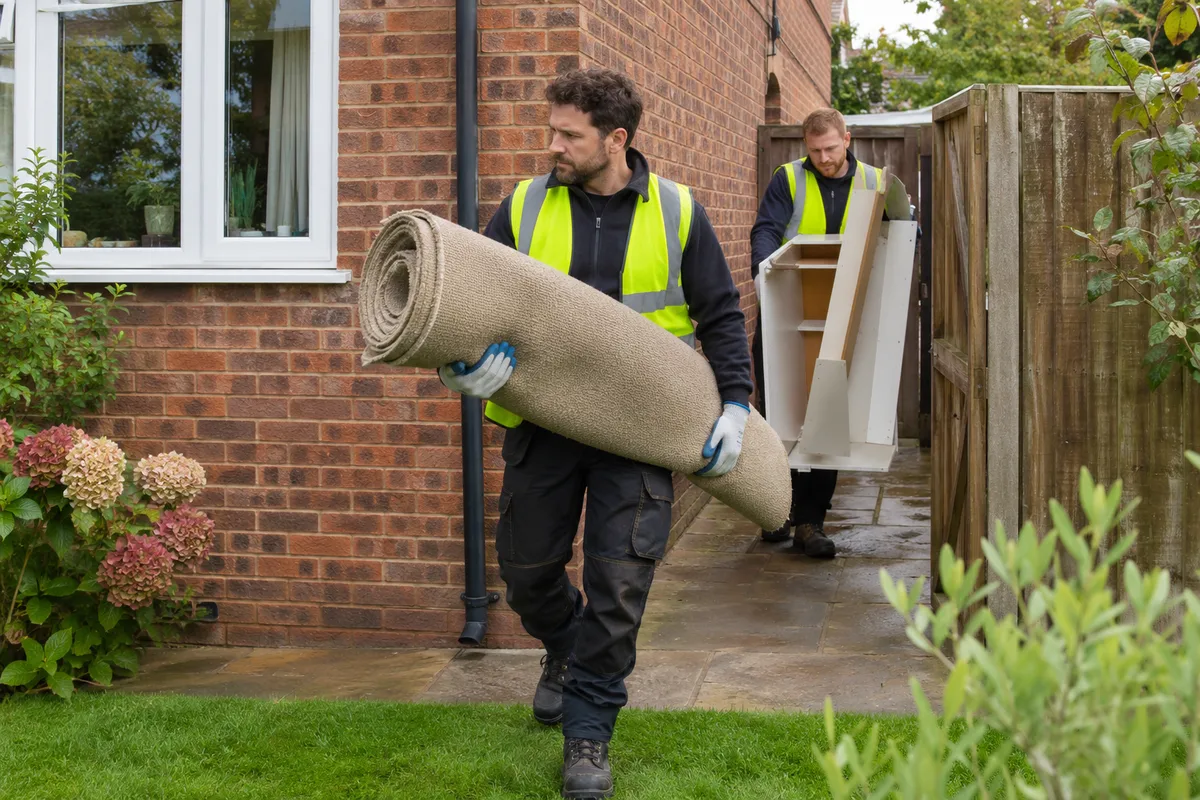
Carrying and loading are matched to the premises
For bulky furniture, provide dimensions where doorways or stair turns are tight and identify glass, loose panels or damage. Explain requested dismantling before the quote, including whether furniture is fitted or freestanding. Tell us about floors, lift suitability and shared entrances where relevant. Outside, describe gates, steps and the relationship between the load and proposed vehicle position. The council’s parking information is the starting point for local checks, with actual road signs and private-entry conditions still relevant. A drive may be occupied and a managed area may need another contact. We discuss those arrangements rather than rely on an apparently empty space. Availability is agreed for the actual job, without invented arrival times, loading exemptions or a guaranteed driving route through Dagenham.
From Dagenham enquiry to removal
01
Break down the materials
Identify household, outdoor, electrical and repair contents.
02
Locate the load
Give the postcode, rooms, garage and gate details.
03
Agree the service
Confirm accepted contents, carrying, full quote and availability.
04
Carry and take away
We load the defined waste for responsible onward handling.
| Decision | Confirm | Purpose |
|---|---|---|
| Accepted contents | All material groups and any unknown substances | The load is understood before arrival |
| Additional tasks | Dismantling or fitted-item work requested | The service boundary is clear |
| Loading position | Road restrictions and private-entry controls | A realistic vehicle approach is discussed |
| Changes | Another room, appliance or pile added | The quote matches the updated scope |
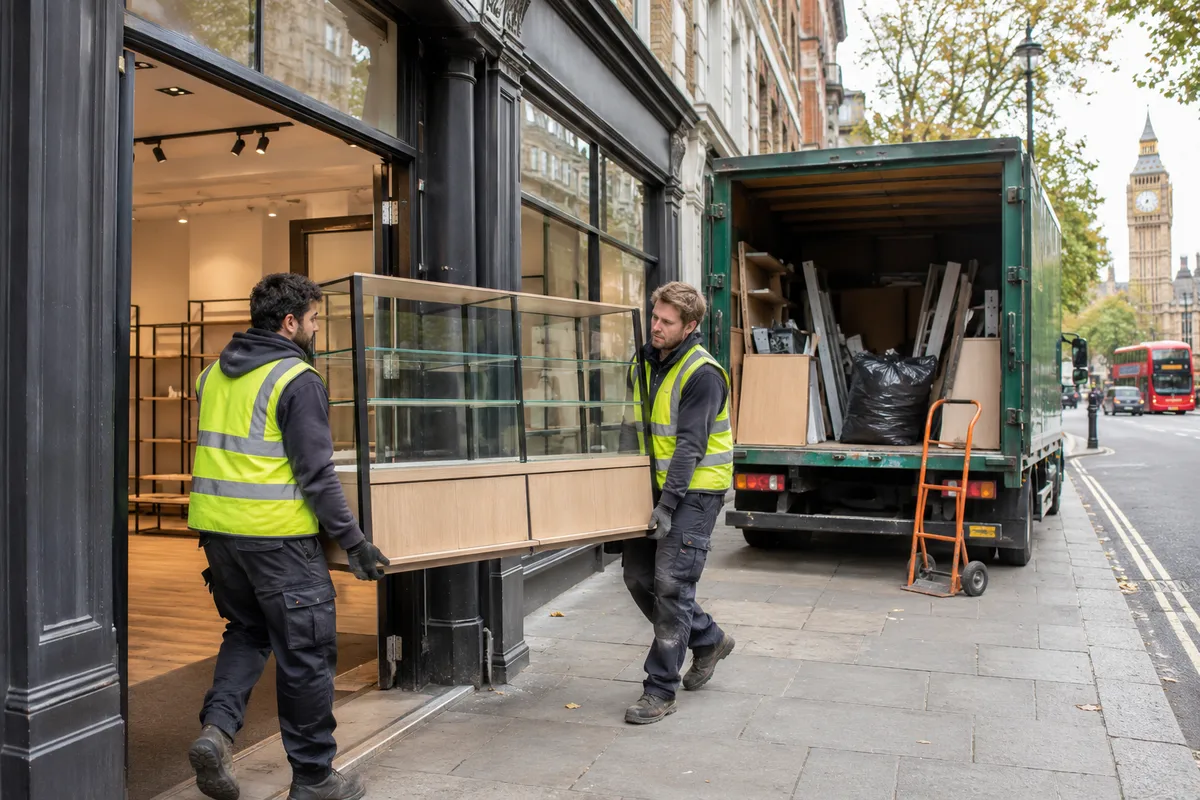
The collection price and onward removal have a clear scope
Our current price guide gives the published bands and relevant supplements. The full quote needs the amount, material mix, particular items and carrying work, including any extra task requested. Tell us about changes before loading so the agreed scope can be updated. For a workplace load, identify the authorised contact and separate unwanted furniture or stock from retained landlord fixtures. The office clearance and shop services concern those defined contents; a strip-out or specialist data task must be discussed explicitly. After carrying and loading, we take the accepted waste away for responsible handling, seeking reuse and recycling where possible. We give no invented local percentage or guarantee that every object is reusable. Cleaning, repair, installation and garden-maintenance requests should be made separately rather than assumed in waste collection.
See the current collection price guide, then confirm your complete quote with us. No separate Dagenham tariff is implied.
More London coverage near Dagenham
For London and M25 collection enquiries, see the coverage directory. We publish links only to available local pages. Give us your complete postcode to discuss the property; we do not use this map as a boundary or claim a local depot.
COLLECTION QUESTIONS
Dagenham removal enquiries: questions answered
Can a Dagenham collection combine dining furniture and garden material?
Give us the furniture pieces and outdoor contents as separate groups, with their locations and routes. We can discuss the full mixed enquiry, including garage material if listed. The quote needs all those details rather than use a table photograph to represent unseen garden bags or repair debris.
What details do you need for green bags beside the garage?
Explain what is inside and the approximate amount, identifying soil, rubble or broken pots apart from cuttings. Tell us the actual position and gate route. Similar-looking bags can contain different materials, so the description helps establish acceptance and the complete carrying task before collection.
Can timber offcuts from a room repair join household rubbish?
Name the timber and any tiles, plasterboard or rubble separately from light cartons. Describe lengths, sharp pieces and loose or bagged condition, with the garage or room location. We review the whole load and work rather than assume dense or awkward repair material is ordinary household packaging.
Should an old fridge be added by name before the visit?
Yes, identify the fridge, its location and whether it is disconnected and freestanding. Let us update the material list and relevant handling or supplements before loading. An appliance discovered later is not automatically covered by a quote based on furniture, cuttings and timber alone.
Does Dagenham housing character guarantee a side-gate route?
Describe the actual property. A side gap can contain steps, a narrow opening or retained contents, and some waste may need to pass through the house. We use local context for orientation while the precise gate and carrying route determine the practical collection discussion.
Will clearing the garden include ongoing maintenance work?
Tell us what material is ready for removal and describe any other work requested separately. Pruning, landscaping and structural tasks should have an explicit scope rather than follow from waste collection. We agree the accepted contents, carrying and full price before the visit so the intended service is clear.
All generated photographs on this page are illustrative service scenes. They do not document jobs in Dagenham.
Discuss your Dagenham collection
Call +44 20 3404 3985 with the collection postcode, item list and property details. We will discuss the scope, available arrangements and quote before work begins.
Services for your Dagenham enquiry
Furniture disposal · Rubbish collection · House and flat clearance