
LONDON & THE M25
Junk Removal
in Hornchurch.
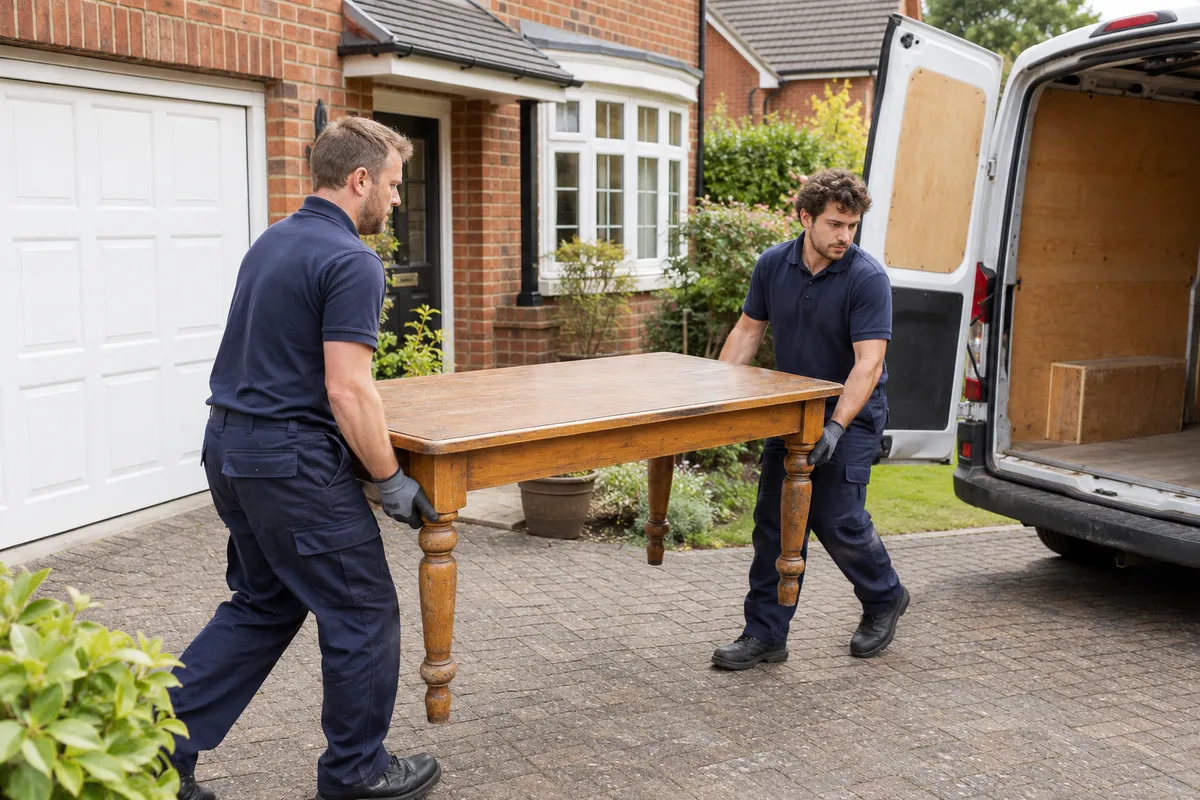
Hornchurch enquiries can involve a home, an independent business or separate occupiers within one address. We organise the collection around the unwanted contents and the part of the premises they belong to. Furniture, loose rubbish and equipment are described before we agree carrying, loading and the collection quote.
- Carrying and loading included
- A clear quote before work begins
- Licensed and insured waste carrier
COVERAGE & CONTENTS
Hornchurch coverage and material groups
The map identifies Hornchurch’s verified place position for orientation, not a depot or service boundary. Give the complete postcode, occupier and actual entrance. Town-centre context does not establish one loading arrangement throughout the locality.
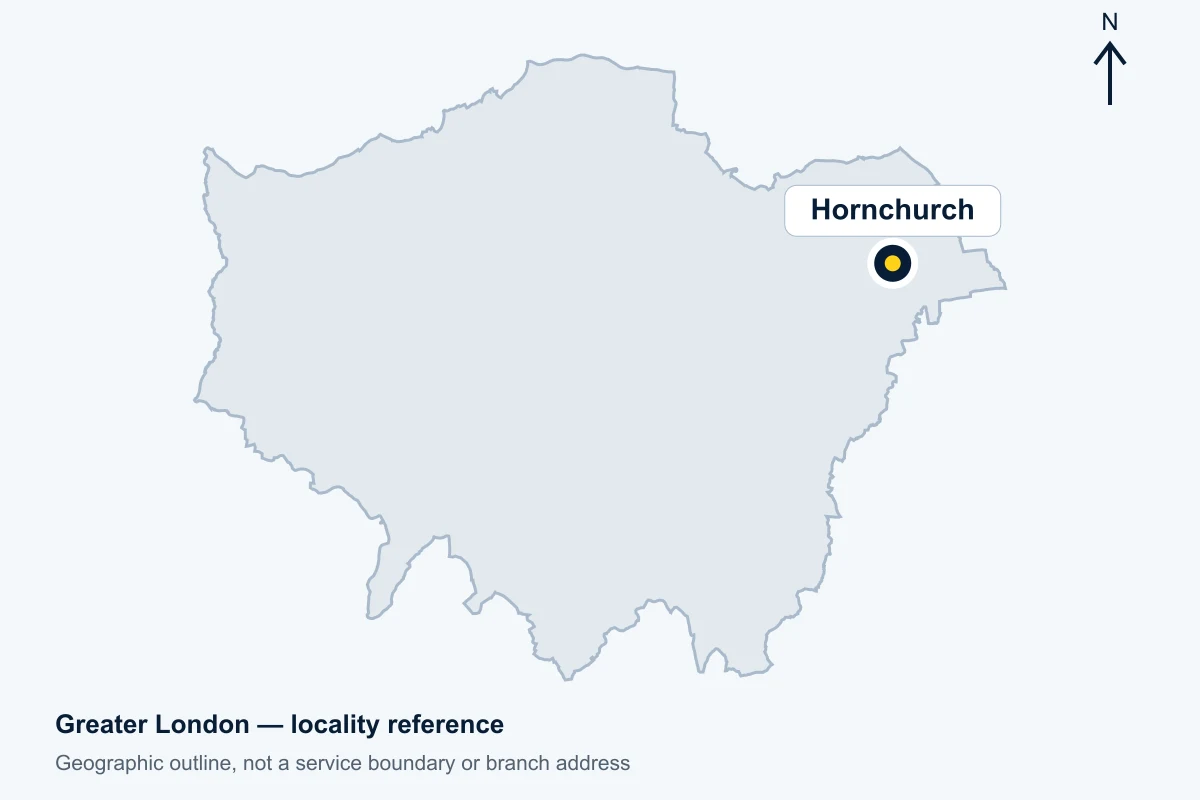
Greater London reference outline: GLA / OS Open Data (OGL). Location: GeoNames UK gazetteer. This is an orientation map, not a service boundary or branch address.
A Hornchurch address needs an occupier description
Havering Council describes Hornchurch town centre as a mix of independent and high-street retail with a cultural role in the borough. That official context supports a careful enquiry: a street address alone does not tell us whether the contents are household belongings, shop storage or workplace equipment. Tell Junk Please which part of the premises needs collection and who occupies it. A residential door may differ from a business frontage, and belongings of one occupier should not be confused with another’s stock. We do not claim every Hornchurch address is commercial or assume a shop enquiry includes rooms above it. Give the complete postcode and actual entrance. The official Hornchurch town-centre information supplies local context, while your specific premises, authority and material list establish the collection to discuss.
Home contents
Business waste
Outdoor materials
- Identify the occupier behind each material group
- Separate household belongings from business stock
- Say whether cartons are empty
- Name electrical and dense materials individually
- Describe the actual entrance and loading authority

Describe the household group as a small independent collection
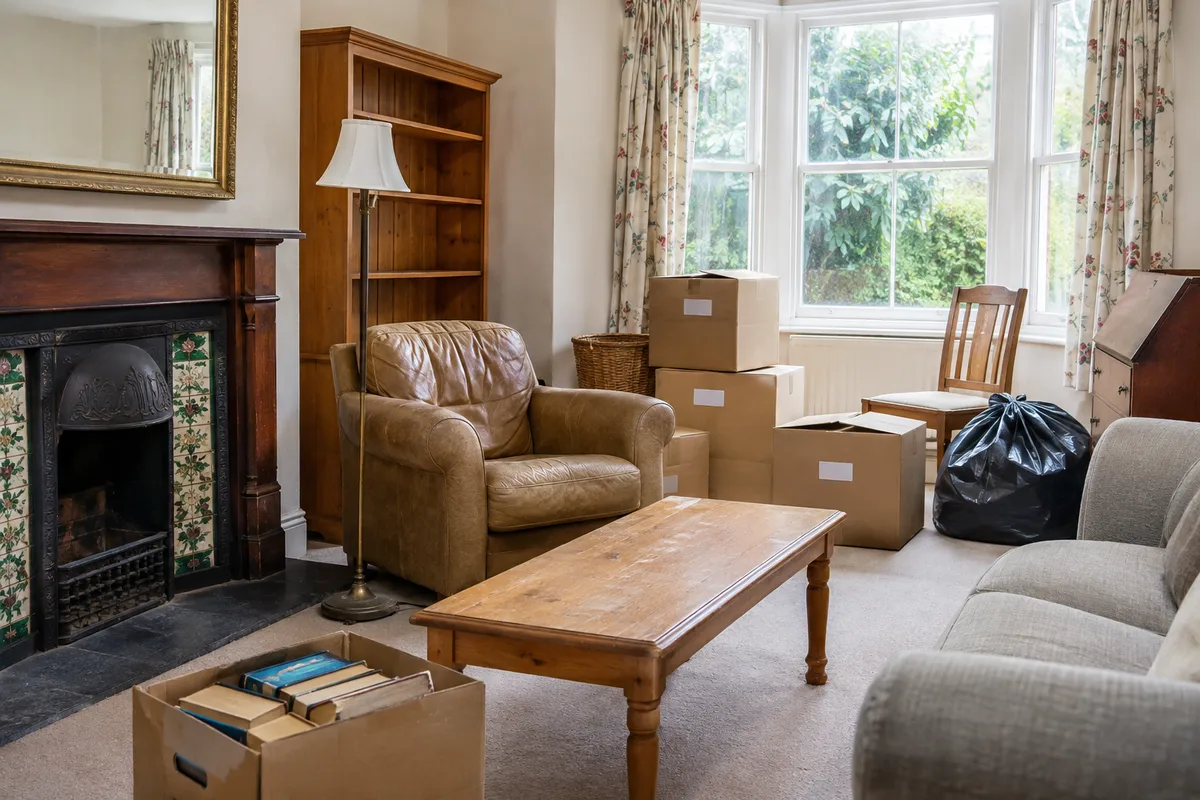
When a household room shares an address with a business store, keep its inventory understandable on its own. State which chair or other furniture leaves, whether it contains belongings and which boxes have been checked by their owner. A family photograph on a desk or a document in a drawer should have been considered before the collection group is confirmed. We do not need private records to understand the waste: broad material descriptions and quantities are sufficient. Explain any furniture that stays in the same photograph. This independent domestic account prevents permission for a shop’s redundant contents being mistaken for permission over someone’s home. It also makes the representative’s job easier at the visit, because they can point to a defined household group rather than decide which part of a mixed room the original enquiry meant.
| Group | Describe | Relevant service |
|---|---|---|
| Household rooms | Furniture and loose contents | House and flat clearance |
| Business storage | Stock, cartons and displays | Shop clearance |
| Work equipment | Desks and electrical devices | Office clearance |
| Project leftovers | Timber, tiles and rubble | Builders clearance |
Distinguish the display from the merchandise it held
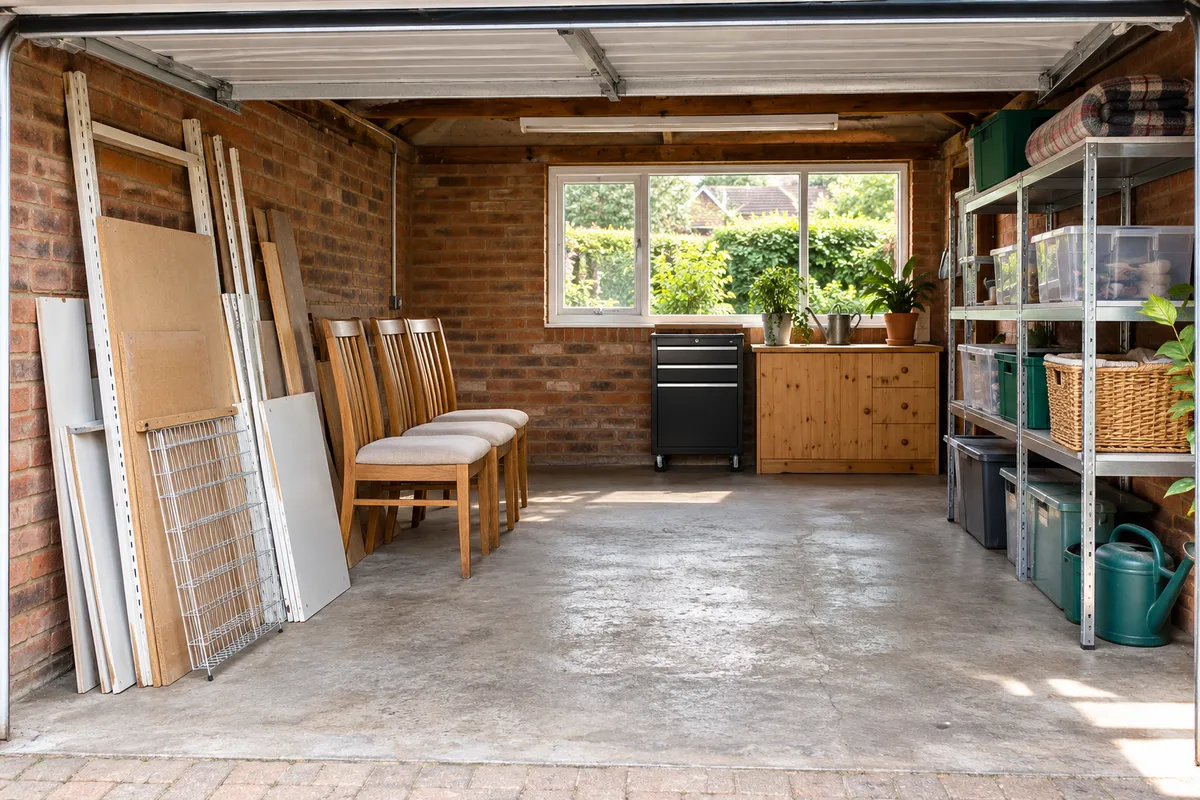
For the business store, describe the physical storage first: a freestanding rack, separate shelves or a unit still fixed in place. Then describe any products proposed for disposal. An empty display and a full one do not communicate the same load, and cartons stacked nearby may be either packaging or stock. Confirm their contents and the business decision about them. If the landlord owns a counter or another occupier owns equipment, keep that item outside the instruction until the relevant authority is settled. Work to detach a fitting should be raised as a separate request, not hidden in a count of shelves. This lets us discuss the store contents without assuming the whole trading setup is being removed. Current stock can remain onsite, provided the approved redundant group is clearly identified to the attending contact.

Name additions that change the household-and-store description
Suppose a mattress or old refrigerator is added after the chair and display furniture have been photographed. Identify that item directly and say where it stands; it should not arrive in the enquiry as just another piece of clutter. A printer from the store likewise needs a decision independent of the shelf beside it. Explain any connection or preparation still outstanding rather than assuming the equipment is ready to move. Records and retained information remain the owner’s responsibility to consider, with specialist requirements discussed expressly. Boxes of books or crockery deserve their own general quantity because their density is not conveyed by the empty-carton group. If something has uncertain contents, report it as an unresolved acceptance question. This keeps the proposed collection honest about its additions without requiring the team to discover a different material mix while carrying.

Outdoor and project material needs its own description
A rear space may contain garden cuttings, broken furniture and leftovers from a repair. Describe those groups separately even if they are proposed for the same visit. Green waste is different from soil, pots and paving. Timber, tiles and rubble differ from empty delivery cartons. Give approximate amounts and say whether material is loose, bagged or already dismantled. Attached units or structures should not be hidden within a loose-debris description. Explain their proposed work explicitly. If another contractor prepared the material, confirm what has actually been completed rather than assuming it will be ready. The outdoor group may use a different gate or route from indoor contents. We confirm the complete proposed mix and any acceptance limits before treating it as one collection. Retained tools, plants and usable stock remain outside that instruction.
| Material | Tell us | Reason |
|---|---|---|
| Cartons | Empty or containing products | Actual load |
| Appliance | Type and connections | Agreed work |
| Garden group | Cuttings versus soil and objects | Material mix |
| Storage unit | Loose or attached | Dismantling discussion |
Give the two inventories two entrance descriptions
The household chair may leave through a residential doorway while the store racks use a rear access. Explain both journeys, even if they end at the same possible loading position. Include the floor, significant turns and any control that requires the contact to open a door repeatedly. Show the largest rigid part of a display if the passage is tight. We should not assume the shopfront provides access to the room above or that a courtyard is authorised because its gate is open. State the arrangement actually available from the premises contact. If another contractor is expected to create space, confirm what has happened rather than leaving preparation uncertain. This connects each approved group to a workable carry and avoids describing one convenient entrance as if it serves every part of a mixed-use address.

An illustrative mixed-premises enquiry
Imagine an occupier arranging removal from a household room and a separately authorised small business store. The domestic group is a chair and checked boxes; the business group is empty display storage and flattened cartons. Live equipment, stock and another occupier’s furniture stay. This is a fictional planning example, not a completed Hornchurch job. We would keep the two instructions distinct and ask who can confirm each. We would identify whether storage is loose and whether the cartons are empty. The organiser would explain the entrances and loading arrangement for both groups. If repair tiles are added, they need a separate material and amount description before inclusion. A settled list lets us discuss the complete quote and carrying without merging ownership or assuming every part of the address is included.
From Hornchurch enquiry to removal
01
Identify occupiers
Confirm whose contents are included.
02
Separate material groups
Describe furniture, stock and equipment.
03
Agree access and quote
Confirm entrances and additional work.
04
Remove the specified load
Carry, load and take away responsibly.
| Stage | Check | Result |
|---|---|---|
| Authority | Occupiers approve contents | Defined instruction |
| Access | Entrances and loading confirmed | Actual route |
| Quote | Final mix and work agreed | Clear price |
| Handover | Each group reviewed | Defined completion |
Confirm the price against the paired inventories
Before agreeing the collection, compare the household list and business list with what now remains. A relative may have taken the chair, or the business may have retained a display after changing its layout plan. Those decisions should be reflected alongside any added appliance or debris. We discuss the complete price with the material descriptions and entrance arrangements in view. Timing needs can be raised when checking availability, with the appointment itself confirmed through the booking arrangement. At the end, the contact reviews the two inventories separately: the household group removed and the store group removed, with retained belongings still excluded. Onward handling follows the actual contents and condition, with appropriate reuse and recycling considered. A new retail layout, cleaning or home repairs belong to a different task rather than being silently included in this agreed removal.
See the current collection price guide, then confirm your complete quote with us. No separate Hornchurch tariff is implied.
More London coverage near Hornchurch
For London and M25 collection enquiries, see the coverage directory. We publish links only to available local pages. Give us your complete postcode to discuss the property; we do not use this map as a boundary or claim a local depot.
COLLECTION QUESTIONS
Hornchurch removal enquiries: questions answered
How should a home and store at one address be listed?
Prepare two short inventories with the relevant owner’s approval and actual entrance for each. This prevents authority for business contents being mistaken for permission over household belongings.
What must be said about a display still holding stock?
Describe the unit and the merchandise separately. State what the business has approved for disposal, what stays and whether the display is loose or attached.
Why identify a printer outside the storage list?
Its ownership, preparation and handling need a specific decision. A printer sitting beside an unwanted shelf is not automatically included with the furniture.
What if the household group uses another door?
Explain its journey independently, including any stairs or control requiring ongoing entry. A single postal address does not prove one door serves all approved contents.
How should an added refrigerator be reported?
Name it, give its location and explain any preparation outstanding. Bring it into the price discussion before collection rather than calling it a minor addition to the original chair-and-display list.
How can the representative confirm the job is finished?
Check both inventories separately and identify any components stored elsewhere. The premises can remain occupied and furnished while the specified household and business groups have been removed.
All generated photographs on this page are illustrative service scenes. They do not document jobs in Hornchurch.
Discuss your Hornchurch collection
Call +44 20 3404 3985 with the collection postcode, item list and property details. We will discuss the scope, available arrangements and quote before work begins.
Services for your Hornchurch enquiry
Furniture disposal · Rubbish collection · House and flat clearance