
LONDON & THE M25
Junk Removal
in Romford.
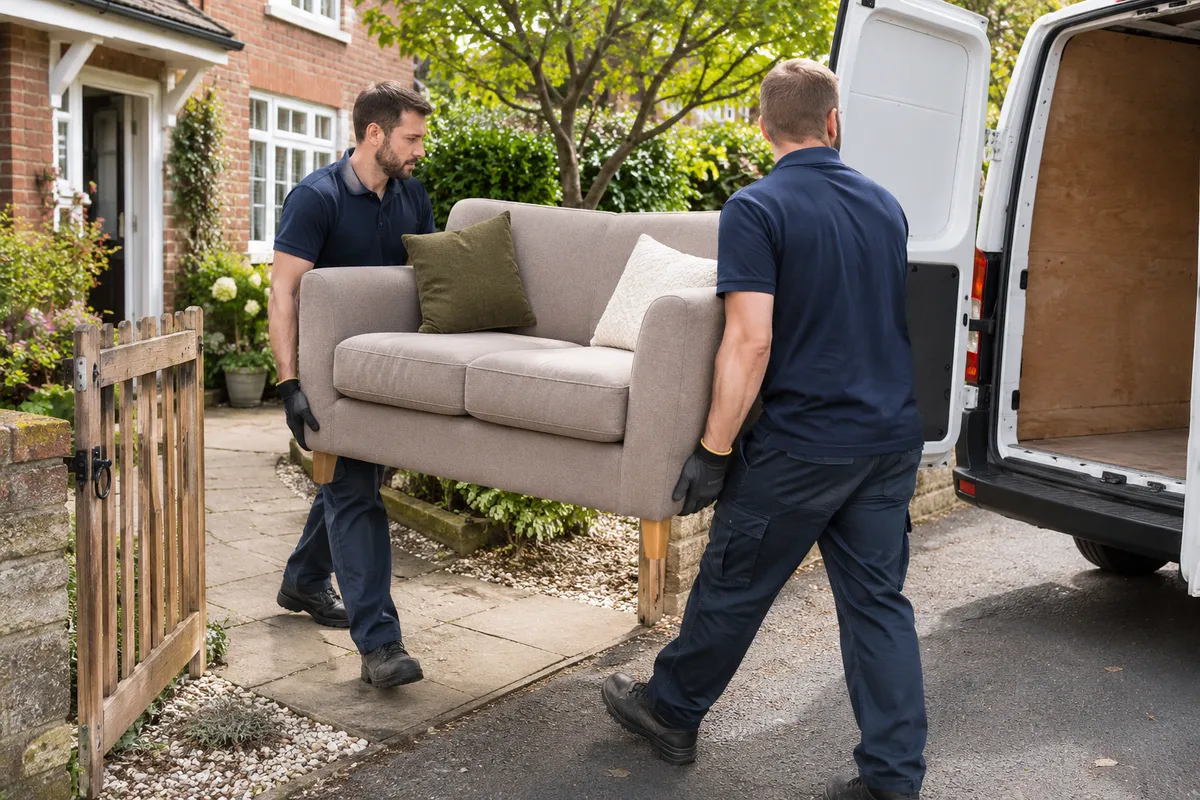
We collect agreed unwanted contents from Romford properties, with the material list and premises established before an appointment. Tell us whether the enquiry concerns household furniture, loose rubbish, commercial equipment or several groups together. We discuss what can be accepted, where it is kept and the carrying and loading involved. The full quote is agreed before work begins. Our team removes the specified contents from their stated locations, so you can explain the complete job rather than shift heavy objects outside or guess the amount of vehicle space required.
- Carrying and loading included
- A clear quote before work begins
- Licensed and insured waste carrier
COVERAGE & CONTENTS
Romford coverage and material groups
Romford is a Greater London town in the London Borough of Havering. The marker provides town orientation and does not identify a company branch or depot. Give the precise postcode and collection entrance. Dagenham and Hornchurch are nearby named areas, with every appointment arranged from its own contents, access and current availability.
Nearby collection areas: Hornchurch · Dagenham · Upminster
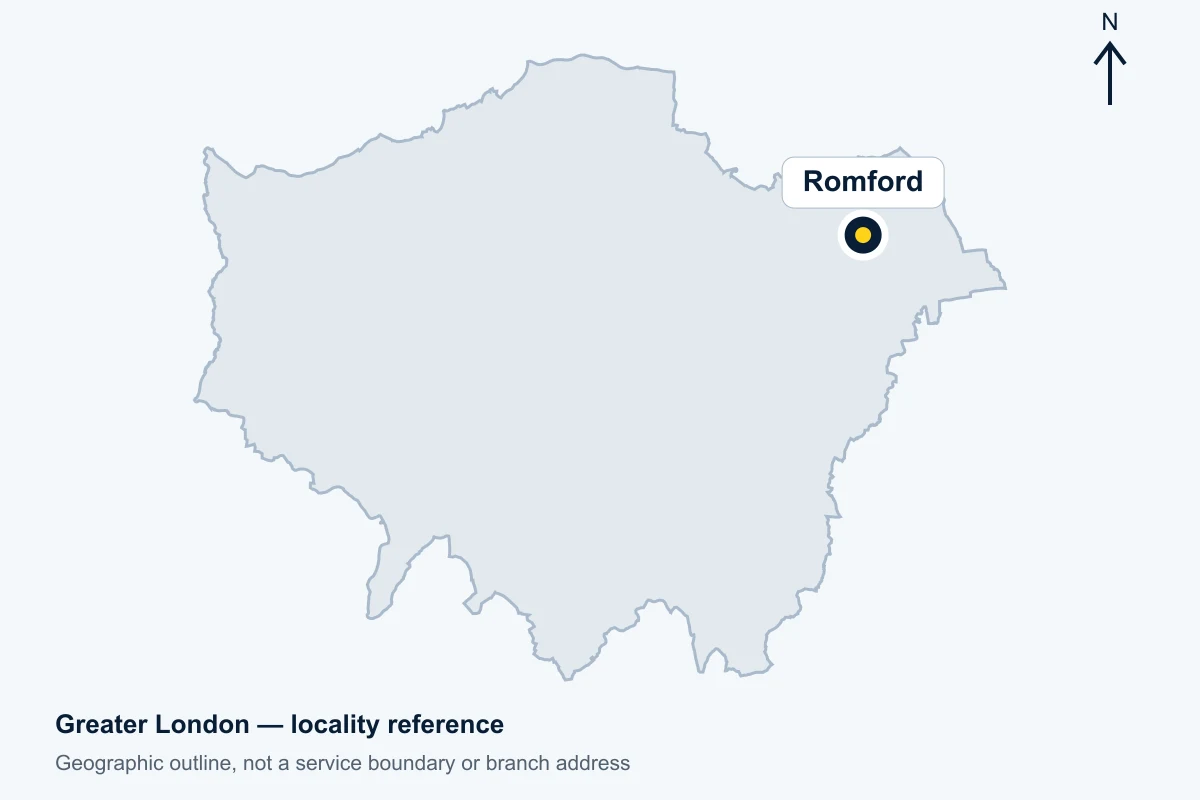
Greater London reference outline: GLA / OS Open Data (OGL). Location: GeoNames UK gazetteer. This is an orientation map, not a service boundary or branch address.
A town-centre enquiry needs the occupier as well as the address
Havering’s character study records Romford’s combination of a historic market-centred core and later redevelopment involving housing, shopping centres and car parks. This is verified local context, not an access description for every property. Tell us which part of the premises is included and who can authorise its contents for removal. A business frontage may have an upstairs occupier or a rear store with a separate entrance. Give the actual postcode and collection door, including any managed entry arrangement. We discuss Romford locality rather than place one marker over the whole borough. A familiar shopping centre or road helps orientation but cannot establish ownership, floor level or loading permission. We make the enquiry concrete from the premises and contents you identify, without implying a company branch in the town.
Home contents
Business waste
Outdoor materials
- Identify the occupier and authorised premises behind the town-centre address
- Separate redundant stock from retained fixtures and filing units
- Describe the current furniture form and any fitting-removal request
- Name refurbishment bags apart from flattened packaging
- Give the service-area contact before discussing a business appointment

Commercial clearances distinguish redundant stock from the fixtures staying
For a Romford office, retailer or business store, list the furniture, packaging, equipment and unwanted stock separately. Identify who will release the load and which fixtures belong to a landlord or remain in use. Our shop clearance and office clearance services can be discussed for those defined contents. A counter attached to the building is a different request from collecting loose chairs, so explain additional fitting-removal work explicitly. Tell us whether shelves are empty and what is inside cartons. Electronics need their own list, with any data-security or certification requirement raised before booking. The business name alone does not explain the job; the inventory should show whether the collection is selected spare items or material across several rooms and stores.
| Group | Useful information | Collection reference |
|---|---|---|
| Household material | Rooms, boxes and retained belongings | Domestic clearance |
| Furniture | Piece, size, current form and damage | Furniture disposal |
| Business equipment | Printer, screens and other items named | Electrical collection |
| Refit waste | Tiles, timber, plasterboard or rubble | Builders clearance |
Household loads are agreed around the belongings being removed
A home enquiry might be a furniture replacement, a partial room clearance or unwanted contents after a move. Through domestic clearance, we discuss the specific rooms and objects involved, rather than treat every possession at the address as waste. Make clear which pieces are reserved for relatives, owned by a landlord or staying in everyday use. Check drawers and shelves for retained belongings before agreed furniture leaves. A representative attending for you should have the same list and the necessary keys. If another person owns boxes in a shared store, exclude them clearly. The aim is one authorised instruction that the collection can follow, with additional locations such as a garage or outside cupboard named before they become part of the quote.

Furniture details explain the practical work
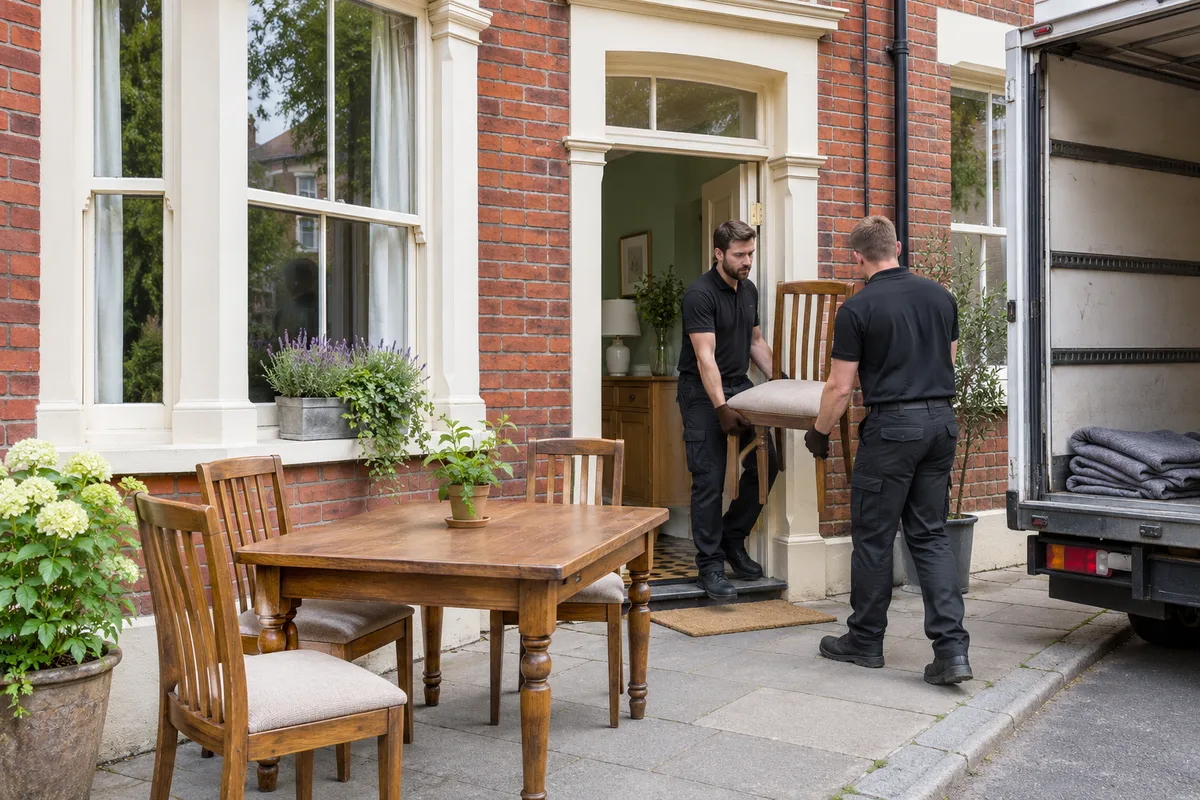
For furniture disposal, tell us the piece, location, size and current form. A table taken apart, a deep assembled sofa and a cabinet fixed to a wall need different discussions. Give dimensions where a door or stair turn is tight and identify glass, loose panels or damage. Dismantling requests must be stated before the price is agreed. Fixed joinery, appliance disconnection and carrying freestanding furniture should each have a clear scope rather than be combined under a general lifting instruction. We carry from the agreed positions, so moving bulky pieces into a shared entrance is unnecessary for the enquiry. Include the whole route to loading, with any lift suitability, external steps or gate, rather than end the description at the room doorway.

Dense waste, equipment and garden material are identified by type
For repair leftovers, describe timber, rubble, plasterboard and tiles with approximate amounts and loose or bagged condition. The builders waste service assessment needs those materials separated from lightweight packaging. Name appliances and electronic equipment, including connected condition for larger items, so any relevant handling can be discussed. Outdoor enquiries should distinguish already-cut green material from soil, paving, furniture and equipment, with the actual gate route explained. We need advance notice of chemicals, unlabelled containers and suspected hazardous substances to establish acceptance. Additional requests such as plumbing, electrical disconnection, pruning, landscaping or structural dismantling should be stated as work to discuss. An agreed waste collection is based on what the contents really are and what the removal requires, without leaving an unknown task concealed in a bag count.
| Situation | Confirm | Reason |
|---|---|---|
| Shop or office | Authorised inventory and retained stock | The business instruction is clear |
| Rooms above | Separate occupier and furniture authority | Shared address does not imply inclusion |
| Rear store | Contents, keyholder and entrance | The full load can be reached |
| Managed service area | Vehicle-entry contact and arrangement | Loading proposal can be checked |
Illustration: an office refresh and a rear storage room
Consider a Romford business replacing desks and chairs while clearing flattened packaging and an old printer from a rear storeroom. This is a hypothetical enquiry, not evidence of a completed collection. We would ask which desks are unwanted, whether they are assembled and who controls the store entrance. A retained filing unit and current stock remain outside the list. If refurbishment bags are included, name their materials apart from cardboard. The route may use a managed service area, so the relevant contact and entry arrangement belong in the initial discussion. Once the authorised load is clear, we can discuss the quote and available visit. An upstairs resident’s later request to add a mattress needs its own ownership, location and carrying information before the business arrangement is revised.

Loading arrangements are checked rather than inferred from public parking
Tell us where the collection vehicle is proposed to load and how the route from the contents reaches it. A customer car park, delivery yard and public street are different access proposals. Havering’s parking-zone and restrictions information explains the importance of the actual controls, including loading restrictions. We use that official reference alongside signs at the location and private management arrangements. An empty space or visitor permit does not establish every condition for the collection vehicle. Include barriers, controlled entrances and whoever can arrange access before booking. We also need stairs and tight turns from every room or store. Availability is checked for the actual job; Romford coverage does not itself confirm an immediate visit, a route around the centre or a promised arrival time.
From Romford enquiry to removal
01
Identify the premises and contents
Give the postcode, occupier and unwanted inventory.
02
Explain each material and route
Include equipment, debris, stores and controlled entry.
03
Confirm the complete arrangement
Agree accepted contents, carrying, loading, price and availability.
04
Remove the specified load
We carry and load it for responsible onward handling.
| Detail | Discuss | Purpose |
|---|---|---|
| Material amount | Every group, including hidden bags | The whole load is represented |
| Carrying | Floors, turns and external steps | The work is accurately described |
| Additional task | Dismantling or fitted-item request | Service boundaries are explicit |
| Changed scope | Another room or occupier added | The agreed price matches the removal |
The full collection price follows the complete instruction
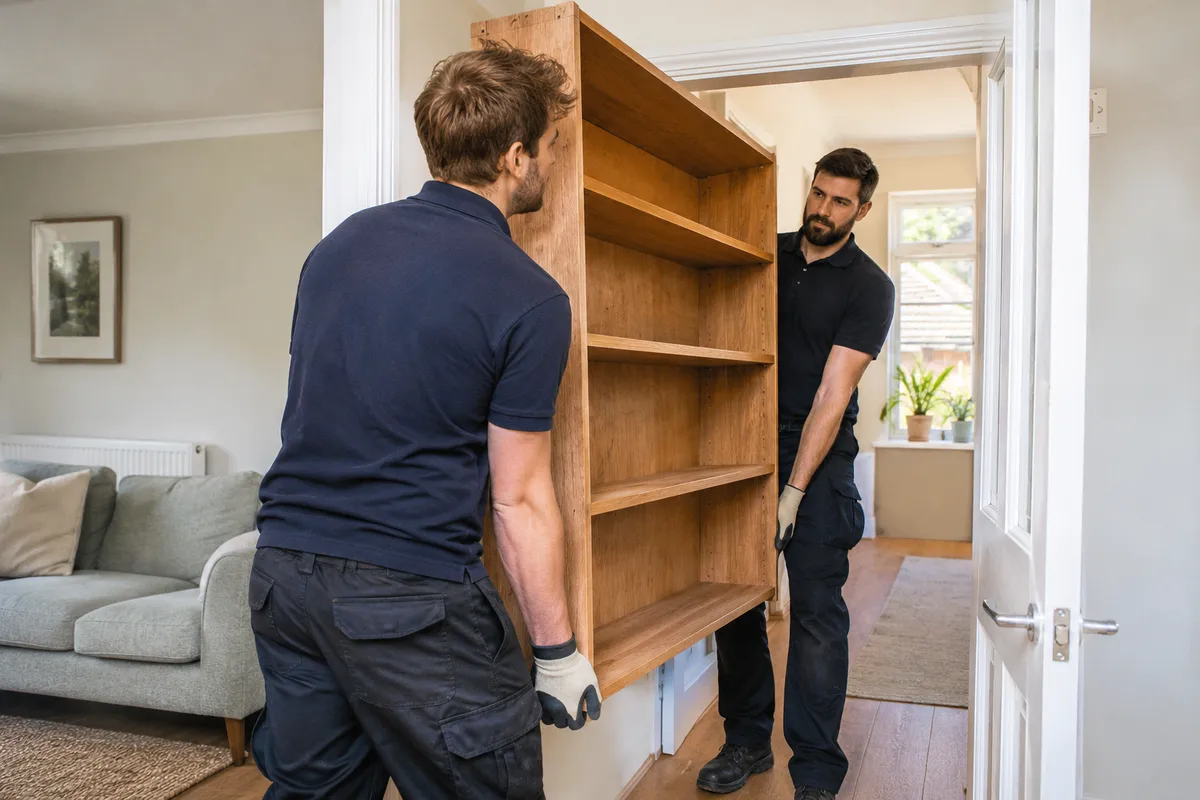
The current price guide provides our published bands and relevant supplements. We then discuss the total quote for the amount, materials, particular items and carrying involved, together with any additional task agreed. A supplement attached to one appliance is not necessarily its entire collection cost. Tell us before loading if another room, occupier’s load or material group is added so the scope can be updated. Once the list and work are agreed, we carry and load the accepted contents and take them away for responsible handling. Reuse and recycling are pursued where possible, without a fabricated local percentage or a guarantee that every object finds a new user. The collection removes the defined unwanted load. Cleaning, repairs, installation and specialist services need their own explicit agreement rather than being assumed from a broad clearance request.
See the current collection price guide, then confirm your complete quote with us. No separate Romford tariff is implied.
More London coverage near Romford
For London and M25 collection enquiries, see the coverage directory. We publish links only to available local pages. Give us your complete postcode to discuss the property; we do not use this map as a boundary or claim a local depot.
COLLECTION QUESTIONS
Romford removal enquiries: questions answered
Can a Romford office collection include a separately locked rear store?
Include the store’s contents, entrance and keyholder alongside the office inventory. Explain how it reaches the proposed loading point and identify retained stock or fixtures. We need the complete location and material description rather than assume every associated room is included in an office-furniture quote.
Does an upstairs resident’s mattress belong in a business collection?
Only if that additional load is described and authorised. Tell us who owns it, its floor and carrying route before the visit where possible. Sharing an address or service entrance does not automatically place another occupier’s furniture within the business inventory or original price.
Can fitted counters be removed with loose chairs?
Describe the counter and the work requested explicitly. Taking a fitting out is a different task from carrying freestanding chairs, so its scope and price need discussion. Identify landlord fixtures and anything remaining in use so the attending contact can confirm the intended removal accurately.
What should I say about repair bags beside flattened cartons?
Name the repair materials and approximate amounts, including bagged or loose condition. Timber, rubble, tiles and plasterboard should be distinguished from light packaging. Explain their storage position and any extra route, then let us discuss the complete quote before loading rather than rely on carton count alone.
Can a nearby customer car park be assumed suitable for loading?
Give us the specific proposal and any management conditions. Customer parking, service access and public-road controls can differ. We need to check the actual position and connect it to the carrying route, rather than assume an apparently empty space or visitor permit settles every vehicle condition.
Will equipment collection provide specialist data treatment?
Tell us the exact security or certification requirement before booking. List printers, computers and screens separately from furniture so the equipment load is clear. Removing accepted items does not itself confirm a particular data destruction process or certificate; that additional service needs explicit agreement.
All generated photographs on this page are illustrative service scenes. They do not document jobs in Romford.
Discuss your Romford collection
Call +44 20 3404 3985 with the collection postcode, item list and property details. We will discuss the scope, available arrangements and quote before work begins.
Services for your Romford enquiry
Furniture disposal · Rubbish collection · House and flat clearance