
LONDON & THE M25
Junk Removal
in Holloway.
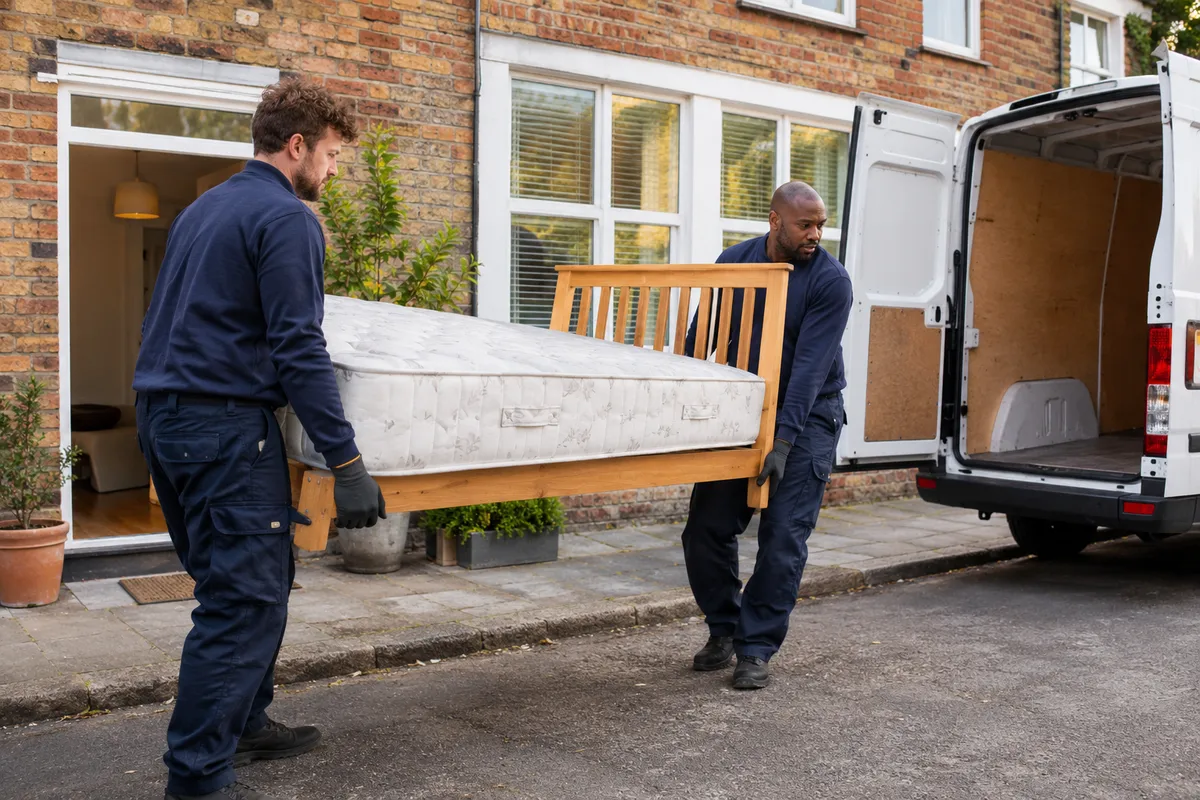
We organise Holloway collections for unwanted contents from shops, workplaces and homes. A clear removal list distinguishes redundant furniture, packaging and equipment from the stock or belongings that stay, with carrying and loading discussed before the visit.
- Carrying and loading included
- A clear quote before work begins
- Licensed and insured waste carrier
COVERAGE & CONTENTS
Holloway coverage and material groups
Holloway is within our London coverage. The geographic marker is an orientation reference and does not represent a local office. Tell us the premises, correct entrance and actual contents; a town-centre or shopping-street description is not a substitute for that collection information.
Nearby collection areas: Kentish Town · Finsbury Park · Highbury
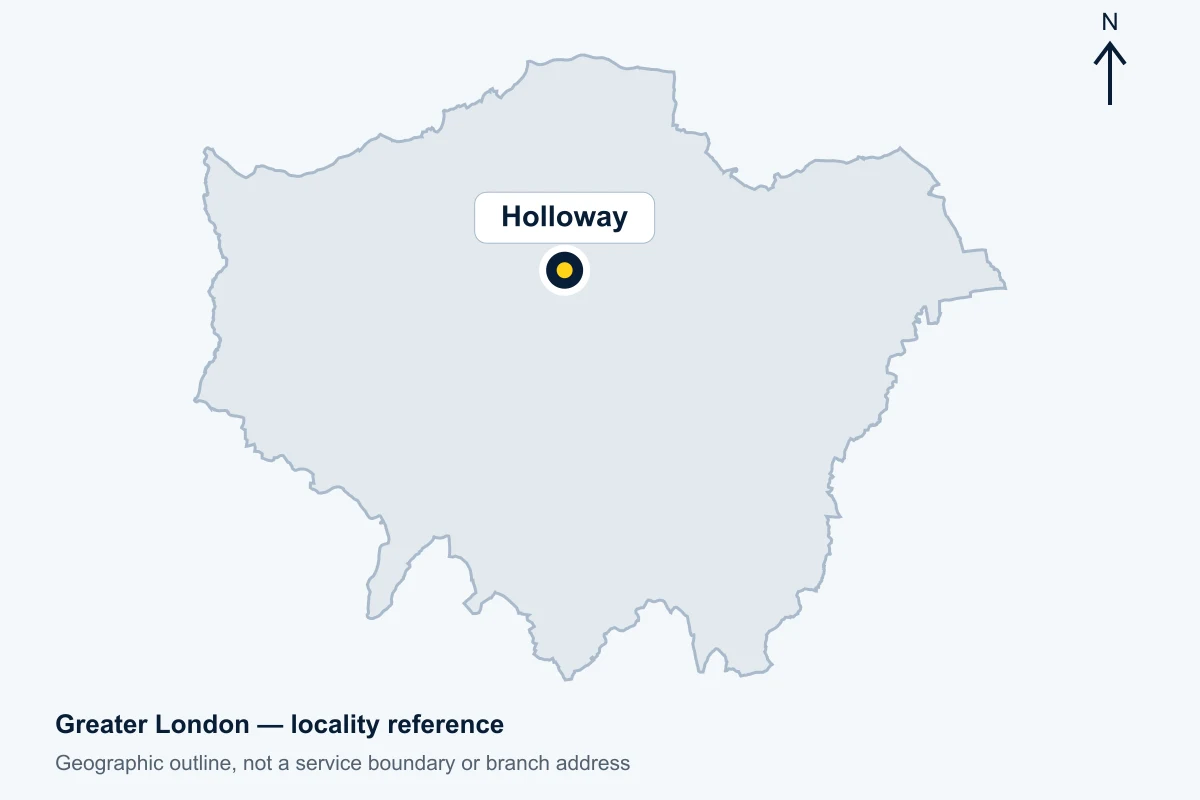
Greater London reference outline: GLA / OS Open Data (OGL). Location: GeoNames UK gazetteer. This is an orientation map, not a service boundary or branch address.
Retail surroundings do not replace the item list
Islington’s local planning material identifies Nag’s Head and Holloway as a retail area with a mix of town-centre uses. For our collection, the useful next step is to establish what is unwanted inside your particular premises. A shop enquiry might involve empty displays and packaging, while another concerns stock, storage units or equipment. We ask you to distinguish those groups instead of assume that a business description tells us the contents of the load. Give us the collection postcode, entrance and the part of the premises being cleared. If household rooms or offices are reached from a separate doorway, explain that arrangement so the collection is connected to the right space.
Home contents
Business waste
Outdoor materials
- Identify redundant stock and retained stock separately
- Describe packaging by its main material
- Explain whether shelving and counters are freestanding or attached
- Name back-office furniture and electrical equipment
- Give the correct entrance and any managed loading details

Separate redundant stock from stock staying in use
A working shop can contain materials that look similar but have different purposes. Boxes awaiting use should not be confused with packaging identified for removal, and retained stock should remain outside the collection list. Tell us which contents are redundant and who can confirm those choices at the visit. We discuss the approximate amount and material types rather than treat the entire backroom as unwanted. If a storage unit is being collected, describe what is still inside it separately from the empty unit. The enquiry should make those boundaries clear before the team carries and loads anything, especially when several staff members or another occupier use the same store.
| Contents | What to distinguish | Why it matters |
|---|---|---|
| Stock and cartons | Unwanted contents versus goods staying for use | Defines what the team is authorised to remove |
| Shelves and rails | Empty units versus storage still containing belongings | Separates furniture from loose material |
| Attached fittings | Fixed counter or cabinet versus movable display | Additional work needs explicit agreement |
| Back-office items | Furniture versus appliances and electronics | Keeps material requirements visible |
Displays and fittings are described by how they stand
Freestanding shelving, movable rails and empty display units can be identified as individual items. Tell us their size, assembled condition and location, including any route through doors or stairs. If a counter, cabinet or fitting is attached to the building, say so rather than assume it involves the same work as lifting a loose display. Additional dismantling or release work must be discussed before it is part of the collection. Our carrying and loading service is arranged around the agreed contents; a general shop-clearance request should not be treated as unlimited removal of fixtures or a complete strip-out. We establish the actual work before agreeing the scope and full quote.


Packaging and building debris need different descriptions
Cardboard, wrapping and other packaging may take up visible space without representing the same load as bags of dense refurbishment debris. Identify the main materials and approximate amount in your Holloway enquiry. If renovation work has left timber, rubble or plasterboard beside the shop contents, list those separately rather than call the whole group packaging. We also ask about loose, bagged or bundled material and where it is stored. Unknown substances or potentially hazardous waste need to be raised before booking so acceptance can be checked. The collection should be based on the actual contents, not simply on the number of containers or the floor area they appear to occupy.

Office furniture and electrical equipment in the same premises
Some commercial enquiries include a desk, staff seating, a small refrigerator or other equipment from a back office. Name those items individually and distinguish them from retail displays. Electrical equipment should not be concealed inside a general furniture description, even if it occupies little room. Tell us whether an appliance is still connected or fitted into a space, because ordinary collection does not automatically include disconnection or installation work. Any specialist requirement concerning information stored on business equipment must also be discussed explicitly. We can establish the proposed mixed load without implying certified data destruction or another service that has not been agreed as part of the removal enquiry.
| Group | Information to provide | Relevant service |
|---|---|---|
| Retail contents | Displays, stock and packaging identified | Shop clearance |
| Office items | Desks, seating and equipment separately | Office clearance |
| Renovation waste | Timber, rubble and plasterboard by type | Builders clearance |
| Household belongings | Selected furniture and loose contents | House and flat clearance |
An example of a defined shop changeover load
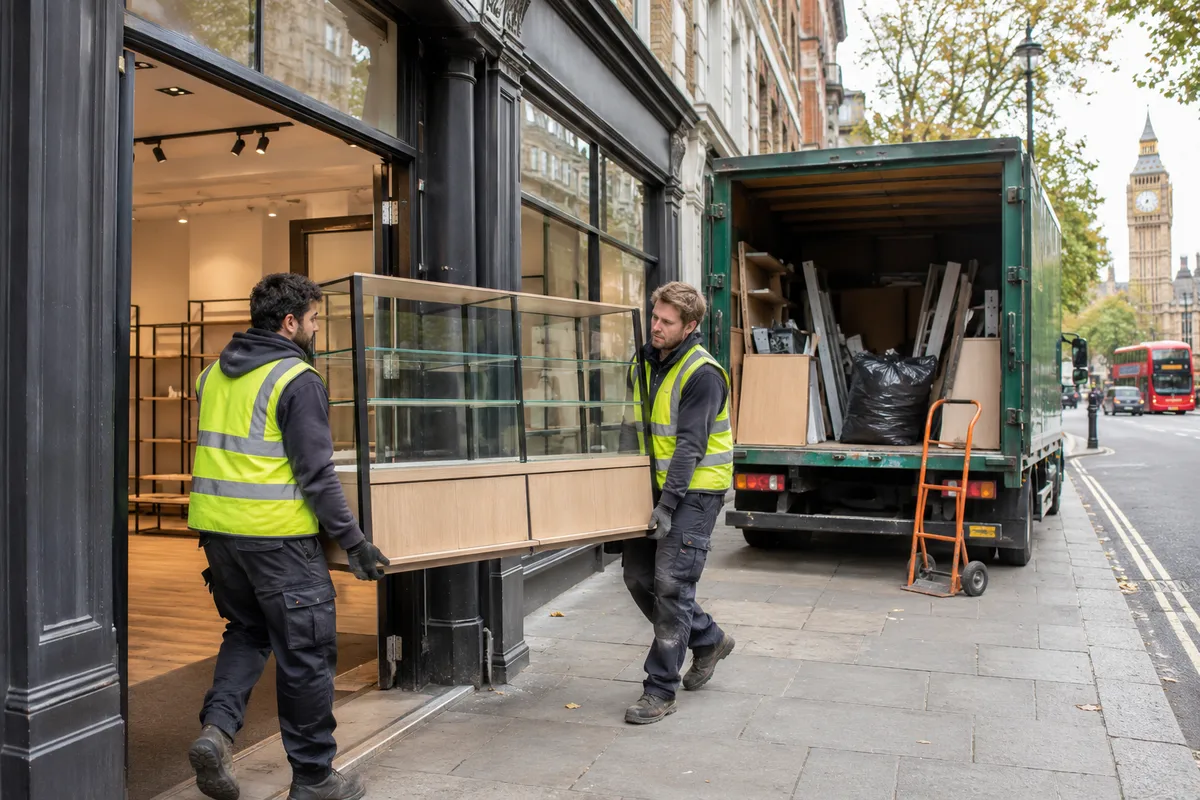
Imagine a Holloway shop replacing freestanding rails and shelving while clearing flattened cartons and a redundant office chair. This is an enquiry example, not a completed local job. We would distinguish the fixtures being replaced from stock that remains for sale, then establish whether the shelving is empty and movable. Packaging would be described as a separate material group, and the chair would be identified alongside any other back-office contents. If a fixed counter were added later, that additional work would need a fresh discussion rather than be assumed from the original list. The collection can then be quoted around a defined changeover load, with the carrying route and loading position understood before the visit.
Household contents at a Holloway address
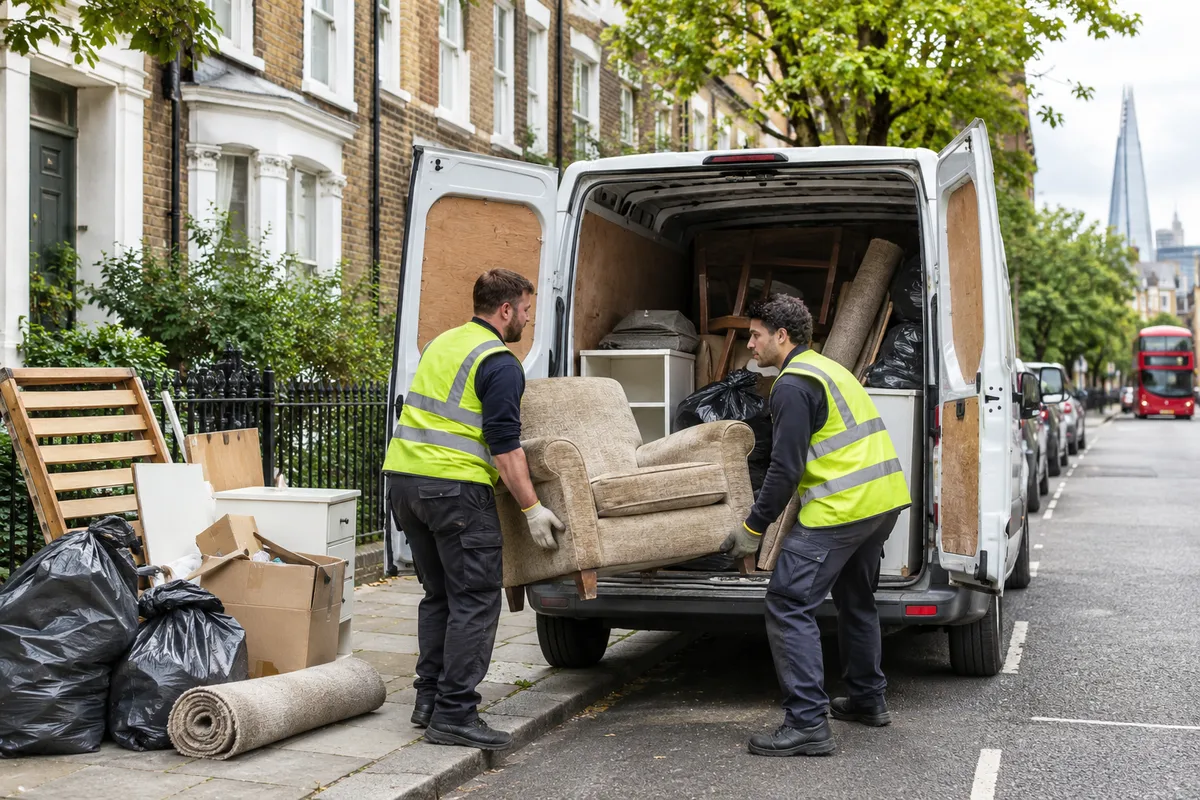
Our domestic service can also be discussed for a house, flat or selected household pieces. Identify furniture, loose belongings and any appliances separately, with the room and floor containing each group. A business on the ground floor does not establish the access to an upstairs home, so give us the correct entrance and any shared stair or landing details. We do not assume that the contents of another occupier are included because they share a building. If garden material or outdoor furniture is part of the enquiry, explain its location and distinguish cuttings from soil, paving and timber. The complete scope should show what is leaving from each space and who can confirm it.
From Holloway enquiry to removal
01
Mark the redundant groups
Identify the contents leaving each part of the premises.
02
Describe the fittings
Explain size, condition and whether units are attached.
03
Agree the business collection
Discuss access, materials and complete price.
04
Load the specified contents
We remove the agreed items for responsible handling.
| Enquiry point | Practical detail | Agreed outcome |
|---|---|---|
| Items leaving | Clear list and nominated contact | Retained stock remains outside the collection |
| Work involved | Dismantling or attached fittings raised | No hidden strip-out assumption |
| Access | Correct doorway, carrying route and loading point | A workable description of the visit |
| Price | Amount, material mix and supplements | Complete quote before work begins |
A price agreed for the load and its carrying
We use the current collection guide as the starting point for discussing bands and applicable supplements. The complete quote reflects the amount, materials, carrying route and any additional work identified in the enquiry. We do not invent a fixed Holloway retail-clearance tariff or assume every collection can use the same loading arrangement. Explain whether staff or a manager controls access and raise any change before the visit where possible. After the agreed contents are carried and loaded, they leave the premises for responsible handling, with reuse and recycling wherever possible. We do not promise that all displays can be reused or assign an unsupported recovery percentage to a business load. The service remains the removal of the contents and work agreed with you.
See the current collection price guide, then confirm your complete quote with us. No separate Holloway tariff is implied.
More London coverage near Holloway
For London and M25 collection enquiries, see the coverage directory. We publish links only to available local pages. Give us your complete postcode to discuss the property; we do not use this map as a boundary or claim a local depot.
COLLECTION QUESTIONS
Holloway removal enquiries: questions answered
Does Holloway shop clearance automatically include a fixed counter?
Tell us that the counter is attached and explain what work would be needed to release it. A request concerning loose displays or packaging does not establish a full strip-out. We discuss the additional requirement before it is included in the collection scope.
Can packaging be removed while the retained stock stays in the backroom?
Yes, identify the unwanted packaging and distinguish it from stock or containers still needed by the business. Someone should be able to confirm the removal list at the visit. We do not treat everything in a shared store as waste because it is beside the collected material.
Should a staff refrigerator be included in the display-unit list?
Name the refrigerator separately as an appliance, with its location and whether it remains connected. We need the actual equipment type to discuss the mixed load and applicable requirements. A furniture or shelving description should not conceal an electrical item.
Can renovation debris be described simply as shop rubbish?
Give the material types and approximate amount. Timber, plasterboard and dense rubble are different from light packaging. Identifying them separately lets us discuss the complete collection and any restrictions before the contents are included in the agreed quote.
Do you assume access to rooms above a Holloway shop?
No. Tell us the entrance, floor and occupier for any household or office contents upstairs. The street-facing business doorway may not serve those rooms. We need the correct route and a clear removal list rather than infer access from the address alone.
Can the removal be arranged around a working business?
Explain when the contents and access can be made available, together with any manager or building controls. We discuss a suitable collection arrangement against current availability. An opening-hours or loading arrangement should be confirmed rather than assumed from a general business enquiry.
All generated photographs on this page are illustrative service scenes. They do not document jobs in Holloway.
Discuss your Holloway collection
Call +44 20 3404 3985 with the collection postcode, item list and property details. We will discuss the scope, available arrangements and quote before work begins.
Services for your Holloway enquiry
Furniture disposal · Rubbish collection · House and flat clearance