
LONDON & THE M25
Junk Removal
in Upminster.
We organise Upminster junk removal around the material groups you want taken away, from household furniture to stored belongings and outdoor additions. Each group needs a clear description and location even when it forms one visit. We agree the contents and carrying before our team loads them for responsible onward handling.
- Carrying and loading included
- A clear quote before work begins
- Licensed and insured waste carrier

COVERAGE & CONTENTS
Upminster coverage and material groups
The map identifies Upminster’s verified place location for orientation, not a depot or outer postcode boundary. Give the complete collection address and actual entrance so the specific premises and access can be discussed.
Nearby collection areas: Hornchurch · Romford · Dagenham
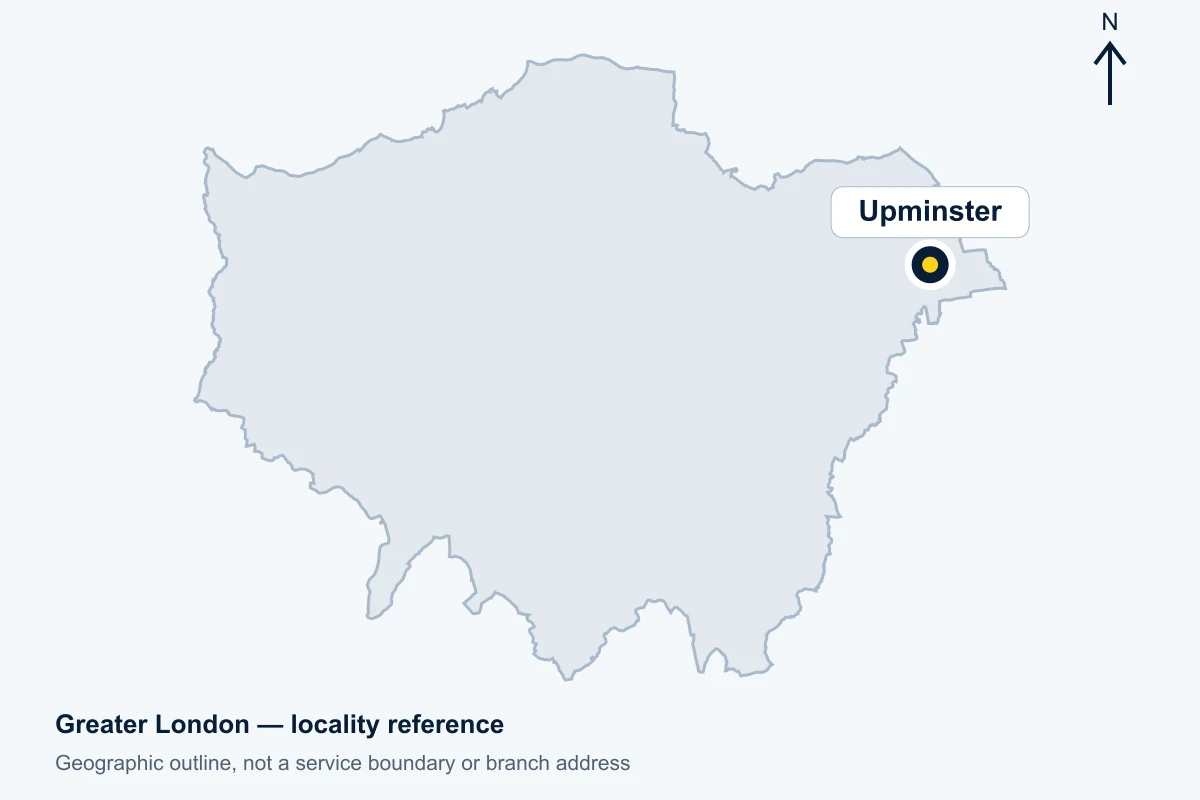
Greater London reference outline: GLA / OS Open Data (OGL). Location: GeoNames UK gazetteer. This is an orientation map, not a service boundary or branch address.
Upminster enquiries need more than the town name
Havering’s published strategy identifies Upminster as a district centre supporting local businesses and communities. That official context includes different uses behind local addresses; it does not mean every collection concerns a shop or that every nearby home has the same access. Tell Junk Please the premises type, full postcode and actual entrance. A domestic room, upstairs workspace and garden store need different material and route descriptions. We do not infer loading permission from the centre’s role or describe proposed improvements as completed work. The official growth strategy supplies local context rather than an access instruction. Explain who controls private or shared space and where loading could take place. The individual contents and existing route establish the practical collection, not the locality name alone.
Home contents
Business waste
Outdoor materials
- Describe each material group separately
- Distinguish furniture from stored contents
- Name appliances and connection work
- Separate cuttings from soil and hard debris
- Explain every starting location and route

Choose which furniture components belong to the visit
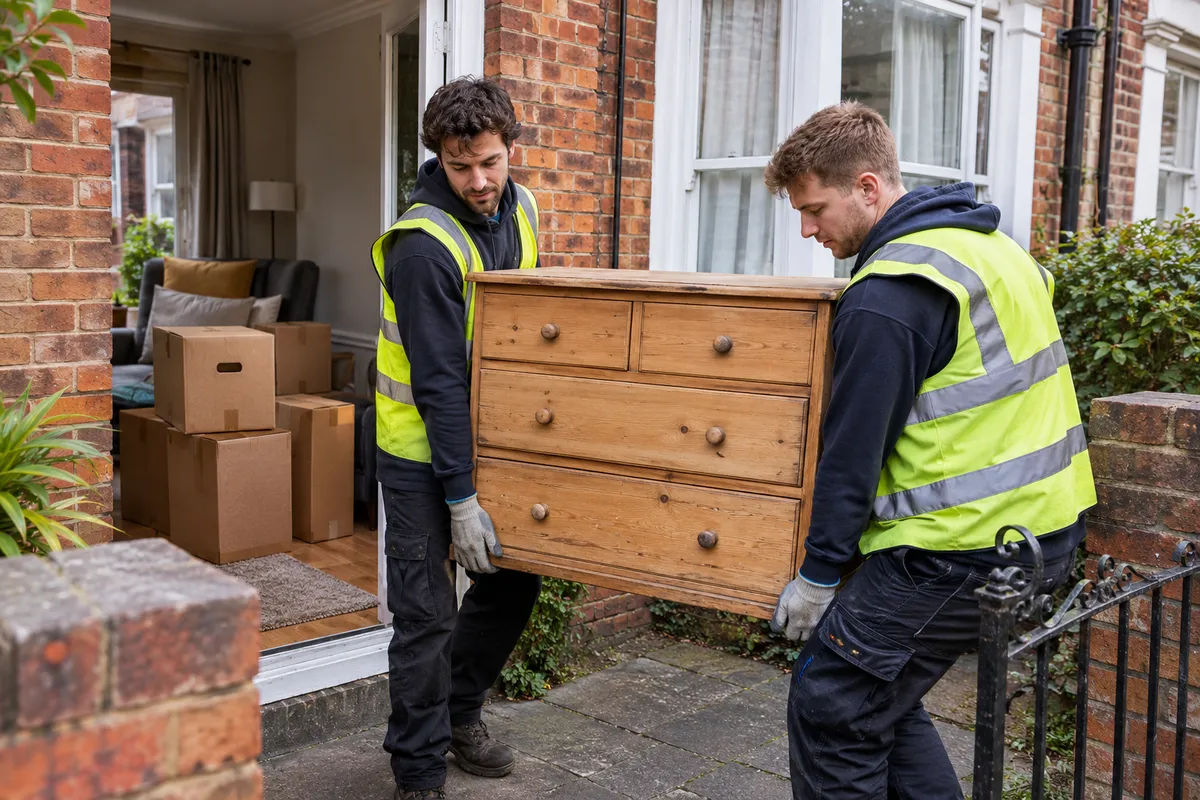
Start with the cabinet or bed as a set of decisions rather than one product label. Is the cabinet empty? Are the removable shelves staying? Does the bed request include its mattress, drawers and headboard? Give those answers alongside size and condition. An owner may want the furniture gone while keeping every loose possession inside, so a photograph of a full unit needs explanation. If the item was assembled in the room, say that and raise any preparation you want discussed. Do not leave the removal enquiry to imply work on fitted storage or unstable furniture. The attending contact should be able to identify the approved components without sorting personal belongings on the day. This creates a clear household core for the mixed enquiry, before additional devices, garden objects or project material are considered.
| Group | Describe | Relevant service |
|---|---|---|
| Household furniture | Components and contents | House and flat clearance |
| Work equipment | Desks and devices | Office clearance |
| Outdoor materials | Cuttings, objects and soil separately | Garden waste collection |
| Project leftovers | Timber, tiles and rubble | Builders clearance |
Stored boxes should explain their material
A box count does not tell us whether the contents are clothing, books, crockery or empty wrapping. Give a general description and approximate amount without sharing private details. Dense contents can look small, while packaging can occupy substantial space. Identify electrical equipment separately and say what remains in use. If boxes belong to several family members, settle authority before booking and keep undecided groups outside the instruction. We do not decide which possessions have value or whether something has been abandoned. Photographs help when they show the overall group, but explain retained objects visible in them. Update the list after relatives collect their belongings or sorting produces more bags. A current inventory supports a useful quote and prevents a stored-content enquiry expanding into every cupboard at the address without agreement.
Give stored electrical items their own status
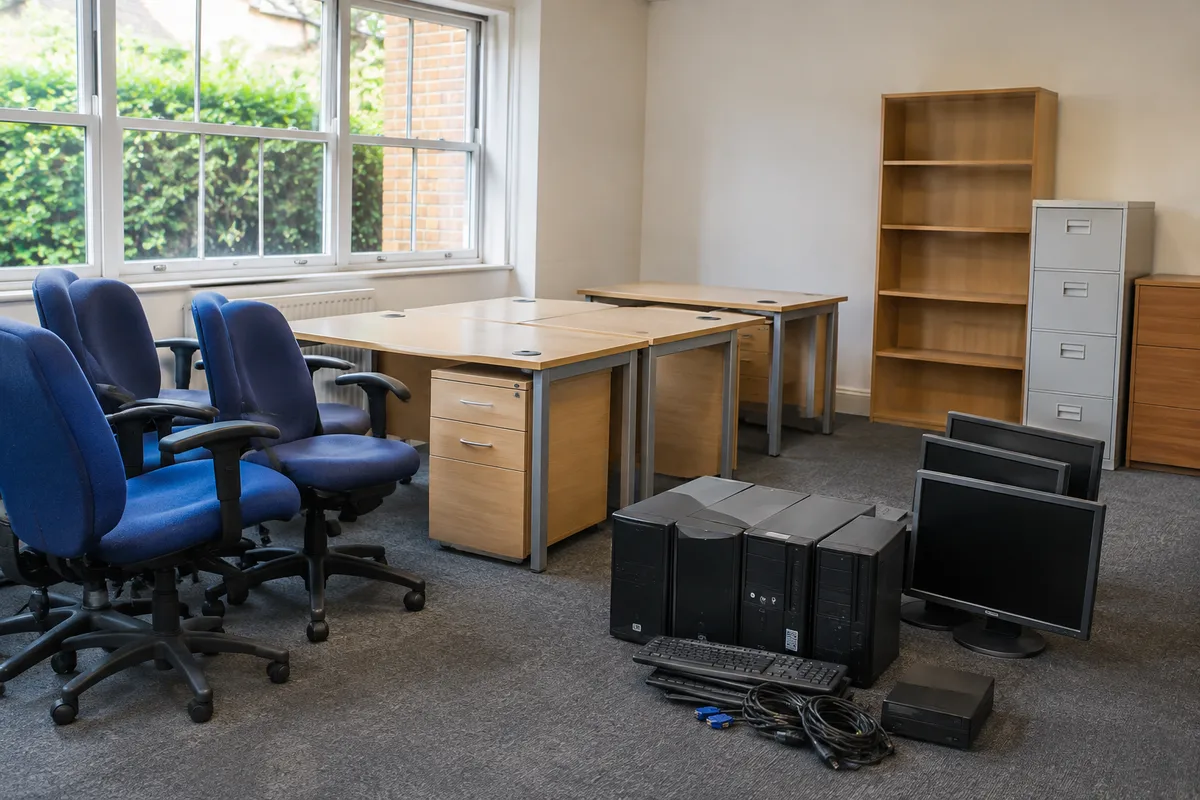
An appliance left in storage can still need preparation, so describe what it is and its present condition instead of assuming the word stored means ready to carry. State whether connections remain and whether anything is inside it. For screens or printers, distinguish the owner’s disposal decision from the fate of the desk or shelf supporting them. Current equipment remains outside the collection unless separately authorised. Retained information and private records should be considered by the owner before a device or cabinet joins the group. If a specialist requirement exists, raise it directly rather than expecting ordinary collection to supply it. This electrical account can be short, but it should stand independently of the furniture inventory. It lets us understand the proposed additions before discussing the complete price and avoids finding a major undisclosed item behind the boxes at the visit.
Garden objects are different from green waste
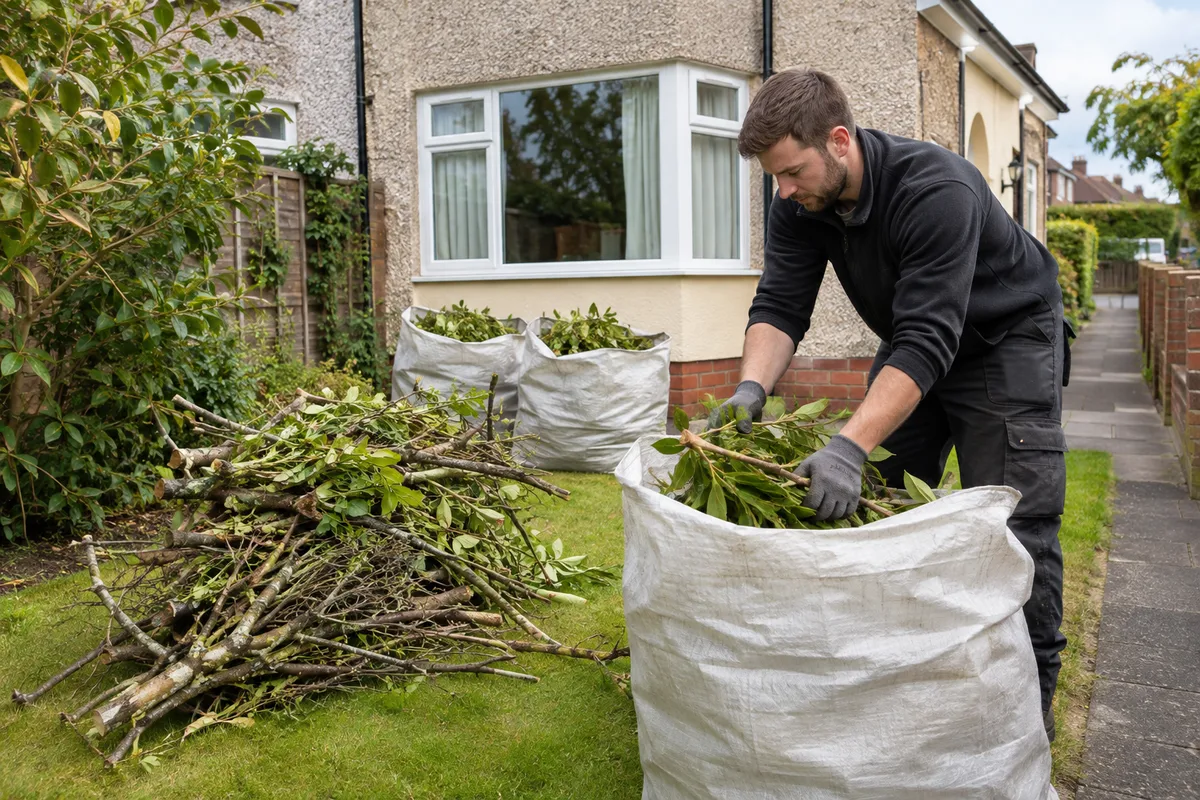
Outdoor seating, cuttings, soil-filled pots and paving should not share one vague description of garden rubbish. Give approximate amounts by group and explain what sacks or containers hold. State whether pots are empty and whether timber is loose furniture, offcuts or part of an attached structure. Shed contents and the shed itself require separate decisions. We do not assume a collection includes taking down a building or pruning vegetation. Unknown containers, chemicals and potentially hazardous substances need to be raised before booking so acceptance can be considered. Outdoor household boxes also need a general contents and condition description. Tell us if material is wet or damaged. The complete mix can be discussed in one enquiry, but each type and location remains important to the scope, carrying and responsible onward handling.
| Detail | Example | Reason |
|---|---|---|
| Density | Books versus wrapping | Actual material mix |
| Construction | Loose panels versus fixed unit | Agreed work |
| Preparation | Appliance connection status | Scope discussion |
| Location | Room versus rear store | Carrying route |
Describe project leftovers by what was removed
Explain whether the project has produced loose cabinet boards, broken tiles, rubble or merely empty cartons. Those descriptions tell us more than a total bag count. A small heavy stack can be obscured by bulky wrapping in photographs, so state the dense amount separately. Tell us what preparation is finished and which material, if any, remains attached. The enquiry should not depend on an assumption that a contractor will dismantle something before we arrive. Useful new fittings and tools need to be kept distinct from waste produced by the work. If uncertain tins or containers are present, leave their status explicit rather than combining their contents with ordinary debris. We can discuss the proposed mix on that basis. This makes the project group a defined addition to the household collection rather than an open-ended request to finish the improvement work.

Map the groups from their current positions
Describe the cabinet’s route from its room, the boxes’ location and the entrance serving any outdoor material. They may converge at the front door, but that does not make the earlier carries identical. Include turns and steps that affect the largest furniture component, and explain whether a garden gate opens onto an authorised private route. A possible loading place needs the responsible person’s actual permission, not just its appearance in a photograph. If another household member has moved the boxes downstairs, use that current position. Someone should remain available where entry depends on a key or controlled door. This account lets us connect a mixed inventory with the work requested. It is more useful than a single property-type label, particularly where a modest indoor group is combined with material at the far end of a garden.
From Upminster enquiry to removal
01
Identify the material groups
Separate furniture, contents and outdoor additions.
02
Confirm authority
Settle retained and removed decisions.
03
Agree access and quote
Describe the actual route and work.
04
Remove the specified load
Carry, load and take away responsibly.
| Stage | Confirm | Result |
|---|---|---|
| Ownership | All groups authorised | Defined instruction |
| Access | Route and permission | Available carrying |
| Quote | Final mix and work | Clear price |
| Handover | Each group reviewed | Defined finish |

Use the final material list to agree and review the collection
For the illustrative cabinet, boxes, appliance and chairs, confirm each group before discussing the complete charge. The retained records and tools should remain visibly excluded. Tell us about changed decisions or additions since the first enquiry, and raise the timing you need when asking about availability. A booking should be confirmed rather than inferred from the fact that the area is nearby. The same list then serves as the completion check: cabinet components, checked boxes, named appliance and authorised chairs accounted for separately. Material collected is handled according to its type and condition, with suitable reuse and recycling considered without asserting one guaranteed destination. Installing replacement storage, rearranging what stays and completing the garden project are separate activities. This gives the mixed visit a clear end even when the household continues its wider reorganisation.
See the current collection price guide, then confirm your complete quote with us. No separate Upminster tariff is implied.
More London coverage near Upminster
For London and M25 collection enquiries, see the coverage directory. We publish links only to available local pages. Give us your complete postcode to discuss the property; we do not use this map as a boundary or claim a local depot.
COLLECTION QUESTIONS
Upminster removal enquiries: questions answered
What makes a useful mixed-load list?
Name each group, its approximate amount and its current position. For example, separate a cabinet, checked boxes, a specific appliance and outdoor chairs instead of reducing them to one pile description.
How should a partly retained bed be described?
Specify the frame pieces, mattress, drawers and headboard that leave. Identify retained components so permission is not inferred from the general bed label.
Is stored electrical equipment necessarily ready to carry?
No. Explain its actual preparation, including remaining connections or contents. The removal discussion should follow the current state rather than an assumption based on where the item has been kept.
Why list dense project material outside the bag count?
Heavy tiles or rubble can be visually hidden by light cartons. A separate amount and material description makes that part of the proposed collection clear before pricing.
What if boxes move to another room after the enquiry?
Update their starting location and the inventory if the contents change. The carrying account should describe where the team will find them, not their position in an old photograph.
How is a mixed collection checked at the end?
Review the agreed groups one by one and confirm retained belongings remain. Ongoing installation or garden work should not blur whether the specified removal has been completed.
All generated photographs on this page are illustrative service scenes. They do not document jobs in Upminster.
Discuss your Upminster collection
Call +44 20 3404 3985 with the collection postcode, item list and property details. We will discuss the scope, available arrangements and quote before work begins.
Services for your Upminster enquiry
Furniture disposal · Rubbish collection · House and flat clearance